
The Environmental Keyword You Probably Haven’t Heard Of
Why You Should Add ‘Ecotone’ To Your Environmental Communication Toolkit
What does ecotone mean?
“Ecotone is a transition area between ecologies, where life worlds meet and integrate.” — James Clifford, Professor Emeritus of Anthropology, UC Santa Cruz
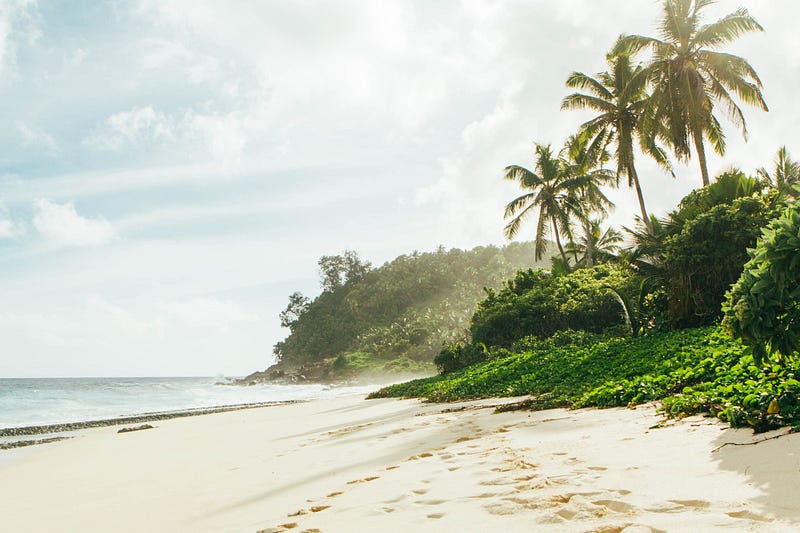
Ecotones are the liminal spaces where a dramatic shift between one ecosystem and another occurs: The transition zone between river and marsh. Between marsh and grassland. Between grassland and forest. Between forest and beach. Between beach and ocean. These are all ecotones.
As the anthropologist James Clifford puts it:
“The transition zone between forest and grassland. It is an ecotone. A particular dynamic combination of life-ways, animal, and vegetal. Its composite environment is always being assembled and disassembled with friction and difficulty…ecologies in tension: struggle, invasion, survival, overlap, dependency. A modus vivendi.”
The word combines ‘eco’ and ‘tone’ (from the Greek tonos meaning tension). In other words, an ecotone emerges as a ‘thirdspace’ in the tension between two ecosystems colliding.
An ecotone is located at the natural boundaries between ecosystems. But ecotones also include human-created transition zones, like the edges of a forest clear-cut, or ecotones of urban greenery.
For example, the philosopher Donna Haraway talks about universities as ecotones:
“I think universities are like edge areas in ecology where different habitat assemblages intermix, like ecotones, where all of the species are in a sense, outside their comfort zone…They are outside of their normative comfort zone, but they can still make a living well enough to be there. But new things are happening in these ecotones.”
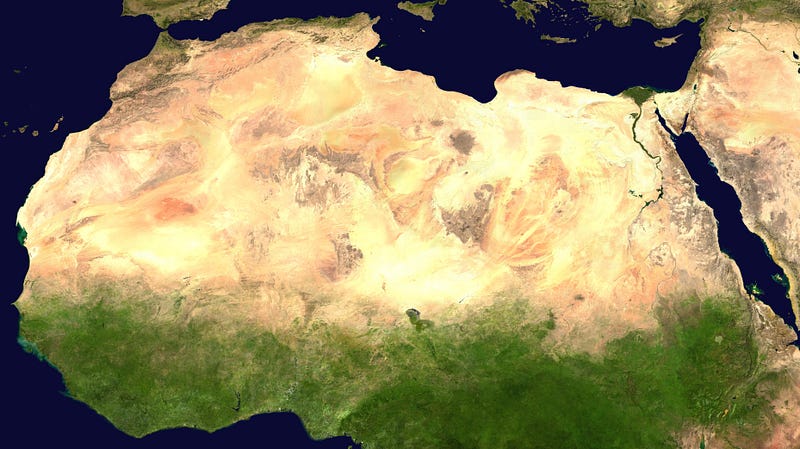
We can talk about ecotones at different scales too: from the half-wild ecosystems popping up in a vacant city lot, to the Sahara desert.
The importance of ecotones for conservation
For conservation biologists, ‘ecotonal areas’ are especially important places to protect due to their richness in biodiversity:
“Various studies have shown that species richness and abundances tend to peak in ecotonal areas, though exceptions to these patterns occur. Recent evidence suggests that ecotones may also be speciation centers. Some researchers argue that ecotones deserve high conservation investment, potentially serving as speciation and biodiversity centers. Because ecotones are often small in size and relatively rich in biodiversity, their conservation may be cost-effective.”
Research on ecotonal areas shows these transitional space to be ‘hotspots’ of biological diversity, both at ‘the community level’ (the number of species inhabiting an area)– and ‘within-species level’ (genetic diversity). And because species that live in ecotones are constantly adapting to the dynamic flux of their life in the ‘in-between,’ it turns out they are especially resilient to climate change.
“Evidence suggests that ecotones may also be speciation hotspots where new forms evolve. As such, ecotones deserve high conservation investment, potentially serving as speciation and biodiversity centers. As populations in ecotones are potentially pre-adapted to changing environments, they may be more resistant to climate change, biotic invasions invasive species and other environmental changes. Because ecotones are often small in spatial extent and within this small area they are relatively rich in biodiversity, with populations adapted to change, their conservation may be a cost effective strategy.”
Ecotones and the future of conservation
Because ecotones are unstable places sensitive to environmental changes, “they are among the first places to show response to new environmental stresses, such as climate change, increased grazing intensity, or pollutants.”
Human-induced climate change is now transforming ecosystems across the planet. It’s worth asking, then, if the entire world has become an ecotone: a blurry transitional habitat between human and natural spaces.
For some conservationists, recognizing the global-scale of anthropogenic (human-caused) climate change signals the end of wild nature.
This is the fear that Bill McKibben famously articulated in his 1989 book, The End of Nature. At the end of the book, McKibben asks,
And if what I fear indeed happens? If the next twenty years sees us pump ever more gas into the sky, and if it sees us take irrevocable steps into the genetically engineered future, what solace then? The only ones in need of consolation will be those of us who were born in the transitional decades, too early to adapt completely to a brave new ethos.
McKibben wrote this in 1989, and yes, we did ‘pump ever more gas into the sky.’ And the ‘transitional decades’ he refers to is the uncertain global ecosystem we are entering deeper into, a planetary ecotone some scientists are now calling the Anthropocene.
But for McKibben, ‘the end of nature,’ did not mean nature would disappear. He meant that there would come a day when there is no wild place left on the entire planet untouched by human influence.
It’s not clear what environmental conservation will look like in the future, probably different in different places. But there will be likely many ecotonal places we will need to look after and to protect: places that do not meet the lofty ideals of untouched ‘wilderness,’ but are still in need of care.
As the environmental journalist Emma Marris puts it, we will need to find new experimental conservation approaches to protect “nature that looks a little more lived-in than we are used to and working spaces that look a little more wild than we are used to.”
In other words, in searching for ways to improve human-environment relationships in a time of rapid ecological transformation, we will need to find better ways to help life flourish in new ecotones: those half-wild transition zones between people and nature.


