avatarJillian Enright

Free AI web copilot to create summaries, insights and extended knowledge, download it at here

3101

Abstract

essive</a>.</p><figure id="3cfd"><img src="https://cdn-images-1.readmedium.com/v2/resize:fit:800/1*2AuxwPEOG92KQcL7xxdMBQ.png"><figcaption>Image created by author — (data from study by Uono and colleagues)</figcaption></figure><p id="1945">Depending on who you ask, and where you are in the world, an averted gaze may be considered more pleasant.</p><h2 id="35ad">There is more than one type of nervous system</h2><p id="44d3">A lot of Autistics aren’t taken seriously when we express that a particular <a href="https://readmedium.com/sensory-overload-double-trouble-acb79533b255">sensory experience is overwhelming</a>, uncomfortable, or causes us distress.</p><p id="fae0">In fact, a lot of people in general have their feelings and experiences dismissed or minimized if what they describe doesn’t line up with the experiences of the majority.</p><figure id="731f"><img src="https://cdn-images-1.readmedium.com/v2/resize:fit:800/1*bhwSHrfshmxXYRbhpAo8Cg.png"><figcaption>Image created by author</figcaption></figure><p id="770e">A lot of Autistics <a href="https://readmedium.com/sensory-overload-double-trouble-acb79533b255">process their senses much differently</a> from allistics. We can become overwhelmed by bright lights, crowds, loud noises, too-tight socks, certain tastes or textures, etc. much more easily than neurotypical folks.</p><p id="1f05">Research suggests <a href="https://doi.org/10.3389/fnint.2020.00022">over 90% of Autistics</a> have significant differences in sensory processing, and at least <a href="https://doi.org/10.4306/pi.2011.8.2.89">40% of people with ADHD</a> have Sensory Processing Disorder (SPD).</p><p id="275a">Of course, there is significant individual variability. Some people are sensory-seekers, some are avoiders, and most are a combination of the two. This can depend on our nervous systems, stress levels, physical and mental health, and general mood.</p><p id="fe99">When someone describes their experience and it’s something you’ve never personally experienced before, that does not mean they’re faking, exaggerating, or being dramatic. It means their nervous system <i>processes their senses differently from yours</i>.</p><figure id="aeb4"><img src="https://cdn-images-1.readmedium.com/v2/resize:fit:800/1*47R9mKJXSBbjdLd2XgtgqA.png"><figcaption>Image created by author — (<a href="https://www.lrdc.pitt.edu/schneiderlab/content/60-minutes-20120716.asp">brain scan by Dr. Walt Schneider at the University of Pittsburgh</a>)</figcaption></figure><h2 id="4f69">Everyone doesn’t have to like you</h2><p id="7895">With 7.8 <i>billion</i> people in the world, it’s inevitable some of those people won’t particularly like each other.</p><p id="bece">That’s okay.</p><p id="855f">Someone not liking you does not necessarily mean there’s an issue with you (although, it <i>could</i>), it may just mean there’s a personality compatibility issue.</p><p id="456f">Despair not, Allistics! Our patented social skills program can teach you to embrace and appreciate the diversity of opinions, neurologies, and ways of experiencing the world that enrich our lives.

Options

</p><p id="e5ed">© Jillian Enright, Neurodiversity MB</p><h1 id="7493">Related Stories</h1><div id="625c" class="link-block"> <a href="https://readmedium.com/social-and-behavioural-issues-in-neurotypicals-2dac07c438a4"> <div> <div> <h2>Social and Behaviour Issues in Neurotypicals</h2> <div><h3>Communication issues, unusual behaviours, and compliance acquiescence disorder.</h3></div> <div><p>medium.com</p></div> </div> <div> <div style="background-image: url(https://miro.readmedium.com/v2/resize:fit:320/1*So1j1Bsz9knrfPkPNcSQew.jpeg)"></div> </div> </div> </a> </div><div id="1485" class="link-block"> <a href="https://readmedium.com/my-adhd-and-autism-are-not-friends-7e6a8bdd0eef"> <div> <div> <h2>My ADHD &amp; Autistic Brain Are Not Friends</h2> <div><h3>Being ADHD and Autistic feels like having an ongoing episode of “The Odd Couple” in my brain.</h3></div> <div><p>medium.com</p></div> </div> <div> <div style="background-image: url(https://miro.readmedium.com/v2/resize:fit:320/1*_cTpKkny8e2cwl61g30f-A.jpeg)"></div> </div> </div> </a> </div><div id="ae53" class="link-block"> <a href="https://readmedium.com/sensory-overload-double-trouble-acb79533b255"> <div> <div> <h2>Help For Sensory Overload &amp; Overwhelm</h2> <div><h3>Triple trouble: Covid, a blizzard, then flooding — oh my!</h3></div> <div><p>medium.com</p></div> </div> <div> <div style="background-image: url(https://miro.readmedium.com/v2/resize:fit:320/1*Ay97Fhr7pMfxiTS3w7zXPQ.png)"></div> </div> </div> </a> </div><p id="8b17"><i>When you join medium, as a member you’ll have access to unlimited reads for only $5 per month. If you use <a href="https://twoemb.medium.com/membership">my referral link</a>, I’ll earn a small commission, and you’ll earn my undying gratitude.</i></p><figure id="5fe4"><img src="https://cdn-images-1.readmedium.com/v2/resize:fit:800/1*S4bGUluzAdSUOD45h-IrPg.png"><figcaption></figcaption></figure><h2 id="23f4">References</h2><p id="32f1">Crasta, J. E., Salzinger, E., Lin, M. H., Gavin, W. J., Davies, P. L. (2020). Sensory Processing and Attention Profiles Among Children With Sensory Processing Disorders and Autism Spectrum Disorders. F<i>rontiers in Integrative Neuroscience, 14</i>. <a href="https://doi.org/10.3389/fnint.2020.00022">https://doi.org/10.3389/fnint.2020.00022</a></p><p id="db0c">Uono, S., &amp; Hietanen, J. K. (2015). Eye contact perception in the West and East: a cross-cultural study. <i>PloS one</i>, <i>10</i>(2), e0118094. <a href="https://doi.org/10.1371/journal.pone.0118094">https://doi.org/10.1371/journal.pone.0118094</a></p></article></body>

Social Skills Training For Neurotypicals

An Autistic’s guide to socialization and communication for Allistics
Created by author

Attention Allistic Adults!

(And parents of allistic children)

Are you worried that you, or your child, are struggling to communicate effectively with others?

Do you struggle with social skills, especially after more than two years of a pandemic impacting our ability to get out and interact with others?

It’s extremely challenging adapting to change, isn’t it?

Well, I have good news for you. We Autistics are well-equipped to teach you how to adjust yourselves to readily meet the expectations and needs of others, often without even considering your own!

I understand, you’re used to having the universe revolve around your preferences and ways of being in the world — especially you white, cis-males out there, have you guys ever had it rough!

We’ll help you through this, and show you there are other ways of thinking and doing. You may have previously dismissed our minds and behaviours as “weird” or “disabled”, but we’ll show you Autistics have been training for this our entire lives.

First thing’s first

I’m going to start with the most important point because I know a lot of Allistics have deficits in attending closely to detail, and you may skim rather than read throughly.

So, if I may speak plainly right now:

SAY WHAT YOU MEAN, AND MEAN WHAT YOU SAY.
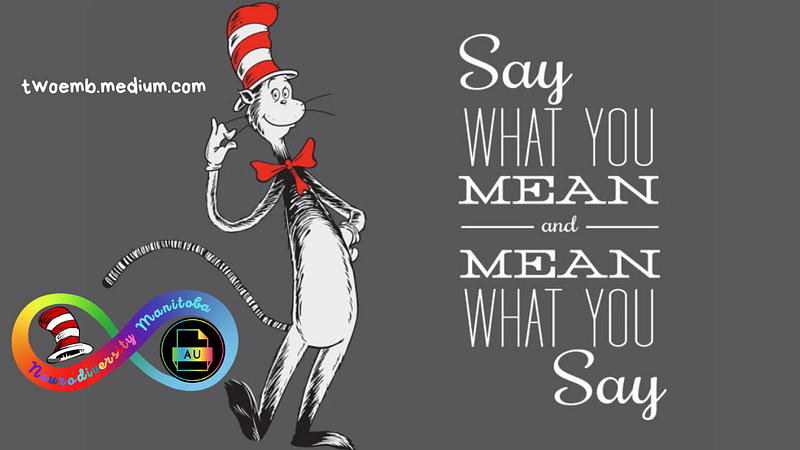
Image created by author

Allistic people have a tendency to play “word games”, use coded or cryptic phrases, or otherwise mince their words, often leading to miscommunication and misunderstandings.

Our social skills training for Allistics will include assertiveness training, instruction in using clear and direct language, as well as lessons on honesty and the dangers of artifice and duplicity.

For the love of — stop staring!

Dear Allistics,

You may have heard the expression, “the eyes are the window to the soul.”

It’s a lie. Don’t believe it.

If you stare into my eyes while we’re having a conversation, you will not see my soul, I promise you. You will only see discomfort.

I mean, when you think about it, staring into someone’s eyes for an extended period of time is kind of…. well, creepy.

There are some cultures wherein making prolonged or intense eye-contact is considered rude, even aggressive.
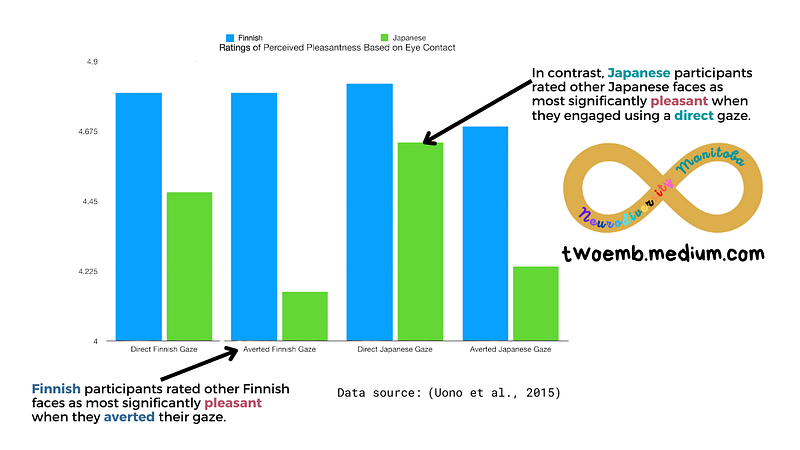
Image created by author — (data from study by Uono and colleagues)

Depending on who you ask, and where you are in the world, an averted gaze may be considered more pleasant.

There is more than one type of nervous system

A lot of Autistics aren’t taken seriously when we express that a particular sensory experience is overwhelming, uncomfortable, or causes us distress.

In fact, a lot of people in general have their feelings and experiences dismissed or minimized if what they describe doesn’t line up with the experiences of the majority.
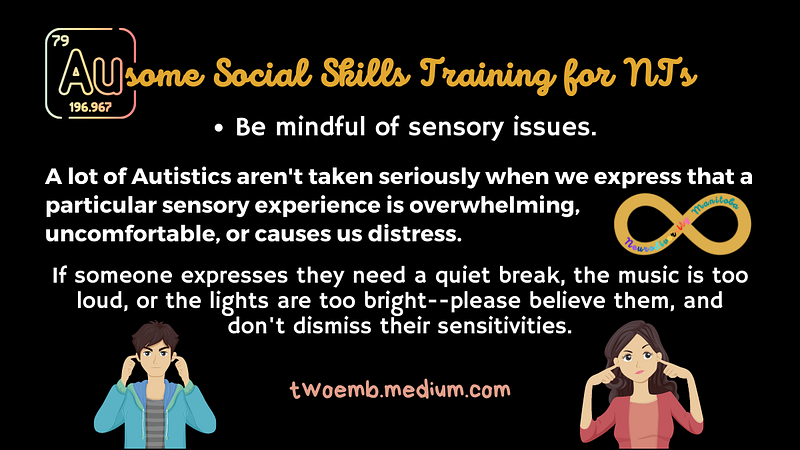
Image created by author

A lot of Autistics process their senses much differently from allistics. We can become overwhelmed by bright lights, crowds, loud noises, too-tight socks, certain tastes or textures, etc. much more easily than neurotypical folks.

Research suggests over 90% of Autistics have significant differences in sensory processing, and at least 40% of people with ADHD have Sensory Processing Disorder (SPD).

Of course, there is significant individual variability. Some people are sensory-seekers, some are avoiders, and most are a combination of the two. This can depend on our nervous systems, stress levels, physical and mental health, and general mood.

When someone describes their experience and it’s something you’ve never personally experienced before, that does not mean they’re faking, exaggerating, or being dramatic. It means their nervous system processes their senses differently from yours.
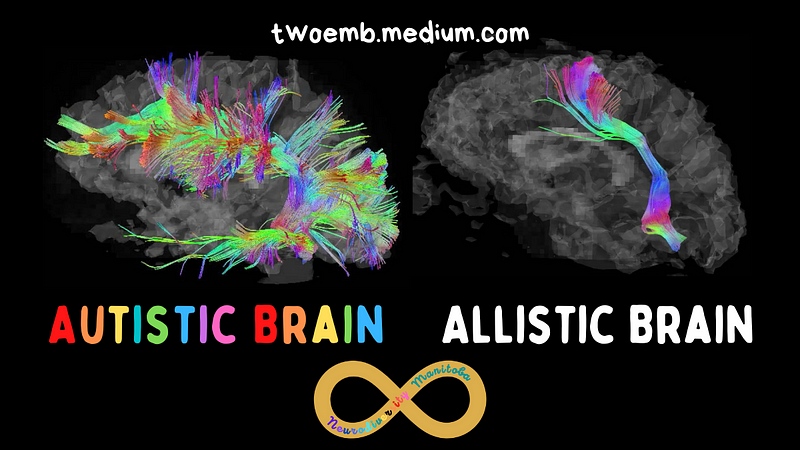
Image created by author — (brain scan by Dr. Walt Schneider at the University of Pittsburgh)

Everyone doesn’t have to like you

With 7.8 billion people in the world, it’s inevitable some of those people won’t particularly like each other.

That’s okay.

Someone not liking you does not necessarily mean there’s an issue with you (although, it could), it may just mean there’s a personality compatibility issue.

Despair not, Allistics! Our patented social skills program can teach you to embrace and appreciate the diversity of opinions, neurologies, and ways of experiencing the world that enrich our lives.

© Jillian Enright, Neurodiversity MB

Related Stories

When you join medium, as a member you’ll have access to unlimited reads for only $5 per month. If you use my referral link, I’ll earn a small commission, and you’ll earn my undying gratitude.
References

Crasta, J. E., Salzinger, E., Lin, M. H., Gavin, W. J., Davies, P. L. (2020). Sensory Processing and Attention Profiles Among Children With Sensory Processing Disorders and Autism Spectrum Disorders. Frontiers in Integrative Neuroscience, 14. https://doi.org/10.3389/fnint.2020.00022

Uono, S., & Hietanen, J. K. (2015). Eye contact perception in the West and East: a cross-cultural study. PloS one, 10(2), e0118094. https://doi.org/10.1371/journal.pone.0118094

Autism
Neurodiversity
Satire
Psychology
Mental Health
Recommended from ReadMedium