
Social (Model) Stories
Stories about the social model of disability
Many neurodivergent people are uniquely gifted at spotting patterns, and I’m no exception. I see them everywhere: in songs, in people’s behaviours, and in the stories we share on Medium.
This past month, I noticed a pattern in the stories we published right here in Neurodiversified and have decided to share them here.
Three of us were thinking along similar lines, although we wrote completely different pieces, they all followed a similar theme.
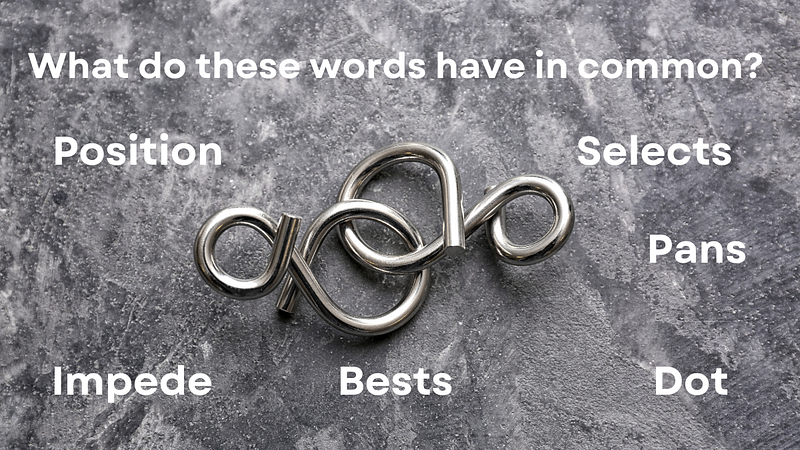
Oh, and just for fun, I posted a brain-teaser relating to pattern recognition in the feature image. It asks:
What do these words have in common?
- Position
- Selects
- Impede
- Bests
- Pans
- Dot
The Social Model of Disability
Last week I published a story about the social model of disability and explained how this relates to the neurodiversity paradigm.
Making the most of a society not designed for our neurotypes
In December, Lula Maude gave us practical tips from the social model perspective, with advice for making a neuronormative world work for her as an Autistic adult.
A Cultural Group
Thinking about neurodiverse people as a cultural group, rather than as being disabled by our neurotype:
Dis-abled, not disabled
J.R. (Not Weird Just Autistic) gave us some practical examples of how we are disabled by our surrounding environment by its lack of understanding and accommodation, and not necessarily by our divergent neurotypes.
Neurodiversified is pleased to welcome a fantastic Autistic writer, Caitlin Chisling, who contributed this well-written, common-sense article. Neurodivergent and disabled people are inherently valuable, and shouldn’t have to perform miracles or “pass” as abled or neurotypical in order to prove their worth.
For more great reads about neurodiversity, parenting, and advocacy, follow Neurodiversified.
We’re always on the lookout for more educational, informative, and well-written articles about ADHD, Autism, mental health, twice exceptionality, neurodiversity, parenting, advocacy, and education.

Want to write for us? Check out our submission guidelines.
Need some inspiration? Check out our latest call for submissions, complete with writing prompts: