
EDUCATION |FOOD
Shokuiku: Why Japanese Children Are Born to Develop Healthy Eating Habits
Ichijū-sansai and healthy refreshments keep children fit
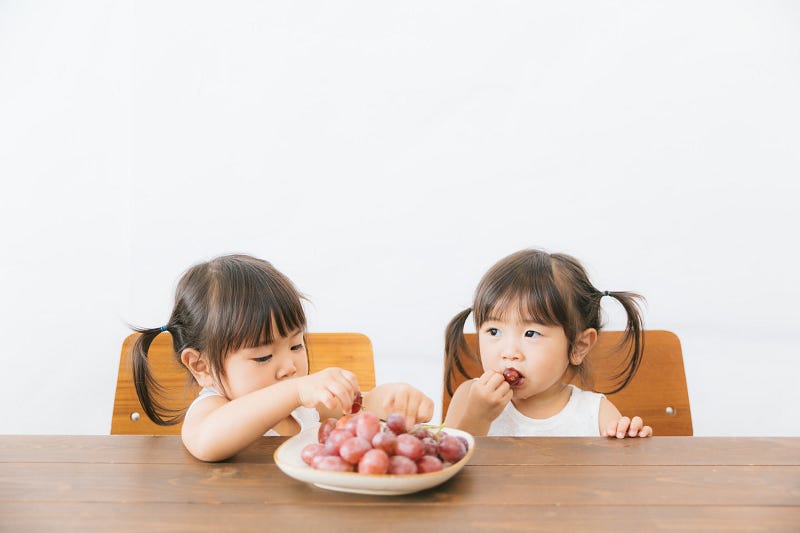
Every time I join my daughter’s seasonal event at kindergarten, I’m impressed by how fit the children are. They run around with endless energy like wild deer.
It’s no wonder Japan has managed to keep the incidence of childhood obesity at 5% among children aged 5 to 9, while the U.S. reported 22.7% and Nauru marked the highest at 35.7% in 2016.
WHO declared that “childhood obesity is one of the most serious public health challenges of the 21st century.” The prevalence is global and rapidly increasing in low and middle-income countries.
How Does Japan Stay Fit?
Modern Japan hasn’t always been so cautious with calorie counting. The flood of fast food chains threatened our traditional eating habits after McDonald’s opened its first store in Tokyo in 1971. Japan today comprises the second largest market for McDonald’s with over 2,800 stores.
In particular, Okinawa experienced a rapid drop in life expectancy from the 1980s to the 2010s. Both men and women topped the average lifespan chart among all 47 prefectures in 1980, but the numbers plunged over the years. Experts suspect that the expansion of fast food chains has caused a significant shift in people’s diets.
Yet, all in all, Japan has sustained longevity. The average lifespan has always been one the longest in the world at 87.6 years for women and 81.5 for men as of 2021.
We Japanese—especially younger generations—love American restaurant chains. People line up to get a table at Shake Shack and Eggs ‘n Things, a casual restaurant popular in Hawaii known for its pancakes towering with whipped cream.
One of the reasons that we’re crazy about these establishments is that hamburgers and pancakes are still largely a novelty. We don’t eat them every day. They are treats for special occasions when we go out with friends or need a sugar rush.
For many of us, rice and miso soup are the bulk of our everyday meals and we’re programmed to stick to them thanks to thorough food education from childhood.
Shokuiku Before Birth
In Japan, education about what to feed children starts before they are even born. ObGyn doctors educate expecting mothers to eat well-balanced meals, and they closely monitor pregnant women’s weight and blood pressure at every checkup.
Some doctors used to be so strict on weight control that the Health Ministry relaxed the number of target weight increases during pregnancy to between 10 kg and 13 kg (22 lb to 29 lb) in 2021, which now aligns with other countries.
Modern Japanese eating standards were established by the introduction of shokuiku (食育). Ever since the doctor and pharmacist Sagen Ishizuka coined the word shokuiku, which means food education, in 1896, Japanese media and government have taken it seriously.
This cornerstone became the foundation of Japan’s unprecedented law named Basic Act on Shokuiku (Food and Nutrition Education) in 2005, and it keeps encouraging children to learn about food and how to eat wisely.
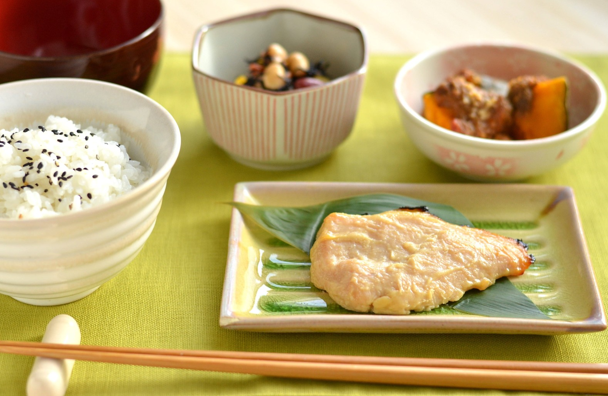
The central premise of shokuiku is ichijū-sansai (一汁三菜). It starts with a bowl of rice and miso soup, and you’re supposed to add three other dishes: one main protein dish — either meat or fish — and two side dishes of vegetables.
Expecting mothers follow these guidelines throughout pregnancy, which continues into breastfeeding, and later, what to feed their growing children once they start eating baby food.
For instance, when I attended a medical checkup organized by the Tokyo government with my daughter, I was inundated with reminders from nurses and staffers to make sure I was feeding my child rice ball onigiri or vegetables for her snack.
They claim snacks between meals for infants shouldn’t be a bag of chips; parents should feed them onigiri, veggies, yogurt, and fruits as healthy refreshments.
They also reminded me of the amount of sugar contained in soft drinks and most fruit juice. My daughter brings mugicha (barley tea — or you may want to call it nonalcoholic beer tea) to kindergarten every day. As a result, she is over the moon when I buy her Dole juice on a whim, and she declares soda is yucky.
Am I too strict? Maybe. We do go to McDonald’s to grab a strawberry shake for a treat. But at the same time, I fry potatoes in olive oil and let her eat them without salt. Even McDonald’s Japan tries to appeal to parents with healthier options such as salad and yogurt.
With or without parents’ effort, Japanese children are destined to be educated by nutritionists at school.
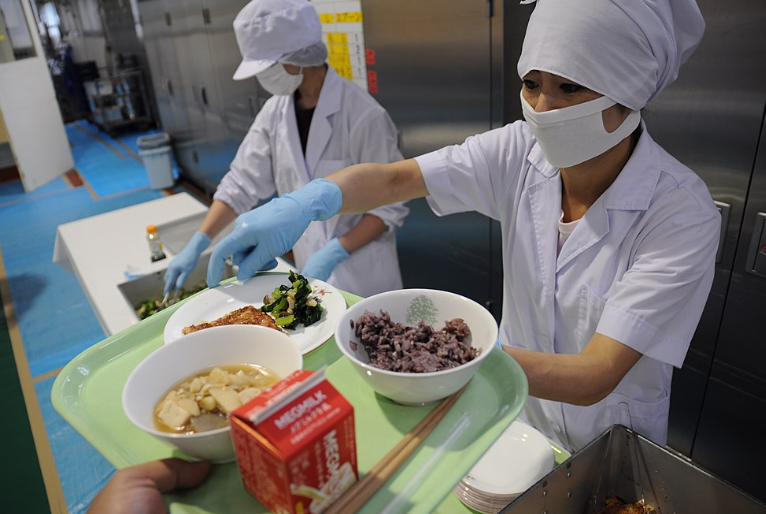
Over 95% of elementary and junior high schools offer school lunches that are carefully calculated in many aspects. Students learn the importance of well-balanced meals through this national trimming of junk food.
The principal of my daughter’s kindergarten is no exception. She spares no effort in raising healthy children. The handbook issued by her requires:
・Please prepare a nutritiously balanced bentō lunch. ・Make sure your children eat a lot of vegetables for lunch. ・Avoid caffeine and sugary foods. ・Don’t bring chips, chocolate, or cookies for lunch.
When I examined it, the photo of an exemplary bentō box in the brochure looked colorful to me though it was black and white. Small balls of onigiri were neatly lined up in the box along with meatballs and boiled vegetables.
The work we were expected to do made me flinch at first. But over the next few months, I slowly optimized my morning routine to prepare colorful bentō lunches using frozen vegetable supplies.
Now I’m glad I followed all the advice from the government and kindergarten. I’m proud of my fine sense of taste, and my daughter is undoubtedly developing healthy eating habits. The Japanese government’s active efforts to enact a healthy nutritional standard have been paying off across the generations.
If you enjoyed this article, discover other works of the author at Japonica.
Follow Yuko for more stories about cross-cultural topics, travel, business, parenting, and equality. You can also subscribe from the referral link, which Medium uses a portion from followers for author support without any additional cost. Mediumの購読はこちらからどうぞ。


