
BUSINESS|TRAVEL
This Japanese Restaurant Challenges Your Definition of Success
They work five hours less and waste no food
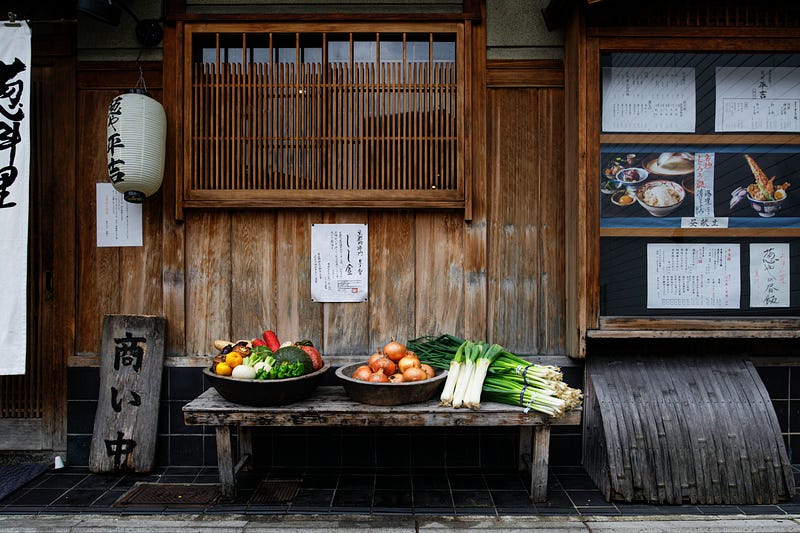
The restaurant industry in Japan is a buffet of options that somehow manages to be meticulously scattered in a segmented fashion. A wide range of businesses coexists: Global fast-food chains, local mom and pop diners, and traditional Japanese restaurants with sushi masters all share the same crowded streets.
Becoming a renowned chef in Japan often takes more than a decade, and apprentices must sacrifice years in training. However, with the awareness of the need for work-life balance, such working environments have been growing increasingly controversial.
The Birth of a Sustainability-Driven Restaurant
Since a restaurant named Hyakushokuya (佰食屋, Hundred Meals Restaurant) opened in Kyoto in 2012, its innovative operations have never bored Japanese diners.
Three main dishes only
Initially, the owner, Akemi Nakamura, and her husband developed their ideal steak bowl from beef produced in Japan. The grilled beef is soft and it goes well with thick, soy sauce-based gravy and fried garlic.
Even today, this steak bowl remains their signature dish, though they’ve added a plated entree with ground radish with ponzu as a Japanese-style steak set, and 20 meals of hamburg steak to the menu.
From the beginning, they knew that quality matters most, so their cost of ingredients for the steak bowl is astonishingly high at 50%, even though the average food cost in the restaurant industry is approximately 30% in Japan. Still, they maintain the price between 1,100 yen to 1,210 yen ($9 to $10).
100 meals, lunch only
Amazingly, the restaurant serves only 100 meals per day. When the restaurant opens, the staff members hand out each numbered ticket to customers, and they book a table in the allotted time. The employees leave their workplace before six pm at the latest. That’s right — they don’t serve dinner.
According to the book 売上を、減らそう (Let’s Decrease Sales), written by the owner Akemi Nakamura, her goal is not the growth of the business but the satisfaction of people around her, including customers, employees, and ultimately, herself. And she believes expanding the business doesn’t necessarily increase people’s happiness because it also increases everyone’s burden along the journey.
No food loss
The restaurant is obsessed with the freshness of the meat. They don’t stock meat, let alone freeze it. They procure what they need for the day, sell everything, and buy fresh beef again the next day. Nakamura says the refrigerator at the restaurant is almost empty when they finish their business each day. There’s no need for a freezer with such high inventory turnover.
Employees first
Surprisingly, if an employee suddenly needs to take a day off, Nakamura reduces the number of diners they’ll serve that day, reducing the total from 100 to 80 meals. She sticks to an employee-customer ratio of 1:4 to offer perfect service to customers.
Furthermore, she requires the employees to use 100% of their vacation time, which is unusual in Japan. One staff member said that their income stayed unchanged after joining Hyakushokuya despite working five hours less each day.
Nakamura explains that putting an absolute ceiling on sales is what leads to this ultimate efficiency.
Drawbacks of Omotenashi Hospitality
Japanese people are known as workaholics. But in many cases, people are clueless about how to change their working environment without efficient systems or management teams that prioritize employees’ health over the obsession to expand their business.
For instance, Japanese restaurant chains used to stay open 24/7 until the middle of the 2010s. However, gradually they stopped these unsustainable operations due to the difficulty of finding workers for the night shift. What forced them to change was the lack of human resources.
In those times, the large gyūdon (beef bowl) chain, Sukiya, owned by Zensho Holdings, faced harsh criticisms on social media when it was disclosed that headquarters assigned only one employee per store during the graveyard shift.
Although Japan is safe, Sukiya restaurants were a target for robberies late at night due to this operation. After these incidents and unusual requests from the National Police Agency, the company ended the one-person operation.
Today, some Gyūdon chain stores still run 24 hours—but are they really necessary? Convenience stores seem good enough to allay our hunger, although forcing them to undertake the burden of hard work may trigger another problem.
Conclusion
Karōshi—overwork-related death—became a loanword in English around 2002. The business model of Hyakushokuya is challenging the status quo by forcing us to ask two fundamental questions: Why do we work? And what’s our purpose in life?
When business owners optimize their operations, it can change employees’ lifestyles. And this idea is applicable to everyone, from homemakers to office workers.
Nakamura says having dinner with her family is more critical for her than becoming rich. In fact, she closed two stores amid the pandemic to stay profitable and now focuses on the remaining two restaurants. It is certainly food for thought.
If you enjoyed this article, discover other works of the author on Japonica Publication.
Please follow me for more stories about cross-cultural topics, travel, food, and parenting. You can also subscribe from the referral link, which will support me from a portion of your fee without any additional cost. Mediumの購読は、ぜひこちらのリンクからどうぞ。


