
Why I Switched from Diet Coke to Mugicha
Drinking Barley Tea Will Prevent You From Looking Like Donald Trump
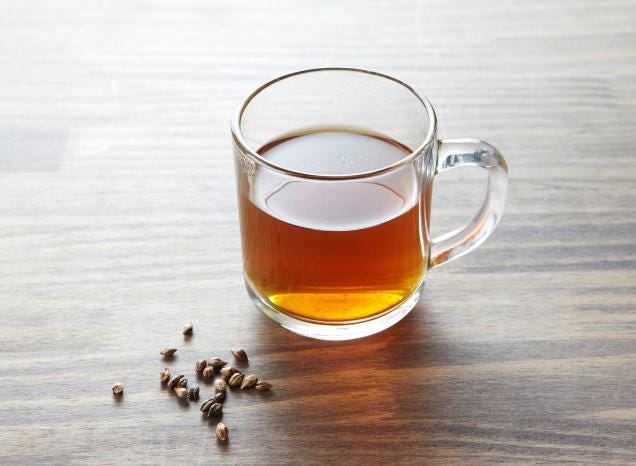
For most of my life, my go-to drink has been Diet Coke. A glass with lunch, a glass with dinner, at least one more during the day. After exercising when I needed to rehydrate, another glass of Diet Coke followed by a loud, refreshing belch.
In fact, I drank so much Diet Coke that when people asked what my name — DC — meant, I held up my can and told them I was named for Diet Coke. Some people even believed me.
My coworkers claimed D.C. was unhealthy, and the aspartame sweetener caused cancer, Alzheimer’s, and dementia, as well as global warming, Covid, and 5G network interference. I cited scientific studies showing it was perfectly safe except for that phone interference.
Then one day, I noticed a president named Trump drinking D.C. in the swamplands of D.C. I won’t comment on politics here, but that rusty orange hair scared the bejeesus out of me.
When I found out Diet Coke was Trump’s go-to drink, too, ordering a dozen cans a day from a red button on the Resolute desk, I was sure Diet Coke was the cause of his hair turning orange. I had to quit before the same thing happened to me.
I toyed around with alternatives, but nothing worked. Water was bland. Bubbly water was bland with bubbles. Juice was an explosion of sugar. Flavored water tasted artificial. Yes, more artificial than Diet Coke. Too much cold coffee sent me soaring to the moon. Diet Cream Soda was great, but I was pretty sure if I drank too much of that, it would turn my hair a putrid shade of green.
My wife drank hot tea with nearly every meal and urged me to do the same. I tried it. The hot water burned my tongue, the tannic acid gave me an ulcer. Besides, after riding a bike for 20 miles, I needed something cold to guzzle.
Being Japanese, she suggested I try mugicha, a popular summer drink in Japan. I bought a bottle at Krogers. I didn’t like it. She tried it, and said, “Ugg. That’s not mugicha.” We went to the Japanese grocery store and bought a bag of mugicha tea bags.
One tea bag in 1 liter of cold water, let it sit for a couple of hours. When it was ready, I tried it. Wow!
It was perfect — cold and refreshing. Just the right amount of flavor. Everything about it tasted natural. And it had no calories.
Once I realized mugi-cha (麦茶) is roasted barley tea, I understood why I loved it. It’s essentially fresh beer without the hops and before the fermentation. It has the same earthy, toasty flavor as beer, with just the faintest hint of bitterness. And it glows with the same beautiful golden-brown color. If they changed the name to “beer tea,” sales in the US and Europe would increase a millionfold.
Proper unsweetened mugicha has no caffeine and no calories. What more can you ask for?
We tried a few different brands and strongly preferred the slightly more expensive version made by Hakubaku which has a smooth, elegant taste and clear golden color. We found it at the local Japanese grocery stores, and even on Amazon.
Compared to Diet Coke, even the most expensive mugicha tea bags saved us enough money in 1 year to buy a new house. (Well, a dollhouse, but still, a nice dollhouse with a big yard and a pretty fence.)
I was happy to be drinking beer all day without gaining weight. My wife was happy I stopped belching.
But most of all, I was glad that instead of a putrid orange color, my hair turned a glowing, shining golden brown.
There was one problem, though. Now I have to change my name from DC to MC.


.jpg)