
Why Not Take the Most Difficult Japanese Language Test—Self-Udon in Kagawa?
Already passed JLPT N1? Then it’s time to visit regional udon restaurants for a real challenge
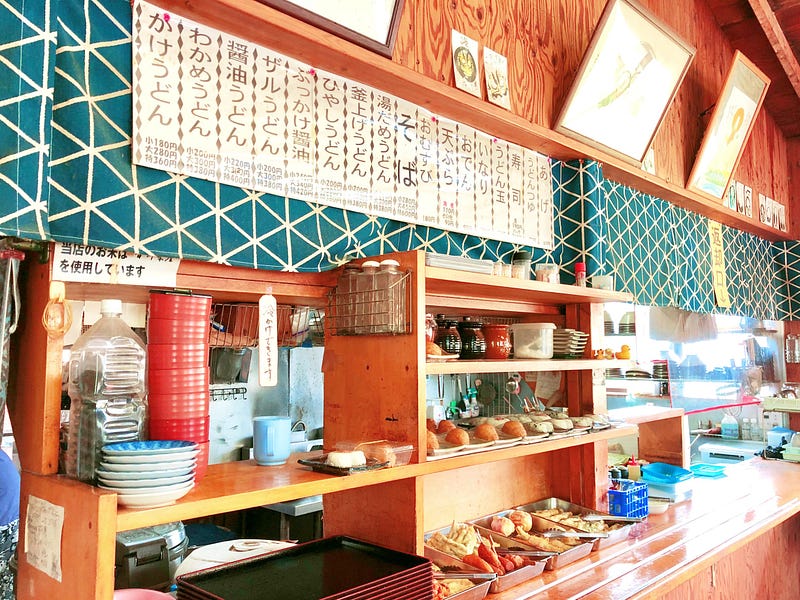
What’s the most challenging moment for Japanese learners living in Japan? Answering phones at the office? Meeting new people at a party? How about reading a regional udon menu?
During my family trip to Kagawa, I happened to face one of those perplexing moments at a local udon restaurant. The list of udon on the menu was incomprehensible. They sounded like ancient spells. Born and raised in Japan, I had no idea what some of them could possibly mean.
Many prefectures across Japan claim to be famous for their udon: 稲庭うどん (Inaniwa-udon) in Akita and 五島うどん (Gotō-udon) in Nagasaki, to name a few. But the holy land of udon is Kagawa, aka うどん県 (Udon Prefecture), famous for its special 讃岐うどん (Sanuki-udon).
So let me take you on an udon tour so you can show off your Japanese proficiency. Oh, do you want to take an Udon Taxi ride? That would be fun because drivers are all udon experts!
Udon First Culture
In Kagawa, there are approximately 800 udon restaurants waiting for you. Given the low density of the population, Kagawa boasts the largest number of udon eateries per person.
You may have encountered udon restaurant chains in your country, but what makes local udon diners distinctive is their udon-centered service called セルフうどん (self-udon).
At セルフうどん, customers are in charge. Forget about Japanese omotenashi hospitality. In the sacred land of udon, you have to follow the udon-first rules. You walk up to the counter, decide what you want to eat, and order it from the owner who is busy boiling udon in the kitchen.
“Nan ni shimasu?” (May I take your order?)
“Kake, dai de!” (Can I have large kake-udon?)
“Hai, kake dai ne!” (Certainly. Large kake-udon coming up.)
The language at self-udon is simple, yet difficult because most Japanese learners—including native Japanese speakers—don’t know the difference between kama-age-udon and yudame-udon even if you have no trouble reading the kanji characters. (Don’t worry, I’ll explain them later.)
How to order and pay at this type of udon sanctuary is another formidable cultural test. Imagine you’re clueless and stutter at the counter. The master of udon will reply “Eh? Nani? Kake?” squinting at you while he or she is cooking. You’ll feel like stepping aside and allowing the next customer to go first. But hang in there — the udon master will help you get what you desire.
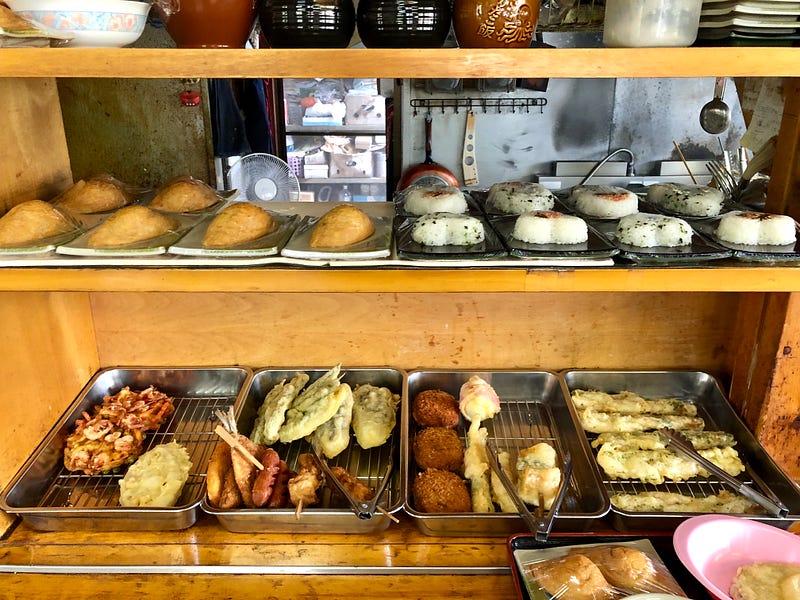
Once you’ve successfully ordered your udon, choose your side dishes. Take your plate, pick anything you want—tempura, kakiage, onigiri, inari—and pay the check at the end of the counter (assume you have to pay cash). Oh, don’t miss oden! It’s a popular side dish for udon in Kagawa.
After receiving your udon, you may have to warm it up yourself in hot water, fill the bowl with dashi, and add chopped green onions, tenkasu tempura bits, and ground ginger. You may even need to grind the ginger by yourself, but that’s how it works here. It’s all part of the charm.
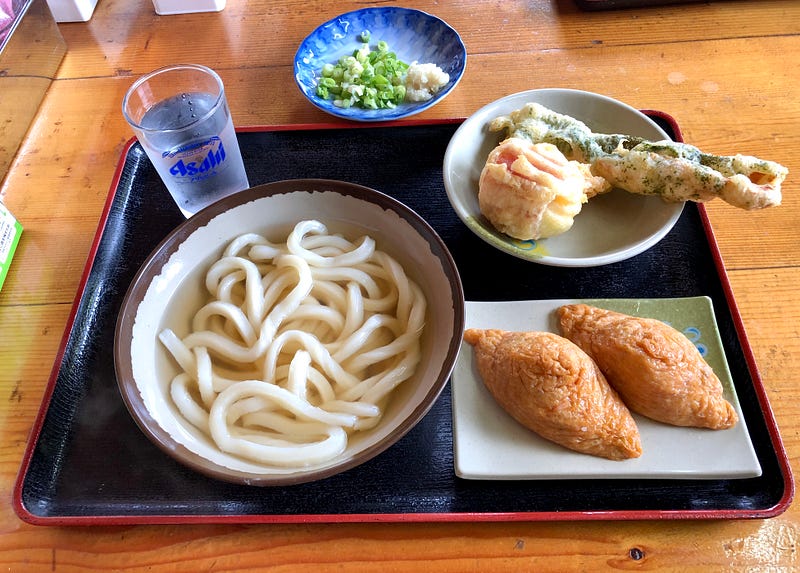
Now it’s time to celebrate your Japanese language proficiency. Itadakimasu! The golden iriko-dashi broth is made from dried sardines. A subtle sweetness fills your mouth after the flavorful umami, and the soft yet chewy noodles are certain to be the best udon you’ll ever taste.
Udon Factories and Perfectionism in Udon
The self-udon restaurants originated from the huge number of noodle-making factories in this region. Neighbors stopped by the factories to buy freshly made udon. Over the years, many udon makers opened a space for customers who couldn’t wait to eat.
From a linguistic perspective, the names of udon dishes are complicated in many ways. For instance, かけうどん (kake udon) and ぶっかけうどん (B.K. udon) look similar in Japanese, but they are totally different (not because the latter is now obscene language.) Kake is served in hot dashi broth while chilled B.K. comes with more concentrated dashi sauce.
Rinsing udon noodles in cold water dramatically changes their texture. Hot udon is soft and smooth, while chilled udon is chewy.
You may want to enjoy the difference by ordering 釜揚げうどん (kama-age udon) or 湯だめうどん (yudame udon).
Restaurants serve kama-age without chilling. Just as its name means, it’s straight out of the pot and into a bowl with hot water. On the other hand, yudame is drained and chilled in cold water, then added to hot water.
According to udon experts, people often eat yudame when kama-age isn’t available.
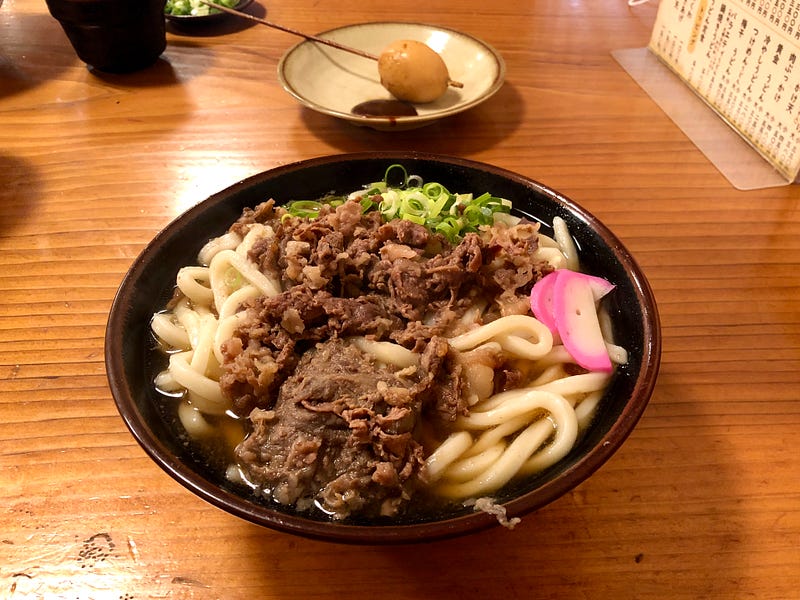
You may think Japan is a homogeneous country with a single Japanese language. I also tend to be oblivious to the cultural richness of other parts of Japan when I go about my daily life in Tokyo.
However, the language of udon never fails to remind me of Japanese people’s enthusiasm for food and the art of perfection that makes this country unparalleled.
So visit Kagawa whenever the borders reopen again and tell me how your udon language exam turned out for you. Did you reach level U1 (うどん一級)?
If you enjoyed this article, discover other works of the author at Japonica.
Follow Yuko for more stories about cross-cultural topics, travel, business, parenting, and equality. You can also subscribe from the referral link, which Medium uses a portion from followers for author support without any additional cost. Mediumの購読はこちらからどうぞ。


