
She Killed Her Daughter, Then Her Neighbor’s Kid
The tragic death of two innocent children.
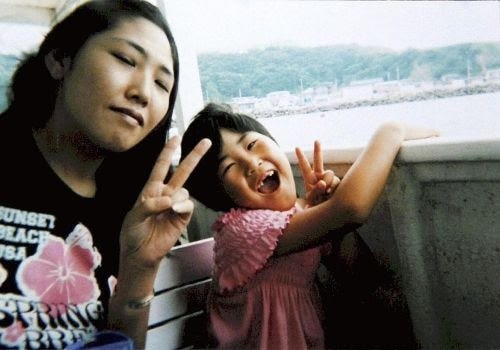
Mothers are supposed to be kind, consoling, and protective of their children. And in the small town in Akita, North Japan, neighbors are always watching out for the children of the community and ensuring the neighborhood is a safe and sheltered area for them to grow and play. But unfortunately, Suzuka Hatakeyama, a 33-year-old mother decided to end the life of her own daughter and then the neighbor’s boy as well. Aged 9 and 7, both children were robbed of any future.
What happened on April 26, 2006, and why did Suzuka decide to kill her only child? And why a month later did she end the life of her neighbor’s son? Was there a motive, premeditation or was this an act of anger or rage? Find out what happened, how police were able to capture Suzuka for her crimes, and why this mother became one of the most talked-about cases in modern Japanese crime history.
Murder of Ayaka
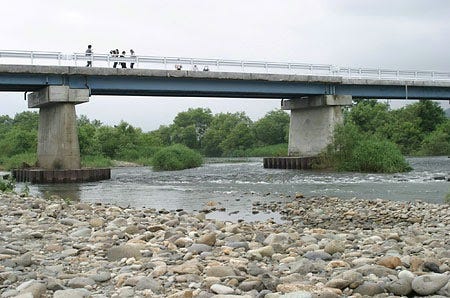
Suzuka Hatakeyama, a 33-year-old single mother living in rural Akita was on a bridge with her daughter on April 9, 2006. They were overlooking the river and her daughter Ayaka wanted to get a closer look at the fish below. Ayaka was sitting on the edge of the railing when she plummeted into the water and to her death. What happened is unclear but both the prosecutor and defense had different stories.
According to the prosecutors and police reports, after being questioned, Hatakeyama had initially confessed she intended to kill her daughter when she brought her to the bridge. Prosecutors said, “Hatakeyama felt her daughter was a nuisance.” And according to the court,
“when the girl asked to see some fish, Hatakeyama’s irritation intensified and she pushed her daughter off the bridge into the river.”
However, according to the mother’s defense team, “she just brushed the girl off when her daughter, who was sitting on the railing of the bridge, tried to hold onto her.” Whether it was premeditated or not, Ayaka fell to her death and her mother didn’t try to help or notify the police. Ayaka’s body was found the next day washed up along the river.

On April 11, police announced Ayaka’s death was highly likely the result of an accident, adding that she appeared to have fallen into the river from the riverside about 500 meters from her home.
Around the same time as this incident, there was a robbery taking place in the town so police were focused on that crime. Since no witnesses came forward and there didn’t seem to be any foul play, police ruled Ayaka’s death an accident.
However, had the police taken more time to investigate and reach out to the community, Ayaka’s mother might have been captured earlier and the real crime would have come to light. It turned out there was a witness who saw Hatakeyama and her daughter on the bridge the day of her death.
News reports reported, “A resident who knows Hatakeyama and her daughter notified police that he had seen the mother and daughter on the evening of April 9, the day Ayaka was murdered, on the Osawabashi bridge, which is about 3 kilometers from their home, when he passed by the bridge in a car.”
However, this witness did not come forward until much later when Hatakeyama had already killed another child. An Akita Prefectural Police investigator said, “We believe that if the information had been forthcoming earlier, the police would have made a different judgment, but interviews of residents failed to obtain the information.” he said. But also admitted, “police could have done a better job interviewing residents, indicating that police might not have done their best investigating the case.”
Bizarrely, Hatakeyama claimed that her daughter would never play near a bridge and said her death was not an accident. She urged people to support her in investigating the incident and finding witnesses who could help shed a light on what happened. Using the media she blamed the police for not doing a proper investigation and called out their incompetence.
Hatakeyama was playing the distraught mother trying to find answers while sowing doubt in the public’s mind about police and their investigations. The investigation had concluded and Ayaka’s death would remain an accident until May 18th just over a month after her death.
Murder of Goken
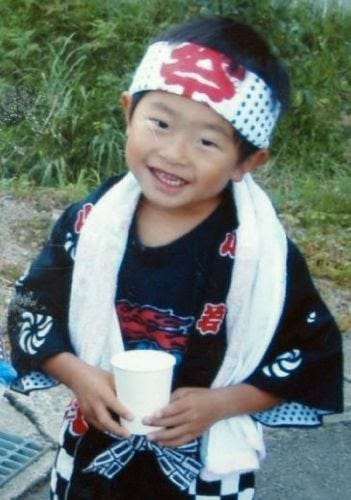
On May 17, 2006, a 7-year-old boy who was a schoolmate with Ayaka disappeared. Goken Yoneyama and his family lived a few doors down from Hatakeyama and the kids would sometimes play together. Goken was on his way home after school when he disappeared. Unfortunately, his body was found the next day laid along the riverside several kilometers from where Ayaka’s body had washed up.
An autopsy revealed he was strangled with a rope in a different location and dumped by the river. The police who had originally closed the case of Ayaka decided to reopen it after Goken’s death and Hatakeyama quickly became the main suspect in the young boy's murder as well.
Hatakeyama first denied any wrongdoing, telling Kyodo News and other media organizations she was at home alone around the time the boy went missing and she noticed nothing unusual outside her house. However, police searched Hatakeyama’s home, her parents’ home, and her car and quickly found many links to the deceased boy.
“The police have detected traces of what they believe are the boy’s blood and urine in Hatakeyama’s home — at the entrance to and inside her deceased daughter’s room — as well as in the trunk of her vehicle. Several items, including hair collected from the victim’s body and the riverbank, matched those found in Hatakeyama’s house.Also, fibers collected from the boy’s clothes match those detected in the carpet in the trunk of the woman’s car.”

Arrest
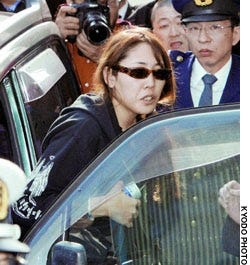
Hatakeyama was arrested on June 4th and confessed to dumping Goken’s body but not strangling him explaining, “she carried Goken Yoneyama’s body to her car, drove to the Yoneshiro River and dumped the corpse in the grass along the riverbank.” Later on, she also admitted to killing the boy but the defense argued that she was in a “state of diminished capacity.”
Prosecutors explained Hatakeyama’s actions and motive saying,
“Hatakeyama initially came up with the idea to ‘abduct’ Yoneyama to divert the police investigation from her daughter’s death. But after the boy was invited to Hatakeyama’s house on May 17, 2006, she felt sudden jealousy and hatred toward him when she saw him happily playing and suddenly decided to kill him.”
Sentencing
During the trial, prosecutors were hoping for a death penalty sentence stating, “slaying of the two children demonstrated she is a ‘cold-blooded and cruel murderer. She repeatedly tried to cover up the murders in a cowardly fashion and has not yet shown any willingness to reflect on her crimes.”
In contrast, the defense team asked for imprisonment for a definite term, arguing that Hatakeyama did not intend to kill Ayaka and that she was in a state of diminished capacity when murdering Goken.
In March of 2008, two years after the murders, the Akita District Court found Suzuka Hatakeyama guilty of murdering her daughter Ayaka, 9, by dropping her from a bridge into a river in the town of Fujisato in April 2006, and strangling Goken Yoneyama, 7, the following month and abandoning his body.
Goken’s mother, Machiko, 40, held a photo of her late son as she and her husband, Katsuhiro, 41, listened to the arguments.
The court sentenced Hatakeyama to life in prison stating that neither murder was premeditated and that the defendant could be rehabilitated. The court recognized intent to kill her daughter stating “the defendant shoved Ayaka into the river after placing her on a ‘dangerous railing’ and failing to take action showing she was worried about the girl’s safety after she fell.”
But they didn’t choose capital punishment as the “murder of Goken was not premeditated and that she did not commit the crime for gain.” At the end of the trial, Hatayama turned towards the parents of Goken, bowed deeply, and said “I’m sorry I took your son.” However, Goken’s mother closed her eyes and turned away from Hatakeyama.
Reactions were varied with many people feeling justice was served while others still demanded the death penalty for the mother who robbed two innocent children of their lives.
A 70-year-old neighbor of Hatakeyama said “I wonder why (Hatakeyama) doesn’t deserve death. I believe the sentence is too lenient.” Another neighbor said “Execution takes only seconds, but a life term takes years. It’s better to give (Hatakeyama) years to repent her crime.”
What was her real motive to kill her only child? Was it an act of frustration or something she had been planning for a while? Was being a single mother in a small town taking a toll on her physical and mental health causing her to go to such extreme measures? When Ayaka fell over did she regret her actions or feel a sense of relief?
Was her lying to the police and pretending to be a caring mother just a way to deflect blame or was she actually in a state of diminished capacity? Did she abduct Goken to kill him, to distract from her daughter’s investigation, or because she felt the absence of a child in her life which she was hoping to replace?
Unfortunately, no one knows the real answers to these questions except for Hatakeyama herself. But what we do know is that two children were murdered by a single mother in a small town and the community and country of Japan felt the shock and sadness of the tragic loss.
If you are interested in more crime stories from Japan, you might like these articles:


