
Man Stabs 45 Disabled People at Healthcare Facility
Japan’s biggest mass murder in modern history
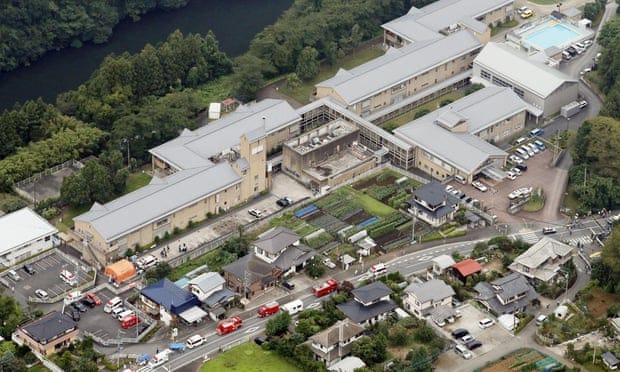
Sagamihara, a small town in Kanagawa, the prefecture next to Tokyo, once only known for its hiking trails, views of Lake Sagami, and scenic views is now known as the location of the biggest mass murder attack in Japanese modern history.
Here, at the Tsukui Lily Garden residential facility that houses over 150 mentally and physically disabled patients ranging from ages 18 to 75, a 26-year-old former employee arrived and went room to room stabbing as many people as he could.
With over 45 people stabbed, 19 were killed and another 20 were critically injured. Who was this ex-employee? Why did he want to kill these vulnerable members of society? And how was he captured?
This is the story of the Sagamihara stabbings that to this day is still Japan’s worst mass murder since World World II.
The Crime
“This is a peaceful, quiet town so I never thought such an incident would happen here,”
- Oshikazu Shimo, resident near Tsukui Lily Garden Facility
On July 26th, 2016, at just after 2 am, while almost everyone was sleeping, 26-year-old Satoshi Uematsu returned to his place of work where he had quit in February. He drove from his home which was close by to the facility and parked outside the premises.
Around 2:10 security camera footage taken near the center showed the vehicle arriving. Uematsu was then seen opening the trunk and removing objects which later was suspected to be a bag of sharp weapons. He was then seen walking towards the facility.
NHK, the national Japanese news organization reported that eight staff members and a security guard were on duty at the time of the attack. It was also reported that 16 surveillance cameras had been installed at the center.
Once at the facility, Uematsu used a hammer to break a window on the first floor to gain entry. He then used plastic cuffs to restrain two caregivers before starting his stabbing spree. The staff was all unharmed.
The stabbing rampage lasted around 40 minutes across the two buildings of the facility. Not much is known about how Uematsu chose his victims but the buildings house a combination of mentally disabled and physically disabled residents some of who could not move or communicate.
During his 40 minutes rampage, Uematsu killed 19 residents and injured 26 more with his weapons. The ages of the victims were between 18 and 70 and of the 19 killed, 10 were male and 9 were female residents.
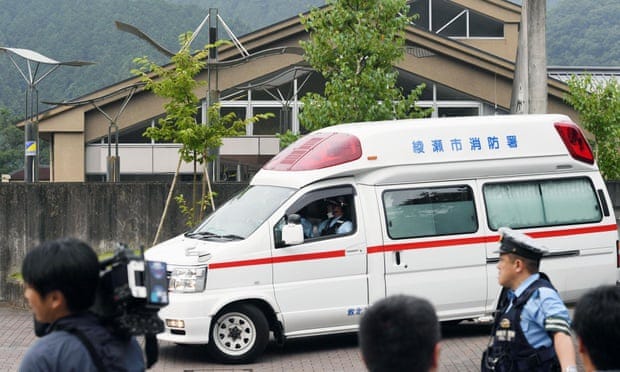
At least 29 ambulances responded to the attack, with those wounded taken to at least six hospitals in the western Tokyo area. A doctor at one of the hospitals where victims were taken said some had “deep stab wounds” to the neck.
At around 2:50 am, shortly after an emergency call was made to the police by one of the staff, the security footage once again showed Uematsu running back to his vehicle carrying the bag of weapons. Police later found his blood-soaked vehicle with bloodstains on his steering wheel.
Uematsu turned himself in to the police a couple of hours after the incident. Police found his bag containing the knives and other sharp tools, a number of them bloodstained.
When Uematsu turned himself into the Kanagawa prefectural police he admitted to the crime saying “I did it,” and adding, “It’s better that the disabled disappear.”
The Victims
“I want Miho to be remembered. She was a daughter we were very proud of.”
-mother of Miho, one of the people killed
The victims of this senseless massacre were vulnerable and made for easy targets for Uematsu’s rage. Not only were all of them either mentally or physically disabled, but some were also unable to move or communicate. And to add to the cruelty, Uematsu chose to commit his crime at 2 am when most if not all residents of the facility were most likely fast asleep.
“This is a very heart-wrenching and shocking incident in which many innocent people became victims,” Chief Cabinet Secretary Yoshihide Suga told a regular news conference in Tokyo.
Neighbors and residents of the town were shocked at the attack not only because crime and murder are very low in Japan, especially in a town like Sagamihara, but the location of the crime was exceptionally ruthless.
“That kind of person can’t defend themselves,” Fujimura said, referring to the victims. “That’s why so many died. It makes you weep to think of somebody just murdering them.”
And the fact that Uematsu purposely targeted the disabled brought about a debate about the way society sees and treats disabled people. Many disabled people face discrimination and repulsion in Japan and a crime like this highlights these ideas.
Advocates for the disabled also worried about the motives of this crime. “I am worried not only about a man who thinks that way but also about this entire society where there are some people who apparently agree with his ideas.”
Many of the names of those killed in the rampage have been withheld by family members fearful of similar attacks or discrimination.
The relative of a 55-year-old man killed at the home told NHK that a long-time neighbor had remarked afterward: “It’s sad that it happened, but wasn’t it good for you?”
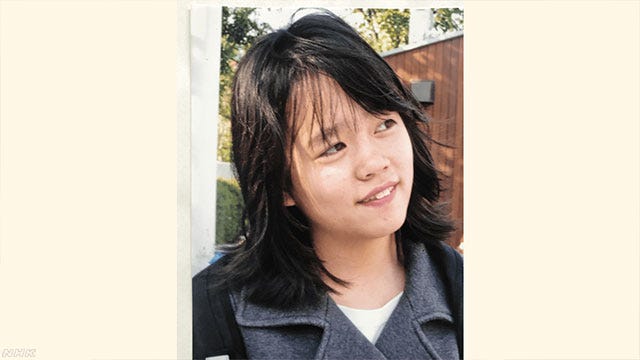
Among the 19 dead, 19-year-old victim Miho was one of the few who were identified. Miho’s mother asked the media to help start a conversation about, “how we can build a society to prevent a recurrence of this sad incident.”
Angered and distraught by the loss of her daughter, she lashed out at Uematsu,
“Even the most extreme penalty is light for you. I will never forgive you. Please bring back my most precious daughter… you’re still alive. It’s not fair. It’s wrong. I demand capital punishment,”

The Killer
“I did it. It’s better that the disabled disappear.”
Satoshi Uematsu, born in 1990 lived with his parents in Sagamihara where his father was an elementary school art teacher. Uematsu had also followed his father and become an elementary school teacher before working at the Tsukui Lily Garden facility. He lived alone in his family house for five years when his parents moved away for work.
Left alone, he seemed like a friendly and kind teacher and neighbor to the people in his neighborhood. A neighbor described him as “a polite, young man who always greeted him with a smile.”
Akihiro Hasegawa, 73, who lives next door, said he,
“often saw Mr. Uematsu playing with neighborhood children who recognized him from a local school where he trained as a teacher. He was following in the footsteps of his father, who taught art at an elementary school.”
Another neighbor, Mitsuo Kishi, said that Mr. Uematsu was always friendly. “I never imagined he was the kind of guy who would commit such a crime. My granddaughter always said he was a good teacher.”
But there was also a dark side to Uematsu that people were not aware of until it was too late. His neighbor had recently seen Uematsu shirtless outside the house and had noticed big tattoos across his chest and back.
Tattoos in Japan have been traditionally seen as those who are part of the Yakuza or crime syndicates. Although most young people have small tattoos that have become trendy and more acceptable, full-body or large tattoos are still seen as taboo and many places like waterparks, pools, and hot springs do not allow people who have tattoos to enter their establishment.
Umetsu had also been posting strange things on Twitter. Reporters uncovered,
“A Twitter account that appeared to be Mr. Uematsu’s included bizarre posts saying that Japan was being destroyed by AIDS and radiation poisoning. The most recent post, including a photo of Mr. Uematsu about 30 minutes after the attack began, reads, ‘May the world be peaceful. Beautiful Japan!’”
Coworkers of Uematsu also noticed his strange behavior and he was reprimanded at work when he told them he was thinking about killing residents. He resigned in February and was committed to a hospital after he expressed a “willingness to kill severely disabled people”, an official in Sagamihara reporters. After an evaluation, he was released on March 2nd after a doctor deemed he had improved, the official said.
Besides these red flags that Uematsu told his coworkers his deranged ideas and spouted strange conspiracy theories on Twitter, he also wrote a letter in February which he hoped to hand-delivered to the speaker of the lower house of parliament.
He wasn’t allowed access to the speaker but the letter was received by security and passed on to him. In the letter, he also hoped that the letter would reach Prime Minister Abe. The letter detailed his plan to eliminate hundreds of disabled people both at his facility and another.
The twisted letter said “My goal is a world in which the severely disabled can be euthanized, with their guardians’ consent, if they are unable to live at home and be active in society,”
The Tokyo police notified the police in the Sagamihara area about Mr. Uematsu’s letter on the same day but no action was taken. Here is the full letter Uematsu wrote,
Dear Lower House Speaker Tadamori Oshima,
Thank you very much for reading this letter. I can wipe out a total of 470 disabled individuals.
I am fully aware that my remark is eccentric. However, thinking about the tired faces of guardians, the dull eyes of caregivers working at the facility, I am not able to contain myself, and so I decided to take action today for the sake of Japan and the world.
My reasoning is that I may be able to revitalize the world economy and I thought it may be possible to prevent World War III.
I envision a world where a person with multiple disabilities can be euthanized, with an agreement from the guardians, when it is difficult for the person to carry out household and social activities.
I believe there is still no answer about the way of life for individuals with multiple disabilities. The disabled can only create misery.
I think now is the time to carry out a revolution and to make the inevitable but tough decision for the sake of all mankind. Let Japan take the first big step.
Would Mr. Tadamori Oshima, who bears the world, use his power to make the world proceed in a better direction?
I sincerely hope you would deliver this message to Mr. Shinzo Abe.
This is the answer I reached after serious thinking about what I can do for humankind.
Dear Lower House Speaker Tadamori Oshima, would you lend your power for the sake of dear Japan and all humankind?
Please give this full consideration.
Satoshi Uematsu
The Plot
It will be carried out during the night shift, when staffing is low.
The target will be two facilities where many multiply disabled people reside.
Staff on guard will be strapped with cable so they can’t move and can’t make contact with anyone outside.
The act will be carried out speedily, and definitely without harming the staff.
After wiping out the 260 people in two facilities, I will turn myself in.
In carrying out the act, I have several requests.
After my arrest, my incarceration should be up to two years, and please let me lead a free life afterward.
Innocence on grounds of insanity.
A new name (Takashi Iguro), government registration and documents such as a driver’s license needed for everyday life.
A disguise for regular society through plastic surgery.
Financial aid of 500 million yen ($5 million).
I would like these conditions to be promised.
If you can make your decision, I will carry it out at any time.
Please consider this fully for the sake of Japan and world peace.
I hope with all my heart that this can be discussed with Prime Minister Shinzo Abe, although I am sorry to trouble him in an unimaginably busy schedule.
Satoshi Uematsu
(address, telephone number)
Worker at the Kanagawa Kyodokai
Uematsu even left his name, address, and telephone number but these warning signs were left unchecked. After leaving his job, telling his coworkers he wanted to kill disabled people, going through an involuntary commitment for 12 days and being released, and even personally hand-delivering a letter with his name and address and a full description of how he would go about killing disabled people, he was never stopped.
Why were the police unable to take in all these factors and stop Uematsu before he harmed others or himself?

Arrest and Sentencing
“The lives of many innocent people were taken away and I am greatly shocked. We will make every effort to discover the facts and prevent a recurrence.”
- Prime Minister Shinzo Abe
After Uematsu turned himself in to the police, he was taken in and had a medical evaluation. An official said, “Uematsu was diagnosed as suffering from paranoia as well as being dependent on cannabis.”
Yasuyuki Deguchi, a criminologist, explained that Uematsu’s actions were typical of someone who bore a grudge and sought revenge because it appeared that he had planned the attack and intended to turn himself in to the police. “Accomplishing his goal was all he wanted,” Deguchi told TV Asahi reporters.
Uematsu was charged with 19 counts of murder, 24 counts of attempted murder, two counts of illegal confinement causing injury, three counts of illegal confinement, one count of unlawful entry, and one count of violating the swords and firearms control law. He was facing the death penalty.
During the trial, Uematsu admitted to targeting his victims because they were people with disabilities that prevented them from communicating. But his defense argued that he was mentally incompetent due to the effects of drugs such as marijuana and that, “He was in a condition in which either he had no capacity to take responsibility or such a capacity was significantly weakened.”
But the prosecution argued “Uematsu’s motive derived mainly from his experiences working at the facility and was not the result of a pathological disorder. Therefore, he could be held criminally responsible. The crime was characterized by a premeditated and violent intent to murder.”
The court agreed and he was found guilty and was sentenced to death by the Yokohama District Court. A man whose sister was killed in the stabbing spree said he was disappointed that Uematsu did not offer an apology. He wanted to hear that there was some sense of regret.
The father of one of the severely injured victims in the attack also mentioned, “While the trial is over, it still feels incomplete. My understanding of what led to the attack is no better than before the trial started.”
And this is a common theme among victim’s families and society as a whole. The senseless violence and aggression that is targeted at the innocent is always hard to comprehend.
Despite the letter that Uematsu wrote and his ideas and comments on society and the disabled, we will never truly know or understand what made Uematsu have such rage against these helpless members of society and why it led him to carry out such a massive and bloody atrocity.
Here are some more true crime stories from Japan: