
Rhianna’s Savage x Fenty Fashion Shows The Power of The Body Positivity Movement
Assessing the challenge to European beauty standards
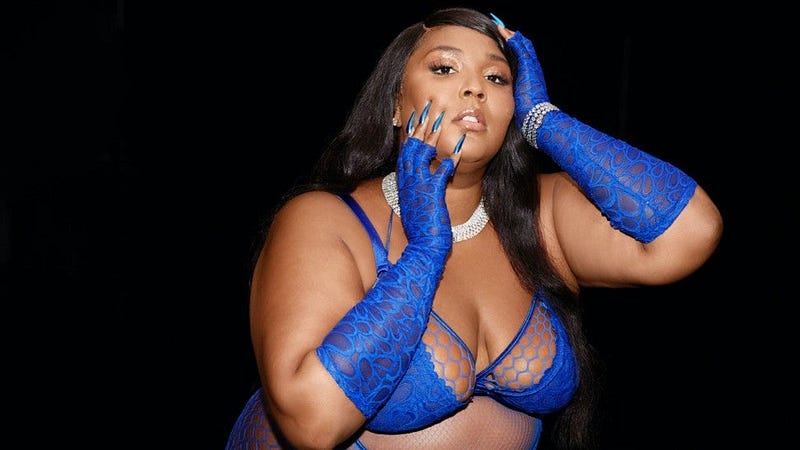
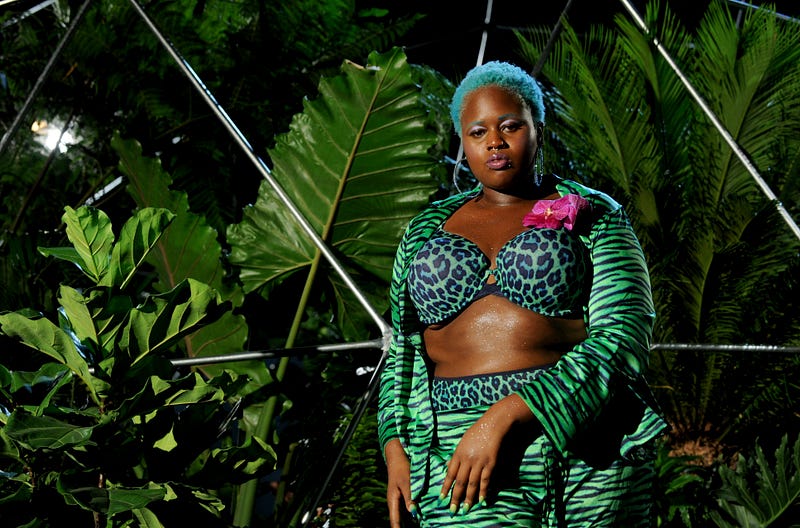
Women and girls are falling in love with themselves anew after streaming Rihanna’s Savage x Fenty 2020 Fashion show. It showcased amazingly stylish lingerie and loungewear, featuring women of different skin tones, shapes, and sizes. It was an unequivocal rejection of the one-size-fits-all Europeanized beauty standards that dominated American culture for centuries. For too long, companies like Victoria’s Secret profited off Black, big beautiful women (BBWs) while neglecting to hire plus-size models for their high profile fashion shows. Since the show started in 1995, the show featured only slender women. Their fashion show, canceled in 2019, is re-evaluating its marketing and brand.
In, We Don’t Need to Aspire to European Beauty Standards, I examined the debilitating Europeanized Beauty standards, which often discriminate against Black women and women of color. Beauty is an element of power; it is fundamentally a defining quality for women. However, when we self-evaluate, our perceived beauty is influenced by our family members, experiences, and societal expectations.
In America, slender white women are regarded as ideal, while all other women deviate from that standard. While the body-positivity movement made significant strides in the past few years, consistent effort must dismantle harmful, limiting criteria. Rhianna’s show is impressive in part because previous attempts to diversify have acted on the fringe instead of in national, high-profile campaigns.
Let’s face it. Even when fashion executives include Black women in national beauty ads, they are often skinny, wearing traditionally straight hairstyles. While Black women should rock whatever hairstyle they want, our hair is not naturally straight. Only including women with these hairstyles is a rejection of natural, African hair. Lack of diversity in body types, facial features, and lush hairdos presented in national and international beauty campaigns leave many women feeling inadequate and insecure.
In order to reduce the negative effects of internalization of White ideals on Women of Colour, White standards of beauty ought to be targeted and dismantled. Broadening of beauty standards and increasing positive media representations of Women of Colour may also be important (Harper, K., & Choma, 2019).
Plus-size and diversity campaigns ordinarily run adjacent as opposed to part of national campaigns. However, the ground is shifting under the beauty industry as more inclusive brands are thriving.
Campaigns like the Dove Self-Esteem Project pledged to show real women in their advertisements and reflect body diversity. Dove also committed never to use digital distortion and invested in teaching young girls the importance of healthy self-esteem.
Globally 8 out of 10 girls opt out of key life activities when they don’t feel good about the way they look (Dove, 2018).
Telling girls and women that they are beautiful on the inside as a consolation prize is condescending. Women of all shapes and sizes are beautiful inside and out, even if some fail to value them. The world over emphasizes the worth of a woman based on her physical appearance, and sometimes they need a reminder — women are people. We are strong but also vulnerable, and the world around us influences us. When girls and women see the same type of woman in movies and their community, getting all the attention, they start to doubt themselves.
We subconsciously compare ourselves to movie vixens and models in cosmetic advertisements. If America thinks Black women and girls are beautiful, the world has a funny way of showing it. Society demonstrated an inability to give equal representation to Black women with natural hairstyles and larger women. This prejudice is indicative of a long-term problem in the industry.
White women are also harmed by these debilitating standards that tell them that being skinny makes you worthy. Women need to start evaluating their beauty through their own eyes because societal expectations can have long term, negative impacts.
In many ways, the lingerie movement has been the most resistant in upholding strict beauty standards that often negatively impact the amour propre* of girls and women. Too often, lingerie and sleepwear are designed based on a man’s gaze. However, women should decide what they find attractive, and as consumers of beauty, men should appreciate it rather than overtly critique it.
Women naturally carry more body fat than men, yet advertisements show that women should always be slim. These harmful stereotypes also give men false expectations. They often undervalue women in their lives because they expect them to look like women on T.V.
Many have argued that beauty should not be a prerequisite, as it so often is, for being treated with respect, kindness or personal autonomy (Donnella, 2019)
While it is true that a woman’s beauty or perceived lack thereof should not take away from a woman’s agency, wanting appearance not to matter will not prevent beauty discrimination. A beauty-blind perspective will continue to leave out many women. The body-positivity movement needs to move in the same direction as Rihanna’s Savage x Fenty, promoting “fearlessness, confidence, and inclusivity.” The beauty and fashion industry owe the shirt off its back to women. It has a responsibility to fight against rigid Europeanized beauty standards they helped to create and maintain.
The Victoria Secret’s Fashion Show is Cancelled Indefinitely
There’s a body type and a size type that they believe in. It’s big tits, tiny waist, tall skinny legs,” says a stylist who has worked with the brand. “If they don’t have the body that Ed [Razek, Victoria’s Secret’s senior creative] deems the perfect woman’s body, they will not be in the show (Weiss & Kast, 2018).
The Victoria’s Secret Fashion Show, which stood like a wall of European beauty standards, has fallen. Since its inception in the 1990s, the show featured mostly white, thin women. Their idea of sexuality and beauty often left out thick Black women. When the company attempted to diversify, they only considered race, failing to include body shape diversity.
Victoria’s Secret brand itself has waned in recent years, as customers have begun to favor bralettes and body inclusiveness over push-up bras and washboard abs. Victoria’s Secret sales at stores open for at least a year have plunged 7% from the prior-year quarter, marking an accelerated decline, according to CNBC (Low, 2019).
This cancellation might not signify the end of Victoria’s Secret, but rather a renaissance. However, the signs point to a change in the American lingerie business. Company representatives canceled the annual Victoria’s Secret Fashion show indefinitely. Whether they can rebuild their brand into a modern, inclusive body-positive company may define their brand and ability to succeed.
The Revolutionary Savage x Fenty Fashion Show
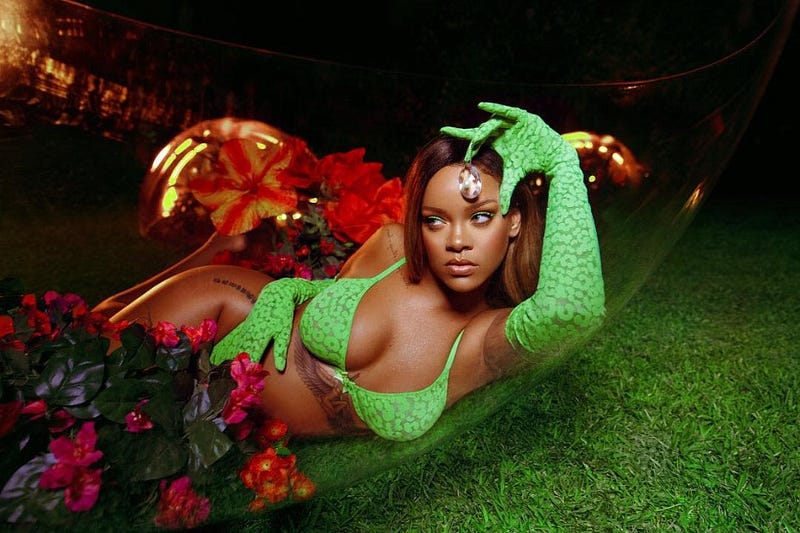
Rhianna’s star-studded Savage x Fenty Fashion Show provided performance, enthusiasm, and high-end glamour. Her fashion brand provided a space for Black women to feel included. Many journalists and socialites praised the show as transformative, even comparing it to the annual Victoria’s Secret Fashion show. Many women felt represented authentically. The level of excitement was extraordinary, with fans everywhere feeling beautiful.
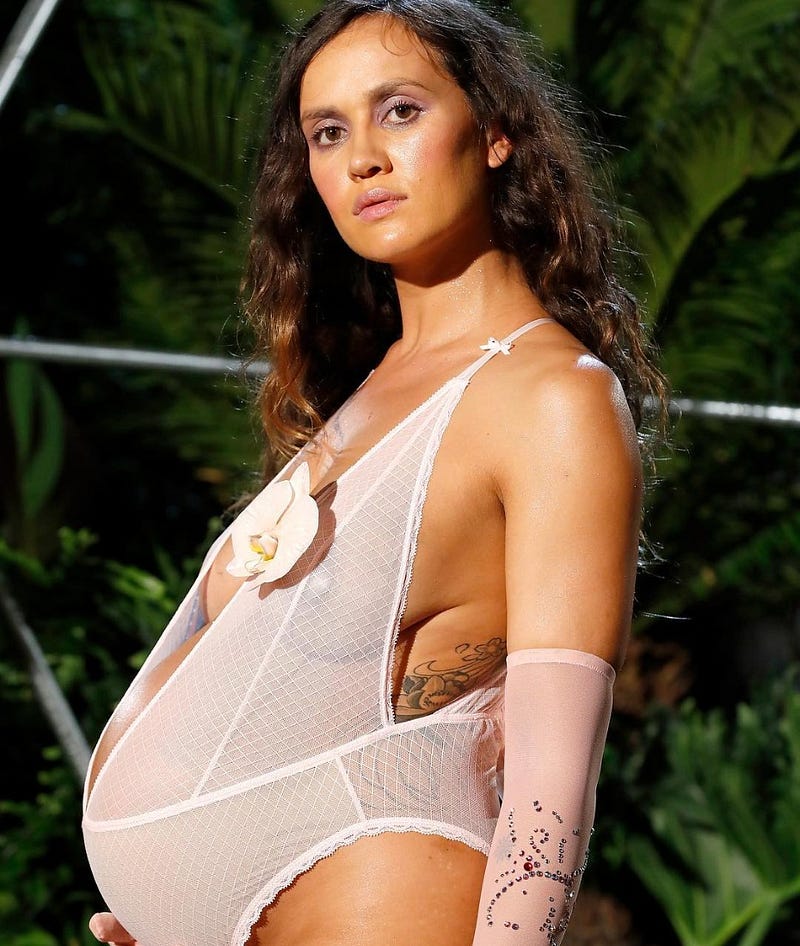
In their attempt to diversify, Rhianna’s fashion show did not leave out slender or white women. Instead, the designers showed just how gorgeous all women are. Pregnant models often left out of national lingerie advertisements, gained representation as well.
Lizzo, a Grammy award-winning body-positive Queen, set an excellent example for young girls and women struggling with body-confidence and self-esteem development. She loves herself and encourages other women to do the same. Lizzo is living proof that we do not need to look skinny or white to be considered beautiful.
The camera cuts to Lizzo, who is decked out in all-blue gloves, bra-and-underwear set, and tights, and two backup dancers as the D’Angelo classic ‘Brown Sugar’ starts to play.
After the show debuted on Amazon, Lizzo took to Instagram to celebrate her contribution to the show. “Just when you thought I couldn’t love myself anymore,” she wrote” (Lambe, 2020).
This year is one for the books. In the middle of a pandemic, Rhianna safely and fiercely celebrated diversity. Lizzo already has confidence, but this show adds to an overwhelming acknowledgment of her beauty. It gives agency to women like Lizzo, traditionally disregarded by the beauty industry.
‘I love Lizzo. She’s so badass,’ Rihanna said last September, during her first major Savage X Fenty presentation. ‘She is everything that Savage stands for: a confident woman, no matter what size, color, shape’ (Lambe, 2020)
My perspective
My skin looks like burnt caramel. While I look brown, I prefer for people to call me Black. My hair is kinky and gets frizzy when it rains, but I do not hide my locks. I will never fit into size 2, 4, or 6 sized jeans, which is fine by me. My African body, which white-washed advertisements taught me to shun, I adore. I do not have to be thin to get the passion I deserve in my life, and neither should any woman. Through self-love, I decolonized my beauty routine. I accept myself and other women as valuable.
As we advance
Savage x Fenty’s show highlights just how much Victoria’s Secret is struggling to stay relevant, especially when it comes to diversity (DiValentino, 2019).
When companies compete to show diversity, women triumph. Rhianna’s fashion show illustrated a significant takeaway — we are not alone. Women of all different shapes and sizes are casting off Europeanized beauty standards and embracing their natural glow. Society impacts our amour propre, so we should commit to counter beauty standards that often bind us.
Victoria’s Secret’s canceled fashion show is a move in the right direction. The body-positive movement is now fierce enough to challenge a Fortune 500 company’s long-term viability. The Savage x Fenty show redefined glamour. Women should support brands that include diversity. We are more than beautiful on the inside — we shine.
*Amour propre— A French Expression for self-love
Articles about Race, Equality, Women, Beauty, and History:
We Don’t Need to Aspire to European Beauty Standards
Women in every culture are beautiful
medium.com
References:
DiValentino, A. (2019, November 24). The Victoria’s Secret Fashion Show may be canceled, but it never held a candle to Rihanna’s Savage X Fenty runway. Retrieved October 03, 2020, from https://www.insider.com/rihanna-savage-x-fenty-show-versus-victorias-secret-2019-9
Donnella, L. (2019, February 06). Is Beauty In The Eyes Of The Colonizer? Retrieved October 02, 2020, from https://www.npr.org/sections/codeswitch/2019/02/06/685506578/is-beauty-in-the-eyes-of-the-colonizer
Dove, E. (Ed.). (2018, December 21). The ‘Dove Real Beauty Pledge.’ Retrieved October 02, 2020, from https://www.dove.com/us/en/stories/about-dove/dove-real-beauty-pledge.html
Harper, K., & Choma, B. L. (2019). Internalized White Ideal, Skin Tone Surveillance, and Hair Surveillance Predict Skin and Hair Dissatisfaction and Skin Bleaching among African American and Indian Women. Sex Roles, 80(11/12), 735–744. https://doi.org/10.1007/s11199-018-0966-9
Lambe, S. (2020, October 02). Lizzo Slays Rihanna’s Savage X Fenty Show With Solo Dance. Retrieved October 03, 2020, from https://www.etonline.com/lizzo-slays-rihannas-savage-x-fenty-show-with-solo-dance-to-a-dangelo-classic-154004
Low, E. (2019, November 25). Why the Victoria’s Secret Fashion Show Was Canceled. Retrieved October 03, 2020, from https://variety.com/2019/tv/news/victorias-secret-fashion-show-canceled-why-1203413186/
Weiss, S., & Kast, C. (2018, November 05). Victoria’s Secret only hires super-skinny models — and that’s a problem. Retrieved October 03, 2020, from https://nypost.com/2018/11/05/victorias-secret-only-hires-super-skinny-models-and-thats-a-problem/


