
Retests May Hurt Students, Not Help Them
Unintended consequences may be harmful to students.

Retests are common in K-12 environment
I have been reflecting upon retests lately. Retests are a common occurrence in K- 12 education. The usual scenario is students who perform poorly on a first test are given a second chance on another examination to raise their score. On the surface, this seems to make sense. However, in most instances, I believe the logic is not only flawed, but this protocol is also hurtful to students.
If a student scores lower than a 70 on a ‘major’ test in the gradebook the teacher must allow the student the opportunity to retest, redo, or cumulatively retest to demonstrate mastery. — Katy ISD (2015–2016)
Reassessments are a growing trend in classrooms across our country… Proponents… [believe] that grades need to be a true and accurate measure of what students know and are able to do. — Brian Stack, Principal of Sanborn Regional High School, Kingston, N.H.
I have no objection to providing multiple means by which students may demonstrate their mastery of instructional content. However, disturbing trends are emerging to boost student success rates that are detrimental to students.
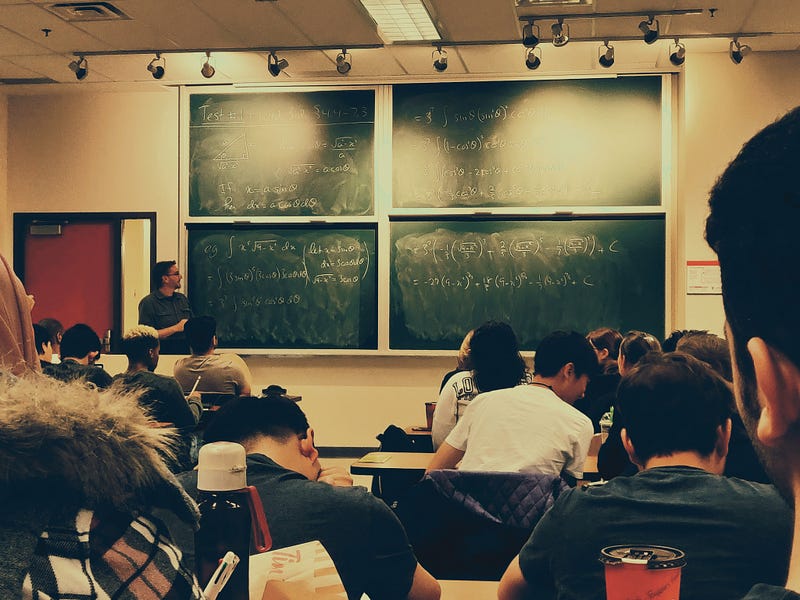
A disturbing trend is emerging
Within the last several years, I have seen educational leadership promote the idea of allowing any student to retest for a maximum possible score. And in addition to encouraging retesting, the better of the two scores are retained.
There are two problems with these scenarios. First, students knowing there will be a retest available may not put in their best efforts to prepare for the first test. Second, if the better of the two test grades are retained, there is a tendency for a student to take a lackadaisical attitude to prepare for the retest. An extreme example I observed was a score of 65 on a first test and a score of 27 on the corresponding retest.
An alternative reassessment approach
I gave a re-test today in my Pre-Freshman Engineering class of Algebraic Structures. The scenario was students who scored below the minimum passing score were required to attend tutoring to prepare for the retest.
After attending coaching, the students then had the option of retesting. However, if they took the retest, their score on the retest would replace the first test grade even if it was lower. The maximum score on the retest was the minimum passing grade.
I believe that something like this is better for the students. Students now have some ownership of their performance. This process reinforces good academic study habits as opposed to reinforcing poor study habits.
Other reassessment approaches
Other teachers have reported ways for students to achieve assessment success when an initial assessment has been unfavorable. Steven Merrill (2019) suggests mastery quizzes, reflective test corrections, and peer-to-peer approaches may be helpful to students.
Principal Brian Stack reports at his school, “when students complete a reassessment, the new grade replaces the old grade, regardless of whether the new grade is lower or higher than the first one.”
Self-reflection and continuous self-improvement are lifelong skills that students will need to be successful in life. Reassessments are one way to help students hone those important skills. — Brian Stack
Original article published on Linkedin.com “Education: Retests may hurt students, not help them,” July 12, 2017.
Citations:
Merrill, Stephen (2019), Allowing Test Retakes — Without Getting Gamed, George Lucus Educational Foundation, Retrieved from https://www.edutopia.org/article/allowing-test-retakes-without-getting-gamed
Stack, Brian, (2018), A grading debate: Pros and cons of reassessments, exclusive.multibriefs.com, Retrieved from http://exclusive.multibriefs.com/content/a-grading-debate-pros-and-cons-of-reassessments/education
Tompkins High School Retest / Redo Procedure, (2015–2016), Katy [TX} ISD. Retrieved from http://www.katyisd.org/campus/OTHS/Documents/RetestRedoPolicy15-16.pdf.
Please click this [LINK] if you have enjoyed reading this story and would like to have my stories delivered to your email inbox when I publish.
Medium is a beautiful site for innovative and exciting stories. Paying $5 for a monthly subscription or $50 for an annual subscription entitles you to read all articles. Use this [LINK] to join. Your membership fee supports writers of Medium.
If you found this article worthwhile, you may find these other articles beneficial.
© 2019 Randle B. Moore All Rights Reserved