
Research Shows That There’s Only One Way to Lose Weight
And it isn’t through hours of exercise, fancy diets, or fat-burners

The fitness industry, the weight-loss industry, particularly thrives off misinformation and bullsh*t — fancy diet plans, fat burner pills, gimmicky exercise routines, etc.
Weight loss is treated as this mystical thing whose knowledge is limited to the “experts” — most of who, in reality, are just scammers trynna make a quick buck leveraging the misinformation.
The first time I tried to lose weight, I almost killed myself. It’s all thanks to the miasma of misinformation and pseudo-science that has pervaded the internet.
I’ve since researched and learned a lot. The biggest thing I realized was how out-of-proportion weight loss has been blown. In reality, it is extremely simple and there’s literally only one way to lose weight.
No wonder this is the very thing my entire fat-loss checklist revolves around!
The Only Way to Lose Weight
Well, I won’t hold it back from you any longer. The only way to lose weight is through a calorie deficit.
It’s pretty simple to be honest — when you consume food and beverages, your body metabolizes them to provide energy and this energy is used for your daily activities. If you consume more energy than what your body burns, the extra is stored as mostly fat and you gain weight.
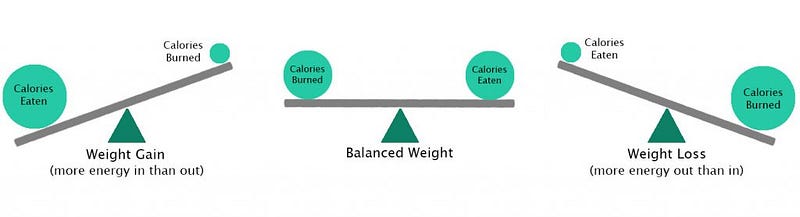
On the other hand, when you consume less than what your body burns, your body turns to your fat stores for energy. This is what being in a calorie deficit means.
So how do you achieve a calorie deficit? There are only two ways:
- By reducing your calorie intake: Every fancy diet on earth be it paleo, keto, or low-carb does just this — they limit your calorie intake in some way. “Dieting” or eating healthy also does just this. Since “healthy” foods are generally less calorie dense, you tend to get full with lesser calories.
- By increasing your calorie expenditure: Exercise and fat burner pills achieve this. While exercise, especially cardio can burn a significant amount of calories, fat burners are worthless — they barely elevate your metabolism.
There’s a third way and it’s the best one — a mix of both the above ways.
Something to note here is that reducing your calorie intake is much easier than increasing your calorie expenditure. To give you perspective — 30 minutes of jogging burns around 200 kcals which is the same as giving up a tiny burrito.
So it’s better to create the deficit mostly through your diet rather than exercise.
A Simple Step-By-Step Guide to Lose Weight
Now that we’ve understood calories, let’s go over a step-by-step guide to lose weight. I and the people I’ve trained have successfully lost weight using this simple strategy.
1. Find Your Total Daily Energy Expenditure (TDEE)
The first step is to determine the number of calories you burn in a day. This can be done easily using an online TDEE calculator.
You have to key in your gender, age, weight, height, and activity level. And it’ll give an estimate of your daily energy expenditure. As to the activity level, decide it based on your preference and convenience.
Let’s take my example. I’m a 20-year-old male that weighs 79 kgs, stands 185 cms tall, and works out regularly. But since I am relatively sedentary the rest of the day, I’d choose the moderate activity option. My TDEE comes out to be 2869 calories.
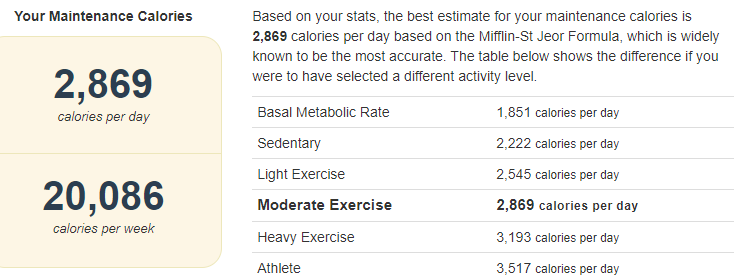
You can see that it’s also displayed my TDEEs for different activity levels. If you’re wondering what the Basal Metabolic Rate (BMR) is, lemme explain — it’s the number of calories you’d burn if you did nothing all day, so say you slept all day.
This is the energy required for your bodily functions such as respiration, blood pumping, digestion, etc.
2. Decide the Calorie Deficit
To lose 1kg, you need to burn 7700 calories in total. So with a daily deficit of 500 calories, it would take you 2 weeks to lose 1 kg. And with a 1000 calorie one, one week.
So the higher the daily caloric deficit, the faster you’ll lose weight. But only up to a point — too large of a calorie deficit is actually counterproductive.
And an extreme caloric deficit can be outright dangerous — metabolic damage, fatigue, hormone imbalances, weakened bones, lowered immunity, and even death.
For most people, a calorie deficit of 20–25% of their TDEE is optimal — which is around 400–600. If you’re really overweight, up to 30 or 35% of your TDEE is okay.
3. Set Your Calorie Target and Track Your Daily Calorie Intake
Now your calorie target is simple — it’s your TDEE minus the calorie deficit. With the target computed, all that’s left is tracking your calories.
This can be done using a calorie counter app like MyFitnessPal. All you have to do is key in your calorie target, log whatever food item you eat, and make sure that by the end of the day — you’re at or slightly under your calorie target.
As to what you eat, there’s no need to overcomplicate things, just use the 80/20 rule — get 80% of your calories from healthy whole foods such as grains, meat, milk, veggies, and fruits. And you are free to eat whatever you want to cover the remaining 20%.
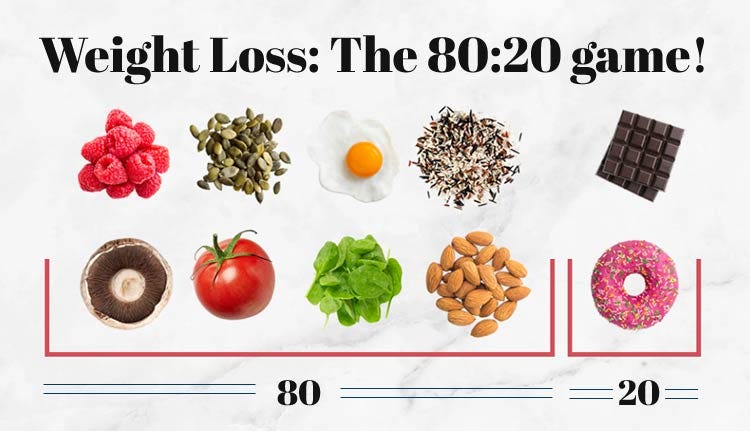
This works like a charm as you not only eat mostly healthy but also satisfy your cravings.
4. Tweak as You Progress
Since your TDEE is not an accurate number but rather an estimate, some tweaking is required from time to time.
Weigh yourself every single morning on an empty stomach and at the end of the week, compute the average. Don’t be bothered by your daily weight as fluctuations are normal.
As long as your weekly average is going down, you’re progressing so don’t change anything. As the saying goes, “Don’t try to fix what ain’t broke.”
But if your weekly average refuses to budge, you might have to nudge your calorie target a bit down. I’d recommend reducing it by a maximum of 100–200 kcals and continuing.

That’s all!
Yes, some basic math and that’s all there is to it. Fat loss isn’t rocket science, it’s simple calorie counting. Like most things in life, it is needlessly complicated.
A key thing is to stay patient. Because of homeostasis, your weight loss might stagnate for a while despite constant tweaking. This is where most give up, so do not give up. Just keep plowing and your weight will start moving again.
As I’ve said earlier, weight loss is simple but hard. You need to be dedicated and patient with it.
You didn’t gain the weight in a day so neither will you lose it in one.
Edit 1: An Important Thing to Address
Based on the responses, I have decided to address something important here.
When you embark on a long weight loss journey, especially one where you need to lose a lot of weight, the tweaking strategy works well only up to a certain point.
As we saw earlier, when you continue to decrease calories, they can reach a point where the calorie deficit is too high and hence cause metabolic damage and affect your hormones.
“When this happens, further decreasing calories would do more harm than good.”
Leptin or the “satiety” hormone decreases. So does testosterone. This leads to decreased fat loss or even fat gain as your metabolism tanks. To add to this, ghrelin or the “hunger hormone” increases. This means that you feel hungry all the time.
When this happens, further decreasing calories would do more harm than good, as with what happened in my case. What you need to do when this happens is take a diet break or reverse-diet for a while.
This means that you’d have to slowly increase your calories until your metabolism and hormones are fixed and you start feeling much better.
Even once your weight loss journey is over, jumping right back into your pre-weight loss eating regimen will cause weight gain. The key is reverse dieting — or slowly increasing your calories week after week until you reach your new maintenance target.
Hope this helps to clarify any doubts or concerns you might have had!


