avatarNeeramitra Reddy

Free AI web copilot to create summaries, insights and extended knowledge, download it at here

9181

Abstract

t of a physiological system.</p><blockquote id="82db"><p>In simple words, it’s the relationship between calories in and calories out<i>.</i></p></blockquote><h2 id="66a5">The exciting application.</h2><p id="f999">Suppose you are someone that consumes and burns 2500 calories a day, and as a result, your weight stays the same.</p><p id="47cd">What do you think would happen if we bumped up both your intake and calorie expenditure to 3000 calories a day?</p><blockquote id="a980"><p>Nothing would change?</p></blockquote><p id="1351">Wrong. A <i>lot </i>would change due to an increase in the G-Flux.</p><blockquote id="0855"><p>An increased G-flux means an increase in <b>both </b>your calorie intake and expenditure.</p></blockquote><p id="7555"><a href="https://www.ncbi.nlm.nih.gov/pmc/articles/PMC6835968/">Studies</a>² have shown that you would achieve an array of benefits, the primary ones being a higher metabolism and better body composition — fat loss and an increase in lean muscle.</p><p id="ba49">To learn more about G-Flux, here is an excellent article:</p><div id="c9be" class="link-block"> <a href="https://www.precisionnutrition.com/all-about-g-flux"> <div> <div> <h2>All About G-Flux</h2> <div><h3>It's a basic law of the universe: Energy can't be created nor destroyed, only converted. As physiological systems, we…</h3></div> <div><p>www.precisionnutrition.com</p></div> </div> <div> <div style="background-image: url(https://miro.readmedium.com/v2/resize:fit:320/0*sErozC-lgUgCmL9R)"></div> </div> </div> </a> </div><h1 id="dd4e">Step 3: Setting up the deficit.</h1><p id="c5d8">Now we know that,</p><p id="42a7" type="7">Higher calorie intake with a higher expenditure is better than lower intake with a lower expenditure.</p><p id="5da6">So would generating a deficit mostly through exercise than restricting calorie intake be better?</p><p id="4a8d">The answer is it <i>depends — </i>on a lot of factors such as your age, obesity level, convenience, preference, etc.</p><h2 id="94e1">Here are a few cases to illustrate.</h2><ul><li><b>Aged or morbidly obese:</b> Any exercise except for low impact ones like walking would strain your joints and burden your heart. So most or all of the deficit should be generated through diet alone.</li><li><b>A serious fitness enthusiast like me: </b>I love working out and work out around two hours every day 6 days a week. So if I wanted to lose fat, I would generate <i>most </i>of my deficit through exercise alone.</li><li><b>An average person who is short on time:</b> Short durations of light or moderate exercise would be preferable. So part of the deficit can be generated through exercise and part through diet.</li></ul><p id="7f90">Now that we have our TDEE and deficit decided, we can set our target calorie intake as:</p><p id="d656" type="7">Calorie Intake = TDEE - Calorie Deficit.</p><h1 id="6719">Step 4: Diet and tracking your calorie intake.</h1><p id="e039">From a pure weight loss perspective, a calorie deficit trumps even a crappy diet as shown by <a href="https://www.latimes.com/archives/la-xpm-2010-dec-06-la-he-fitness-twinkie-diet-20101206-story.html#:~:text=Twinkie%20Guy%20%E2%80%94%20also%20known%20as,Stop%20the%20presses.">Mark Haub’s famous experiment</a> where he lost 27 pounds in 10 weeks eating only Twinkies, Doritos, Oreos, and other treats.</p><p id="6b19">Just because you can doesn’t mean you should — A bad diet might help you lose weight but will definitely <i>wreck</i> your health.</p><h2 id="5e09">Diet:</h2><p id="65d5">So should your diet be 100% healthy? No, 70% is enough. Feel free to eat whatever you want for the remaining 30%.</p><p id="6fd5">By healthy, I mean meals composed of mostly unprocessed foods like grains, meat, eggs, legumes, seafood, nuts, herbs, vegetables, and fruits. Below is an excellent blog post on healthy eating.</p><div id="3893" class="link-block"> <a href="https://blog.myfitnesspal.com/essential-guide-to-healthy-eating/"> <div> <div> <h2>The Essential Guide to Healthy Eating | MyFitnessPal</h2> <div><h3>When you start learning more about nutrition, it can seem overwhelming, but in the end, basic nutrition is quite…</h3></div> <div><p>blog.myfitnesspal.com</p></div> </div> <div> <div style="background-image: url(https://miro.readmedium.com/v2/resize:fit:320/0*711oi_647ID4eFpj)"></div> </div> </div> </a> </div><blockquote id="c722"><p><b>Note:</b> If you want to preserve or build muscle while on a deficit, you <a href="https://academic.oup.com/ajcn/article/103/3/738/4564609">NEED</a>³ a high enough protein intake, around 0.8 to 1g per pound of your body weight should suffice.</p></blockquote><h2 id="15c1">Tracking calories:</h2><p id="9443">Now all you have to do is track your calories using calorie counting apps such as <a href="https://www.myfitnesspal.com/">MyFitnessPal</a> which I personally use and am a big fan of.</p><figure id="d877"><img src="https://cdn-images-1.readmedium.com/v2/resize:fit:800/1*mPxeGHgnvUGrxQWuIep4JA.jpeg"><figcaption>Source: Screenshot by the Author.</figcaption></figure><p id="a10d">Set a calorie target and after every meal, search and add whatever you ate. Just make sure you stay around the target, plus or minus 50 calories is okay.</p><h1 id="03ae">Step 5: Hydration.</h1><p id="6a87">Studies such as <a href="https://www.tandfonline.com/doi/abs/10.1080/07315724.2007.10719657">this</a>⁴ and <a href="http://Shaheen NA, Alqahtani AA, Assiri H, Alkhodair R, Hussein MA. Public knowledge of dehydration and fluid intake practices: variation by participants' characteristics. BMC Public Health. 2018;18(1):1346. Published 2018 Dec 5. doi:10.1186/s12889-018-6252-5">this</a>⁵ have found the effects of dehydration to be debilitating — diarrhea, dizziness, affected brain functioning, seizures, kidney failure, and in extreme cases coma and death.</p><figure id="93d1"><img src="https://cdn-images-1.readmedium.com/v2/resize:fit:800/0*r0-AkkcRPQjvBIXj"><figcaption>Photo by <a href="https://unsplash.com/@andersonrian_?utm_source=medium&amp;utm_medium=referral">Anderson Rian</a> on <a href="https://unsplash.com?utm_source=medium&amp;utm_medium=referral">Unsplash</a></figcaption></figure><p id="3c05">Apart from the general importance of drinking water, <a href="https://www.ncbi.nlm.nih.gov/pmc/articles/PMC4901052/">research</a>⁶ has also found drinking more water to be associated with better weight loss.</p><p id="da7d">Despite individual requirements being different, this <a href="https://www.nap.edu/catalog/10925/dietary-reference-intakes-for-water-potassium-sodium-chloride-and-sulfate">paper</a>⁷ found that males on average required 3.7 liters of water while females on average required 2.7 liters of water per day.</p><p id="4c39" type="7">Make sure to drink at least 3 to 4 liters of water per day.</p><h1 id="04e2">Step 6: Exercise — Resistance vs Aerobic Exercise.</h1><h2 id="a3c2">The basic difference:</h2><p id="5c82">Resistance exercise involves the use of free weights, machines, or your own bodyweight to build strength and muscle while aerobic exercise or <i>cardio </i>involves getting your heart rate up and conditioning your heart.</p><p id="89f8">So weightlifting, bodybuilding, powerlifting, calisthenics, etc. are resistance exercises while swimming, cycling, running, etc. are aerobic ones.</p><figure id="62f4"><img src="https://cdn-images-1.readmedium.com/v2/resize:fit:800/0*NHw5HuU7RaV5vI4y"><figcaption>Photo by <a href="https://unsplash.com/@visualsbyroyalz?utm_source=medium&amp;utm_medium=referral">Anastase Maragos</a> on <a href="https://unsplash.com?utm_source=medium&amp;utm_medium=referral">Unsplash</a></figcaption></figure><h2 id="5405">Muscle preservation or building:</h2><p id="1372">This <a href="https://www.ncbi.nlm.nih.gov/pmc/articles/PMC5678994/">study⁸</a> found resistance exercise to be superior to cardio when it comes to building or preserving muscle while losing body fat.</p><p id="c2e4">Intuitively we would expect this as — The point of resistance exercise is to build strength and muscle.</p><h2 id="b4f8">Calorie burning: The concept of Excess Post-exercise Oxygen Consumption (EPOC)</h2><p id="7008">We all know that when exercising you burn calories but did you know about the exercise after-burn — where you burn calories even <i>after </i>exercising?</p><p id="a580">ESOC is the amount of oxygen required by the body to restore its state from an <i>elevated </i>metabolism level to <i>normal</i> after exercising. The energy spent due to ESOC is called the after-burn effect.</p><p id="fd31">Cardio burns more calories than resistance exercise while exercising but <a href="https://www.unm.edu/~lkravitz/Article%20folder/epocarticle.html">research</a> has found resistance exercise to elicit a <i>much </i>greater EPOC or after-burn effect than cardio.</p><blockquote i

Options

d="3967"><p>This means that resistance training can burn as much as if not <b>more</b> calories than aerobic exercise.</p></blockquote><h2 id="9f39">Conclusion</h2><p id="6998">As described earlier, the first time I lost weight, I did a <i>lot </i>of cardio and ended up looking anorexic having lost a lot of muscle and strength.</p><p id="77a3">The next time I went on a fat-loss cycle, I prioritized weight training and did minimal to <i>no</i> cardio.</p><p id="52e7">The results were <i>much </i>better — enhanced fat loss and little to no strength and muscle loss.</p><p id="d3b4">Based on the research and my experience:</p><p id="0073" type="7">Prioritize resistance training over aerobic exercise.</p><p id="2514" type="7">Let resistance training constitute 60–80% while cardio 20–40% of your exercise routine.</p><h1 id="8cce">Optional Step: Ramp up your NEAT</h1><p id="b51b">Non-Exercise Activity Thermogenesis (NEAT) refers to the energy spent in your normal daily activities excluding exercise.</p><p id="f5ec" type="7">Research⁹ has shown that Non-Exercise Activity Thermogenesis (NEAT) accounts for up to 80% of your daily energy expenditure.</p><figure id="4feb"><img src="https://cdn-images-1.readmedium.com/v2/resize:fit:800/0*gPpM0iF5wOg0YtCA"><figcaption>Photo by <a href="https://unsplash.com/@bonniekdesign?utm_source=medium&amp;utm_medium=referral">Bonnie Kittle</a> on <a href="https://unsplash.com?utm_source=medium&amp;utm_medium=referral">Unsplash</a></figcaption></figure><p id="d290">Just staying active throughout the day can help you burn a <i>lot </i>of calories. I have experienced this first hand.</p><p id="0db7">I am mostly sedentary at home while I get in a<i> lot </i>of walking on my 500-acre college campus without even realizing it. As a result, my calorie requirements in college are <i>significantly</i> higher than at home.</p><p id="a968" type="7">Ramping up your NEAT → Increasing your TDEE → You can increase your calorie intake!</p><p id="bb62">Here are a few ways you can increase your NEAT:</p><ul><li>Set goals and track your daily steps.</li><li>Take the stairs instead of the elevator.</li><li>If you work a desk job, stand up every now and then to stretch and even take a stroll.</li><li>Walk while talking on the phone.</li><li>Cycle or walk instead of using a car or motorbike whenever possible.</li><li>Walk your dog if you have one.</li></ul><h1 id="e35d">Step 7: Sleep is crucial.</h1><p id="4753">Sleep, in general, is of paramount importance as this <a href="https://www.ncbi.nlm.nih.gov/pmc/articles/PMC6281147/">study</a>¹⁰ aptly titled <i>“The Extraordinary Importance of Sleep” </i>explains.</p><p id="a8c3">The effects of sleep deprivation are debilitating — affected brain functioning, increase in blood pressure, increased risk of heart diseases, disruption of hormones, weight gain, and even <i>death</i>.</p><p id="c6f2">When looking to burn fat, the importance of sleep jumps up a <i>lot </i>of notches.</p><figure id="3bfe"><img src="https://cdn-images-1.readmedium.com/v2/resize:fit:800/0*nS_4PKSgVTMRdeLF"><figcaption>Photo by <a href="https://unsplash.com/@ejleusink?utm_source=medium&amp;utm_medium=referral">Erik-Jan Leusink</a> on <a href="https://unsplash.com?utm_source=medium&amp;utm_medium=referral">Unsplash</a></figcaption></figure><p id="5a57"><a href="https://www.ncbi.nlm.nih.gov/pmc/articles/PMC2951287/">This</a>¹¹ study compared the effects of 8.5 hours and 5.5 hours of sleep per night on weight loss keeping the other factors such as calorie deficit, exercise, etc. the same.</p><p id="1c95">The results were <i>astounding</i>.</p><p id="cd30" type="7">The 5.5 hours group lost 55% lesser fat mass and 60% more lean body mass than the 8.5 hours group.</p><p id="5dd1">Sleep alone can make or <i>break</i> your fat loss regime.</p><p id="fc40" type="7">Get in 8–9 hours of quality sleep every night for optimal results.</p><h1 id="7428">Step 8: Weigh yourself every morning.</h1><p id="5a5b">This is easy to do — Just buy a scale, and pop it in the washroom. When you walk into the washroom first thing after waking up each morning, step on the scale.</p><h2 id="aade">Monitoring progress.</h2><p id="8f0e">Daily weight fluctuations are normal so don’t freak out or get too excited if your weight goes up or down a pound the next day.</p><p id="a093">Record your weight every day and at the end of the week, take the average.</p><p id="bd8c" type="7">As long as your weekly average is going down, you ARE making progress.</p><h1 id="a483">The Final Step: Patience and some tweaking.</h1><p id="37e0">Now you need to stay patient. You didn’t gain all that fat in a day or a week so don’t expect to lose it that soon either.</p><p id="b06f">If you have been following the plan to a tee and your weekly average is going down by at least half a pound, do NOT change anything.</p><p id="0aa4" type="7">If it ain’t broke, don’t fix it.</p><figure id="2aa5"><img src="https://cdn-images-1.readmedium.com/v2/resize:fit:800/0*r209ks1mMKS0o_uW"><figcaption>Photo by <a href="https://unsplash.com/@aronvisuals?utm_source=medium&amp;utm_medium=referral">Aron Visuals</a> on <a href="https://unsplash.com?utm_source=medium&amp;utm_medium=referral">Unsplash</a></figcaption></figure><p id="cd11">If there is no progress or if your progress stalls at some point, then it’s time for some slight tweaking.</p><p id="0bc2">In most cases, the culprit is tracking calories, it’s easy to ignore sauces, oil, toppings, etc. — Track every single thing you put into your mouth.</p><p id="aa6b">TDEE calculators give only<i> estimates</i> and this discrepancy is why you aren’t making progress. As you lose weight, your TDEE tends to go down as well so it’s natural for progress to stall.</p><p id="b132">No need to freak out. All you have to do is:</p><p id="123c" type="7">Decrease your calorie intake by 150 - 200 calories when progress stalls.</p><h1 id="7eab">Ending words.</h1><p id="85a3">If you’ve made it this far, kudos, and thanks a lot.</p><p id="bb1c">I have drawn upon my experience and the scientific literature to write this comprehensive article and I hope you have found it helpful and insightful.</p><p id="ae5b"><b>Good luck on your fat-loss journey!</b></p><h2 id="da23">Want to Lose (and Keep Off) Body Fat without Any Overcomplicated B.S.? Grab Your Free Copy of The 5-Minute Fat-Loss Simplifier</h2><h1 id="5473">References:</h1><p id="9b60">[1] Strasser B, Spreitzer A, Haber P. Fat loss depends on energy deficit only, independently of the method for weight loss. Ann Nutr Metab. 2007;51(5):428–32. doi: 10.1159/000111162. Epub 2007 Nov 20. PMID: 18025815.</p><p id="31cc">[2] Melby CL, Paris HL, Sayer RD, Bell C, Hill JO. Increasing Energy Flux to Maintain Diet-Induced Weight Loss. <i>Nutrients</i>. 2019;11(10):2533. Published 2019 Oct 21. doi:10.3390/nu11102533</p><p id="b4b2">[3] Thomas M Longland, Sara Y Oikawa, Cameron J Mitchell, Michaela C Devries, Stuart M Phillips, Higher compared with lower dietary protein during an energy deficit combined with intense exercise promotes greater lean mass gain and fat mass loss: a randomized trial, <i>The American Journal of Clinical Nutrition</i>, Volume 103, Issue 3, March 2016, Pages 738–746, <a href="https://doi.org/10.3945/ajcn.115.119339">https://doi.org/10.3945/ajcn.115.119339</a></p><p id="6f05">[4] Ann C. Grandjean & Nicole R. Grandjean (2007) Dehydration and Cognitive Performance, Journal of the American College of Nutrition, 26:sup5, 549S-554S, DOI: <a href="https://doi.org/10.1080/07315724.2007.10719657">10.1080/07315724.2007.10719657</a></p><p id="4fce">[5] Shaheen NA, Alqahtani AA, Assiri H, Alkhodair R, Hussein MA. Public knowledge of dehydration and fluid intake practices: variation by participants’ characteristics. <i>BMC Public Health</i>. 2018;18(1):1346. Published 2018 Dec 5. doi:10.1186/s12889–018–6252–5</p><p id="0aa5">[6] Thornton SN. Increased Hydration Can Be Associated with Weight Loss. <i>Front Nutr</i>. 2016;3:18. Published 2016 Jun 10. doi:10.3389/fnut.2016.00018</p><p id="42bf">[7] Institute of Medicine. 2005. <i>Dietary Reference Intakes for Water, Potassium, Sodium, Chloride, and Sulfate</i>. Washington, DC: The National Academies Press. <a href="https://doi.org/10.17226/10925.">https://doi.org/10.17226/10925.</a></p><p id="7ca7">[8] Beavers KM, Ambrosius WT, Rejeski WJ, et al. Effect of Exercise Type During Intentional Weight Loss on Body Composition in Older Adults with Obesity. <i>Obesity (Silver Spring)</i>. 2017;25(11):1823–1829. doi:10.1002/oby.21977</p><p id="3dcf">[9] Von Loeffelholz C, Birkenfeld A. The Role of Non-exercise Activity Thermogenesis in Human Obesity. [Updated 2018 Apr 9]. In: Feingold KR, Anawalt B, Boyce A, et al., editors. Endotext [Internet]. South Dartmouth (MA): MDText.com, Inc.; 2000-. Available from: <a href="https://www.ncbi.nlm.nih.gov/books/NBK279077/">https://www.ncbi.nlm.nih.gov/books/NBK279077/</a></p><p id="d7ec">[10] Worley SL. The Extraordinary Importance of Sleep: The Detrimental Effects of Inadequate Sleep on Health and Public Safety Drive an Explosion of Sleep Research. <i>P T</i>. 2018;43(12):758–763.</p></article></body>

How to Become a Fat-Torching Machine

Without crazy dieting or spending hours in the gym
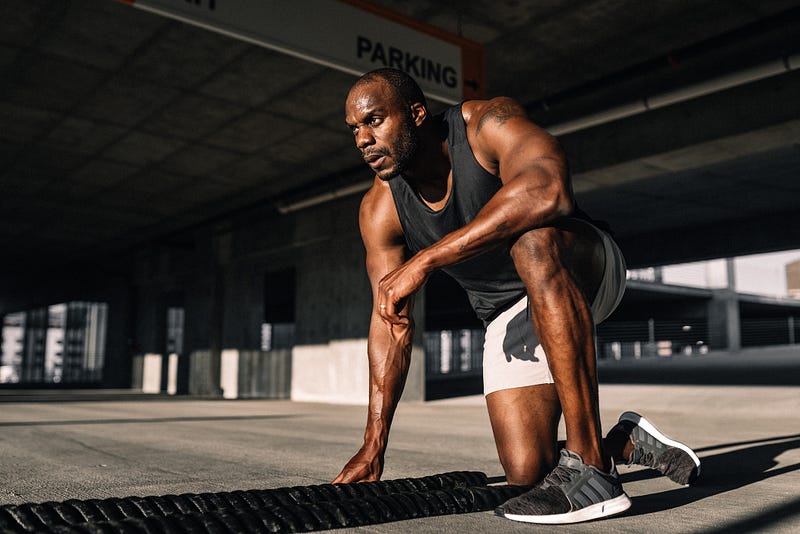
Photo by Karsten Winegeart on Unsplash

The first time I decided to lose fat and get ripped, I nosedived into an almost ascetic style of dieting and working out. Needless to say, it was a big mistake.

Every time my progress stalled, I further reduced my food intake and upped my physical activity.

I gradually developed a sickly pallor, sunken cheeks, deep bags under my eyes, and felt extremely exhausted all day.

By the end, I was eating less than 1000 calories per day, cycling 10 km thrice a week, and working out in the gym the other 4 days.

From 87 kgs to 63 kgs, I had lost 24 kgs in a span of 6 months — a lot of strength and muscle along with the fat.

Standing 6'1'’ tall and weighing only 63 kgs, I looked skinny and almost anorexic as opposed to ripped.

With the constant fear of regaining weight, I developed an unhealthy relationship with food — obsessing over every single calorie and checking my abs after every meal.

Only after a couple of months did I finally get back to eating enough, making progress in the gym, and looking healthy.

Looking back, I honestly don’t know how I even stayed alive with such strenuous physical activity and eating in a day as many calories as I eat in a single meal now.

I now weigh around 73 kgs and carry a lot more muscle but only slightly more fat than I did back then. I have learned a lot since then, and losing fat is an almost effortless process now.

I want to distill what I have learned into detailed steps. But before that let’s first understand how weight loss occurs.

Calorie Deficit: The ONLY way to lose weight.

Put simply, a calorie is a unit of energy.

Your calorie intake is the energy you get from consuming food and beverages while your calorie expenditure is the energy you expend in a day.

Quick note: When we say 1 calorie, we are actually referring to 1 kcal or 1000 calories. In food sciences, a calorie or a food calorie is equivalent to 1 scientific kcal. Going forth, a calorie shall mean a food calorie only.
Photo by Jason Blackeye on Unsplash

You expend energy when you move, exercise, and even when you sit — bodily processes like digestion, respiration, blood circulation, etc. need energy.

Your calorie deficit is the difference between your calorie expenditure and calorie intake.

So if you burn 250 calories more than you consume, you generate a caloric deficit of 250 calories.

Now,

When you burn more than you consume, your body turns to your fat stores primarily and muscle secondarily for energy.

This is the only way¹ to lose fat.

Macros, Micros, and some Math.

Food constitutes two types of nutrients — macronutrients and micronutrients. Macronutrients are composed of proteins, carbohydrates, and provide energy while micronutrients composed of vitamins and minerals are essential for various bodily functions.

So your calorie intake comes only from the macros.
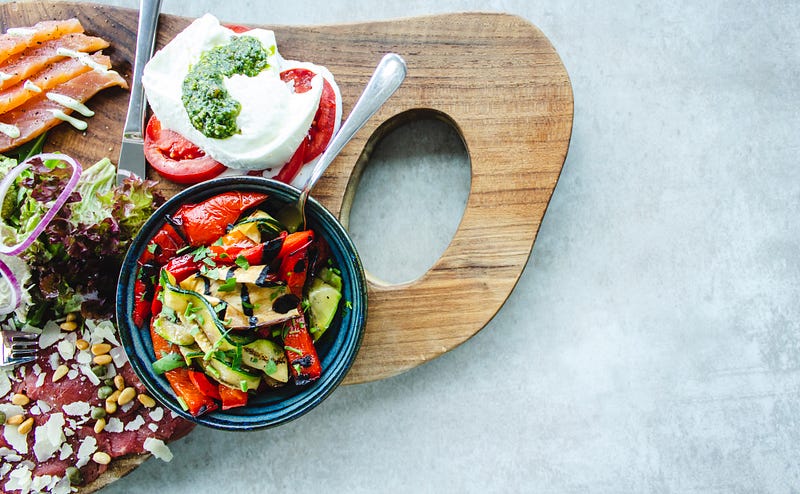
Photo by Louis Hansel @shotsoflouis on Unsplash

How many calories though?

A gram of protein and carbohydrates give you 4 calories each while a gram of fat gives you 9 calories.

So a burger containing 15g protein, 40g carbohydrates, and 10g fat would amount to 15*4 + 40*4 + 10*9 or 310 calories.

How many calories to lose a kilogram of body weight?

Any guesses? 100 or even 1000 calories maybe?

Well, It’s a whopping 7700 calories!

No wonder losing weight is hard.

Equipped with this arsenal of knowledge let’s proceed to the steps now.

Step 1: Choose a timeframe and a calorie deficit.

You first need to decide the amount of weight you want to lose. Based on this, an optimal time frame and the daily caloric deficit can be decided.

Going aggressive with the calorie deficit to rush the process isn’t a good idea.

The below article explains some of the downsides — lowered metabolism, bone density reduction, muscle-loss, disrupted hormones, etc.

In fact, you might even do more harm than good by severely restricting calories as what happened in my case.

A moderate deficit over a longer period of time is always better than a large deficit over a short period of time.

For most people, a deficit of 250 to 500 calories, and for really obese people, up to 750 calories is considered optimal.

Unless you need to lose weight in a short time, go with the lower or middle values of the optimal range.

Once the calorie deficit is decided, the time frame can be chosen.

An Illustrative Example:

Suppose you wanted to lose 10 kgs in total and are moderately obese, a calorie deficit of 400 calories would be a good choice.

Since we know that you need to burn around 7700 calories to lose 1kg, you would now need to burn 77,000 calories in total to lose 10 kgs. With a deficit of 400 calories a day, you would need 70,000/400 = 175 days or around 6 months.

Let’s say you need or want to do it a bit faster. We’ll go with a deficit of 650 then. With this, you would need 70,000/650 = roughly 107 days or a little over 3 months.

Step 2: Calculate your TDEE.

Now you need to calculate your Total Daily Energy Expenditure or TDEE. This can be done by using an online calculator such as this.

Your TDEE is an estimate of how many calories your body burns throughout the day based on factors like your age, height, weight, and activity level.
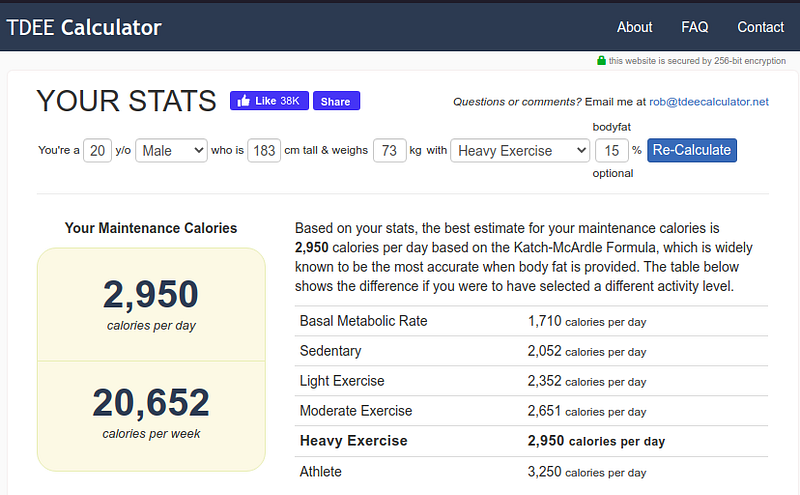
Source: Screenshot by the Author

The above screenshot shows my TDEE estimates for various activity levels.

Observe how the TDEE goes up as the activity level goes up — from 2052 when sedentary to 3250 when exercising like an athlete, it’s a whopping 1198 calories difference!

Clearly, a deficit can be created through both exercise and diet. So then what would be the optimal combination?

The Concept of G-Flux.

The boring definition.

G-Flux, otherwise known as energy flux, is the complex and interdependent relationship between the energy that flows into and out of a physiological system.

In simple words, it’s the relationship between calories in and calories out.

The exciting application.

Suppose you are someone that consumes and burns 2500 calories a day, and as a result, your weight stays the same.

What do you think would happen if we bumped up both your intake and calorie expenditure to 3000 calories a day?

Nothing would change?

Wrong. A lot would change due to an increase in the G-Flux.

An increased G-flux means an increase in both your calorie intake and expenditure.

Studies² have shown that you would achieve an array of benefits, the primary ones being a higher metabolism and better body composition — fat loss and an increase in lean muscle.

To learn more about G-Flux, here is an excellent article:

Step 3: Setting up the deficit.

Now we know that,

Higher calorie intake with a higher expenditure is better than lower intake with a lower expenditure.

So would generating a deficit mostly through exercise than restricting calorie intake be better?

The answer is it depends — on a lot of factors such as your age, obesity level, convenience, preference, etc.

Here are a few cases to illustrate.

  • Aged or morbidly obese: Any exercise except for low impact ones like walking would strain your joints and burden your heart. So most or all of the deficit should be generated through diet alone.
  • A serious fitness enthusiast like me: I love working out and work out around two hours every day 6 days a week. So if I wanted to lose fat, I would generate most of my deficit through exercise alone.
  • An average person who is short on time: Short durations of light or moderate exercise would be preferable. So part of the deficit can be generated through exercise and part through diet.

Now that we have our TDEE and deficit decided, we can set our target calorie intake as:

Calorie Intake = TDEE - Calorie Deficit.

Step 4: Diet and tracking your calorie intake.

From a pure weight loss perspective, a calorie deficit trumps even a crappy diet as shown by Mark Haub’s famous experiment where he lost 27 pounds in 10 weeks eating only Twinkies, Doritos, Oreos, and other treats.

Just because you can doesn’t mean you should — A bad diet might help you lose weight but will definitely wreck your health.

Diet:

So should your diet be 100% healthy? No, 70% is enough. Feel free to eat whatever you want for the remaining 30%.

By healthy, I mean meals composed of mostly unprocessed foods like grains, meat, eggs, legumes, seafood, nuts, herbs, vegetables, and fruits. Below is an excellent blog post on healthy eating.

Note: If you want to preserve or build muscle while on a deficit, you NEED³ a high enough protein intake, around 0.8 to 1g per pound of your body weight should suffice.

Tracking calories:

Now all you have to do is track your calories using calorie counting apps such as MyFitnessPal which I personally use and am a big fan of.
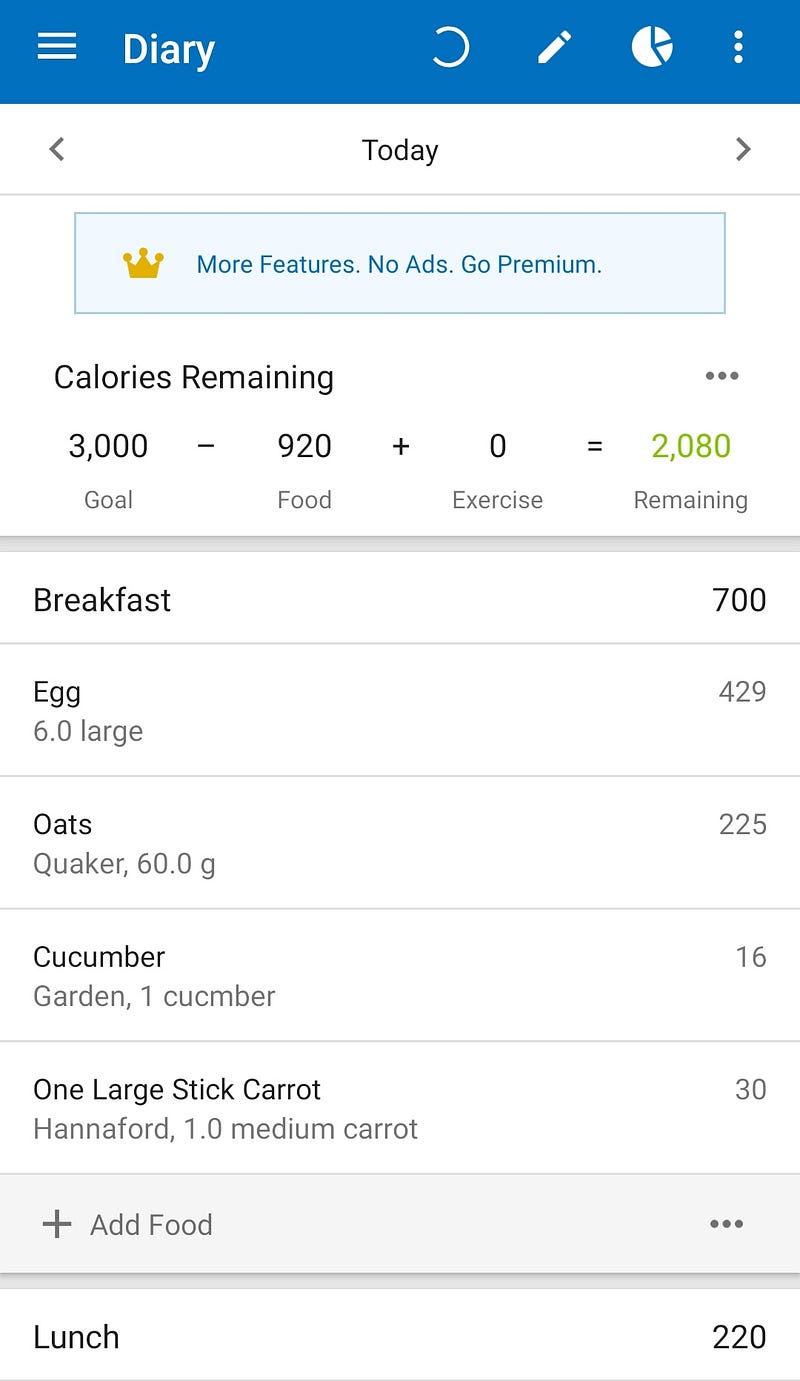
Source: Screenshot by the Author.

Set a calorie target and after every meal, search and add whatever you ate. Just make sure you stay around the target, plus or minus 50 calories is okay.

Step 5: Hydration.

Studies such as this⁴ and this⁵ have found the effects of dehydration to be debilitating — diarrhea, dizziness, affected brain functioning, seizures, kidney failure, and in extreme cases coma and death.
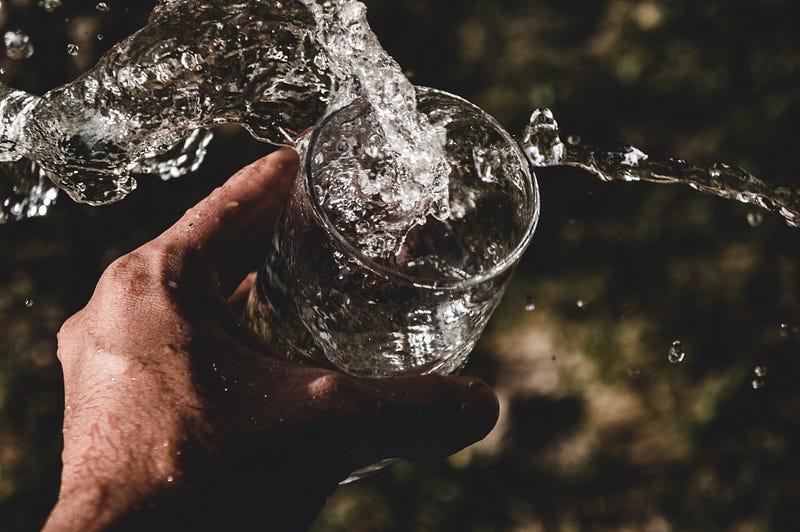
Photo by Anderson Rian on Unsplash

Apart from the general importance of drinking water, research⁶ has also found drinking more water to be associated with better weight loss.

Despite individual requirements being different, this paper⁷ found that males on average required 3.7 liters of water while females on average required 2.7 liters of water per day.

Make sure to drink at least 3 to 4 liters of water per day.

Step 6: Exercise — Resistance vs Aerobic Exercise.

The basic difference:

Resistance exercise involves the use of free weights, machines, or your own bodyweight to build strength and muscle while aerobic exercise or cardio involves getting your heart rate up and conditioning your heart.

So weightlifting, bodybuilding, powerlifting, calisthenics, etc. are resistance exercises while swimming, cycling, running, etc. are aerobic ones.

Photo by Anastase Maragos on Unsplash

Muscle preservation or building:

This study⁸ found resistance exercise to be superior to cardio when it comes to building or preserving muscle while losing body fat.

Intuitively we would expect this as — The point of resistance exercise is to build strength and muscle.

Calorie burning: The concept of Excess Post-exercise Oxygen Consumption (EPOC)

We all know that when exercising you burn calories but did you know about the exercise after-burn — where you burn calories even after exercising?

ESOC is the amount of oxygen required by the body to restore its state from an elevated metabolism level to normal after exercising. The energy spent due to ESOC is called the after-burn effect.

Cardio burns more calories than resistance exercise while exercising but research has found resistance exercise to elicit a much greater EPOC or after-burn effect than cardio.

This means that resistance training can burn as much as if not more calories than aerobic exercise.

Conclusion

As described earlier, the first time I lost weight, I did a lot of cardio and ended up looking anorexic having lost a lot of muscle and strength.

The next time I went on a fat-loss cycle, I prioritized weight training and did minimal to no cardio.

The results were much better — enhanced fat loss and little to no strength and muscle loss.

Based on the research and my experience:

Prioritize resistance training over aerobic exercise.

Let resistance training constitute 60–80% while cardio 20–40% of your exercise routine.

Optional Step: Ramp up your NEAT

Non-Exercise Activity Thermogenesis (NEAT) refers to the energy spent in your normal daily activities excluding exercise.

Research⁹ has shown that Non-Exercise Activity Thermogenesis (NEAT) accounts for up to 80% of your daily energy expenditure.
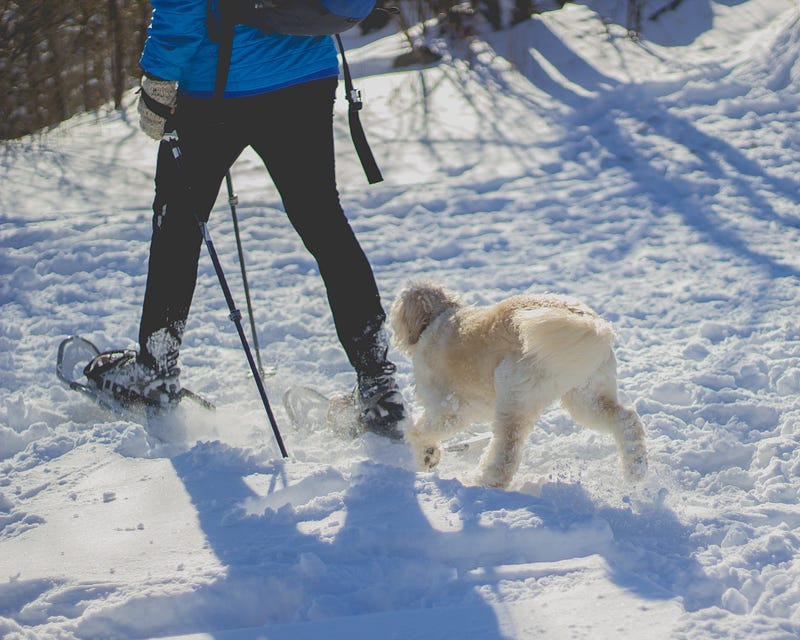
Photo by Bonnie Kittle on Unsplash

Just staying active throughout the day can help you burn a lot of calories. I have experienced this first hand.

I am mostly sedentary at home while I get in a lot of walking on my 500-acre college campus without even realizing it. As a result, my calorie requirements in college are significantly higher than at home.

Ramping up your NEAT → Increasing your TDEE → You can increase your calorie intake!

Here are a few ways you can increase your NEAT:

  • Set goals and track your daily steps.
  • Take the stairs instead of the elevator.
  • If you work a desk job, stand up every now and then to stretch and even take a stroll.
  • Walk while talking on the phone.
  • Cycle or walk instead of using a car or motorbike whenever possible.
  • Walk your dog if you have one.

Step 7: Sleep is crucial.

Sleep, in general, is of paramount importance as this study¹⁰ aptly titled “The Extraordinary Importance of Sleep” explains.

The effects of sleep deprivation are debilitating — affected brain functioning, increase in blood pressure, increased risk of heart diseases, disruption of hormones, weight gain, and even death.

When looking to burn fat, the importance of sleep jumps up a lot of notches.
Photo by Erik-Jan Leusink on Unsplash

This¹¹ study compared the effects of 8.5 hours and 5.5 hours of sleep per night on weight loss keeping the other factors such as calorie deficit, exercise, etc. the same.

The results were astounding.

The 5.5 hours group lost 55% lesser fat mass and 60% more lean body mass than the 8.5 hours group.

Sleep alone can make or break your fat loss regime.

Get in 8–9 hours of quality sleep every night for optimal results.

Step 8: Weigh yourself every morning.

This is easy to do — Just buy a scale, and pop it in the washroom. When you walk into the washroom first thing after waking up each morning, step on the scale.

Monitoring progress.

Daily weight fluctuations are normal so don’t freak out or get too excited if your weight goes up or down a pound the next day.

Record your weight every day and at the end of the week, take the average.

As long as your weekly average is going down, you ARE making progress.

The Final Step: Patience and some tweaking.

Now you need to stay patient. You didn’t gain all that fat in a day or a week so don’t expect to lose it that soon either.

If you have been following the plan to a tee and your weekly average is going down by at least half a pound, do NOT change anything.

If it ain’t broke, don’t fix it.
Photo by Aron Visuals on Unsplash

If there is no progress or if your progress stalls at some point, then it’s time for some slight tweaking.

In most cases, the culprit is tracking calories, it’s easy to ignore sauces, oil, toppings, etc. — Track every single thing you put into your mouth.

TDEE calculators give only estimates and this discrepancy is why you aren’t making progress. As you lose weight, your TDEE tends to go down as well so it’s natural for progress to stall.

No need to freak out. All you have to do is:

Decrease your calorie intake by 150 - 200 calories when progress stalls.

Ending words.

If you’ve made it this far, kudos, and thanks a lot.

I have drawn upon my experience and the scientific literature to write this comprehensive article and I hope you have found it helpful and insightful.

Good luck on your fat-loss journey!

Want to Lose (and Keep Off) Body Fat without Any Overcomplicated B.S.? Grab Your Free Copy of The 5-Minute Fat-Loss Simplifier

References:

[1] Strasser B, Spreitzer A, Haber P. Fat loss depends on energy deficit only, independently of the method for weight loss. Ann Nutr Metab. 2007;51(5):428–32. doi: 10.1159/000111162. Epub 2007 Nov 20. PMID: 18025815.

[2] Melby CL, Paris HL, Sayer RD, Bell C, Hill JO. Increasing Energy Flux to Maintain Diet-Induced Weight Loss. Nutrients. 2019;11(10):2533. Published 2019 Oct 21. doi:10.3390/nu11102533

[3] Thomas M Longland, Sara Y Oikawa, Cameron J Mitchell, Michaela C Devries, Stuart M Phillips, Higher compared with lower dietary protein during an energy deficit combined with intense exercise promotes greater lean mass gain and fat mass loss: a randomized trial, The American Journal of Clinical Nutrition, Volume 103, Issue 3, March 2016, Pages 738–746, https://doi.org/10.3945/ajcn.115.119339

[4] Ann C. Grandjean & Nicole R. Grandjean (2007) Dehydration and Cognitive Performance, Journal of the American College of Nutrition, 26:sup5, 549S-554S, DOI: 10.1080/07315724.2007.10719657

[5] Shaheen NA, Alqahtani AA, Assiri H, Alkhodair R, Hussein MA. Public knowledge of dehydration and fluid intake practices: variation by participants’ characteristics. BMC Public Health. 2018;18(1):1346. Published 2018 Dec 5. doi:10.1186/s12889–018–6252–5

[6] Thornton SN. Increased Hydration Can Be Associated with Weight Loss. Front Nutr. 2016;3:18. Published 2016 Jun 10. doi:10.3389/fnut.2016.00018

[7] Institute of Medicine. 2005. Dietary Reference Intakes for Water, Potassium, Sodium, Chloride, and Sulfate. Washington, DC: The National Academies Press. https://doi.org/10.17226/10925.

[8] Beavers KM, Ambrosius WT, Rejeski WJ, et al. Effect of Exercise Type During Intentional Weight Loss on Body Composition in Older Adults with Obesity. Obesity (Silver Spring). 2017;25(11):1823–1829. doi:10.1002/oby.21977

[9] Von Loeffelholz C, Birkenfeld A. The Role of Non-exercise Activity Thermogenesis in Human Obesity. [Updated 2018 Apr 9]. In: Feingold KR, Anawalt B, Boyce A, et al., editors. Endotext [Internet]. South Dartmouth (MA): MDText.com, Inc.; 2000-. Available from: https://www.ncbi.nlm.nih.gov/books/NBK279077/

[10] Worley SL. The Extraordinary Importance of Sleep: The Detrimental Effects of Inadequate Sleep on Health and Public Safety Drive an Explosion of Sleep Research. P T. 2018;43(12):758–763.

Fitness
Fat Loss
Health
Exercise
Weight Loss
Recommended from ReadMedium