
Generative AI: The Next Frontier in Artificial Intelligence
Now, let’s talk about generative AI.

Long Story, Short > generative AI, is a cutting-edge approach to AI that has the potential to revolutionize industries and transform the way we live and work. In this article, I explore how it works, the challenges researchers face, and the immense possibilities for growth and innovation in the healthcare and manufacturing industries. If you’re an investor looking to stay ahead of the curve and capitalize on the next big thing in AI, this article is a must-read.
As someone who has been in the tech industry for over two decades, I’ve witnessed the transformation of artificial intelligence from its nascent stages to what it has become today.
My early investment in AI in 2007 with iKen Solutions, an innovative AI incubated company in ITT of Bombay, India left a lasting impression on me. Today, Iken Solutions has become a leading AI consulting firm, helping companies worldwide leverage AI to improve their operations and decision-making processes.
Recently, I’ve made two investments in the industry in the lasts years. The first is in Kin Analytics, a promising AI company based in Ecuador. Kin Analytics is at the forefront of developing innovative AI solutions for the US, Europe, and Latin American markets. They offer analytical consulting services and software development for organizations of all types. With their potential, I believe they have what it takes to become a significant player in the global AI industry.
My second investment is in Strics, an AI-powered microlearning platform for employee training currently in stealth mode. Strics aims to revolutionize the traditional approach to employee training by providing personalized and engaging content that can be easily accessed through its platform. With the increasing demand for upskilling and reskilling in the workforce, I believe Strics has a promising future in the EdTech industry.
While traditional AI has made impressive advances in natural language processing and image recognition, it still has limitations. That’s why I’m excited about the potential of generative AI. This innovative approach to AI has the potential to learn and evolve on its own without the need for human intervention.
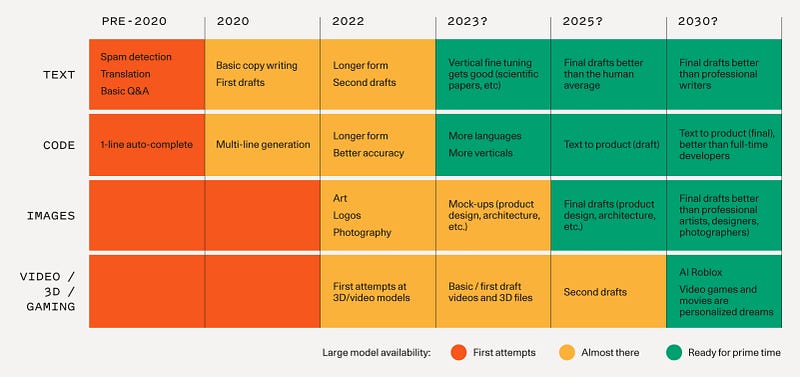
AI has already become an integral part of our daily lives, from Siri on our iPhones to autonomous cars on our roads. However, I believe that the untapped potential of AI is still waiting to be discovered. Generative AI is set to revolutionize our thinking about AI and its capabilities. It’s less about creating static models and more about creating dynamic, adaptable systems that can learn, evolve and regenerate themselves.
Now, let’s talk about generative AI. This emerging field is a new way of thinking about artificial intelligence that’s less about creating static models and more about creating dynamic, adaptable systems. Traditional AI has made impressive advances in natural language processing and image recognition. Still, regenerative AI has the potential to learn and evolve on its own without the need for human intervention.
This opens up possibilities, from developing more advanced medical treatments to improving our understanding of complex systems such as the climate. With generative AI, the untapped potential of artificial intelligence is waiting to be discovered.
The potential applications for generative AI are vast. Generative AI has the potential to transform industries by creating more intelligent, more efficient systems that can learn and adapt in real-time.
Get ready to discover how generative AI could transform industries! This cutting-edge technology has the power to create intelligent and efficient systems that can learn and adapt in real time, revolutionizing everything from healthcare to energy production. Consider concrete examples of how Regenerative AI could be applied in different industries.
- Healthcare industry: Generative AI can potentially improve medical treatments by creating more personalized and targeted therapies. Imagine a system that analyzes patient data to identify patterns and develop customized treatment plans, resulting in better patient outcomes and more efficient use of medical resources.
- Education sector: Generative AI could be used to create more personalized student learning experiences. A system that analyzes a student’s learning style and adapts the curriculum to suit their needs could lead to better student engagement and retention.
- Financial institutions: could also benefit from generative AI by improving fraud detection and risk management. A system that analyzes transaction data to identify patterns of fraudulent activity and adapts its algorithms to detect and prevent future fraud could help reduce financial losses.
- Transportation industry: Generative AI could improve safety and efficiency. Imagine a system that analyzes traffic patterns and optimizes routes in real-time to reduce congestion and improve traffic flow.
- Energy production: Generative AI could also optimize energy production and consumption. A system that analyzes energy usage patterns to identify areas where energy is wasted and develops strategies to reduce consumption could significantly reduce energy waste.
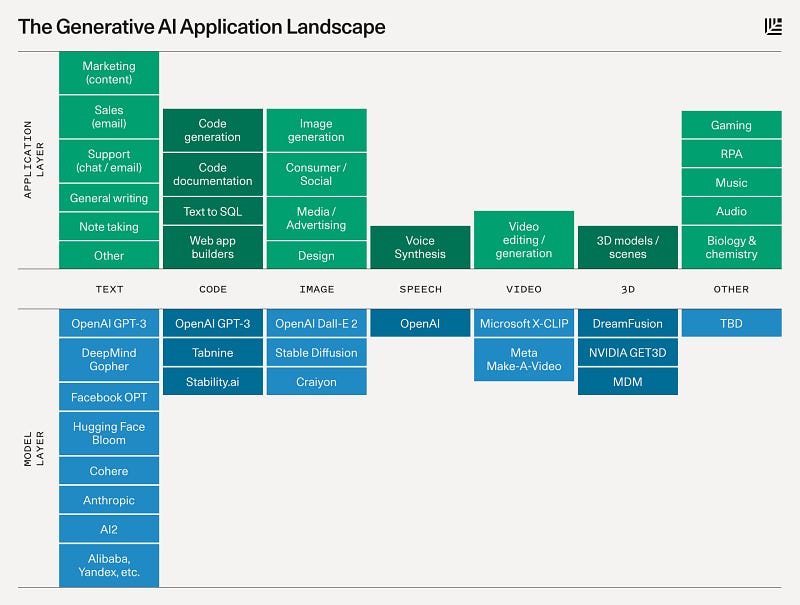
These are just a few examples of how generative AI could revolutionize different industries. We expect to see even more exciting, and innovative applications emerge as technology develops.
But how does generative AI work?
Imagine a world where machines can learn and improve independently without human intervention. That’s the exciting promise of generative AI. But how exactly does it work? At its core, generative AI is based on evolution and natural selection principles. It’s like creating a digital ecosystem where the most robust models survive, and the weaker ones are discarded. And this trial-and-error approach has already shown great promise in fields like robotics, where robots can learn to do complex tasks independently!
But generative AI isn’t just limited to robotics. Researchers use it to solve some of the most complex problems in finance and engineering. And it’s not just about creating more intelligent algorithms — it’s about creating self-learning and evolving systems that continuously improve their performance.
Of course, there are still some significant challenges that researchers in generative AI must tackle. One of them is ensuring that our algorithms are ethical and unbiased. We don’t want to reinforce existing biases or create new ones. And then there’s the challenge of developing the infrastructure and tools we need to support the development of regenerative AI systems. But despite these challenges, the future of regenerative AI looks incredibly promising!
So why is generative AI so important?
Get ready because generative AI is about to change the game! This exciting field has the power to transform the world we live in by solving some of our most significant challenges. Imagine creating systems that continuously learn and adapt in real time to solve complex problems like climate change, healthcare, and poverty.
We can make our systems more efficient, sustainable, and equitable with generative AI. We’re talking about a world where we can create personalized medical treatments, optimize energy production and consumption, and even reduce traffic congestion — all with the help of intelligent, self-learning systems. The possibilities are endless, and regenerative AI is at the forefront of this revolution.
When it comes to generative AI, there are some big players and promising startups leading the way. Let’s look at the top ten companies in this exciting field.
Big Companies:
- OpenAI — at the forefront of developing generative AI systems, focusing on creating safe and beneficial technologies for society.
- Google DeepMind — is known for its groundbreaking work in developing AI algorithms that can learn to play complex games and for its research on neural networks and reinforcement learning.
- Microsoft Research — dedicated to conducting research in various fields, including AI, focusing on developing algorithms that can learn from experience and adapt to new situations.
- IBM Research — focused on developing cutting-edge technologies in various fields, including AI, with research in generative AI, including developing algorithms to learn and adapt to new situations and technologies for creating safe and ethical AI systems.
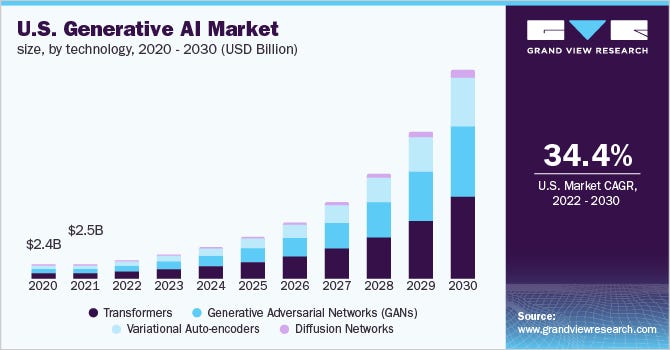
Promising Startups:
- Vicarious — develops AI systems that can learn and reason like humans, based on the principles of the human brain, to create more intelligent and versatile AI systems.
- Xnor.ai — develops AI algorithms that can run on low-power devices, such as smartphones and IoT devices, to create more efficient and adaptable AI systems.
- Neural Magic — develops AI algorithms that can run on commodity hardware, such as CPUs and GPUs, to create more efficient and adaptable AI systems.
- Gamalon — focused on developing AI systems that can understand natural language, with research to create more efficient and effective natural language processing systems.
- Covariant — focused on developing AI systems for the manufacturing industry, with research to create more efficient and effective manufacturing systems.
- Osaro — develops AI systems for the logistics industry, with research to create more efficient and effective logistics systems.
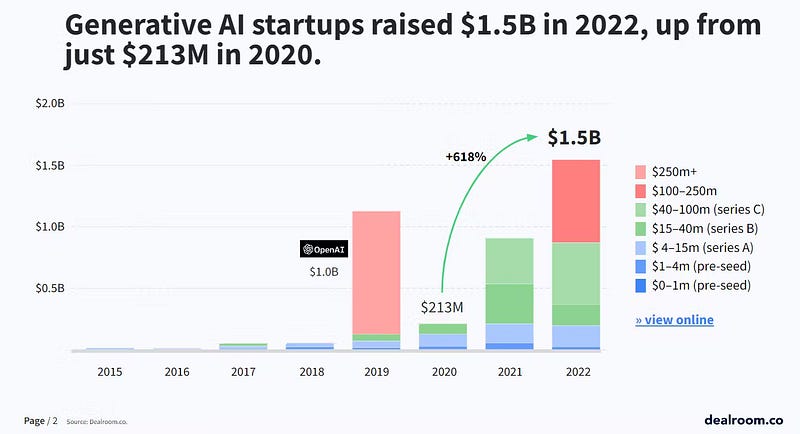
So there you have it, the top ten companies in generative AI. With these players leading the way, we’re sure to see some exciting developments and breakthroughs in this field in the future.
Generative AI is an emerging technology with vast potential. However, as with any new tech, there are challenges to overcome. To fully realize the potential of regenerative AI, we must address these potential concerns proactively.
One of the most significant concerns with generative AI is these systems’ ethical and unbiased use. As they learn and adapt, there’s a risk they may develop biases based on the data they’re trained on, leading to unfair and discriminatory decision-making. It’s crucial to ensure that regenerative AI systems are transparent and accountable, with clear guidelines for ethical and unbiased use.
Data privacy is another potential challenge. Generative AI systems require vast amounts of data to learn and evolve. This data may include personal information, and there’s a risk that this data could be misused or compromised, leading to privacy violations. Implementing robust data protection measures to handle personal data responsibly and securely is essential.
Job displacement is also a potential challenge. As generative AI systems become more advanced and can perform increasingly complex tasks, there’s a risk that they may replace human workers. It’s essential to prepare for this eventuality by upskilling and reskilling the workforce to ensure they can adapt to the changing demands of the job market.
Generative AI is an exciting and promising technology that can transform our world positively. Despite the challenges of any emerging technology, the benefits of regenerative AI are too significant to ignore.
Imagine a world where our systems are more efficient, sustainable, and equitable, where we have more time and resources to focus on creative and meaningful work. Generative AI can optimize work time and automate routine tasks, freeing time and resources to tackle society’s most significant challenges, from climate change to healthcare and poverty.
Of course, there are potential concerns, such as these systems’ ethical and unbiased use and data privacy. But by proactively addressing these challenges, we can ensure that generative AI is used ethically and responsibly for the greater good of society.
As someone who has invested in and helped grow AI companies, I’m confident that generative AI will transform the tech industry and our world in ways we can’t imagine. The journey ahead may be difficult, and we will undoubtedly encounter challenges. But the opportunities and benefits of regenerative AI are too significant to ignore.
Let’s embrace the potential of generative AI and work towards creating a better future for ourselves and future generations. With the right approach and clear guidelines, we can harness the power of this technology to solve some of society’s most pressing issues and create a better world for all.
The AI Saga: is a series of four articles that explore the advancements and implications of artificial intelligence (AI) in our world. The articles cover various topics, including generative AI, the role of data and AI in reshaping the world, the backbone technology driving the new AI revolution, and the complex relationship between humans and AI. Together, these articles offer a comprehensive look at the current state of AI and its potential impact on society.
If you’re still here, check out my 😂 trip to India and witness my first encounter with AI at Iken Solutions in 2007! >