
Meet the Builders and Developers Driving the new AI Revolution
My first expedition to the Cutting-Edge Technologies and Creative Minds Shaping the Future of AI
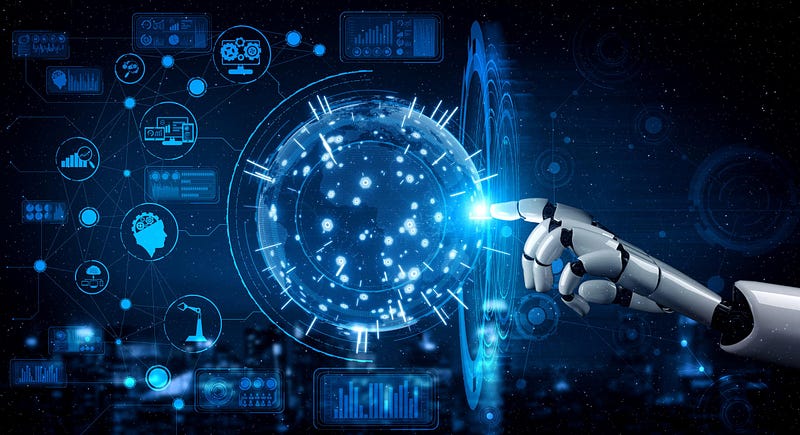
Long Story, short: In this article, we’ll take a closer look at the exciting advancements in AI. We’ll discuss the latest technologies fueling its progress, such as neural networks, transformers, Bayesian networks, and reinforcement learning. Moreover, we’ll explore some of the leading players in the AI industry, including Microsoft, OpenAI, Facebook, Cognitivescale, and Neurala. If you’re interested in discovering how AI transforms our lives and work, keep reading!
As someone who has always been fascinated by the potential of AI technology, I’ve been closely following the latest developments in this field. It has been incredible to witness the rapid pace of innovation that has been taking place in recent months, with new applications and tools being developed at an astonishing rate.
However, as I delved deeper into this world of AI, I realized that behind every powerful AI application is a team of builders and developers using various cutting-edge technologies to bring these applications to life. Transformers and neural networks, reinforcement learning, and Bayesian networks are some of the technologies that form the backbone of the AI revolution we are currently experiencing.
As a non-tech person, I find it daunting to understand the intricacies of these technologies. Still, they are driving the exponential growth of AI and opening up new possibilities for innovation and progress.
The world of AI is complex and multifaceted, with a wide range of technologies and approaches being used to create powerful and transformative applications. As I’ve explored more deeply into this world, I’ve come to appreciate the incredible potential of these technologies and the builders using them to create innovative new applications and tools.
It’s evident that my journey into AI has only just begun, and I’m thrilled to keep exploring and learning about the latest advancements in this field. As technology evolves, it’s clear that various AI systems will become more interconnected, working collaboratively to create even more innovative solutions.
So please meet some of the builders behind ChatGPT and other generative AI innovations:
- OpenAI: OpenAI is a research organization at the forefront of AI research and development. The organization’s mission is to create “friendly” AI to benefit humanity rather than harm it. OpenAI has released several powerful AI tools, including GPT-2 and GPT-3, which use transformer-based architecture. These language models have been used for various applications, from natural language processing to creative writing.
- Microsoft: Microsoft has been heavily investing in AI research and development, with a focus on creating AI-powered applications and tools that can be used by businesses and consumers alike. Microsoft’s AI-powered chatbot, Xiaoice, has become a popular virtual assistant in China, with millions of users daily chatting with the bot. Microsoft has also developed various language models, including Turing NLG and MT-DNN, which have achieved state-of-the-art results on various NLP tasks.
- Facebook: Facebook has been working on various AI projects, including chatbots and image recognition systems. The company’s AI-powered chatbot, M, was designed to help users with multiple tasks, from ordering food to making travel arrangements. Facebook has also developed advanced image recognition systems, such as DeepFace and DeepMask, which can recognize faces and objects accurately.
- Cognitivescale: Cognitivescale is a company focused on creating AI systems that can learn and adapt over time and can be used for various applications, from automating business processes to improving healthcare outcomes. The company’s Cortex platform uses AI technologies, including neural networks and evolutionary algorithms, to create highly adaptive and efficient AI systems.
- Neurala: Neurala is another company that creates highly adaptive and efficient AI systems. Neurala’s technology is based on a combination of neural networks and reinforcement learning algorithms, which allow the AI system to learn and adapt over time. The company’s Brain Builder platform will enable developers to create custom AI models for various applications, from robotics to industrial automation.
These builders and others in the AI space are working to make AI more accessible and valuable to a broader range of users. By leveraging the latest AI technologies, such as transformers, neural networks, and reinforcement learning algorithms, they are creating powerful and transformative applications that have the potential to revolutionize a wide range of industries and domains.
As AI technologies continue to evolve and breakthroughs are made, we can expect to see even more innovative and transformative applications of AI in the years to come.
And this is the technology they are using:
Transformers: Are a type of neural network architecture that has been particularly successful in natural language processing (NLP) tasks such as machine translation and text summarization.
a. Hugging Face: Hugging Face is a startup that has developed a popular open-source library for natural language processing called Transformers. The library is built on top of PyTorch and is widely used for various NLP tasks, such as language translation and text generation.
Neural Networks: Are machine learning models designed to mimic how the human brain works using layers of interconnected nodes to process and analyze data. Neural networks are used in various applications, from image and speech recognition to natural language processing and recommendation systems.
a. TensorFlow: TensorFlow is a popular open-source library for building and training neural networks. Developed by Google, TensorFlow has become the go-to framework for many machine learning researchers and practitioners.
b. NVIDIA: is a leading manufacturer of graphics processing units (GPUs) widely used in training deep neural networks. The company has also developed several software libraries and tools, such as cuDNN and TensorRT, that make training and deploying neural networks on GPUs easier.
Reinforcement Learning: is a machine learning type involving an agent learning to make decisions in an environment by receiving feedback in the form of rewards or punishments. Reinforcement learning has been used to develop intelligent systems that can play games, control robots, and make complex decisions in various domains.
a. IBM: has been actively researching and developing reinforcement learning algorithms and applications for many years. The company’s AI research division, IBM Watson, has developed several reinforcement learning frameworks and tools, such as IBM Watson Studio and IBM Watson Assistant, which can be used to build and deploy AI-powered applications.
b. DeepMind: DeepMind is a research organization that has made significant contributions to the field of reinforcement learning. The company’s AlphaGo algorithm, which used reinforcement learning to defeat the world champion in the game of Go, was a significant milestone in the development of AI.
Bayesian Networks: Are a probabilistic graphical model using probability theory to represent and reason uncertain knowledge. Bayesian networks are beneficial for modelling complex systems with multiple interacting variables and have applications in healthcare, finance, and engineering fields.
a. Microsoft: Besides developing neural network-based AI tools, Microsoft has invested in probabilistic graphical models, such as Bayesian networks. The company’s Infer.NET framework provides tools for building and training Bayesian network models.
b. Intel: has developed several tools and libraries for probabilistic programming and Bayesian inference, such as the Intel Distribution for Python and the Intel Probabilistic Programming Library. These tools can be used for various applications, such as fraud detection and risk assessment.
The AI revolution is just starting, with countless new startups and millions worldwide embracing these technologies daily. By leveraging the power of collaborative spaces and combining different technologies, we can expect to see even more incredible breakthroughs in every aspect of our lives.
At the forefront of this revolution are powerful AI technologies such as transformers, neural networks, and reinforcement learning algorithms, which drive innovation and progress in various domains. With the expertise and creativity of builders and developers, we can expect to see even more transformative AI applications in the future, further revolutionizing how we work, live, and interact with technology.
The potential of AI is immense, and we are only just beginning to scratch the surface of what is possible. As we continue to explore and learn about the latest developments in AI, we can look forward to a future filled with even more innovative and transformative applications.
The journey ahead is sure to be exciting, filled with endless possibilities and opportunities to create a better world through the power of AI.
The AI Saga: is a series of four articles that explore the advancements and implications of artificial intelligence (AI) in our world. The articles cover various topics, including generative AI, the role of data and AI in reshaping the world, the backbone technology driving the new AI revolution, and the complex relationship between humans and AI. Together, these articles offer a comprehensive look at the current state of AI and its potential impact on society.