
Prompt: Innocence vs. Experience
William Blake
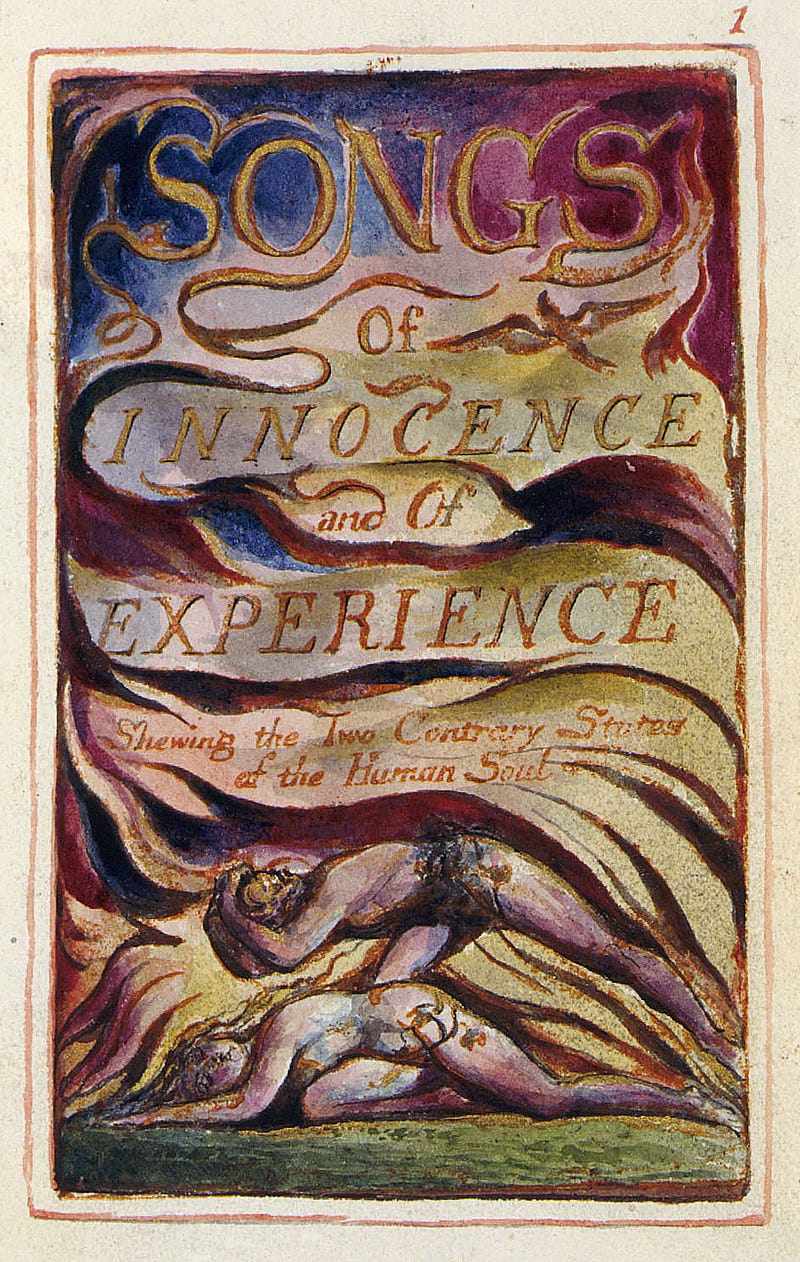
I hope you are well and safe wherever you are. Much of the world is on lockdown, which is absolutely appropriate. Please take it seriously, but I hope that you can also find peace amidst the fear and that you might take advantage of the coming days — time for reading, writing and reflecting. With that, hope you enjoy the following prompt — perhaps darker than my normal sentiment, but I think fitting for the time we are in.
I owe William Blake an apology. I assumed he was an outdated romantic poet, as that is how the textbooks label him. But in truth, Blake is in some ways as relevant today as he was two hundred years ago.
Blake dives headlong into the paradox of existence with the Songs of Innocence and Experience, articulating life beautifully and dangerously in words and illustrations.
The Songs of Innocence contains happy, sleepy, vanilla lullaby poems, as I expected, but these are juxtaposed by delightful darkness in the Songs of Experience, full of death, plagues, poisoned rivals, lions, tigers, and malevolent deities.
Blake lived through tumultuous times — an unraveling of the Old World monarchies in Britain and France, and replacement with revolutionary republics. It strikes me how much his sentiments can speak to us today, in the Coronavirus chaos, the polarizing turmoil of election season, in the time where reality is not what we were prepared for. Blake is critical of the organized church, skeptical of the state leadership. . .if one can look beyond the Thys and Thous in his writing, he could fit well into our age.
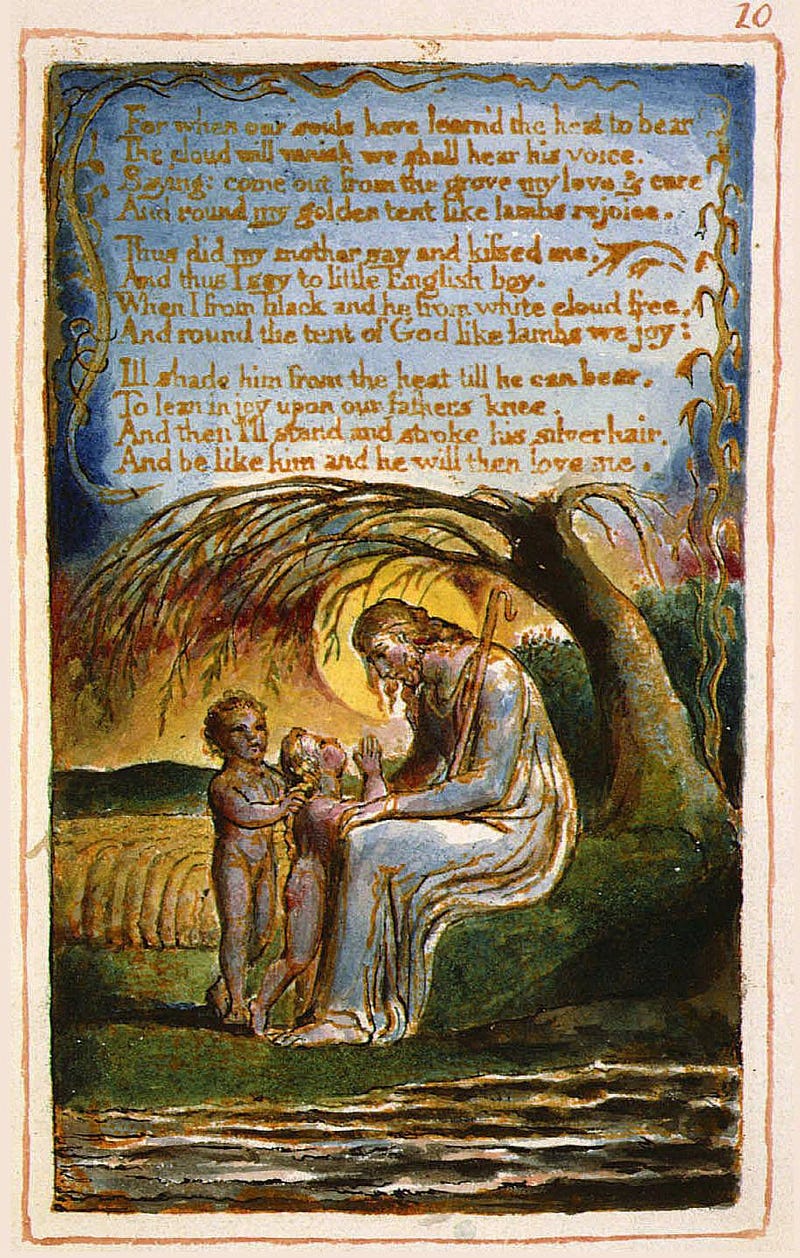
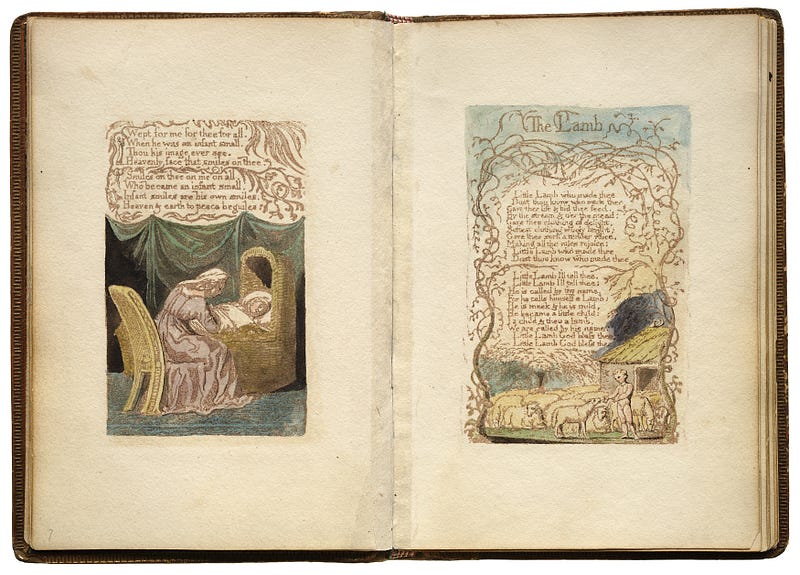
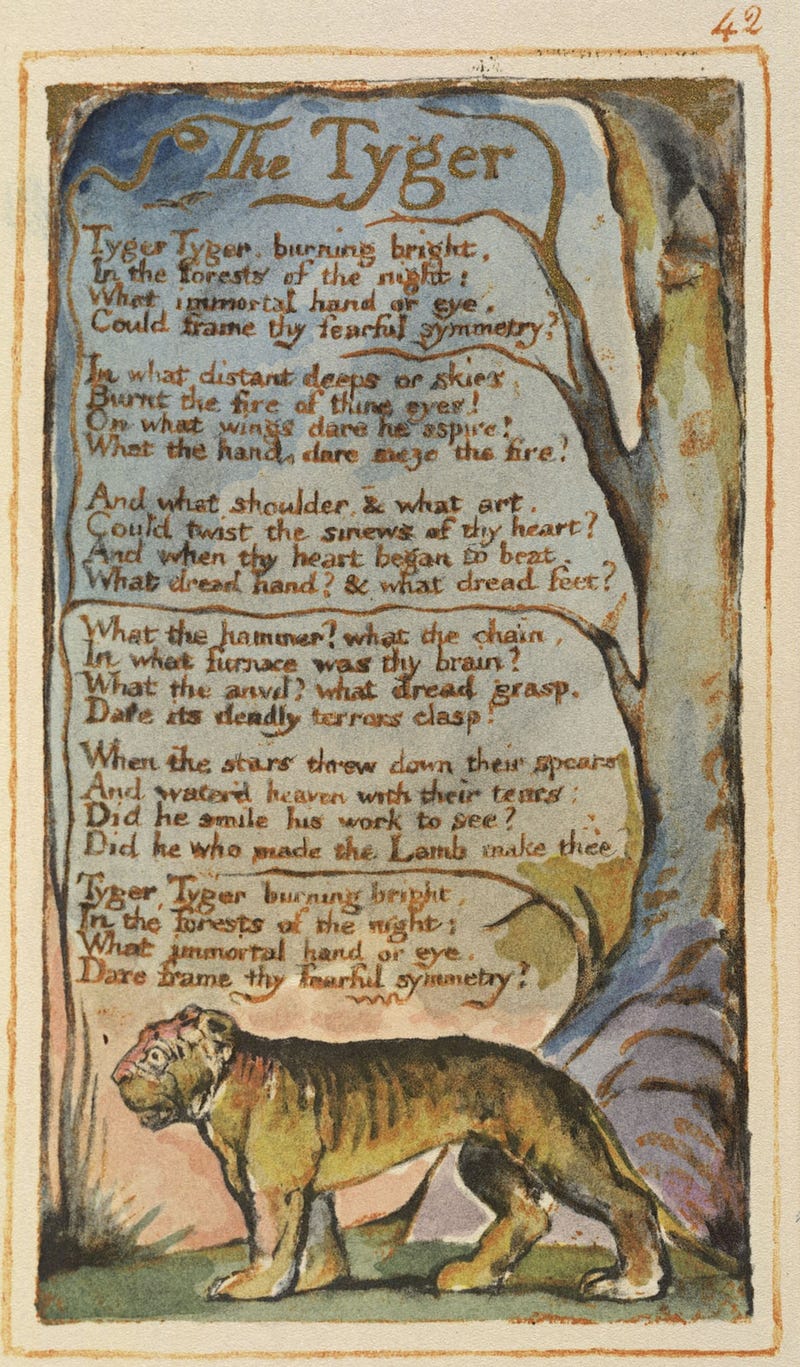
The Tyger, Blake’s most famous poem, is not merely about an animal, it is a question about divine goodness and the presence of evil — does God take joy in creating a killing machine? The Tyger is the opposite of the The Lamb, his song of trust in the classical image of God as a good shepherd.
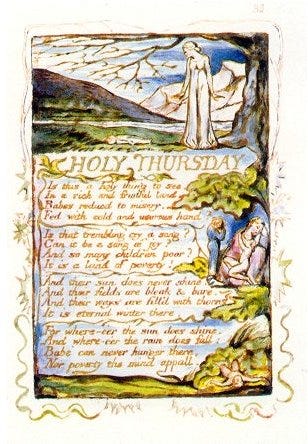
Blake brings similar questions in his two versions of The Divine Image. In the Songs of Innocence, both God and humans are Mercy, Pity, Peace and Love. In the Songs of Experience version,
Cruelty has a human heart, And Jealousy a human face; Terror the human form divine, And Secrecy the human dress.
With this criticism of humans, Blake questions the divine as he did in the Tyger — if God made humans like this, then who is God?
From what I’ve read, this wasn’t necessarily a rejection of faith, and Blake worked on faith-based illustrations until the day he died. As Dickinson wrote, “Faith is Doubt.” I agree. . .it’s hard to imagine actual faith in absence of questioning.
Blake considers the human heart in “A Cradle Song.” Written in two versions, the Songs of Innocence is sweet and optimistic, whereas the Songs of Experience version closes with foreboding:
O the cunning wiles that creep In thy little heart asleep! When thy little heart doth wake, Then the dreadful light shall break.
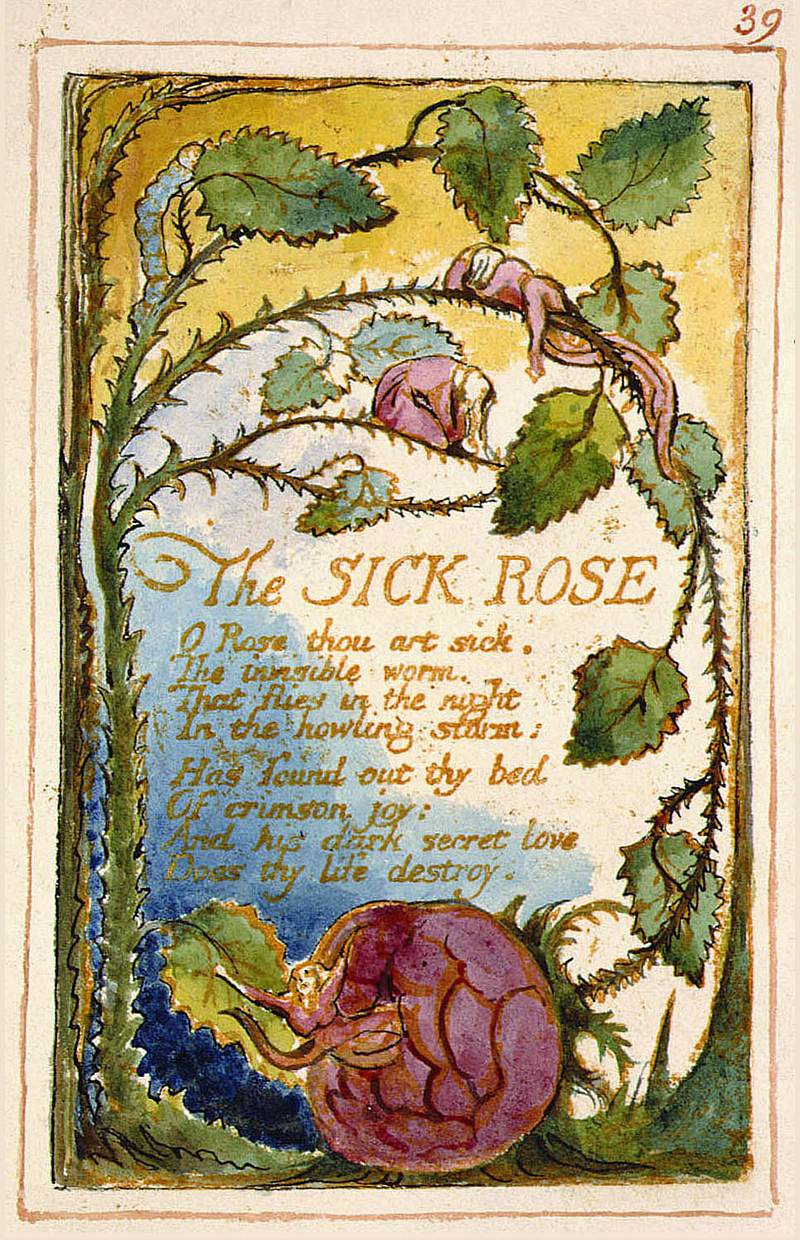
“The Sick Rose” considers the death of beauty, “The Human Abstract” depicts the human brain as a tree of deceit, “The Poison Tree” imagines desired revenge coming to fruition, “The Bard” questions leadership and authority.
None are simple poems with simple answers. All are complex, image-rich and thought-provoking. Romantic poet — I think not.
Prompt — What is the gap between your innocence and experience? How is the world different from what you wanted it to be?
The layout of Blake’s work is brilliant, starting with exactly what is expected, then a 180 degree pivot. Important to note Blake doesn’t often offer answers or resolution. . .he observes and thinks outlaid.
Neither am I hoping for simple answers, but rather insightful exploration.
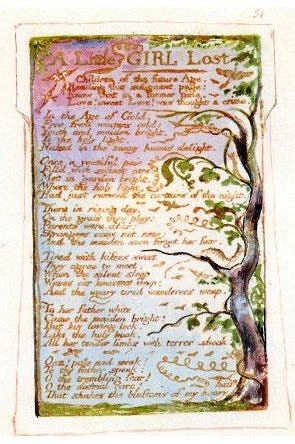
Below are art and illustrations from Blake’s Songs of Innocence and Experience. Full text is available on Gutenberg, and I’m sure Kindle. Images of the plates (for stamping illustrations that were hand colored) are available on Wikipedia, though not all in one place— you can find if search for individual poem titles.
Also below are responses to the previous Dead Poets Live prompt, And That is Life — Fantastic work!
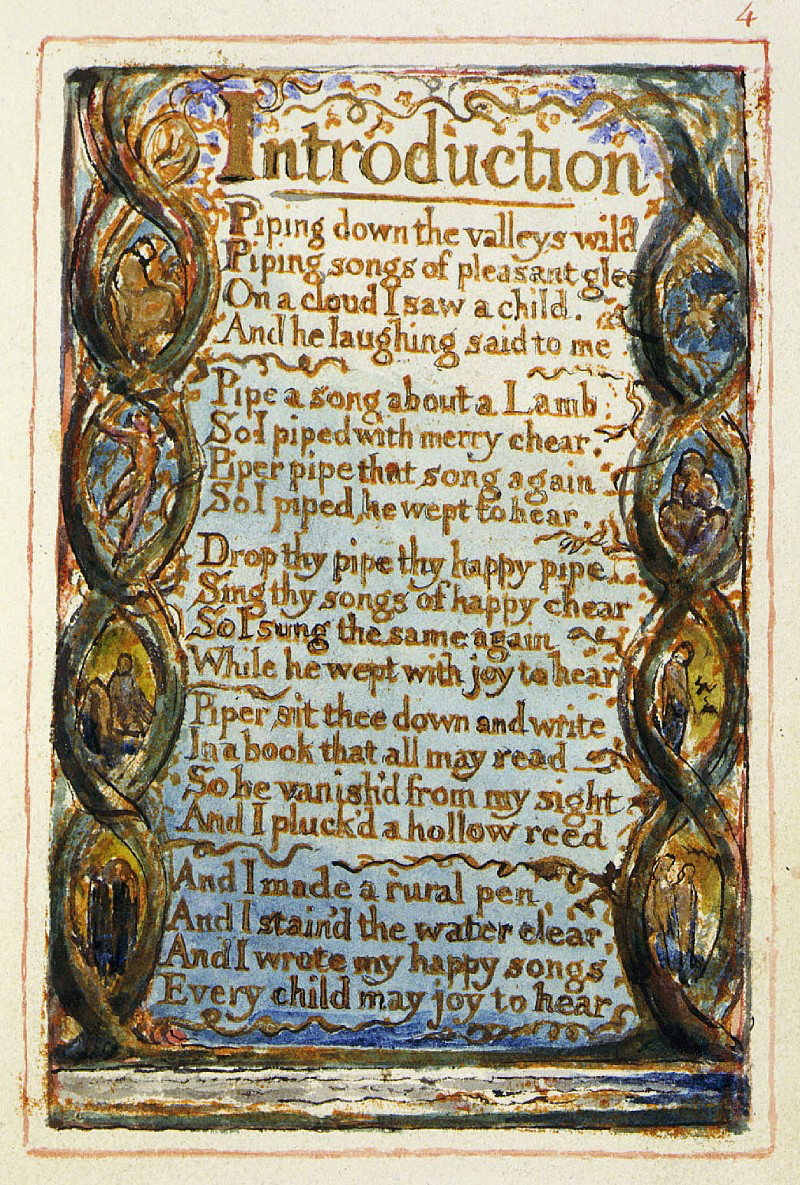
THE DIVINE IMAGE (Song of Innocence)
For Mercy, Pity, Peace, and Love, Is God our Father dear; And Mercy, Pity, Peace, and Love, Is man, His child and care.
For Mercy has a human heart; Pity, a human face; And Love, the human form divine: And Peace the human dress.
THE DIVINE IMAGE (Song of Experience)
Cruelty has a human heart, And Jealousy a human face; Terror the human form divine, And Secrecy the human dress.
The human dress is forgèd iron, The human form a fiery forge, The human face a furnace sealed, The human heart its hungry gorge.
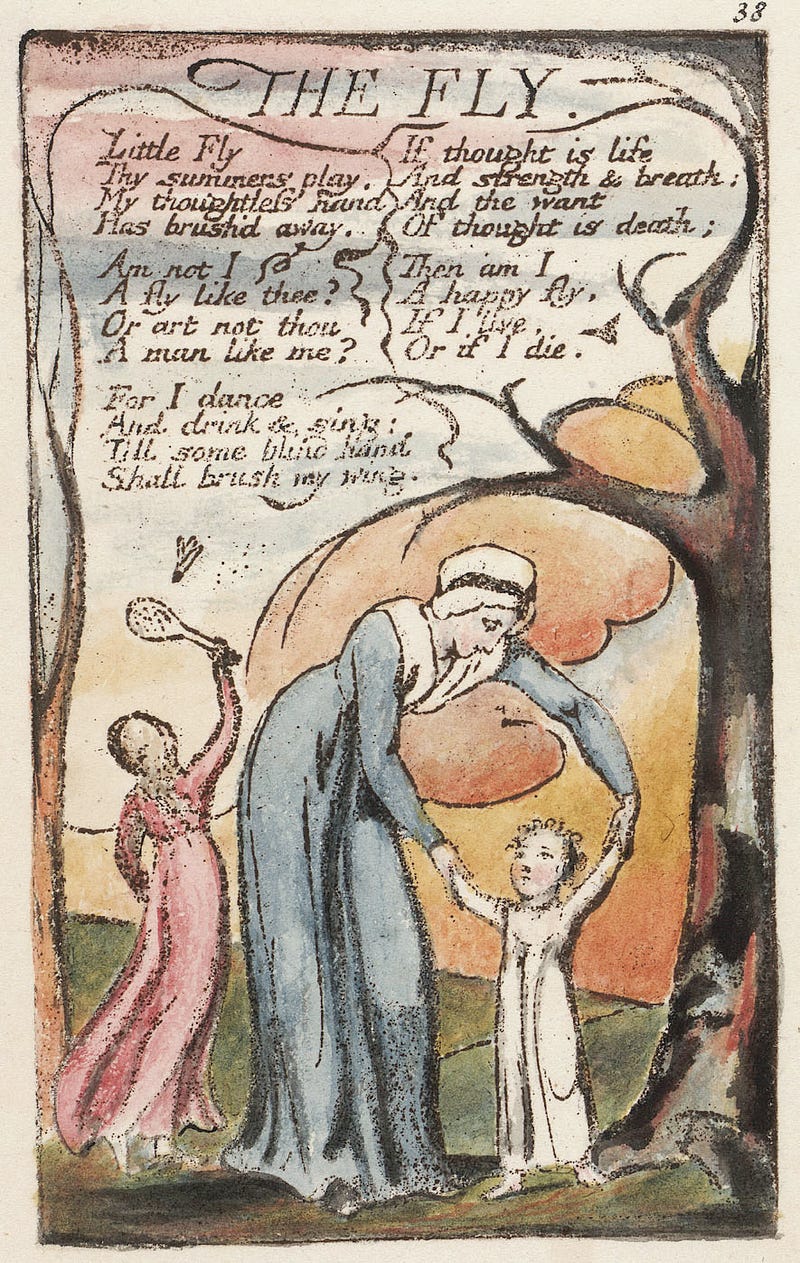
THE FLY
Little Fly, Thy summer’s play My thoughtless hand Has brushed away.
Am not I A fly like thee? Or art not thou A man like me?
For I dance, And drink, and sing, Till some blind hand Shall brush my wing.
If thought is life And strength and breath, And the want Of thought is death;
Then am I A happy fly. If I live, Or if I die.
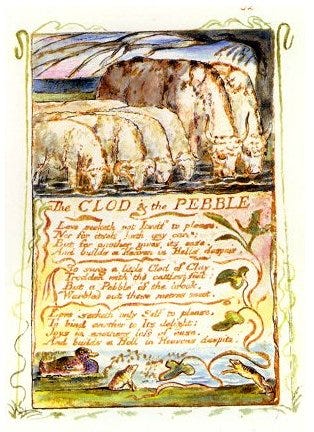
THE CLOD AND THE PEBBLE
‘Love seeketh not itself to please, Nor for itself hath any care, But for another gives its ease, And builds a heaven in hell’s despair.’
So sung a little clod of clay, Trodden with the cattle’s feet, But a pebble of the brook Warbled out these metres meet:
‘Love seeketh only Self to please, To bind another to its delight, Joys in another’s loss of ease, And builds a hell in heaven’s despite.’
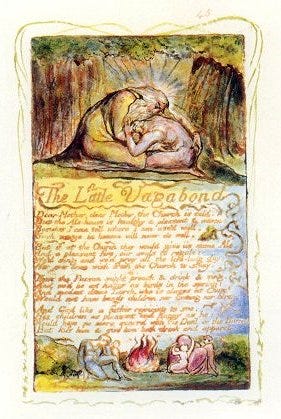
THE LITTLE VAGABOND
Dear mother, dear mother, the Church is cold; But the Alehouse is healthy, and pleasant, and warm. Besides, I can tell where I am used well; Such usage in heaven will never do well.
But, if at the Church they would give us some ale, And a pleasant fire our souls to regale, We’d sing and we’d pray all the livelong day, Nor ever once wish from the Church to stray.
Then the Parson might preach, and drink, and sing, And we’d be as happy as birds in the spring; And modest Dame Lurch, who is always at church, Would not have bandy children, nor fasting, nor birch.
And God, like a father, rejoicing to see His children as pleasant and happy as He, Would have no more quarrel with the Devil or the barrel, But kiss him, and give him both drink and apparel.
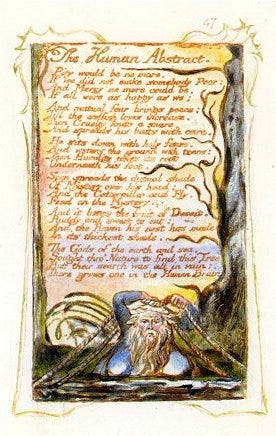
THE HUMAN ABSTRACT
Pity would be no more If we did not make somebody poor, And Mercy no more could be If all were as happy as we.
And mutual fear brings Peace, Till the selfish loves increase; Then Cruelty knits a snare, And spreads his baits with care.
He sits down with holy fears, And waters the ground with tears; Then Humility takes its root Underneath his foot.
Soon spreads the dismal shade Of Mystery over his head, And the caterpillar and fly Feed on the Mystery.
And it bears the fruit of Deceit, Ruddy and sweet to eat, And the raven his nest has made In its thickest shade.
The gods of the earth and sea Sought through nature to find this tree, But their search was all in vain: There grows one in the human Brain.
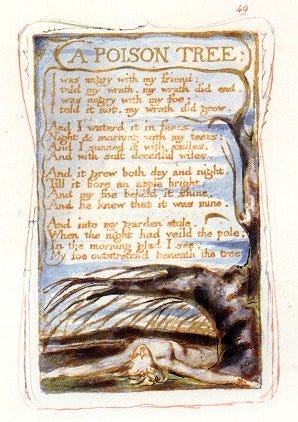
A POISON TREE
I was angry with my friend: I told my wrath, my wrath did end. I was angry with my foe: I told it not, my wrath did grow.
And I watered it in fears Night and morning with my tears, And I sunnèd it with smiles And with soft deceitful wiles.
And it grew both day and night, Till it bore an apple bright, And my foe beheld it shine, And he knew that it was mine, —
And into my garden stole When the night had veiled the pole; In the morning, glad, I see My foe outstretched beneath the tree.
A CRADLE SONG
Sleep, sleep, beauty bright, Dreaming in the joys of night; Sleep, sleep; in thy sleep Little sorrows sit and weep.
Sweet babe, in thy face Soft desires I can trace, Secret joys and secret smiles, Little pretty infant wiles.
As thy softest limbs I feel, Smiles as of the morning steal O’er thy cheek, and o’er thy breast Where thy little heart doth rest.
O the cunning wiles that creep In thy little heart asleep! When thy little heart doth wake, Then the dreadful light shall break.
THE TIGER
Tyger, tyger, burning bright In the forests of the night, What immortal hand or eye Could frame thy fearful symmetry?
In what distant deeps or skies Burnt the fire of thine eyes? On what wings dare he aspire? What the hand dare seize the fire?
And what shoulder and what art Could twist the sinews of thy heart? And, when thy heart began to beat, What dread hand and what dread feet?
What the hammer? what the chain? In what furnace was thy brain? What the anvil? what dread grasp Dare its deadly terrors clasp?
When the stars threw down their spears, And watered heaven with their tears, Did He smile His work to see? Did He who made the lamb make thee?
Tyger, tyger, burning bright In the forests of the night, What immortal hand or eye Dare frame thy fearful symmetry?
THE BLOSSOM (Song of Innocence)
Merry, merry sparrow! Under leaves so green A happy blossom Sees you, swift as arrow, Seek your cradle narrow, Near my bosom. Pretty, pretty robin! Under leaves so green A happy blossom Hears you sobbing, sobbing, Pretty, pretty robin, Near my bosom.
THE SICK ROSE
O rose, thou art sick! The invisible worm, That flies in the night, In the howling storm,
Has found out thy bed Of crimson joy, And his dark secret love Does thy life destroy.
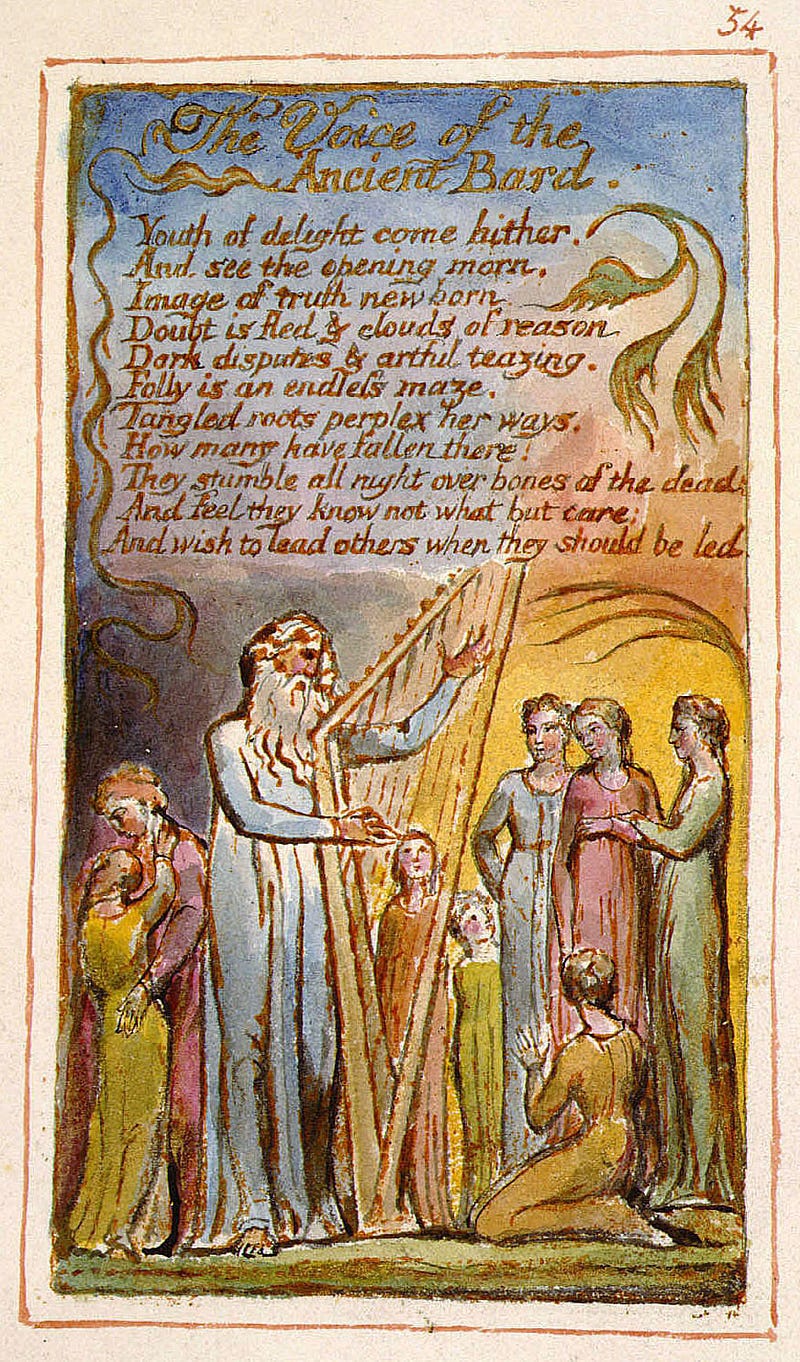
THE VOICE OF THE ANCIENT BARD
Youth of delight! come hither And see the opening morn, Image of Truth new-born. Doubt is fled, and clouds of reason, Dark disputes and artful teazing. Folly is an endless maze; Tangled roots perplex her ways; How many have fallen there! They stumble all night over bones of the dead; And feel — they know not what but care; And wish to lead others, when they should be led.
Previous Prompt: And That Is Life
Guérin Asante Sylvia Wohlfarth Dennett Anna Rozwadowska Lindsay Lonai Linegar Carver Bain Michelle Muses Aaska Ejaz Chiedza Kikumi LB Blue Fences kurt gasbarra
Jo Ann Harris FILZA CHAUDHRY Suwimali Bandara Kurt Gasbarra Crystal E.Wild Flower Sarah Book Amy Jo Reynolds antoinette nevitt Dennett Joe Váradi Austin Briggman Dana Sanford Shringi Kumari Anisesh Tracy Aston wimpy af Ashwini Dodani Vaishali Paliwal Leah J.🕊 Tapan Avasthi Maymuuna Seth Cason Brian Fehler Simon Heathcote Sonam Arora Nadine Morsch Ngang God’swill N. Lisa Tomey Shobha Roy D. E. Fulford poetsarah Gretchen Lee Bourquin 💗POM-poet!💗 Joey L. Sara Stasi Abigail Siegel M.J. Falke Samantha Lazar Tanya E. Denhere Markham J Moody Jack Burt Daphni Sawyer Esther Spurrill-Jones Gurpreet Dhariwal Somsubhra Banerjee