
Prompt: And That Is Life!
“A crust of bread and a corner to sleep in, A minute to smile and an hour to weep in” —Paul Laurence Dunbar
Thank you for your fantastic responses to the Love prompt. I’ll share links to those at the bottom of the page. Beautiful and thought provoking!
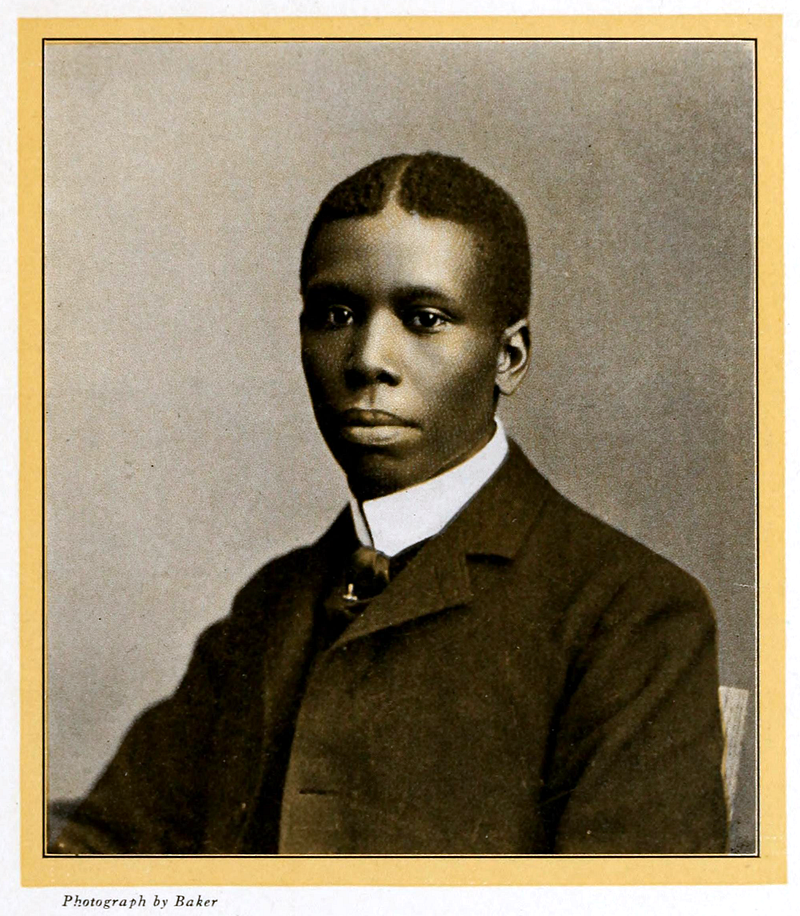
I’ve been looking at the Complete Poems of Paul Laurence Dunbar for the past few weeks. He’s an extremely good writer, and though I don’t think he is going to be one of my all-time favorite poets, he shaped several of my favorite poets. In another way of saying it, my favorite writers may not have been if it wasn’t for him! A little about Dunbar below, then on to the prompt.
Paul Laurence Dunbar was one of the first African American poets to gain recognition in mainstream America in the early 1900’s. He wrote in two styles, beautiful formal poetry/sonnets and lyrical narrative poems in southern black vernacular.
I think the reason we don’t hear much about Dunbar today is that he doesn’t fit the mold of resistance poets like Langston Hughes, James Baldwin, or Maya Angelou, who spoke passionately about race and injustice. Dunbar’s poems about plantation life are shockingly nostalgic (see A Corn Song or The Party), devoid of anger, lacking acknowledgment of the abuse and lynchings suffered by his people.
Dunbar was not a tortured soul. He did not have Rilke’s explosive passion or Dickinson’s reclusiveness. He loved nature, loved love, and wrote romantically rather than cynically about the past, though his most memorable poems did abandon decorum and address something dark or heavy. He frequently mused on death, and TB claimed him at a young age. But he seemed to have gone quietly into that good night rather than raging, as Dylan Thomas advised.
Paul Laurence Dunbar was a guide for those who followed in terms of breadth of work, producing much beyond poetry. Carrie Williams Clifford called Dunbar “the singer.” He produced the first African American musical to be performed on Broadway, wrote novels and short stories, travelled extensively.
Dunbar broke glass ceilings in the way that Jackie Robinson would for sports or Robert Johnson would for music. Though he may not have been a great poet in the manner of Hughes or Angelou, he paved the way for them. Maya Angelou’s legendary autobiography, “I know why the caged bird sings” derives its title from Dunbar’s most famous poem “sympathy.”
Prompt: And That is Life!
In Dunbar’s famous poem, the line “And That is Life!” is a repeating refrain with a changing verse. He uses a similar technique in “We Wear the Mask,” repeating the central theme three times. In “Sympathy,” he repeats “I know why the caged bird. . .”at the beginning and end of each stanza with slight variation of the closing word.
I know how the caged bird feels,
I know why the caged bird beats his wing,
I know why the caged bird sings!
Repetition is powerful, and it is memorable!
They say that the average person needs to hear something seven times before they remember it. So we shouldn’t be afraid to repeat ourselves in poetry, and in fact the opposite. If we want to be memorable, we must repeat!
For this prompt, try your own repeating refrain. If you want to use a Dunbar line “And That is Life!” or “We Wear the Mask,” great.
Or if that’s too restrictive, feel free to create your own repeating verse.
I look forward to what you create!
Examples of Dunbar’s work below, and responses to Prompt: Love below those.
Poems by Paul Laurence Dunbar
LIFE
A crust of bread and a corner to sleep in, A minute to smile and an hour to weep in, A pint of joy to a peck of trouble, And never a laugh but the moans come double; And that is life! A crust and a corner that love makes precious, With a smile to warm and the tears to refresh us; And joy seems sweeter when cares come after, And a moan is the finest of foils for laughter; And that is life!
A CORN-SONG
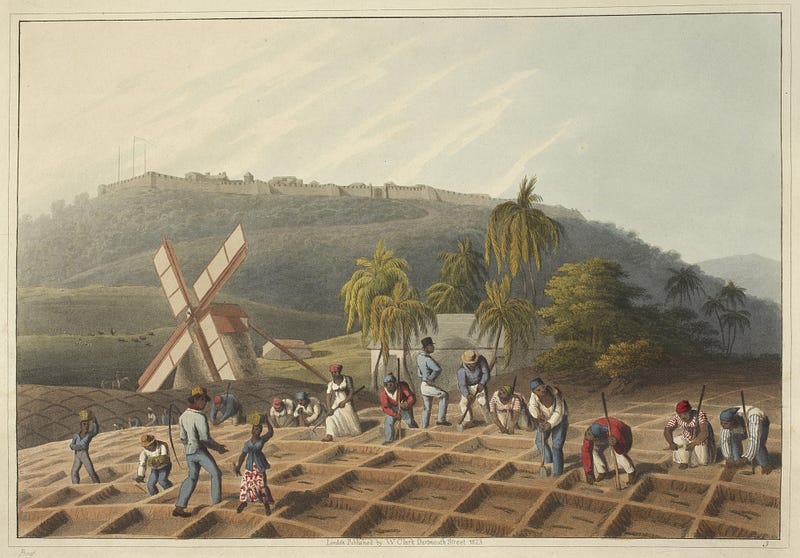
On the wide veranda white, In the purple failing light, Sits the master while the sun is lowly burning; And his dreamy thoughts are drowned In the softly flowing sound Of the corn-songs of the field-hands slow returning. Oh, we hoe de co’n Since de ehly mo’n; Now de sinkin’ sun Says de day is done. O’er the fields with heavy tread, Light of heart and high of head, Though the halting steps be labored, slow, and weary; Still the spirits brave and strong Find a comforter in song, And their corn-song rises ever loud and cheery. Oh, we hoe de co’n Since de ehly mo’n; Now de sinkin’ sun Says de day is done. To the master in his seat, Comes the burden, full and sweet, Of the mellow minor music growing clearer, As the toilers raise the hymn, Thro’ the silence dusk and dim, To the cabin’s restful shelter drawing nearer. Oh, we hoe de co’n Since de ehly mo’n; Now de sinkin’ sun Says de day is done. And a tear is in the eye Of the master sitting by, As he listens to the echoes low-replying T o the music’s fading calls As it faints away and falls Into silence, deep within the cabin dying. Oh, we hoe de co’n Since de ehly mo’n; Now de sinkin’ sun Says de day is done.
WE WEAR THE MASK
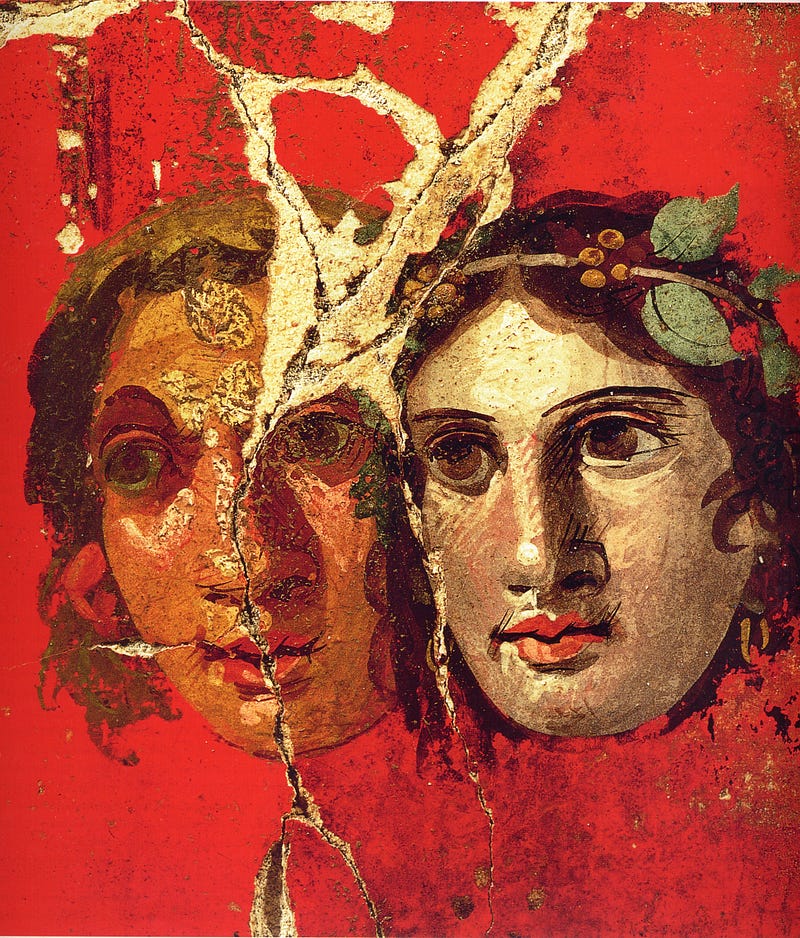
We wear the mask that grins and lies, It hides our cheeks and shades our eyes, — This debt we pay to human guile; With torn and bleeding hearts we smile, And mouth with myriad subtleties. Why should the world be over-wise, In counting all our tears and sighs? Nay, let them only see us, while We wear the mask. We smile, but, O great Christ, our cries To thee from tortured souls arise. We sing, but oh the clay is vile Beneath our feet, and long the mile; But let the world dream otherwise, We wear the mask!
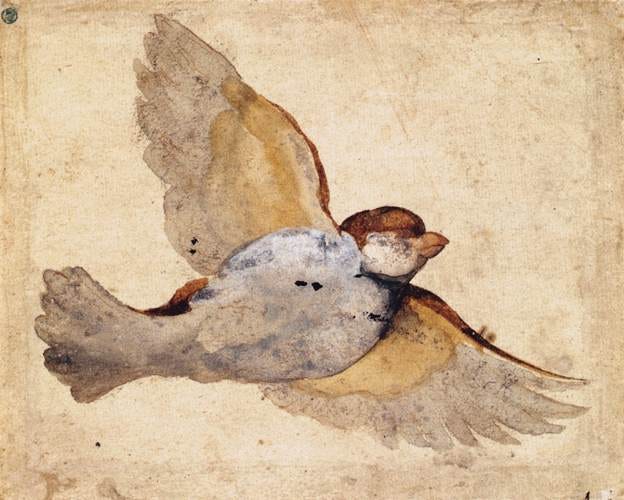
THE SPARROW
A little bird, with plumage brown, Beside my window flutters down, A moment chirps its little strain, Ten taps upon my window-pane, And chirps again, and hops along, To call my notice to its song; But I work on, nor heed its lay, Till, in neglect, it flies away. So birds of peace and hope and love Come fluttering earthward from above, To settle on life’s window-sills, And ease our load of earthly ills; But we, in traffic’s rush and din Too deep engaged to let them in, With deadened heart and sense plod on, Nor know our loss till they are gone.
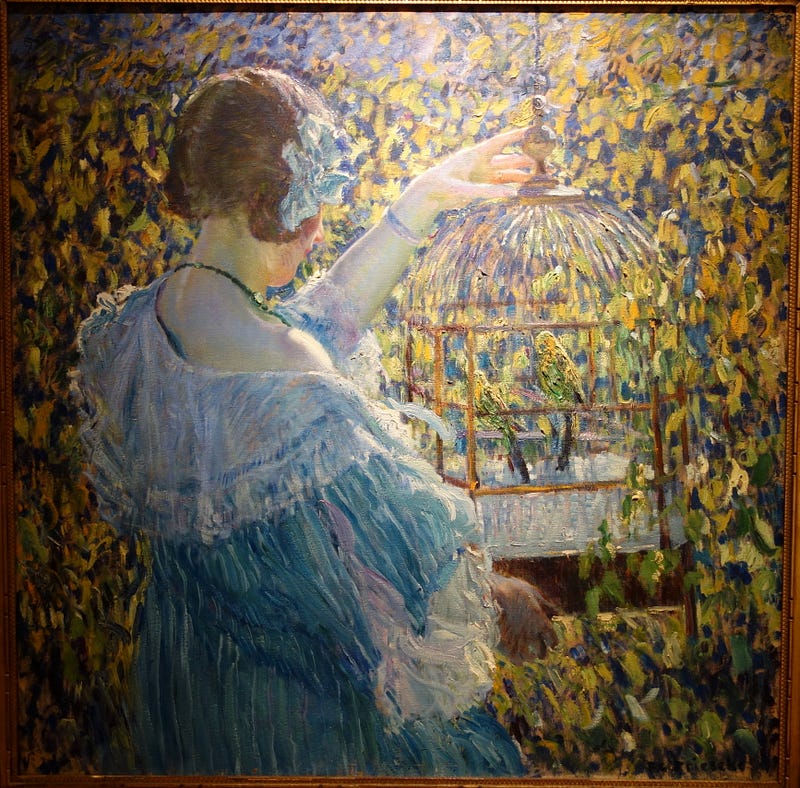
SYMPATHY
I know what the caged bird feels, alas! When the sun is bright on the upland slopes; When the wind stirs soft through the springing grass, And the river flows like a stream of glass; When the first bird sings and the first bud opes, And the faint perfume from its chalice steals — I know what the caged bird feels!
I know why the caged bird beats his wing Till its blood is red on the cruel bars; For he must fly back to his perch and cling When he fain would be on the bough a-swing; And a pain still throbs in the old, old scars And they pulse again with a keener sting — I know why he beats his wing!
I know why the caged bird sings, ah me, When his wing is bruised and his bosom sore, — When he beats his bars and he would be free; It is not a carol of joy or glee, But a prayer that he sends from his heart’s deep core, But a plea, that upward to Heaven he flings — I know why the caged bird sings!
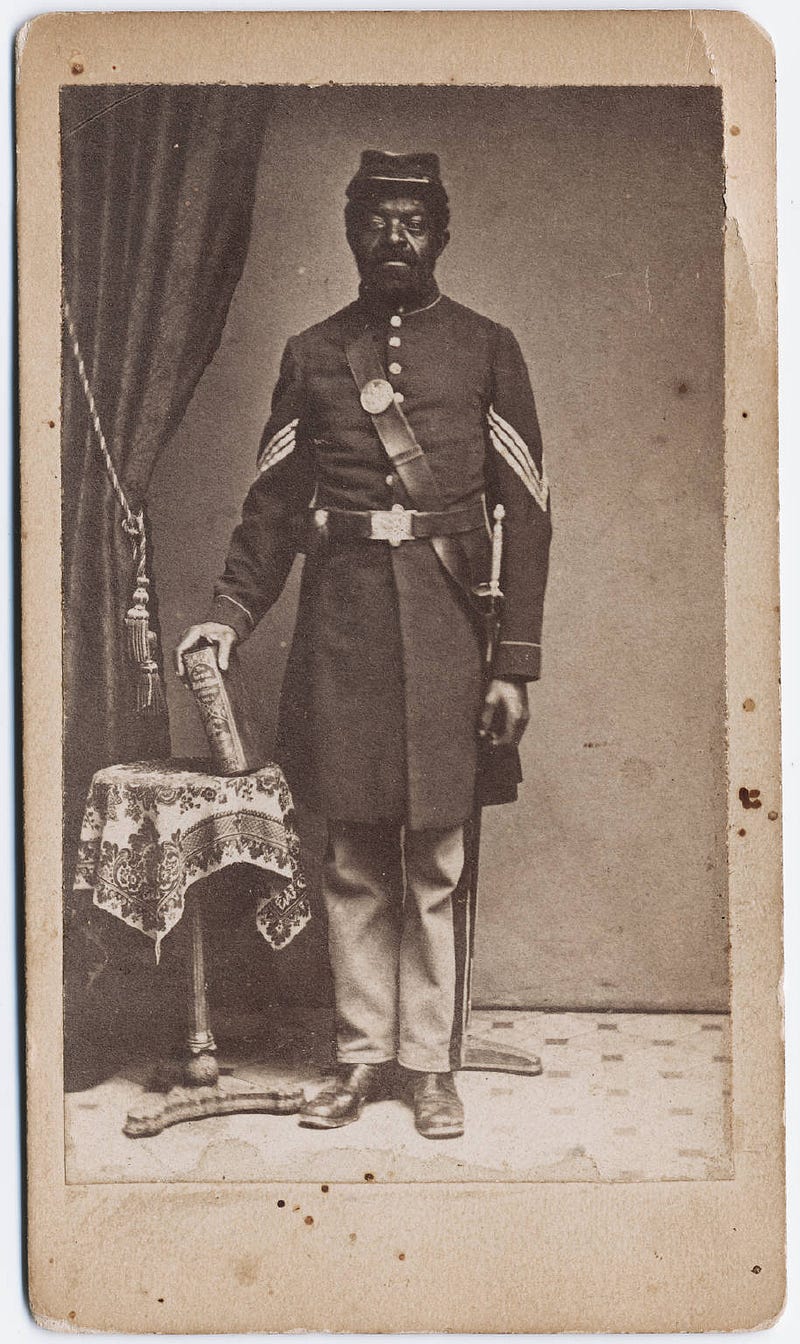
from Unsung Heroes
They fought their way on the hillside, they fought their way in the glen, And God looked down on their sinews brown, and said, “I have made them men.” They went to the blue lines gladly, and the blue lines took them in, And the men who saw their muskets’ fire thought not of their dusky skin. The gray lines rose and melted beneath their scathing showers, And they said, “‘T is true, they have force to do, these old slave boys of ours.”
Oh, Mighty God of the Battles Who held them in Thy hand, Who gave them strength through the whole day’s length, to fight for their native land, They are lying dead on the hillsides, they are lying dead on the plain, And we have not fire to smite the lyre and sing them one brief strain. Give, Thou, some seer the power to sing them in their might, The men who feared the master’s whip, but did not fear the fight. . .
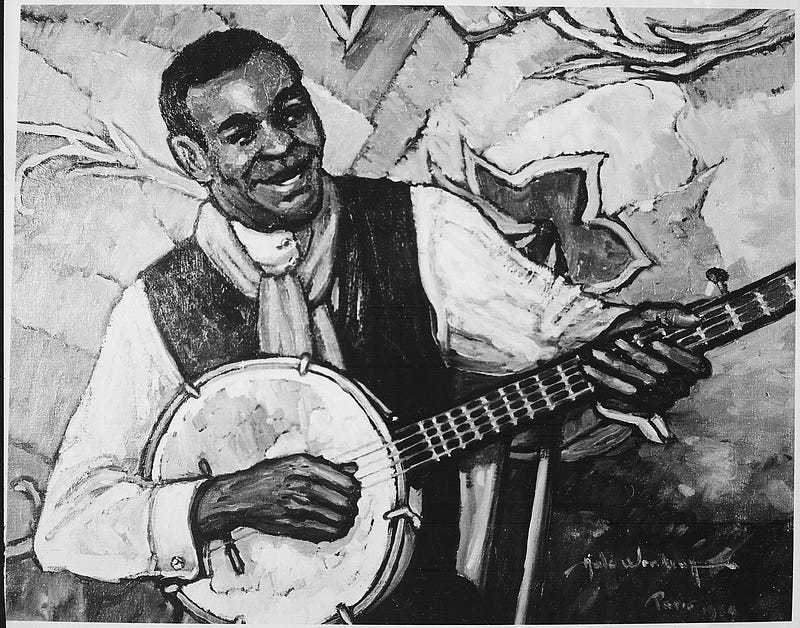
THE VOICE OF THE BANJO
In a small and lonely cabin out of noisy traffic’s way, Sat an old man, bent and feeble, dusk of face, and hair of gray, And beside him on the table, battered, old, and worn as he, Lay a banjo, droning forth this reminiscent melody: “Night is closing in upon us, friend of mine, but don’t be sad; Let us think of all the pleasures and the joys that we have had. Let us keep a merry visage, and be happy till the last, Let the future still be sweetened with the honey of the past.
Responses to Prompt: Love
Guérin Asante Sylvia Wohlfarth Dennett Anna Rozwadowska Lindsay Lonai Linegar Carver Bain Michelle Muses Aaska Ejaz Chiedza Kikumi LB Blue Fences kurt gasbarra
Jo Ann Harris FILZA CHAUDHRY Suwimali Bandara Kurt Gasbarra Crystal E.Wild Flower Sarah Book Amy Jo Reynolds antoinette nevitt Dennett Joe Váradi Austin Briggman Dana Sanford Shringi Kumari Anisesh Tracy Aston wimpy af Ashwini Dodani Vaishali Paliwal Leah J.🕊 Tapan Avasthi Maymuuna Seth Cason Brian Fehler Simon Heathcote Sonam Arora Nadine Morsch Ngang God’swill N. Lisa Tomey Shobha Roy D. E. Fulford poetsarah Gretchen Lee Bourquin 💗POM-poet!💗 Joey L. Sara Stasi Abigail Siegel M.J. Falke Samantha Lazar Tanya E. Denhere Markham J Moody Jack Burt


,_plate_III_-_BL.jpg)


