
Project ITER:
A Major International Collaboration to Demonstrate the Feasibility of Fusion Energy
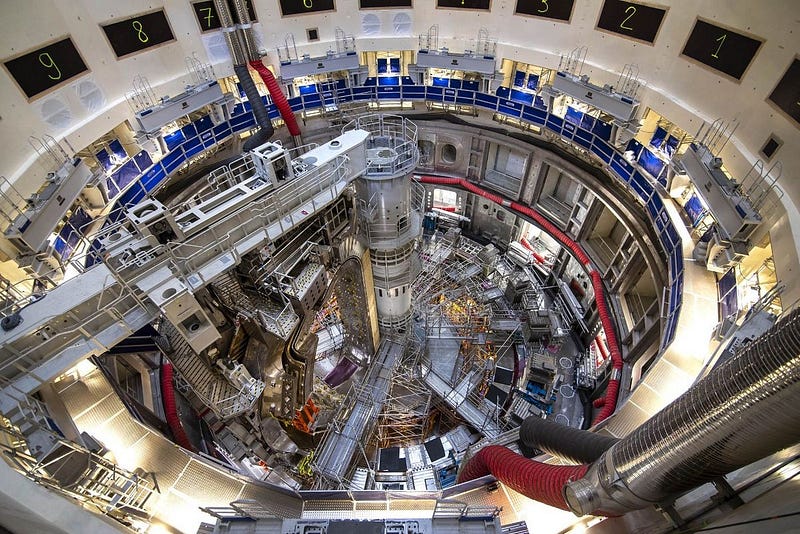
Project ITER is an international collaboration that aims to demonstrate the feasibility of fusion as a source of clean, safe, and limitless energy. Fusion, the process that powers the sun and stars, has the potential to provide a virtually limitless source of energy, as it generates power through the fusion of hydrogen isotopes, which can be obtained from seawater. This makes it a sustainable and environmentally friendly energy source, with no carbon emissions or radioactive waste.
What is Project ITER?
ITER is being built in the south of France, and it will be the world’s largest experimental fusion facility. The project involves 35 countries and is being funded by the European Union, the United States, China, India, Japan, South Korea, and Russia. The project is being managed by the ITER Organization, which is responsible for coordinating the construction and operation of the facility.
The goal of ITER is to demonstrate the scientific and technical feasibility of fusion energy, and to provide a proof-of-concept for future commercial fusion power plants. To achieve this, the facility will use a tokamak, which is a doughnut-shaped device that uses powerful magnetic fields to confine and heat a plasma of hydrogen isotopes to the point where they fuse together and release energy.
“ITER is the first fusion experiment to produce net energy — more energy out than in,”
said Bernard Bigot, the director-general of ITER.
“It will be a major milestone in the development of fusion energy, and it will pave the way for the commercialization of fusion power.”
Progress and Challenges
ITER is currently under construction, and is expected to be operational in the 2030s. When it is completed, it will be the largest tokamak in the world, and will be capable of producing 500 MW of power for several minutes at a time. This will be a major milestone in the development of fusion energy, as it will be the first time that a fusion facility has been able to produce more energy than it consumes.
The construction of ITER is a massive and complex undertaking, and it has faced numerous challenges and setbacks along the way. One of the biggest challenges has been the coordination of the project, as it involves so many different countries and stakeholders. Another challenge has been the cost of the project, which has exceeded initial estimates. However, despite these challenges, the project has made significant progress, and it is on track to achieve its goals.
Key Achievements and Ongoing Work
One of the key achievements of the project so far has been the completion of the tokamak’s cryostat, which is a massive, doughnut-shaped structure that will house the tokamak. The cryostat was built using advanced manufacturing techniques, and it is one of the largest and most complex structures ever built. It is a major milestone for the project, as it represents the first time that all of the major components of the tokamak have been brought together in one place.
In addition to the construction of the tokamak, the project is also focused on developing and testing new technologies that will be needed to make fusion a viable source of energy. This includes work on materials, heating, diagnostics, and other areas. These efforts are being carried out at research institutions and universities around the world, and they are helping to advance the state of the art in fusion energy.
The Future of Fusion Energy
As the project moves closer to completion, there is growing excitement and optimism about the potential of fusion energy. While it is still too early to say when fusion will become a commercial reality, the progress being made by ITER and other projects around the world is very encouraging. If all goes well, fusion could become an important part of our energy mix in the coming decades, providing a clean, safe, and virtually limitless source of power.
“Fusion is the ultimate energy source, with the potential to provide almost limitless clean energy for future generations,” said Bigot.
“ITER is a major step towards realizing this potential, and it will help to pave the way for the commercialization of fusion power.”
In conclusion,
Project ITER is a major international collaboration that is focused on demonstrating the feasibility of fusion as a source of clean and limitless energy. The project is being built in the south of France, and it involves 35 countries and a wide range of research institutions and universities. The goal of the project is to build and operate the world’s largest experimental fusion facility, which will use a tokamak to fuse hydrogen isotopes and produce 500 MW of power for several minutes at a time. While the project has faced numerous challenges and setbacks, it has made significant progress and is on track to achieve its goals. If all goes well, fusion could become an important part of our energy mix in the coming decades, providing a clean and sustainable alternative to fossil fuels.


