avatarVibrant Jellyfilsh

Free AI web copilot to create summaries, insights and extended knowledge, download it at here

2309

Abstract

grounds, for example, may learn to recognize and appreciate different emotional expressions and responses.</p><p id="062c">As pre-schoolers continue to develop their empathy skills, it is important for caregivers and educators to reinforce positive behaviours and provide opportunities for continued growth. Praising children for demonstrating empathy and kindness, for example, can encourage them to continue exhibiting these behaviours. Educators can also incorporate activities that promote empathy into the classroom, such as role-playing exercises or reading books that focus on emotional experiences.</p><p id="b333">The development of empathy is critical for healthy social and emotional development. Through play and social interactions, pre-schoolers learn to recognize and respond to the emotional states of others, building a foundation of empathy that will serve them well throughout their lives. Caregivers and educators play an important role in fostering this development by providing responsive caregiving, exposure to diverse experiences, and opportunities for continued growth.</p><figure id="0376"><img src="https://cdn-images-1.readmedium.com/v2/resize:fit:800/1*mvN1EqeMeX3NI8M1x66-KA.png"><figcaption></figcaption></figure><div id="2095" class="link-block"> <a href="https://readmedium.com/adolescence-and-continuing-empathy-development-e5620d4113e0"> <div> <div> <h2>Adolescence and Continuing Empathy Development</h2> <div><h3>During adolescence, empathy development continues as individuals navigate the complex social world of adolescence.</h3></div> <div><p>medium.com</p></div> </div> <div> <div style="background-image: url(https://miro.readmedium.com/v2/resize:fit:320/1*AN4Ybq6J75ClnGnC8-CSOA.jpeg)"></div> </div> </div> </a> </div><div id="7d97" class="link-block"> <a href="https://readmedium.com/imaginative-play-and-role-play-is-helps-develop-empathy-5249ee7aac68"> <div> <div> <h2>Imaginative Play and Role Play Helps Develop Empathy</h2> <div><h3>We must not deny our preschoolers the gift of play, else we risk seriously damaging s

Options

ociety</h3></div> <div><p>medium.com</p></div> </div> <div> <div style="background-image: url(https://miro.readmedium.com/v2/resize:fit:320/1*TuCT_VimEDDBhvV6__CPFA.jpeg)"></div> </div> </div> </a> </div><div id="5394" class="link-block"> <a href="https://readmedium.com/developing-empathy-b5a1da35f6f5"> <div> <div> <h2>Developing Empathy</h2> <div><h3>Empathy is the ability to understand and share the feelings of others, and it is an essential component of healthy…</h3></div> <div><p>medium.com</p></div> </div> <div> <div style="background-image: url(https://miro.readmedium.com/v2/resize:fit:320/1*V_L8b-u1_FxKQPbbdl3qnA.jpeg)"></div> </div> </div> </a> </div><div id="1422" class="link-block"> <a href="https://readmedium.com/we-can-not-deprive-children-of-play-or-we-risk-destroying-society-2346eef58397"> <div> <div> <h2>We Can Not Deprive Children of Play or We Risk Destroying Society</h2> <div><h3>There is a growing body of evidence that supports the importance of play in child development.</h3></div> <div><p>medium.com</p></div> </div> <div> <div style="background-image: url(https://miro.readmedium.com/v2/resize:fit:320/1*TbOxvucws6AB1bk3us0Z8g.jpeg)"></div> </div> </div> </a> </div><div id="6fb9" class="link-block"> <a href="https://readmedium.com/the-importance-of-mini-goals-addcad380095"> <div> <div> <h2>The Importance Of Mini Goals</h2> <div><h3>Where do you want to be in 5 years? What can you do this afternoon that would take you closer to that?</h3></div> <div><p>medium.com</p></div> </div> <div> <div style="background-image: url(https://miro.readmedium.com/v2/resize:fit:320/1*-LY8NXV6e2sZ-CrR9S0EIg.jpeg)"></div> </div> </div> </a> </div></article></body>

Pre-schoolers Development of Empathy

From a young age, children have the capacity to feel empathy. However, they could use some practice.
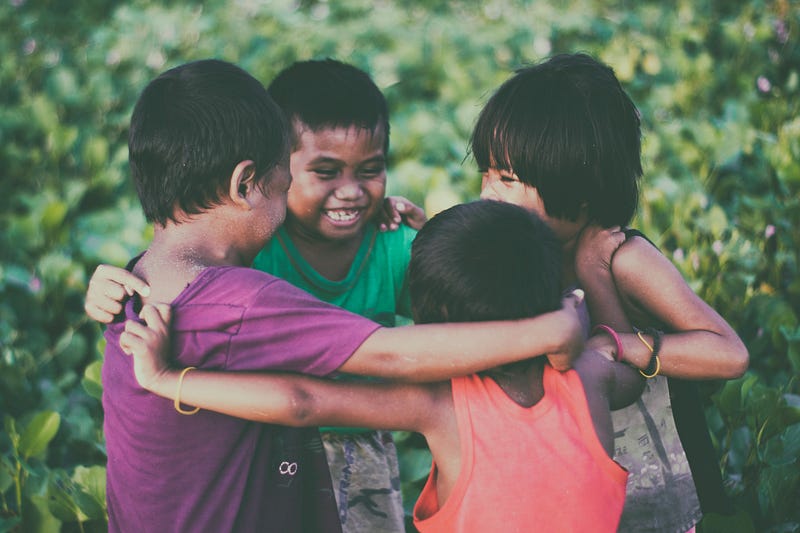
Photo by Archie Binamira: https://www.pexels.com/photo/toddlers-forming-a-circle-754769/

Throughout their early years, pre-schoolers engage in play and social interactions that help them recognize and respond to the emotional states of others. These experiences build a foundation of empathy that is critical for healthy social and emotional development. In this essay, we will explore the process through which pre-schoolers develop empathy, and the important role that play and social interactions play in this process.

From a young age, children have the capacity to feel empathy. However, they need to learn how to recognize and respond to the emotions of others. Caregivers and parents can help foster this development by engaging in responsive caregiving practices, such as showing affection, responding to distress signals, and providing comfort and support. As a child’s ability to communicate develops, parents can also talk with their child about emotions and help them understand and express their own feelings.

As pre-schoolers begin to engage in social interactions, they become more aware of the emotions of others. Play, in particular, is an important context for social interaction and emotional development. Through play, children learn to take on different roles and perspectives, develop social skills, and practice empathy. For example, a child may take on the role of a doctor or nurse, caring for a sick doll or teddy bear. In doing so, they learn to recognize and respond to the emotional needs of others.

In addition to play, pre-schoolers also benefit from opportunities to interact with a variety of people and situations. Exposure to diverse experiences helps children develop a broader understanding of the world and the emotions of others. Pre-schoolers who interact with people from different cultural backgrounds, for example, may learn to recognize and appreciate different emotional expressions and responses.

As pre-schoolers continue to develop their empathy skills, it is important for caregivers and educators to reinforce positive behaviours and provide opportunities for continued growth. Praising children for demonstrating empathy and kindness, for example, can encourage them to continue exhibiting these behaviours. Educators can also incorporate activities that promote empathy into the classroom, such as role-playing exercises or reading books that focus on emotional experiences.

The development of empathy is critical for healthy social and emotional development. Through play and social interactions, pre-schoolers learn to recognize and respond to the emotional states of others, building a foundation of empathy that will serve them well throughout their lives. Caregivers and educators play an important role in fostering this development by providing responsive caregiving, exposure to diverse experiences, and opportunities for continued growth.

Preschool
Kids
Empathy
Child Development
Social
Recommended from ReadMedium