
Precious Baby Turns Into Hitting Toddler Who Loves Ripping Books
How I try to navigate through it all, inspired by dr. Laura Markham.
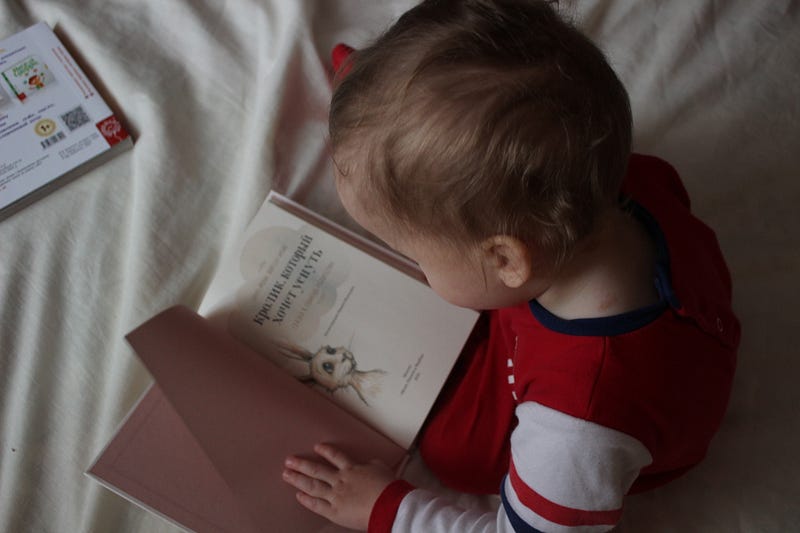
When a small child can’t have something he wants, he will get upset. Really upset. So upset that hitting you might become his way of lashing out. And he will do it not just once, but as many times as you let him. All while you’re in shock. Possibly even with him laughing as you try to show him that you’re also in pain.
I, for one, was certainly in shock when my precious baby started to show attitude. From hitting the closest person to him to ripping pages out of the books that he loved, the little guy struggled with his big feelings. Big momma struggled with the little guy too.
It innocently started after he turned one
When my son was getting close to 18 months, he started to grab us by the hair when he became frustrated. Grab and hold, with no intention of ever again letting it go.
My mom, who was spending time with him while I was working from home, was particularly affected and offended by his behavior. She claimed that we (my sister and I) didn’t do that when we were little and that clearly, this “wasn’t normal.”
She was already seeing my son as the problem-kid in school [rolling eyes & sigh from me].
I tried to explain to her that he’s the child, and we’re the adults, and he doesn’t know any better, but without much success. He kept pulling off anyone’s hair whenever we left the guard off. Yet, the boy eventually put this behavior behind.
And, it never really stopped, but rather evolved.
As he grew older, he began showing his upset by ripping books or… kicking grandma. We live with my parents, and my mother is quite involved in raising her grandson, but imagine her frustration. And mine.
At first, I didn’t know how to handle the ripping part. I was puzzled because he loves his books, and it didn’t make sense to me that he wanted to break something he appreciates. Then again, I came to think it’s like hitting someone even though he loves that person.
It seemed he had significant discomfort and didn’t know how to act on it otherwise. He was doing it when he couldn’t get a thing he wanted, go to a place he liked, or even when I wasn’t paying much attention to whatever he was doing.
So, I taught him that if he was upset for not being allowed to go somewhere, to come and ask me for a paper or a napkin that he can rip instead of destroying his favorite books. Or if he wanted me to stop from what I was doing, to come to touch my face and say “Mommy” instead of ripping things apart. He seemed to get the idea and started to do so.
At times it got better, but now that he’s two and a half, he went to the next level.
When ripping books doesn’t look so bad anymore.
That’s right, when a toddler switches from destroying things to hitting other people, there’s a bigger problem.
He hits grandma when he wants to spend time with mommy or grandpa (who are at work) or hits mommy when he wants to go downstairs, and he hears the n-word.
My now 2.5-year-old son does that even when he is too tired and needs to go to sleep.
Managing his actions and feelings is often overwhelming. But so is managing my emotions.
It wasn’t until I found Dr. Laura Markham’s lovely script of what to do when your toddler hits you that things started to feel more manageable.
She does have a way of making it look so easy! I loved the dialogue she created on the Aha! Parenting blog and the suggestion to teach the child to clap his arms around himself in a hug and yell that he’s mad instead of hitting others.
After reading a lot of her articles and other resources, I’ve come to break down the process as follows.
What you feel when the child gets violent
At first, you’re shocked to see your little one coming at you like that.
As he tries to repeat the gesture, you’ll verbally express your pain, but you won’t help but notice how you feel like kicking him back.
Then, you’re thinking about ignoring him. You’re afraid that you’re encouraging him to act like that. You don’t want to reward unacceptable behavior with attention, right?
The more you talk to him, the more defiant he becomes, and watching him laughing and trying to kick you again pushes all your buttons. You’re starting to ask yourself if he’s enjoying watching you suffer.
At this point, you fantasize about locking him in his room or throwing away his favorite toys.
You hardly resist smacking him — he’s acting so much like a little brat. You don’t recognize him. You don’t understand why he’s doing it.
You will want to raise your voice, even yell at him to stop and shake his shoulders.
What you should remember when a toddler hits you
The child is as upset as he acts. He’s going through some big emotions.
He is acting out, indeed, but only because he needs your attention and help to cope with the feelings.
And he’s so tensed that before he can start to cry, he will instead feel like laughing in an attempt to release the tension.
He’s not laughing because he enjoys watching you hurt. He can’t cry just yet — that’s how mad he is.
His feelings are normal and understandable. His behavior is off track and needs to be corrected — the child needs firm limits to understand that he isn’t supposed to act like that when he’s mad.
You need some time to regroup yourself and play your adult part, so step back, out of his reach, breathe deeply, and try to regulate your emotions — he’s acting like the child that he is!
Yelling makes things worse; the more aggressive you become, the more aggressive the child will be. Plus, yelling doesn’t show him you’re serious.
The things you need to do when the child hits you
- Block his hands.
- Talk to him with a firm voice.
- Tell him the rule and the “why” behind it. As in, “No hitting. Hitting hurts”.
- Give him your undivided attention because that’s why he is acting out — he is challenging you to give him a response. His behavior is off track; he needs firm limits; otherwise, he will keep acting like that.
- Remind yourself that he needs your help to deal with the intense feelings that have made him act out in the first place.
- Verbalize what he’s feeling. Tell him the rule, again. As in, “You’re mad because I said No. It’s ok to be mad, but no hitting!”
- Keep verbalizing with a firm tone of voice. As in, “You’re laughing, but you’re hitting me… It looks like you’re very upset!”
- Use your arms to keep him at a distance and talk to him in the same firm, serious tone of voice. As in, “You’re so mad. Still, no hitting Mommy!”
By this point, the child might start to verbalize his feelings, confirming that he wants to hurt you.
Keep him at a distance and reflect on his feelings. Ask him if he is so mad that he wants to hurt you. As you show him that you understand what he feels, the child might start to look you in the eye.
This is where you encourage him to show his feelings through a different behavior. You could ask him to stomp his foot, to shout that he’s mad, all while reminding him — No hitting. No hurting.
Slowly, the child will come to a point where he can finally cry and want to make a non-violent connection with you. This is the part where he needs a hug. He needs you to tell him that he was hurting inside (touch his heart) and that he wanted to hurt someone else. You help him make a connection between his feelings and his behavior, all while verbalizing his new feeling of guilt.
- Your firm tone of voice should turn into a kind voice. You tell him that you understand that he’s now feeling bad for hitting you and assure him that you’re ok.
- You reinforce the rule — No hitting. No hurting.
- You remind him of the alternative — Tell me what you feel. Stomp your foot. Don’t hit.
- You ask him to show you how he will act the next time and encourage him to do it like that. — Yes, you can stomp your foot. I will know that you’re mad.
The lessons your child perceives from your efforts to handle his hitting
If you find the calm and the energy to go through this scenario with your troubled kid, you’ll give him the fantastic opportunity to learn that:
You understand what he feels;
You will help him to navigate through any feeling;
You are ready to set the limits that he truly needs;
You will keep him and everyone else around safe;
He wants to lash out when he is upset or feeling hurt;
He needs to try not to lash out because he is hurting others in the process;
He can do other things to manage his emotions without hurting others;
His mother will love him, understand him and support him, no matter what!
Disclaimer: all this looks so much easier in theory than it is in practice. But so is everything that involves children, right? Still, getting into a power struggle with a script (or pieces of it) at the back of your mind is infinitely better than deep diving with lots of negative thoughts that will only take your attention away from your child and what happens in his little body. You should try it, not just once, but countless times, and see where it leads you!
Wait a sec! Take a peek at my other parenting articles:
Thank you for reading! You can always find me here: Adelina Vasile.


