
People need closure. A “how to” for both sides of the table

If you’ve been dumped or want to dump someone, you need to read this in order to avoid some basic mistakes that blindside us when we’re in the midst of a breakup.
Before you go into reading whether you or your partner have the right rational reasons to close a relationship, please go ahead and read this article on what emotional connection really means because it will reveal what we look for in a partner from a rational stand point before we decide to invest ourselves emotionally.
That will help you differentiate between your rational reasons about the partner or your inability to establish a solid emotional connection which would require you to read this article I wrote on emotional availability.
The rational closure
When you align the facts, it might turn out that you were never really a match with your partner. It’s very hard to really create a life blueprint to see where you are standing and what you would want from a partner that most of us really base their decision on some micro-moments when they foresee more possibility than what really is. We really project our needs and wants and expectations over a person who maybe has managed to tick some of the superficial boxes we have on our list. And more recently, with all the psychology of self help people feel shamed around admitting what they really want and that they really do have a subconscious list of things they want in a partner. But probably the most important part is that people who don’t want to admit they have a list actually have a list of things they hate or are afraid of from previous relationships and basically have a minefield waiting for us to be discovered as we dance through the relationship. And while that might actually be a graceful exercise for someone like me for example to force them to slow down and really pay attention to the partner’s needs and triggers and really spend time discovering what wounds this person has and how can my bubbly personality not disrupt or activate these bombs before he gets to love me and accepts some of the mistakes I am prone to make because of my nature, then, you’re probably not going to like to have to spend so much energy avoiding to break anything in this minefield of the person who hasn’t done the “work”. When I say “the work” I mean the journey of self discovery, the inner child re-parented and unlearning the limiting beliefs we’ve been taught as children about how life will go.
Now that you know you also have a list, let’s start really looking at it. ( I keep repeating “really” with the sole purpose of making you aware you must be in the present moment, in a connection with your body and mind when you read this).
The rational mind will engage in finding elements in the factual base and evidence of our partner in order to confirm that they are the right match. Our rational mind can play tricks though. Here are the first signals you’re being blindsided by your ration:
- Your insecurities have formed active filters in your mind to select and remove any potential threat from the environment. The faults you find in your partner, even though rational, might not be based on this reality. As Esther Perel says “We live different levels of truth and reality when we deny our history”. And not being able to dig deeper into our past to bypass our defense mechanism is the first most dangerous part of our rational mind.
- If you’ve been hurt before by your partner and you found a deeper wound was connected to this fight, you’ll gather more evidence in your mind about the „truth” you hold until you’ll revive the pattern you feared most. I do this a lot myself and I keep on projecting on my partner my fears until I actually have enough “evidence” that I was right. It’s a very hurtful process that has “defectiveness” life-trap at its routes. I talk about defectiveness in the article I wrote on the inner critic.
- Our idea of the future is based on our past experiences so our mind can’t project the future without being blindsided by its own bad experiences. And especially in relationships we tend to push away people that we fear might reenact the toxic family dynamics we had when we grew up. It’s important to stay open to getting to know someone for who they are before we project our entire history of traumas on them and then we expect them to do something different than what we already know and are familiar with.
- We’re constantly getting input and signals from our partners, but we choose to be biased on what we truly listen to. We can do this on a subconscious level and not even be aware that we only hear what we want to hear, but the truth is, even if the partner speaks to us loud and clear, only we can change what goes on in our filters about how we perceive the other person. Setting a conscious intention about not looking for the fault in the other is the best way to practice a fair active listening towards our partner.
- Love is intentional. I can’t emphasis on this aspect enough. We tend to think there’s a perfect partner, but reality is that we are given a very short window for choosing and making a partner our perfect one. And if we don’t accept and embrace that there is not an unlimited pool of choices we can make we’ll end up dragging and stretching that window for dreadful amounts of time when we will only feel insecure, lonely, unloved and hopeless about finding the love we know we deserve. That’s only because we are still emotionally unavailable and we need to bring that into awareness and work with it. I wrote a lengthy article on that a while back and I invite you to go through it if this is you.
I am sure there are more rational things that we do to avoid the pain of doing the inner work and having a partner that would hold us accountable. But it’s valid for both the one being dumped and the one calling off the relationship. We all do these things.
The other very important aspect of the rational mind is that our biases are also ego constructs. Some of them are for example:
- “they does not earn enough money as I would want from a partner and that means I have to work for 2 people”- that’s an ego about social status and being the one who will have to downgrade themselves to be with this person.
- “they want different things than me, and I can’t put my life on hold for that”- that your ambition telling you that you will not be seen/ admired/ validated / happy if you will wait and do things in a different rhythm. You also want to control if you impose a speed of things in the relationship
- “we’re just too different”- the energy we share with our partner might feel like a yin and yang. Most often the best partners are the most different ones from us because we get to learn so much by having to balance each other in harmony. But our ego will tell us that it’s too much work and work is hard and energy draining so it’s better to go for an easier option. Easier options work for a while until we end up in the same vicious circle and then we really need to address the issue. However, ego is a very strong part of our identity and we make a lot of efforts to protect it.
- “they can’t raise up to my level of….( fill in blank)” -once again an ego of wanting to see ourselves a certain level and being maybe arrogant about what we’ve learned and not allowing the other the time to stand next to us on that “podium”. I once told a good friend who was not willing to invest in “teaching” his girlfriend what he thought was important for her to know already as a woman in the house, that he’s maybe a bit forgetful about how he learned to do what he masters now. He also learned it from someone who believed in him that he can do better and invested in him the time. That’s what our partners need as well from us.
The list can go on. But bottom line, this is all in our mind more than it is in our body. Our body will tell us a different story of compatibility if we’d just let it communicate to us.
We can get rational closure by checking some of the facts above and making some really mathematical predictions of how much time does it take for us to change ourselves to work on these issues with more awareness vs how long it takes until we start seeing the result of our investment and we can already enjoy the changes we’ve made. Because this might in some cases be a life’s work and in the meantime we still want to make sure we don’t miss on that window of validating this person and moving forward with our relationship despite the challenges. That would of course be the decision to take after seeing that there’s not that much “real” reason to break up after all.
If you are the one being dumped and would feel like this is something your partner should do to take you back, then read this part again and make sure you work on it for yourself on this one. The next part would probably help you more in changing the other person’s mind about their radical rational decision.
The emotional closure
If you’ve reached this part of the article it means that unfortunately you’ve done everything you could to be both emotionally available and to match your partner on a rational level of expectations. However, they still broke up with you and it seems like there’s nothing else you can do about it. Or is it?!
That’s what emotional closure is about. Accepting what is and letting go of an apparently perfect match on paper.
But how do we let go as all the self help books say and all the articles on the internet advise? It seems so easy.
I have a really clear instruction list for you to follow to detach yourself emotionally from the person who broke up with you and finally get some emotional closure.
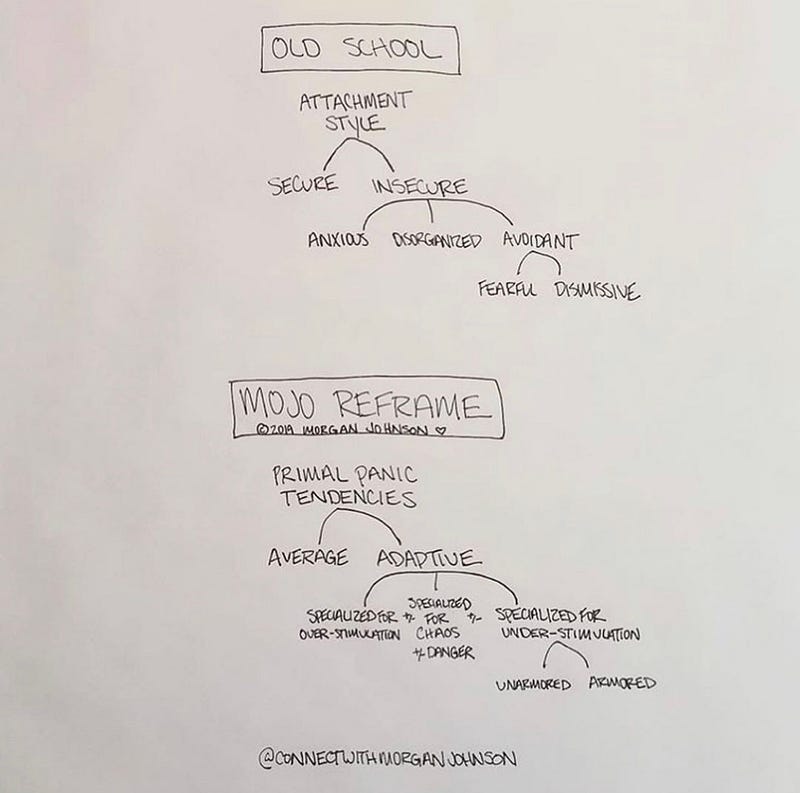
- Get clear about what is your attachment style and make sure that you respond to the emotional needs of how you learned to be loved and give love to others. By looking at your attachment style you will understand what needs your partner met and you will learn to depend less on him/her to allow healing of the broken connection to begin. Once you understand the role your ex-partner played for you and how your relationships before ( and with your parents) were formed in the past, you will be able to reframe this and have some closure about the bond between you. I can’t recommend enough the book of Amir Levine on attachment theories that will help you not only now to detach but also in the future when you will start a new relationship that you can better manage.
2. Understand your love language and soothe yourself in that way. Gary Chapman came up with the idea that we all have 5 love languages and one will be our primary language. In relationships, we often have the situation that our partner might show us love, but not in the language that we expect and want more. As a result, we end up having an empty love tank. This situation is also valid when we break up and end up alone and with an empty love tank. I personally learned that my love language is touch. So when I know I am single and I feel like I need my ex back, I give myself a hug and try to take a long bath and do some self care that would help me regulate my emotions and feel loved by myself again. It’s not easy, but it helps a lot if I know how to love myself before I ask anyone else to love me this way.
3. Put your self in the position to allow love to come in your life even if you are heartbroken. We come on the planet with 2 basic functions: to find connection and avoid rejection. Just because you got rejected it doesn’t mean you should close off for people wanting connection with you. By making yourself emotionally available again you will come to peace with yourself about many things. It might be that you will even find out that despite all the emotional connection you felt with your partner, in the end it was all about the responsiveness they gave you and as soon as that is not there anymore, you’re not so much bonded anymore and you can allow yourself to flirt again and be with someone else.
4. Don’t look for another person to fill in the void just because you can’t be alone and deal with the rejection. Find what connected you to your partner on a deeper level and make sure you look for those qualities in other people. Find someone that will have that and more. That’s when you know you’re not just settling for a replacement in your bed.
5. If you’ve had a long history together, then your emotional connection is even bigger because you have a lot of things to remind you of the relationship. You will find triggers anywhere. But remember one thing: If someone dies, we need 40 days of grief in order to start detaching ourselves from them; if we start a new habit it takes 21 days until we have settled into a new routine. In the end, the time you spend together will start fading away from your memory as you replace the old routines you had as a couple with new ones you will have on your own. But the most important part is to be able to see past this routine of the emotions you would share together every day. Changing environment will help, travelling will help, anything that helps you rebuild your own routine will help. Emotions come and go and the love you have will also fade in time as it will not be physical anymore and supported by all the little things you would do together. I am basically describing how to “kill” a love by acknowledging that what you have is highly contextual and you will adapt to a new context.
Hopefully despite not offering an exhaustive answer to your search for closure, you will be able to bring the emotions into your rational mind and see where those emotions can be replicated either by yourself through self love or by connecting to friends, family and other people you might want to date in the future. Emotional regulation plays a big role in filling up the void left by someone in your life.
In my personal experience, the emotional closure took me more almost 6 years with the one I had my longest relationship with. Our 4 years relationship left me at the age of 22 depleted of resources to love anyone else the same way. Or at least that’s what I thought. Until 6 years later when I met someone else I thought would be the one, but who left me even more heartbroken and triggered my healing process. You can find more about that story here. Then 9 months later after that terrible breakup I met someone new whom I still love, but also left. The 3rd big disappointment of my life. How many can there be? Life teaches us the lessons we need to learn until we are ready to fully be the best version of what we can be. Loosing yourself in a relationship might not bring you what your’re looking for in terms of growth so that’s why you get challenges along the way. However painful they might be, they teach us lessons.
Once you’ve gone though all the steps, honestly, there’s not much more you can do. Your ex might decide to come back if they realize you were the one for them. They would probably be able to do that if they go through some of the steps in the rational part. Bringing awareness into their unconscious biases would help, but in order to do so, they need to remember the good stuff in your emotional connection and in the routines you had. They need to first miss that in order to start reanalyzing their biases. If they’ve already replaced you and did not spend much time recovering emotionally from your breakup, then there’s probably not much that really reaches them. They might be too closed off or emotionally unavailable and not in touch with their feelings if they are able to dismiss everything. Emotional unavailability also comes from trauma, so don’t judge and try to offer emotional support if you are still in touch with them. Despite you being the one dumped, being still open to support the other one who hurt you is a proof of your love being real, long lasting and trustworthy. It will help you as well see you still play an important role in your ex partners life, but that timing was just not good for your relationship to grow. In my case, this last bit gave me emotional closure. I saw the need of time and space for my ex to heal on the things our relationship triggered and I realized it will not be easy for him and as a result, I need to move on.