

The story of the inner critic in you
Words our caretakers used to describe us in our childhood and words we used ourselves to label the result of our actions in childhood become the inner voice we hear when failing.
In psychology, the inner critic is the voice from the subconscious level that we develop at an early stage as a sense of self, and around the age of 3–4 years old our memory already starts to recollect the words we hear around and starts coding the language of our inner world before we can even properly articulate it with the exterior world. The importance of this stage is fundamental in the way we can work with our self-esteem as adults.
Some of the environments will be more positive and we would develop a gentle inner critic that is balanced and resilient to change, but as the world is transforming and getting more and more diverse environments for raising children, the story of the inner critic becomes a more complex and important conversation to have in our society.
The inner critic appears in adulthood as a voice in our heads constantly putting our self worth to the ground.
It starts with a thought „I am not good enough” and then it translates to an action that „proves” our belief about ourself.
The best way to deal with the harsh inner critic is to decompose the phrases we use in different moments when we practice this self-sabotage and change from
I am unworthy because…
To
In this situation I messed up but…
From „I am” to „the situation is”
Allowing ourselves to see the bigger context in which we might have fucked up something is the key to change the inner monologue from assigning a core denominator of the self to putting more context and not allowing a circumstance to define who we are. We are nothing less because we fucked up. We are not our mistakes.
In therapy, this lifetrap in which we fall to define yourself worth according to our mistakes is called the defectiveness lifetrap.
A lot of people suffer from it because their caretakers used very harsh words or even abuse and violence to correct our early behaviors which led to an intense shame felt inside whenever we would repeat such a mistake. That shame later translates into our own inner critic taking charge and telling us „You’ve fucked up again.. you’re just the piece of shit that you’ve always been”. This is one variation of many used inside our minds to have the same effect on our self-confidence.
My story is connected to poop. Yes, you read that right. My parents shamed me with that. First of all, let me put some context to it. I grew up in post-communist Romania when diapers were still not available. They used some special nappies to wrap around me and they had to wash them after using them. It’s not a nice sight, let me tell you that. But it’s your child who is doing a natural healthy thing there. So, in theory, it should not be something you should shame your child on. But what I record from the early times is that they made faces. They turned their nose, they expressed their dislike. And I felt ashamed of myself. I felt like a burden. It was translated later into adolescence through the body-shaming my dad would perform on me. I was always the „fat” girl. Because I started working in advertising at 14 and I was competing with many other girls for roles in TV ads or commercials or hostess parts, I had to be beautiful and skinny. So I became more self-aware about this „size” of my body. I tried many diets, not eating, getting an ulcer for dropping 10kg in one month and many more stupid decisions, all because my inner critic was telling me I am not good enough to be selected for those jobs. Later, at 18 I went on a first date with the guy who was my boyfriend for 4 years and he told me „oh, I had the impression you were skinnier when I saw you last time with the other outfit”. That was his way of putting me down from the first seconds of our date. But since I had a dad who made me feel the same way about myself, I went on dating this abusive guy for another 4 years not thinking for even a second that this did not love. Because to me, it was. I learned that this was love. This was the way I saw myself and I of course „loved” myself. However, our reference systems for self-love are based on this inner critic conversations.
I recently met an architect who told me about her view on the built environment from the perspective of a 3rd culture kid. Giulia Mauro even wrote some of her challenges as an architect of the future world here.
The idea of being a 3rd culture kid is reflected in different ways by psychology studies. But my article will focus on these aspects not applied to the 3rd culture kids only but to everyone.
Using the knowledge developed in psychology around developmental challenges of Cross Culture Kids and Third Culture Kids and expanding that to the complex environments of today where kids grow up in households where there is a 360 degrees view upon global problems, I would say this impacts more and more the development of the inner critic.
As a 3rd culture kid, all of a sudden your world of potential threats especially in that early childhood stage is a lot more diverse. Basically you get exposed to much more and you risk much more. Your entire sensitivity to the outside stimulation changes and that relationship you have with your body recognizing and distinguishing between real danger and real needs from just over-stimulation maybe forever disrupted.
This kind of trauma, although much more subtle than the ones we are used to already treat in the mental health realm, is much more complex and harder to prevent especially since the exposure to the stimulation can’t be controlled, changed or determined properly by parents.
The topic of complex trauma has a lot to do with the story of the inner critic, but will not be the subject of the current article. As such, coming back to the voice we give to our thoughts about ourselves when we fail, this becomes of reference system for the world. The way we make sense of the world depends on how we treat thoughts resulted from action.
Let’s look a bit more in-depth at the mechanism of formation of that voice:
- We have an impulse from our subconscious level to make an action.
- We make the action and then our conscious mind analyzes the action and assigns a meaning to it
- Now it went from action to thought and that thought will generate a new action of storing the information about ourselves through that thought into the subconscious
- But first, the thought will be associated with an emotion. That emotion also comes from a body sensation that we generically call feeling that we are unable to trackback from where we inherit it. That’s our generational trauma DNA that comes with our “hard drive “. We will certainly not be able to tap into untangling the routes of those feelings unless we really make a conscious effort to research it from our family history.
- Now that thought associated with the emotion is already “rich” enough in information to provide a further reference when we meet a similar situation where these emotions will be triggered again and can be avoided by putting a “don’t touch this box” label on it. Otherwise, you may also call it “fragile”. But now it’s fully stored into your subconscious because it went past your limbic emotional brain.
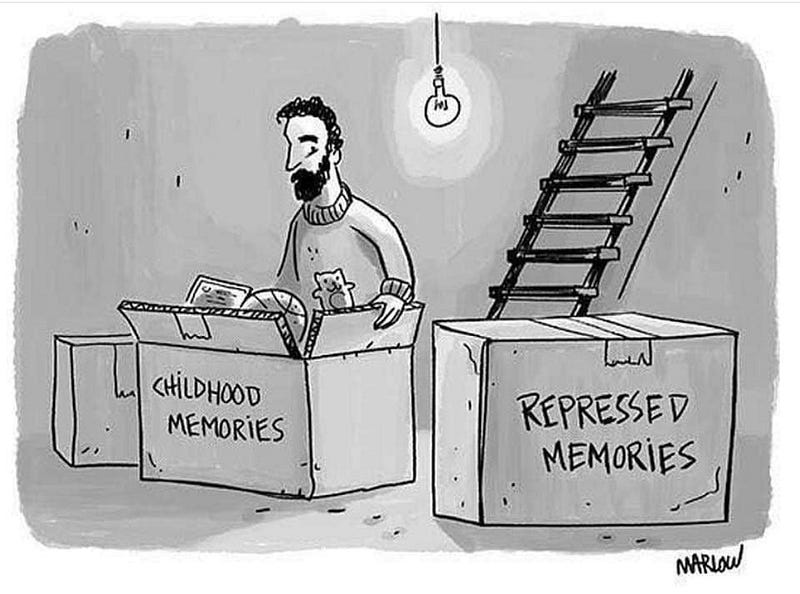
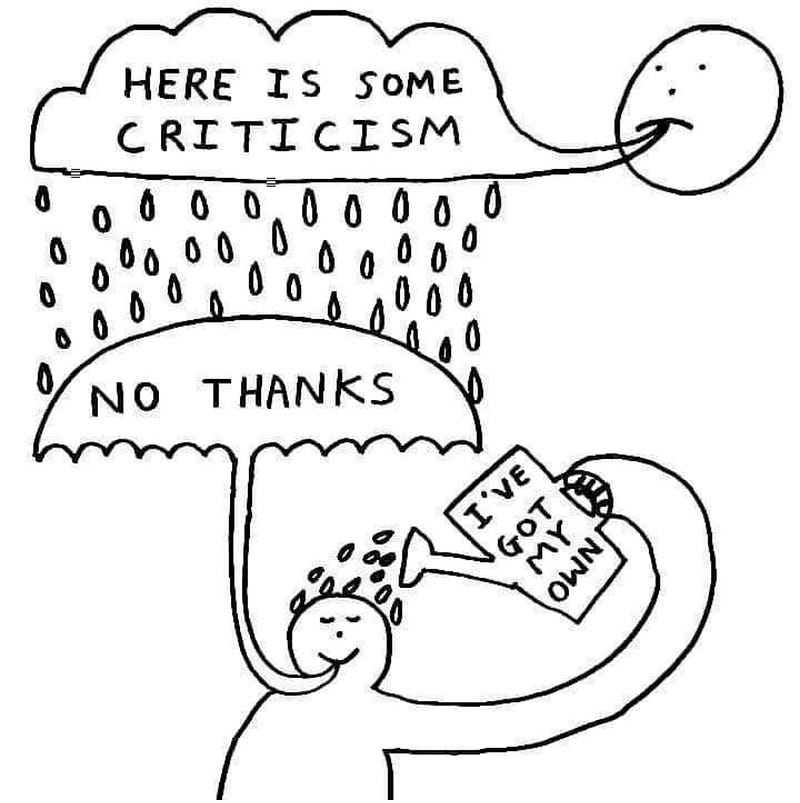


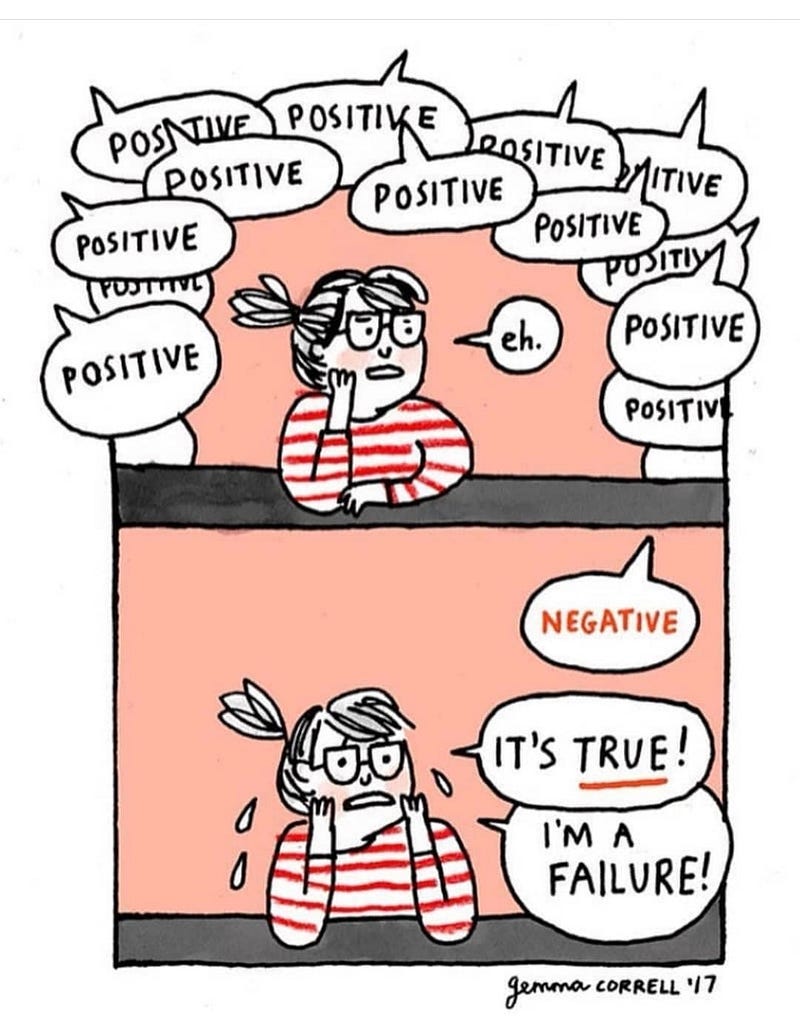
6. The next time you will encounter a situation where you are presented with the opportunity to repeat the mistake, you will automatically recollect the box with “don’t touch this box” from the basement, and pull out all the negativity you gathered there about yourself at the time you created it.

7. In time, this box is the first one you tap into when you need “comfort” of something you know and are familiar with because you’ve been telling yourself this for so long that it became your day to day way of handling things.
The juggling
In our adult life, we juggle with a lot of things at the same time.

Most of us will probably want to follow a “standard” or be part of a system where they can get benchmarked and check up their progress according to what they see in others ( yes, we want to compare ourselves as we are primarily social beings). But the ones bypassing the standard and the rules will be the hustlers who will fight with new challenges and unpaved paths. The problem they will face is that they will have no benchmark except their own. So that’s when the biggest threat comes in. Our inner critic will then take over and start working its ways in sabotaging our work.
Let’s see some of the ways in which we can tackle self-sabotage.
Performance vs perfectionism
In western psychology, especially the one coming from German psychologists we see a lot of theories developed around performance as part of self-efficacy framework.
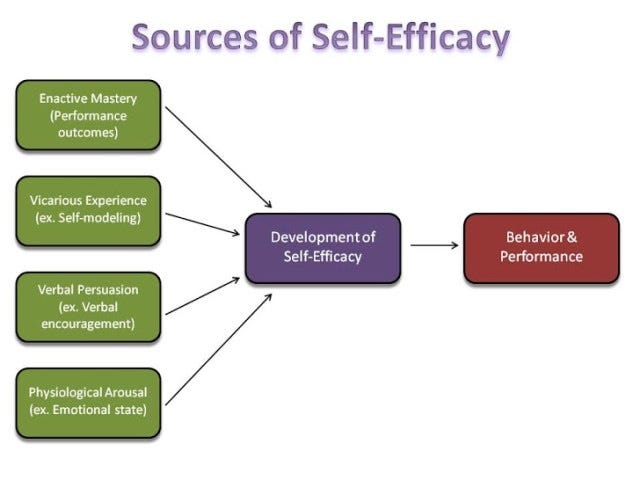
Despite the self-efficacy model itself being developed later on by Canadian psychologists Bandura, the way in which the German thinking school is based upon works with digging up the deepest traumas from your subconscious, bring it to the consciousness and working with that. Psychoanalysis development from Freud and Jung onward was all contributing to this thinking process. As such, there’s very little question in these ways of exploring the mind about how much harm they can cause if we dig too deep. That’s one of the reasons why the performance-based self-improvement style in the western world might not be the best way to handle healing. Truth is, no patient stays as long in therapy so any of them can actually prove that their method worked best. That’s where the eastern mindset comes along. With the Buddhism being the center of the thinking school in eastern world, we see the development of self-compassion there, healing and the discipline of the mind without trying to hyper analyze it and the result of good energy flows bringing topics like happiness into the world. We see how these 2 thinking styles are very different, yet trying to solve the same issue. However, only living in your emotions and not having enough cognition over your actions is the wrong approach while having too little feelings and only dealing with cognitive rational thoughts will never tap into the trauma and heal the wounds.
As such, in the context of our inner critic, we see 2 types of lenses that we can use to generate a recipe to handle it:
1. Performance
While performance focuses on improving the self having in mind it’s limitations, it will allow us to have a personal benchmark of the best we can be on a topic in a specific context with a certain type of resources. This type of lens provides the inner critic enough perspective to develop compassion while still working on improving aspects if the context allows for it.
2. Perfectionism
On the opposite hand, perfectionism is the dark brother of performance because it is based on the idea of making things perfect regardless of the context. This puts pressure on the individual and doesn’t allow compassion to be gentle to ourselves and our fragile nature. People who develop perfectionist traits are usually coming from a defectiveness life trap and develop perfectionism as a coping mechanism for their initial trauma.
In the work of James Pennebaker, the American social psychologist and language expert outlines a few interesting aspects about syntax in the context of the inner critic. We tend to use less “I” in conversations after we suffered from trauma and we detach our emotions from our body and tend to base things on facts in order to cope with the pain. This could be the explanation why most of the trauma-related work in therapy is done again through embodiment and treating somatized feelings. David Emerson talks in his book on Trauma-Sensitive Yoga in Therapy about bringing back the body into treatment to understand the initial motivation behind the inner critic today.
In my personal opinion, and after going through 1 intense year of yoga to work on my trauma I see the benefits of understanding where we have a blockage and where we have limitations in our body and the be gentle with ourselves and allow imperfect poses to help us heal the need for perfection or the voice of the inner critic.
I hear and read a lot about how to quiet down the inner critic. It simply defies the purpose to do that. The inner critic story is about the trauma of the inner child that needs to be healed. We need to address the events that created the feelings that generated the inner critic. We can’t solve this by shutting down or numbing it down.
The other lesson from yoga classes and the book on yoga as therapy is teaching ourselves acceptance, compassion, gratefulness, empathy and warmth and love for ourselves. Every time I show up on the mat on rainy Saturday morning I am grateful for my body waking up that day on time and giving me the strength to be there despite the bad weather. Every time I hear my yoga instructor saying that he is also grateful for our energy and openness to share our energy with others in class, I know my inner critic is softening the rough edges it has. It loses the grip on how it entangled me into a story about a baby body who was shamed and put down and started developing the story of self-based on that shame. That story is in my past. Who I am today is what I built through decisions of not sabotaging myself another day in my life.
What I saw in Brene Brown's work on shame and vulnerability resonates to the idea of giving yourself words of affirmation that Richard Brandson has. However, simply using the words of affirmation will not do the trick. The work that needs to be done is in the shame and vulnerability of your past that once reframed will enable you to strengthen the new you with words of affirmation. Otherwise, it will be like a shape without a context.
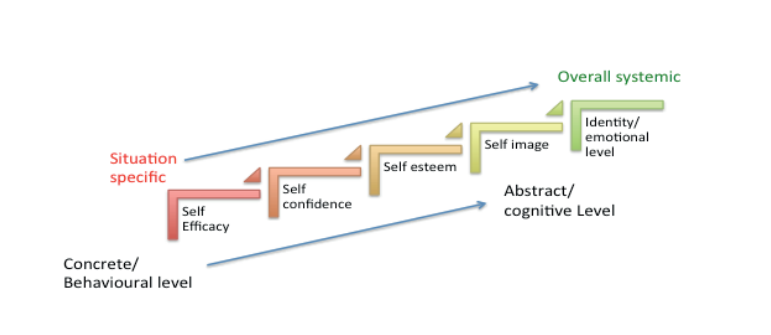
Looking back at the self-efficacy and performance part, one has to develop the relationship to its body to understand its limitations and not push when specific context/resources/ situation doesn’t allow for better performance. In the end, that would not be an optimal experience anymore because the EGO would step in and would try perfection when the context enables a different type of performance and optimization. Our need for optimizing while knowing when to optimize allows then a level of self-confidence that we know when to do the right action which builds up self-esteem which ultimately creates the self-image of being a certain way and this is the level of our inner critic. This is how high a role it plays. But without going into the context of why we couldn’t perform a certain task well enough, we only scratch the surface of how this image was built. The level over it is already a superior level which has to do with integrating multiple angles and introducing ourselves into an ecosystem and understating the role the system plays into our own individual performance.
Knowing what you know now about the inner critic story, what will you tell yourself differently from now on?


