avatarWorld As One 4PEACE

Free AI web copilot to create summaries, insights and extended knowledge, download it at here

2498

Abstract

atiently waiting to flex its muscles in the maritime domain and these latest incidents in the Red Sea posed the perfect opportunity. The US seeks to establish a maritime strategy based on a concept called networking of alliances. This is also relevant to the Indo-Pacific strategy, which is a much broader defense and security cooperation framework that intends to deter China’s rise in the Pacific and Indian oceans.</p><blockquote id="a336"><p>“Iran’s partnership with the Houthis, including its supply of weapons, has grown deeper since 2014. But this isn’t a typical patron-client relationship. The Houthis are financially self-sufficient, earning revenue through taxation, customs charges and service fees, as well as smuggling operations.”</p></blockquote><p id="98cb">The first part of this statement reads like a Cold War narrative — i.e., “patron-client relationship”. But the next part of the statement speaks to how much impact non-state actors have on the Middle East conflict. The Houthis are an armed group, with backing from a state actor in Iran, who is using this as a proxy war against other state actors Saudi Arabia and United States. It is very important to understand these principles of the Middle East conflict today. In my view, the tension between Cold War legacies, and a renewed focus on non-state actors, is what has kept the Middle East in such a volatile political and economic state.</p><blockquote id="986a"><p>“Either way, international shipping has taken a hit, fueling new concerns over the global economy. The most obvious worry is that the situation could cause a spike in energy prices, given that the region is a major exporter of oil to markets around the world.”</p></blockquote><p id="253b">A variety of international shipping companies have decided to stop traversing the Red Sea due to the Houthi attacks. Meanwhile, the constant focus on oil prices has not died down since the original attack by Hamas on Israel on October 7. Before the October 7 attack, it appeared that OPEC+ would control the narrative on oil prices through its voluntary production cuts. Now, with this geopolitical dimension in the Middle East, it looks more like an issue of whether ships — in this case, crude oil tankers — can actually traverse the Red Sea without any major consequences. Don’t forget that an environmental disaster would be just as catastrophic for shippers.</p><blockquote id="df77"><p>“Supply chains for other sectors have also experienced disruptions. Given

Options

that the Red Sea is used for transporting commodities and other resources between large markets, disruptions in traffic here can have serious economic effects. This is especially the case at the moment because a severe drought has reduced traffic via the Panama Canal, causing U.S. grain shipments destined for Asia to take lengthy detours through the Suez Canal and southern Africa.”</p></blockquote><p id="8f38">Global commodities markets are likely to feel the impact from these Red Sea attacks. One way or another, if it isn’t crude oil tankers, then it will likely be other ships carrying commodities, of which prices have become so volatile due to geopolitical trends. Anytime there’s a disruption in the Middle East, global commodities should definitely be a cause for concern to the global economy. Especially since the US is talking about not raising interest rates in 2024. Any type of shock to global commodities markets will change the narrative on interest rates in the US economy — just look at what’s been causing these problems since the US started raising rates in 2022–2023.</p><p id="fc90">Read Antonia Colibasanu’s full article: “<a href="https://geopoliticalfutures.com/what-red-sea-disruption-means-for-global-supply-chains/?tpa=NWM3MTNkOWEzODAwMzBkMTMzYjEyYzE3MDQ5ODc4NzZjMWFlN2Y&amp;utm_source=Former%2BSubscribers&amp;utm_campaign=4b35d5a3e2-20240104_FORMERS_Readers_Choice&amp;utm_medium=email&amp;utm_term=0_9c030d5841-4b35d5a3e2-265212839&amp;mc_cid=4b35d5a3e2&amp;mc_eid=87ed0a6d95"><b>What Red Sea Disruption Means for Global Supply Chains</b></a>”.</p><p id="f30e">If you like my opinion on current affairs, check out some of the previous opinions I wrote for [The Weekend Brief] newsletter:</p><ul><li><a href="https://readmedium.com/opinion-is-the-us-china-meeting-in-san-francisco-similar-to-international-events-of-1972-5787ce24c202"><b>Is the US-China meeting in San Francisco similar to international events of 1972?</b></a></li><li><a href="https://readmedium.com/opinion-the-effect-trump-had-on-the-world-will-leave-a-long-lasting-impact-on-international-501728ec562d"><b>The effect Trump had on the world will leave a long-lasting impact on international politics!</b></a></li><li><a href="https://readmedium.com/opinion-why-is-the-kremlins-existential-fear-of-social-disintegration-and-revolution-related-to-4f2fda4a5801"><b>Why is the Kremlin’s existential fear of social disintegration and revolution related to Ukraine?</b></a></li></ul></article></body>

[Opinion] The US has been patiently waiting to flex its muscles in the maritime domain!

Sign up for [The Weekend Brief] newsletter by Areas & Producers
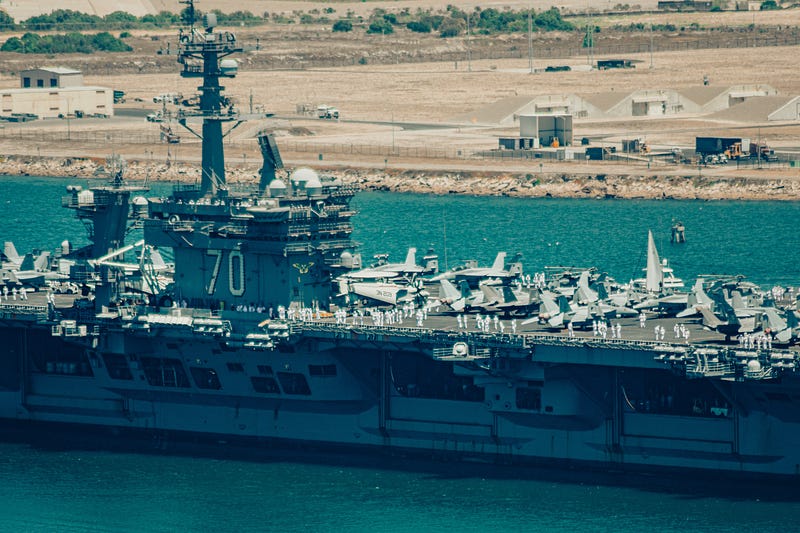
Photo by William Rudolph on Unsplash

War and energy are on the minds of so many people right now. Conflict rages on from Israel and Palestine, to Ukraine and Russia, and between armed groups in Myanmar, all the while OPEC+ meetings are stirring up the pot of international politics by cutting output of global oil supplies.

That’s why I encourage everyone to join this discussion. We should be talking more about world affairs these days!

I even wrote a previous opinion for [The Weekend Brief] newsletter about the the upcoming 2024 US election — It’s 2024, a whole new world is taking shape, and the Republicans need a new strategy!— which includes some commentary about Bidenomics and the US economy.

George Friedman is founder of Geopolitical Futures and author of many books on geopolitics. This latest writing in GPF is not from Friedman, but from an associate, Antonia Colibasanu. Colibasanu’s latest writing about the Red Sea attacks is insightful and a little controversial. Have a look at it here.

Now, here are my thoughts about the article.

“On Dec. 18, the U.S. announced that it would set up a task force to strengthen security in the area. But as Washington calls for more governments to contribute to the effort, the Houthis say the attacks will continue.”

This did not surprise me at all. The US has been patiently waiting to flex its muscles in the maritime domain and these latest incidents in the Red Sea posed the perfect opportunity. The US seeks to establish a maritime strategy based on a concept called networking of alliances. This is also relevant to the Indo-Pacific strategy, which is a much broader defense and security cooperation framework that intends to deter China’s rise in the Pacific and Indian oceans.

“Iran’s partnership with the Houthis, including its supply of weapons, has grown deeper since 2014. But this isn’t a typical patron-client relationship. The Houthis are financially self-sufficient, earning revenue through taxation, customs charges and service fees, as well as smuggling operations.”

The first part of this statement reads like a Cold War narrative — i.e., “patron-client relationship”. But the next part of the statement speaks to how much impact non-state actors have on the Middle East conflict. The Houthis are an armed group, with backing from a state actor in Iran, who is using this as a proxy war against other state actors Saudi Arabia and United States. It is very important to understand these principles of the Middle East conflict today. In my view, the tension between Cold War legacies, and a renewed focus on non-state actors, is what has kept the Middle East in such a volatile political and economic state.

“Either way, international shipping has taken a hit, fueling new concerns over the global economy. The most obvious worry is that the situation could cause a spike in energy prices, given that the region is a major exporter of oil to markets around the world.”

A variety of international shipping companies have decided to stop traversing the Red Sea due to the Houthi attacks. Meanwhile, the constant focus on oil prices has not died down since the original attack by Hamas on Israel on October 7. Before the October 7 attack, it appeared that OPEC+ would control the narrative on oil prices through its voluntary production cuts. Now, with this geopolitical dimension in the Middle East, it looks more like an issue of whether ships — in this case, crude oil tankers — can actually traverse the Red Sea without any major consequences. Don’t forget that an environmental disaster would be just as catastrophic for shippers.

“Supply chains for other sectors have also experienced disruptions. Given that the Red Sea is used for transporting commodities and other resources between large markets, disruptions in traffic here can have serious economic effects. This is especially the case at the moment because a severe drought has reduced traffic via the Panama Canal, causing U.S. grain shipments destined for Asia to take lengthy detours through the Suez Canal and southern Africa.”

Global commodities markets are likely to feel the impact from these Red Sea attacks. One way or another, if it isn’t crude oil tankers, then it will likely be other ships carrying commodities, of which prices have become so volatile due to geopolitical trends. Anytime there’s a disruption in the Middle East, global commodities should definitely be a cause for concern to the global economy. Especially since the US is talking about not raising interest rates in 2024. Any type of shock to global commodities markets will change the narrative on interest rates in the US economy — just look at what’s been causing these problems since the US started raising rates in 2022–2023.

Read Antonia Colibasanu’s full article: “What Red Sea Disruption Means for Global Supply Chains”.

If you like my opinion on current affairs, check out some of the previous opinions I wrote for [The Weekend Brief] newsletter:

World
Opinion
Current Affairs
Middle East
War
Recommended from ReadMedium