[Opinion] Is the United States an invented country?
Sign up for [The Weekend Brief] newsletter by Areas & Producers
I am a loyal follower of Geopolitical Futures and its diverse team of writers, analysts and forecasters. George Friedman is founder of Geopolitical Futures and author of many books on geopolitics, but there are other writers focusing on all areas and issues of the world, such as the example of the Arab World and how politics and economics shape entire regions.
I have provided content about the latest video and graphic provided from the Geopolitical Futures team to cap off a year of turbulent geopolitics and world affairs. Please find the content below.
Attacks were more frequent and deadly in 2022 compared with the year before
Just reading the byline above gives an insight into what has been going down in world affairs since 2022: more deadly terrorist attacks around the world.
According to the graphic provided by Geopolitical Futures, the Islamic State (IS) has caused the most number of terrorist incidents since 2021–22.
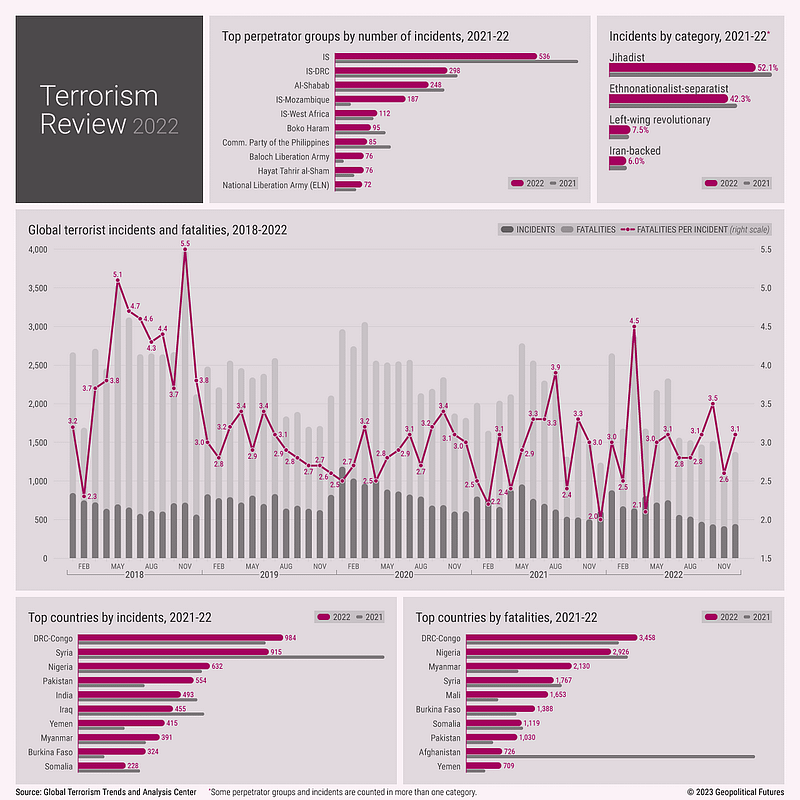
“Military regimes in Niger, Burkina Faso and Mali promised greater security, but instead the situation has worsened; the Sahel accounted for 43 percent of all terrorism-related deaths in 2022, a 7 percent increase over 2021.”
Their findings suggest that, due to the political instability accross the Sahel region, that less security assitance has been provided to deter terroist groups from committing such attacks in the region. Read the full details about the graphic: “Terrorism Hot Spots”.
The Emering World Order
In a Bonus Video provided by the Geopolitical Futures team, George Friedman sits down Christian Smith on the podcast Talking Geopolitics to discuss the so-called cycles of American history and how those cycles have contributed to the U.S. foreign policy decisions.
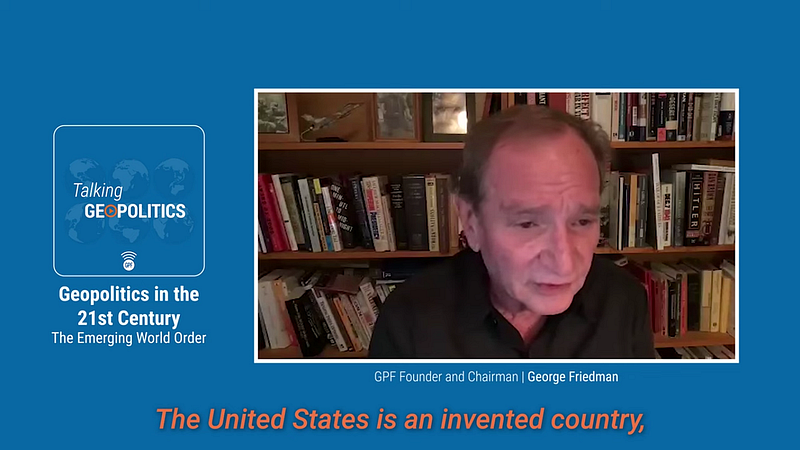
“The United States is an invented country, okay? Unlike England, unlike France, which are organic countries which have developed stably over the years. We’re a country that was built out of nothingness: through immigrations, through massive movements of people into it and through technological revolution. So we’re different from the rest of the world.”
There’s so much bold courage attached to this statement by George Friedman. Calling the US “an invented country” alone would cause some significant debate and complicated thoughts, but then he goes out on a limb and calls out the UK and France for being “organic countries” which is a term I am not all that familiar with, anyways. I agree with the fact that technological revolution has indeed been a key role in the development of the US culture, politics and identity over the years. And while I also agree his statement — “we’re different from the rest of the world” — I don’t think we should stop there without having a bigger discussion about why the US is different from the rest of the world.
The rest of the podcast goes over the American cycles and how it relates to this emerging world order. Watch the full Bonus Video: “Geopolitics in the 21st Century”.
If you like my opinion on current affairs, check out some of the previous opinions I wrote for [The Weekend Brief] newsletter: