[Opinion] It’s amazing how politics and economics shape entire regions!
Sign up for [The Weekend Brief] newsletter by Areas & Producers
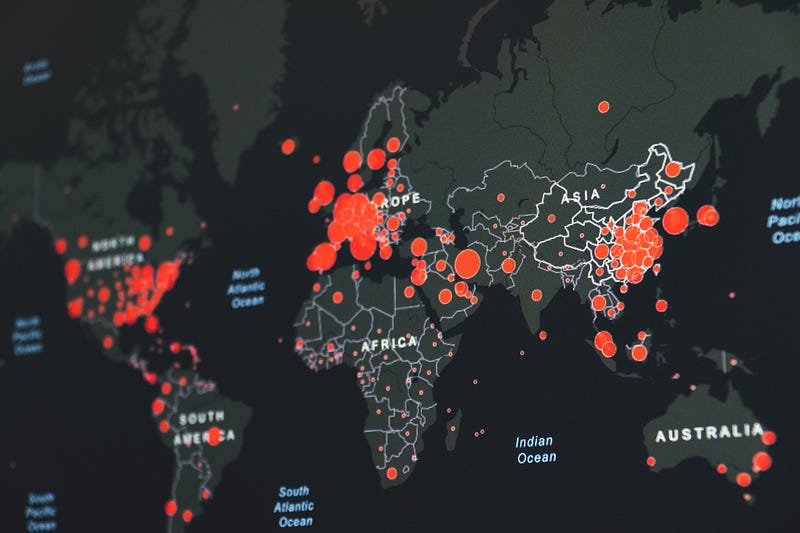
War is on the minds of so many people right now. Conflict rages on from Israel and Palestine, to Ukraine and Russia, and between armed groups in Myanmar.
That’s why I encourage everyone to join this discussion. We should be talking more about world affairs these days!
I even wrote a previous opinion for [The Weekend Brief] newsletter about the Israel-Palestine war in November — Did Hamas and their supporters have more time to make the strike?— which includes some commentary from other Medium writers.
Geopolitical Futures and its diverse team of writers, analysts and forecasters have been continuously writing about the situation these wars have created for international politics. This latest writing in GPF is not from George Friedman, but from an associate, Hilal Khashan. Khashan’s latest writing about the changing dynamics of the Arab world is insightful and a little controversial.Have a look at it here.
Now, here are my thoughts about the article.
“Since the turn of the 20th century, political leaders, heads of state and political movements in the Arab world have also shown a propensity for massive miscalculation. Hamas’ Oct. 7 attack is a prime example, but it was precipitated by several other cases that have shaped the region since World War I.”
It’s amazing how politics and economics shape entire regions — i.e. by connecting the people and culture around them into an entire geographical area. History plays a big role in this process, of course, as Khashan alludes to during the 20th century. For the Arab world, colonial ties are still just as important as they were in those countries’ histories. But they are not alone; we see these historical forces taking shape all over the world. Even though there has been a lot of optimism about de-colonization since the turn of the 21st century, I think that the post-Covid-19 world must face a starker reality of accepting the role of colonial ties by each region. The latter will only be reinforced by so-called de-globalization trends. De-globalization actually leads to more colonial involement in the Arab world, as opposed to a lesser amount of influence under a globalization paradigm.
“Hamas failed to consider the likelihood that Israel’s war Cabinet would launch an unprecedented air and ground campaign following its attack, the scale of which recalled the genocidal horrors ingrained in Israel’s collective consciousness…Images from Gaza on Oct. 7 showed Hamas guerrillas ecstatic about the possibility of a massive prisoner swap. But Israel instead unleashed a withering military campaign.”
Indeed, the international media shapes one narrative, but, in reality, the events unfold in a way that is always unexpected and miguided by uncertain intentions of state actors. State actors always control the war agenda, never non-state actors. Non-state actors, such as Hamas, are completely reliant upon other state actors who support what they’re doing via a “proxy war”. This term has become very popular due to the Russia-Ukraine war, with the involvement of the US and NATO, but also because of the overall concerns surrounding Russia’s intentions in the former Soviet Union. At the same time, the world should be concerned about this proxy war happening in the Arab world with equal concerns about the future.
On the Arab Revolt in 1916: “Hamas’ deadly miscalculation wasn’t unprecedented. The 20th century is rife with episodes of poor decision-making by Arab leaders, beginning with the anti-Ottoman Arab Revolt in 1916…In June 1916, Hussein launched the Arab Revolt, unaware that Britain and France had already signed five months earlier the Sykes-Picot agreement, which gave administration over Iraq and Palestine to London and over Syria and Lebanon to Paris.
Talk about a lot of controversy. The Sykes-Picot agreement is mired in problems surrounding colonialism, post-colonialism and the beginning of the Arab world’s struggles with de-colonization — even until today. All these -isms and -zations ought to make us think that the Arab world is an intense academic discussion. Well, I would argue that this is what the colonial powers wished for from the very beginning. Keeping the Arab world as an academic discussion invevitably keeps London and Paris in the coversation. Take the academics out of the equation, and the history of the Arab world would have been a lot different from what it has become today.
On the 1948 Blunder: “The Arab summits over the Palestine issue in 1946 in Egypt and Syria did not refer to military intervention in Palestine. They primarily rejected the recommendations of the Anglo-American Commission, which called for creating two states in Palestine, one Jewish and another Arab…Egypt lost the war due in part to the lack of coordination with the Iraqi army and Jordan’s Arab Legion, the best-trained and most efficient army during the war, and in part to militarily unfit Egyptian troops, the absence of a war strategy and low morale.”
Great points made here about the military situation in 1948. Clearly the politics around the Israel-Palestine issue did not lend a helping hand to Egypt’s military strategy. They likely miscalculated — or were decieved — by the other Arab militaries’ capabilities in the region. It is likely that the Egyptian military was expecting a broader coalition of military aid and support from both international actors and regional partners. But, history proved that this is not how those events played out at all.
On the Suez and the Straits of Tiran: “During the interwar period leading to the 1967 war, Nasser bragged about building the most potent armed forces in the eastern Mediterranean. However, his Arab critics ridiculed him for allowing Israeli shipping through the Straits of Tiran. Over time this issue soured Nasser’s image, and he waited for an opportunity to undo it.”
Here we go. The maritime issues of the Israel-Palestine war are overlooked in many of the reports following the events unfolding there now. The Eastern Mediterranean has come back into focus in international politics, and I believe it is the focal point of this latest flare-up between Hamas and Israel. There are a variety of state and non-state actors who want to ensure their maritime interests will be upheld in the Eastern Mediterranean. I advise anyone that is watching developments in the Arab world to closely look at the overall dynamics in the Eastern Mediterranean right now.
Read Hilal Khashan’s full article: Arab Strategic Miscalculations.
If you like my opinion on current affairs, check out some of the previous opinions I wrote for [The Weekend Brief] newsletter: