avatarAvi Kotzer

Free AI web copilot to create summaries, insights and extended knowledge, download it at here

3144

Abstract

terial like silk (but also wool and others) is selected for spinning into fabric, usually the longer and more even fibers are picked. <i>Noil</i> is a relatively short fiber, which means that fabric made from it tends to be weaker than the one made from longer silk.</p><p id="aeb1">The 1911 edition of the Encyclopedia Britannica sums up the process of separating <i>noil</i> from the longer silk fibers.</p><blockquote id="8833"><p>First the filled silk is placed into a holding receptacle, clamped fast, and presented to combing teeth. These teeth retain a certain proportion of shorter fibre and rough places and tangled portions of silk, which are taken off the combs in a book-board or wrapped round a stick and again presented to the combs. This fibre again yields combings which will also be combed, and so on for five or six times until the combings are too short, and are taken from the machine and known as <b><i>noils</i></b>. The productions from these several combings are known as “ drafts “ and are of different lengths: the product of the filled silk first placed in the dressing frame being the longest fibre and of course the most valuable.</p></blockquote><p id="b132">Silk <i>noil</i> is also made from naturally short cocoon fibres or fibers that break when the moths emerge from the silkworm cocoons. Until the 1300s, <i>noil</i> was valued and often used to create silk blends.</p><p id="b971">According to Wikipedia, the the image below shows hand-dyed silk <i>noils</i>.</p><figure id="38a5"><img src="https://cdn-images-1.readmedium.com/v2/resize:fit:800/0*ZnYvSbNghnU4cUpy.jpg"><figcaption>Photo by Ever Improving Me</figcaption></figure><p id="6852">The above example shows unspun <i>noils</i>, but they are also often plied into threads and used to make a type of silk known as a <b>slub</b>, or “a soft thick uneven section in a yarn caused accidentally by knotting during winding… or by the inclusion of short fibers during spinning.”</p><p id="1046">And if you want to see someone doing some noil spinning, here is a <a href="https://www.youtube.com/watch?v=9ybIwi-DjAA">video</a> by Chantelle Hill of Fiberific showing how she uses a Tibetan spindle.</p><h2 id="8639">Raw Silk</h2><p id="531f"><i>Noil</i> is sometimes called “raw silk”, although this is a misnomer, since all silk could be considered a raw material.</p><p id="4938">Raw Silk, with capital R and S, is coincidentally the name of two bands and a movie. I couldn’t find out much information about the 1988 Australian TV movie, except the synopsis on IMDB sums up its plot as follows: “A street-smart lawyer is framed on a murder charge, and must defend himself against a hot-shot female barrister.”</p><p id="5465">Then there is the Greek rock / metal band Raw Silk, formed in 1989. According to Discogs, their first album, “Silk Under the Skin”, was initially released independently but then re-released by EMI. Meaning they must have had some success. They disbanded in 1992 and reunited 25 years later. You can watch a short live performance at The Crow club in Athens, Greece, <a href="https://www.youtube.com/watch?v=zYd10MTpMfo">here</a>.

Options

(Note that the link to their website is broken and now shows something else. Click at your own risk.)</p><p id="7dad">Finally, the better-known <b>Raw Silk</b> may be the American dance and disco band from the late 1970s and early 80s. Raw Silk consisted of Ron Dean Miller and Bert Reid, who had been members of the Brooklyn R&B / funk / disco group Crown Heights Affair. Miller and Reid had three female vocalists: Tenita Jordan, Sybil Thomas, and Jessica Cleaves. Cleaves was a also a singer with Earth, Wind & Fire and Parliament Funkadelic.</p><p id="f320">Raw Silk’s 1982 boogie hit, “Do It to the Music”, reached the number 5 spot on the U.S. Dance chart, and was number 18 on the UK charts. Let’s end today’s column with a live version of that song:</p> <figure id="8b68"> <div> <div> <img class="ratio" src="http://placehold.it/16x9"> <iframe class="" src="https://cdn.embedly.com/widgets/media.html?src=https%3A%2F%2Fwww.youtube.com%2Fembed%2FrkLMTA9ljK8%3Ffeature%3Doembed&amp;display_name=YouTube&amp;url=https%3A%2F%2Fwww.youtube.com%2Fwatch%3Fv%3DrkLMTA9ljK8&amp;image=https%3A%2F%2Fi.ytimg.com%2Fvi%2FrkLMTA9ljK8%2Fhqdefault.jpg&amp;key=a19fcc184b9711e1b4764040d3dc5c07&amp;type=text%2Fhtml&amp;schema=youtube" allowfullscreen="" frameborder="0" height="480" width="854"> </div> </div> </figure></iframe></div></div></figure><p id="4e36">Now you know. If you’re ever shopping at a store that has items made of silk, feel free to ask them if they have anything made from the <i>noils</i>. Don’t be surprised if they just laugh in your face. Not because you don’t want to buy the more expensive stuff… but because the editors of the Spelling Bee decided that <i>noil</i> is a dord*.</p><p id="e6c2">You can check out my previous entry on another <b>dord* </b>here:</p><div id="040a" class="link-block"> <a href="https://readmedium.com/vita-f0ed87645900"> <div> <div> <h2>Vita</h2> <div><h3>Live is life… na, na, na, na-na</h3></div> <div><p>medium.com</p></div> </div> <div> <div style="background-image: url(https://miro.readmedium.com/v2/resize:fit:320/0*S5lgBsycxkvBtQlF)"></div> </div> </div> </a> </div><p id="c666">*What the heck is a <b>dord, </b>you ask? Here’s the answer:</p><div id="fb3f" class="link-block"> <a href="https://www.merriam-webster.com/words-at-play/dord-a-ghost-word"> <div> <div> <h2>'Dord': A Ghost Word</h2> <div><h3>One of the questions people like to ask lexicographers is this: Can you sneak something into the dictionary? Can you…</h3></div> <div><p>www.merriam-webster.com</p></div> </div> <div> <div style="background-image: url(https://miro.readmedium.com/v2/resize:fit:320/0*DWcvzjUXcyQZp3k_)"></div> </div> </div> </a> </div></article></body>

Noil

A touch of silk
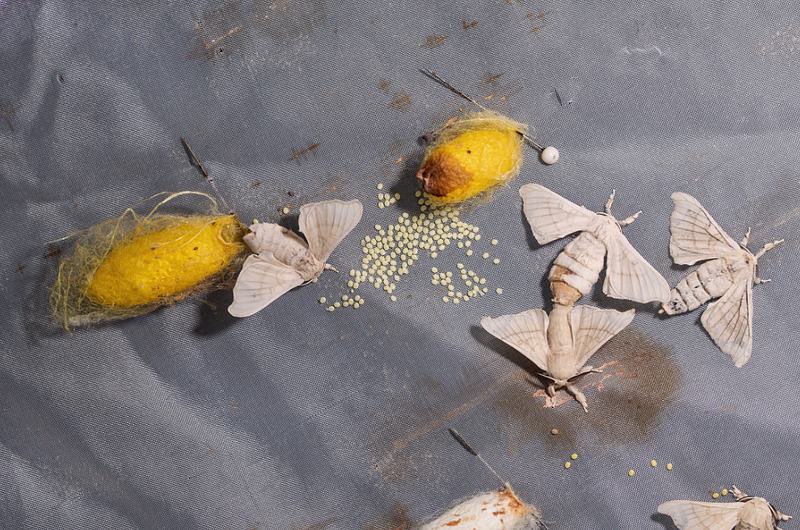
Photo by David Clode on Unsplash, titled 90 degrees by Iva Reztok

Today’s New York Times Spelling Bee letters:
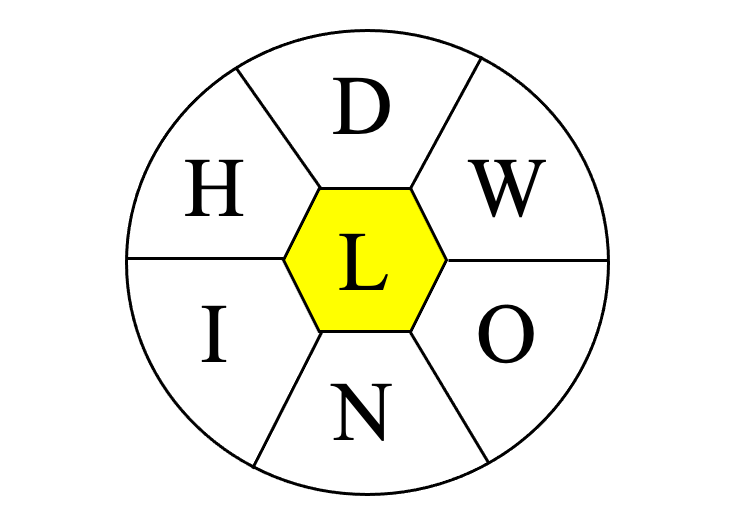
Art: Iva Reztok

D, H, I, N, O, W, and center L (all words must include L)

Merriam-Webster says…
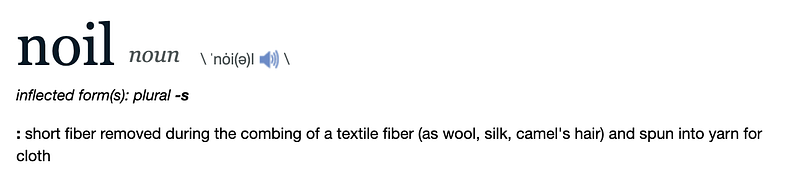
Credit: merriam-webster.com

Silly little dictionary! Don’t you know that noil can’t possibly be a word if The New York Times says it ain’t?

For a complete list of rejected words, check out the Spelling Bee Master.

What’s your favorite dord* from today’s puzzle?

My Two Cents

Today was slim pickens when it came to selecting which word I should write about. Fewer than two dozen words from which to choose. Some of them I’ve already written about (like lido and wold), others don’t even show up in the dictionary.
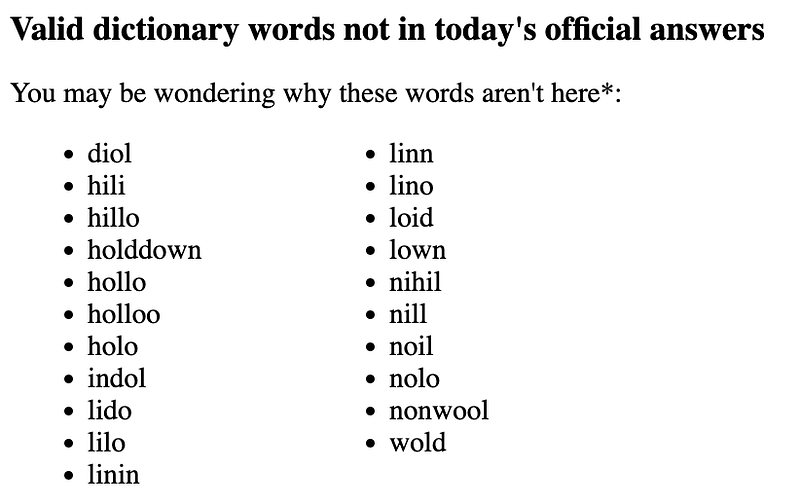
Credit: https://nytbee.com

One day I’m going to run out of dords*, and I’ll have to resort to click-baiting readers on this platform in order to earn my daily 13 cents. Until that day, however, I vow to keep teasing Merriam-Webster for including non-words in their dictionary. How dare they go up against The New York Times?!?

Anyway, today’s offering will be short and smooth… like silk.

Fiber silk

Our friends at Merriam-Webster tell us that the origin of noil is uncertain, which is an elegant way of saying they have no effin’ clue where the term comes from. Neither does the online etymology dictionary, or dictionary.com. However, the latter does claim that the first usage of noil was recorded around the first quarter of the 17th century.

As you may probably already know, silk is an animal fibre secreted by some insects and arachnids to make their cocoons and webs. Some silk can be made into fine fabrics, and humans have been using the silkworms (caterpillars of several moth species) to do so for millennia.

When material like silk (but also wool and others) is selected for spinning into fabric, usually the longer and more even fibers are picked. Noil is a relatively short fiber, which means that fabric made from it tends to be weaker than the one made from longer silk.

The 1911 edition of the Encyclopedia Britannica sums up the process of separating noil from the longer silk fibers.

First the filled silk is placed into a holding receptacle, clamped fast, and presented to combing teeth. These teeth retain a certain proportion of shorter fibre and rough places and tangled portions of silk, which are taken off the combs in a book-board or wrapped round a stick and again presented to the combs. This fibre again yields combings which will also be combed, and so on for five or six times until the combings are too short, and are taken from the machine and known as noils. The productions from these several combings are known as “ drafts “ and are of different lengths: the product of the filled silk first placed in the dressing frame being the longest fibre and of course the most valuable.

Silk noil is also made from naturally short cocoon fibres or fibers that break when the moths emerge from the silkworm cocoons. Until the 1300s, noil was valued and often used to create silk blends.

According to Wikipedia, the the image below shows hand-dyed silk noils.
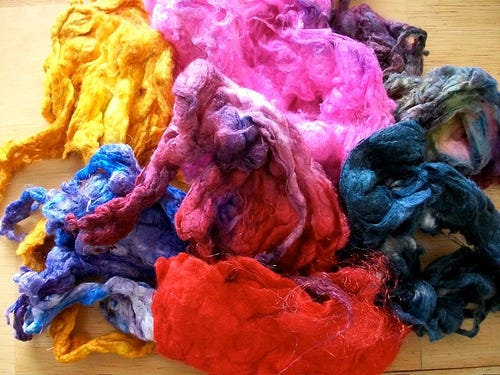
Photo by Ever Improving Me

The above example shows unspun noils, but they are also often plied into threads and used to make a type of silk known as a slub, or “a soft thick uneven section in a yarn caused accidentally by knotting during winding… or by the inclusion of short fibers during spinning.”

And if you want to see someone doing some noil spinning, here is a video by Chantelle Hill of Fiberific showing how she uses a Tibetan spindle.

Raw Silk

Noil is sometimes called “raw silk”, although this is a misnomer, since all silk could be considered a raw material.

Raw Silk, with capital R and S, is coincidentally the name of two bands and a movie. I couldn’t find out much information about the 1988 Australian TV movie, except the synopsis on IMDB sums up its plot as follows: “A street-smart lawyer is framed on a murder charge, and must defend himself against a hot-shot female barrister.”

Then there is the Greek rock / metal band Raw Silk, formed in 1989. According to Discogs, their first album, “Silk Under the Skin”, was initially released independently but then re-released by EMI. Meaning they must have had some success. They disbanded in 1992 and reunited 25 years later. You can watch a short live performance at The Crow club in Athens, Greece, here. (Note that the link to their website is broken and now shows something else. Click at your own risk.)

Finally, the better-known Raw Silk may be the American dance and disco band from the late 1970s and early 80s. Raw Silk consisted of Ron Dean Miller and Bert Reid, who had been members of the Brooklyn R&B / funk / disco group Crown Heights Affair. Miller and Reid had three female vocalists: Tenita Jordan, Sybil Thomas, and Jessica Cleaves. Cleaves was a also a singer with Earth, Wind & Fire and Parliament Funkadelic.

Raw Silk’s 1982 boogie hit, “Do It to the Music”, reached the number 5 spot on the U.S. Dance chart, and was number 18 on the UK charts. Let’s end today’s column with a live version of that song:

Now you know. If you’re ever shopping at a store that has items made of silk, feel free to ask them if they have anything made from the noils. Don’t be surprised if they just laugh in your face. Not because you don’t want to buy the more expensive stuff… but because the editors of the Spelling Bee decided that noil is a dord*.

You can check out my previous entry on another dord* here:

*What the heck is a dord, you ask? Here’s the answer:

Spelling Bee
Language
Music
Silk
Textile
Recommended from ReadMedium