
No, Voter Mobilization Won’t Defeat Trump
Why Democrats need a holistic campaign strategy in 2020.
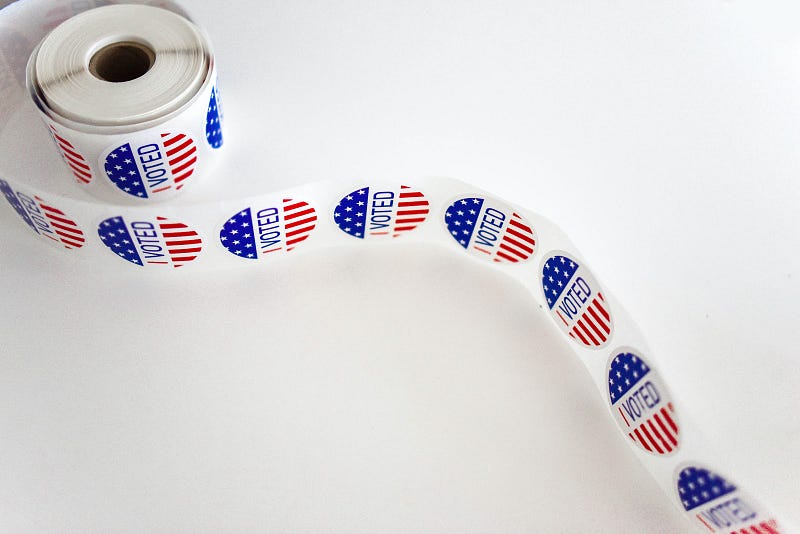
Voter registration and turnout are critical, but they’re not enough.
When I talk with progressives about how to defeat Donald Trump, there’s one argument I hear over and over again: Democrats just need to mobilize our base.
At one level, I agree with their analysis. The party has a history of leaving voters on the table, especially people of color, and there’s reason to believe our 2016 loss was partly a function of the Clinton campaign’s failure to organize in black communities. Making sure as many voters as possible register and get to the polls is critical to our success.
Where we part ways is that a lot of folks have latched onto voter mobilization as the be-all-end-all of Democratic strategy, thinking if we can just turn out our voters, we will win in a landslide.
In many ways, this was the conceit of the entire Bernie Sanders campaign. While acknowledging that Bernie was off-putting to some moderate voters, his acolytes maintained Democrats could make up for any losses in the middle with heightened turnout, especially among the young and zealously progressive.
As we all know now, however, the prophesied blue wave of Bernie voters never materialized, giving the lie to a theory of voter turnout that never had any scientific support.
Eight reasons voter mobilization isn’t enough
1. Partisan affiliation is roughly equal in most swing states.
The major premise for the “just mobilize” argument is that there are more Democrats and left-leaning independents in the U.S. than there are Republicans. After all, Hillary Clinton received nearly 3 million more votes than Trump did in 2016. The problem with this reasoning is that it ignores where the votes are. Yes, there are more of us than there are of them, but there aren’t significantly more of us in places where it counts. There’s a reason swing states are swing states: because party affiliation in those areas is about evenly divided between Republicans and Democrats.
In Florida, Wisconsin, Arizona, and North Carolina, there are just as many people who identify as Republican as identify as Democratic. And, even in states like Michigan and Pennsylvania where Democrats still have a lead in party affiliation, it was trending toward Republicans for years before reversing slightly in 2018. Even if we succeed in turning out a high percentage of our voters, it could all be offset by high turnout on the right as well.
2. The deck is stacked against us.
Even if mobilization could work in theory, we are fighting an uphill battle. Not only are we stuck with the Electoral College, which inherently favors rural voters over urban ones, but Republicans have been systematically rigging the game in their favor for decades. From gerrymandering to voter suppression laws to felon disenfranchisement to disinformation campaigns, the GOP has crafted a system perfectly designed to make it harder for poor people and people of color to exercise power at the ballot box. While it’s essential for Democrats to do everything we can to turn-back and override these efforts, the notion that we can overcome all of these barriers in a single election cycle — especially without new legislation to secure voting rights — is naive.
3. Some evidence suggests increased turnout would help Trump.
A recent FiveThirtyEight analysis of a Knight Foundation poll of non-voters concluded that in key swing states like Pennsylvania and Florida, non-voters lean significantly Republican. In addition, while non-voters lean Democratic in other swing states like Michigan and Wisconsin, the margins are much smaller in their favor.
4. Registration is already relatively high in battleground states.
A recent analysis by Nate Cohn in the New York Times concluded voter registration efforts wouldn’t do much in the Northern battleground states because “registration is generally high” and “people who aren’t registered are disproportionately whites without a college degree” — those more likely to vote for Trump.
5. Massive voter registration prior to the 2016 election didn’t save us.
Few people remember, but there was a robust Democratic voter registration operation before Trump was elected. During Obama’s presidency, more than 50 million people registered to vote and of those, more than 42% leaned Democratic (compared to 28% who leaned Republican). More registration can’t hurt, but it’s unlikely to be a panacea this time around either.
6. Democrats won in 2018 partly because Trump supporters stayed home.
While election coverage almost universally attributed Democratic success in 2018 to increased voter mobilization, reality is a bit murkier. It’s true that Democrats saw a surge in anti-Trump turnout, but polling data suggests a simultaneous depression in voting among Trump’s strongest supporters played a role. The same can’t be expected in the general election.
7. Mobilization campaigns can inadvertently mobilize opponents.
In recent years, it‘s become increasingly clear that mobilization campaigns can backfire. Efforts to fire up the base by focusing attention on hot button “wedge issues” polarizes the electorate on both sides of the political spectrum while driving moderates out of the voting pool. Moreover, as I explained in Dear Democrats, Beware Dragon Voters, Trump is an “antifragile president” who thrives when and his followers are under attack. As a result, when Democrats run negative advertisements to boost turnout, it can simultaneously mobilize his supporters to turn out as well.
8. Mobilization will be harder in 2020 than in 2016 and 2018 because of the pandemic.
Registering and turning out voters is one of the most labor intensive jobs in politics and it usually involves a tremendous amount of in-person contact. While it’s still possible to do voter mobilization at a distance, it’s harder and less effective. Whatever we do to increase turnout at the polls this fall will almost certainly accomplish far less than Democratic strategists originally hoped.
Beyond the Myth of Mobilization
Despite the uphill challenge before us, victory is still well within our grasp. But first Democrats will have to let go of the belief that mobilization is the cure to all that ails us. As Ruy Teixeira, a senior fellow at the Center for American Progress, has observed:
“No myth is stronger in progressive circles than the magical, wonderworking powers of voter turnout. It’s become a sort of pixie dust that you sprinkle over your strenuously progressive positions to ward off any suggestion that they might turn off voters.”
Whether mobilization is your talisman against moderate resistance to liberal policies or a security blanket you snuggle beneath during the dark, cold night of Trump’s presidency, it’s not enough.
Voter registration and turnout are an essential part of any effective 2020 strategy. However, victory will also depend on our ability to persuade swing voters and demobilize and dissuade soft Trump supporters.
To learn how to persuade Trump-leaning swing voters, check out:
And, to learn why we must demobilize and dissuade soft Trump supporters, check out:
No Time Like the Present
As I write this, there are 168 days until the election. That’s enough time to get this right despite all the forces arrayed against us — if we abandon the fantasies and denial clouding our vision.
But we must start now, before it’s too late.
About the Author
Dr. Karin Tamerius is the founder of Smart Politics, a former psychiatrist, and an expert in political psychology who specializes in teaching progressives how to communicate more productively and persuasively with people across the political spectrum.