
Dear Democrats, Beware Dragon Voters
Taming right-leaning voters is as critical as mobilizing our base & persuading the undecided.

Recently, a hardcore Trump supporter told me:
“I hated Trump my whole life. I voted against him even. But I never felt more personally committed to doing whatever I can to help him succeed than watching [impeachment] unfold.”
Think about that for a moment. He didn’t vote for Trump. Hated him, in fact. But now he’s mobilized not just to vote for Trump, but to do whatever he can to reelect him.
Resist the temptation to write this guy off — I know you think he’s crazy, but he’s not — just listen.
This isn’t an isolated case. I’ve been talking with Trump supporters almost nonstop since the 2016 election and this sentiment is more the rule than the exception. It’s not always so clearly expressed — but it’s there. If you’re not hearing it, it’s because you’re not asking the right questions or not engaging with Trump supporters at all.
Don’t believe me? Consider this conversation described by Erica Etelson in her excellent new book Beyond Contempt: How Liberals Can Communicate Across the Great Divide:
“Four white men at a red-blue dialogue I attended said they used to be liberal but got tired of being lectured to and scolded. None of them liked Trump, but they did find his hostility to liberal finger-wagging highly appealing. One of them said he hated Trump but less so every time the Left attacks his supporters: He may be a fool but he’s our fool.”
Comments like these crystallize a phenomenon I’ve been warning about for some time: Trump is an “antifragile president”, one who thrives when he and his followers are under assault. Like the X-Men supervillain Sebastian Shaw, the more you attack him, the stronger he gets.
Anatomy of an Invincible Candidate
Negative Partisanship
Remember when Trump said this?
“You know what else they say about my people? The polls, they say I have the most loyal people. Did you ever see that? Where I could stand in the middle of Fifth Avenue and shoot somebody and I wouldn’t lose any voters, okay? It’s like incredible.”
Sure, it was foolish bluster. But like many of the inane things he says, it also contained a grain of truth: the president’s supporters are largely indifferent to his actions.
What Trump’s analysis gets wrong, however, is why voters stick with him. He explains their support in terms of “loyalty” but what really drives them is “loathing” — for Democrats.
Political psychologists call this phenomenon negative partisanship and it’s the dominant organizing force in American politics today:
“Over the past few decades, American politics has become like a bitter sports rivalry, in which the parties hang together mainly out of sheer hatred of the other team, rather than a shared sense of purpose. Republicans might not love the president, but they absolutely loathe his Democratic adversaries. And it’s also true of Democrats, who might be consumed by their internal feuds over foreign policy and the proper role of government were it not for Trump.” (Abramowitz & Webster, 2017 in Politico)
People who hate Democrats — be they Republicans or independents or third-party voters — are drawn to Trump despite his flaws for the same reason sports fans root for any team that takes on their arch rival: the enemy of my enemy is my friend.
As Charles Murray said about the rise of Trump on a 2017 “Making Sense” podcast interview:
“One of the things that struck me most were people who say, ‘You don’t understand. We don’t particularly like Donald Trump. We are not defending his character, or anything like that. He’s our murder weapon.’ And I think that is a pretty short and accurate way of saying what function Trump served.”
And the Trump-as-murder-weapon effect is strengthened right now because, unlike in sports, Trump v. Democrats is the only game in town. If you’re a voter looking to attack the left, the current occupant of the White House is not just your guy — he’s your only guy.
Moreover, because Trump himself views the world exclusively in terms of us-versus-them (or, perhaps more accurately, me-versus-them), he is the perfect vehicle for the expression of negative partisanship — simultaneously epitomizing and magnifying the tribalism of both sides.
As I explained in Why Trump Has Such a Hold on His Followers:
“Trump is successful because his hyper-tribalism dovetails perfectly with this polarized moment in American history…By virtue of his obsessive us-versus-them thinking, Trump embodies the national zeitgeist in a way no one else can, serving as a powerful organizing force for people on both sides of the divide who already view each other with animosity.”
Since voters aren’t drawn to Trump because of who he is or what he stands for, but because of who he hates and who hates him, when we attack him, it doesn’t dissuade or demobilize his supporters — it galvanizes them. Indeed every time a Democrat launches a political assault on the president, it reaffirms their decision to back him: If Democrats hate Trump so much, he must be doing something right.
The Bullied Underdog
A second factor driving the fervent support of Trump voters is an underdog effect.
In politics as in sports, fans prefer to root for David rather than Goliath. When people believe a team is trailing or on the brink of elimination — they will support them more strongly or, in some instances, even abandon their side to support the opponent, especially if the other side is perceived as dominant or having an unfair advantage.
It is the latter part of this phenomenon where Trump excels. By virtue of his “persecution complex”, the president constantly portrays himself as a martyr in the war against the left — a war in which he and his followers are victims. In his view, “no President in the history of our Country…has been treated so badly.”
The Washington Post’s Philip Rucker said of Trump in 2018:
“Unfair is one of his favorite words, and he has used it in 69 tweets. He calls the federal investigation into Russian interference in the 2016 presidential election a rigged witch hunt. He accuses the FBI of infiltrating his campaign with spies. He insists the media is running a sophisticated disinformation operation to discredit him. And he demands apologies for myriad criticisms and slights…In President Trump’s telling, which can often be more imaginary than real, he is a victim — a long-suffering, tormented victim.”
This theme of persecution is a fundamental part of Trump’s appeal. As Republican strategist and #NeverTrump-er Steve Schmidt warned during the impeachment inquiry:
“At a Trump rally, central to the show is the idea of shared victimization. Donald Trump revels in it, has consistently portrayed himself as a victim of the media and of his political opponents, and this [impeachment inquiry] will all be framed as an unfair effort to overturn a legitimate election. That argument will have enormous currency across right-wing media. It will be believed.”
When Trump frames Democratic attacks such as impeachment as unfair, he doesn’t just neutralize them — he turns them into ammunition. Each assault becomes a new indictment that proves Democrats are unscrupulous bullies, unleashing a backfire loop that endlessly amplifies his message.
As I explained last year:
“…Trump has created a self-reinforcing system. The more he lashes out at others, the more they strike back at him and his followers. And the more people strike back at Trump and his followers, the more he and they feel persecuted. The escalating sense of persecution binds his followers to him ever more tightly.”
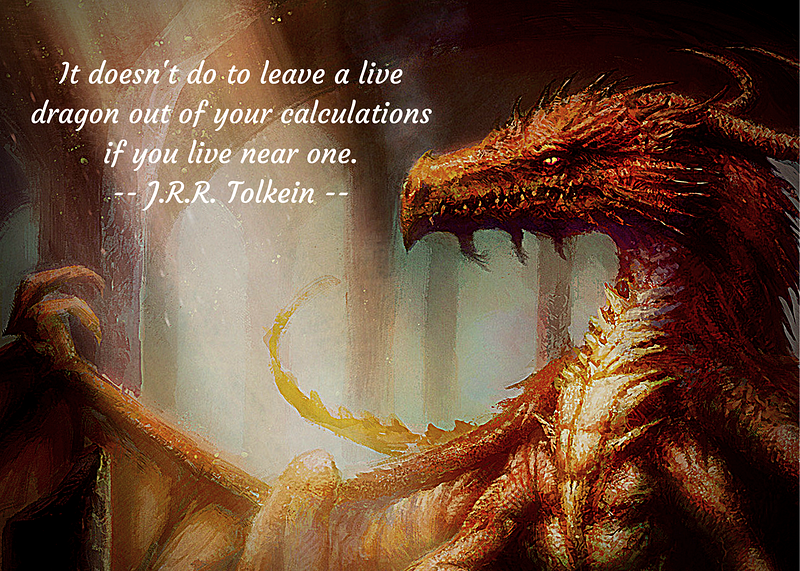
The Dragon in Our Midst
Supporters who are drawn to Trump primarily because of negative partisanship — not affinity for him, his party, or his policies — and who are mobilized by Democratic attacks are “dragon voters”: people who aren’t particularly dangerous at rest, but can wreak havoc when awake and angry.
Worry about dragon voters should keep Biden’s campaign advisors up at night. Unfortunately, instead of figuring out how to quiet the beast — or at the very least not provoke it — Democratic strategists are leaving the dragon out of their calculations entirely or planning to overpower it by mobilizing a dragon of their own.
In short, they’re relying on a “tried and true” election game plan focused on mobilization and persuasion that treats Trump like any other presidential opponent. But as we all know, Trump isn’t like other candidates and 2020 isn’t like any other election.
A traditional campaign — especially one that relies on a daily drumbeat of negative talking points and ads about the president — may backfire as spectacularly as Hillary Clinton’s “deplorables” comment did in 2016 if it inadvertently riles up dragon voters.
To quiet the dragon and win on November 3rd, Democrats must do three things:
1. Reduce hatred of Democrats, liberals, & the Democratic party
Since support for Trump is driven by animus toward the left, our primary objective with this group should be to improve our reputation. Right-leaning voters don’t need to like us for this to work, they just need to not hate us so much.
2. Stop attacking Trump
Voters already know Trump is bad. Almost nobody likes him — not even many of the people who vote for him. Continuing to talk about how awful he is is a waste of resources (at best) or will backfire (at worst).
3. Start promoting Biden
Recent research on political advertising shows that ads that promote a candidate’s strengths are significantly more effective than ads that attack a candidate’s weaknesses. In this particular case, providing positive information about Biden won’t simply mobilize supporters and persuade the undecided; it will also alleviate the fear, anxiety, and anger that inspire right-leaning voters to turnout and fight for Trump even when they don’t like him.
Demobilizing Trump voters is worth the investment.
Given how much time Democrats spend obsessing about mobilizing our own voters, it’s striking how little time we spend thinking about demobilizing Trump’s. While even the best campaign can’t win the election by converting dragon voters into Biden supporters, a weak campaign can easily lose the election by failing to neutralize them.
As for the Trump-loving friend I referenced at the beginning of this article — and others like him across the country — there’s not much chance of converting them back into third-party voters or undecided right-leaning independents before November. No matter what we do, they’re almost certainly going to vote for Trump. However, there are two ways we can make a difference:
- Soothe their anger so they don’t spend all their resources persuading and mobilizing others to turn out against us.
- Avoid converting others into Trump supporters just like them.
Democrats, we still have nearly six months until the election. Let’s not recreate Clinton’s 2016 campaign with its never-ending attacks on Trump. We know where that will end and the stakes are just too high.
The dragon is watching. Let’s not provoke it.
About the Author
Dr. Karin Tamerius is the founder of Smart Politics, a former psychiatrist, and an expert in political psychology who specializes in teaching progressives how to communicate more productively and persuasively with people across the political spectrum.