
No graceful exit for ‘Bonanza,’ NBC’s longest-running western
‘What did they want us to let them do? Film a last show where everybody on the Ponderosa was killed off?’ Andrew J. Klyde, archivist and executive producer of the official season DVD’s, investigates why the unforgettable family horse opera that sustained the Peacock network from 1959–1973 was suddenly cancelled over 50 years ago.
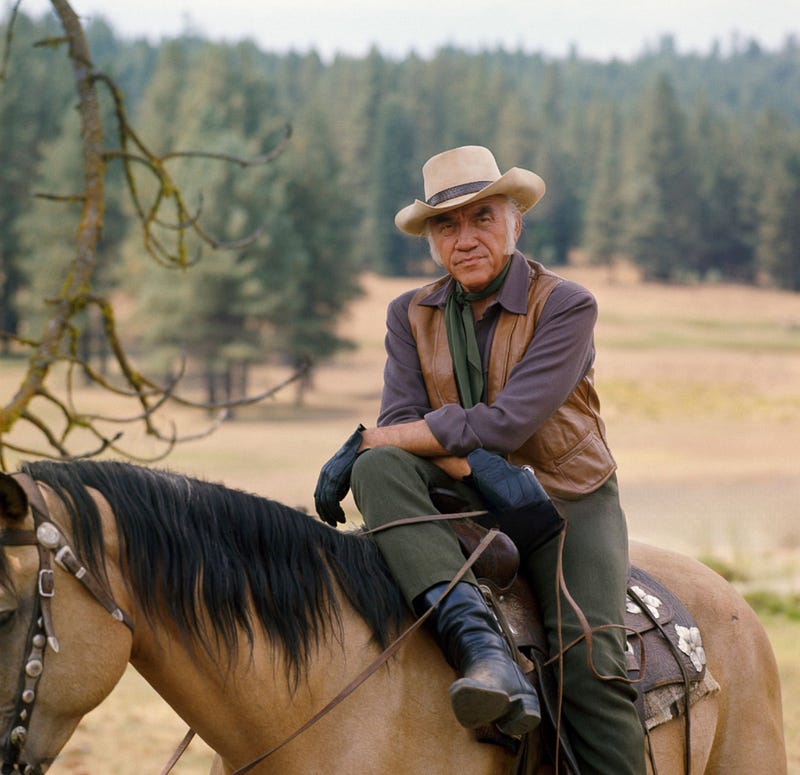
The Andy Klyde Interview, Part One
For Bonanza fans, what exactly went down on Jan. 16, 1973?
It’s hard to believe, but that date marks 50 years since the last first-run episode — “The Hunter” — aired on NBC. It was not the last one filmed or even the next-to-last one filmed. It was third to last. But because Michael “Mike” Landon wrote, directed, and primarily starred in it along with guest Tom Skerritt, it seemed a fitting last show, albeit one scheduled at the last minute. The cast and crew were told on a Monday that the series was cancelled as of Wednesday, and no more episodes would be made once they finished filming “Marriage of Theodora Duffy,” a mystery story of sorts featuring newest cast member Tim Matheson as wayward parolee Griff King.
NBC execs informed Lorne Greene, Mike, executive producer-series creator David Dortort, line producer Richard Collins, and associate producer John Hawkins on Monday, Nov. 6, 1972. Collins then had the unenviable task of telling the crew and cast members that were in the Warner Bros. studio working on “Duffy” that NBC had quickly and unceremoniously pulled the plug.
Collins also broke the distressing news to director Lewis Allen and cinematographer Haskell “Buzzy” Boggs, prepping for the episode they were to start shooting on Thursday the 9th. Written by Jim Byrnes, “Bloodhounds, Bullets, and Jesse Dillard” would have been a Little Joe and Griff episode. Byrnes divulged to me that he later re-worked “Bloodhounds” as a Gunsmoke script featuring Marshal Dillon’s hillbilly deputy Festus Haggen [multiple award-winner Byrnes penned 34 hard-hitting episodes of the enduring cowboy morality play as well as the subsequent Return to Dodge reunion TV movie. “Bloodhounds” was poised to be his debut Bonanza contribution].
“Barnaby” was another unfilmed Bonanza script, essentially a Little Joe and Griff comedy. Mitch Vogel, who played young Jamie, revealed an additional storyline on the schedule — a coming-of-age tale of the adopted teenage Cartwright getting his first gun.
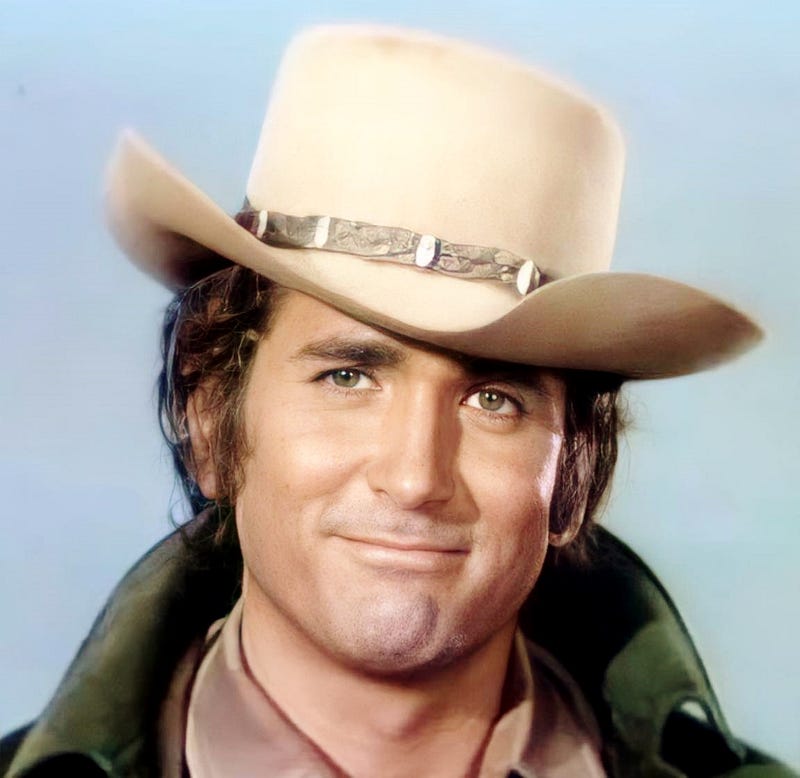
How did David Canary, who effectively rendered Ponderosa Ranch foreman Candy Canaday, come to return to the fold after departing two years prior?
A good question. The departure was not exactly on good terms. As I understand it, the issue was primarily money. David, through his agent, asked for a raise at the end of the 11th season. No response was forthcoming, and the agent read in the trades later that Canary was “moving on” and the Bonanza company “wished him well.” The agent responded immediately that Canary was ready to work, but by then the company actually had moved on in a different direction and hired Mitch.
David kept busy in the interim, directing and performing onstage, and starring in The Prosecutors, a pilot produced by David Gerber and co-starring Bonanza alumni Robert Pine and James Olson for a series that did not sell. It was shown as a made-for-TV movie on NBC — just three days before Bonanza’s final episode — under the revised title of Incident on a Dark Street.
After Dan “Hoss” Blocker’s passing, Mike made a personal plea to David — one of the absolute nicest guys in the world — to come back. I think that made the difference, along with a promise to let David write scripts and possibly direct, something he very much wanted to do. I don’t believe David ever got his raise though.
With Landon personally calling Canary and asking him to reprise his role, was Matheson’s character necessary?
I think so. A wet-behind-the-ears character was in keeping with the producers’ plans to make Bonanza more appealing to younger viewers. Even Tim admitted, “Griff was such a pup.” By now mature and in a position of authority, Mike no longer felt threatened by another pretty face — which was a factor in the cases of Barry Coe [Little Joe’s half-brother in 1962’s “The First Born”] and Guy Williams [Pa’s nephew and Adam’s romantic rival in a season five arc] — so he had no objection. Griff was a Dortort-Collins-Hawkins creation, and I’m sure Mike supported Hawkins — his writing mentor — unconditionally.
Did the producers consider bringing back eldest Cartwright son Adam [Pernell Roberts]?
I would think I asked Collins that question, but I honestly can’t recall his answer.
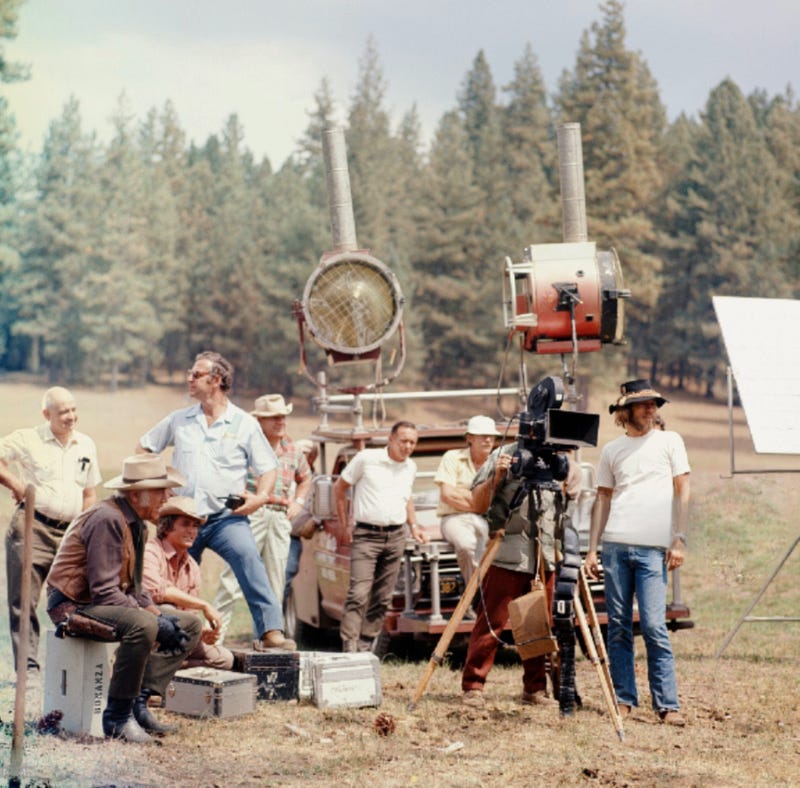
Was any attempt made to have NBC re-consider and rescind its decision to cancel the series?
Dortort pleaded by long-distance telephone with an NBC executive in New York to let them finish the season, or at least do another three or four shows. No dice. Lorne was furious. He admitted he expected network decision-makers to cancel the show after Dan died suddenly of a blood clot in his lung following routine gallbladder surgery. When they didn’t, he thought they should have been given a chance to finish the season. Lorne was quoted as saying NBC should have allowed them to “go out gracefully,” and “a caretaker gets more notice.”
NBC was contractually obligated to pay Mike and Lorne for a full season’s roster of shows, so maybe the decision makers felt they didn’t owe them much notice. Mike and Lorne were earning in the neighborhood of $17,000 per show, figuring a $1,000 per year raise after the $10,000 base per episode started in the fall of 1965 after Roberts departed.
Almost 20 years later, in 1992 I met retired high-ranking programming executive Jerry Stanley, who was an assistant to NBC Vice President Alan Livingston in 1959, but had risen in the ranks by 1972. Stanley expressed no remorse when he told me, “What did they want us to let them do? Film a last show where everybody on the Ponderosa was killed off?” The network execs were anxious to start making money from the show entering syndication in 1973 and didn’t want to spend any more on making new ones.
Mike had signed a development deal with the network to produce and star in another series, but for obvious reasons this fact wasn’t too well known at the time. I’ve heard the argument that Mike deserved part of the blame for the show’s cancellation. Contributing factors were the sudden and shocking death of Dan the previous May, the network’s decision to move the show from its traditional Sunday night berth to Tuesdays where it had been since 1961, and to a lesser extent, Chevrolet’s decision to end their exclusive 11-year sponsorship of the show.
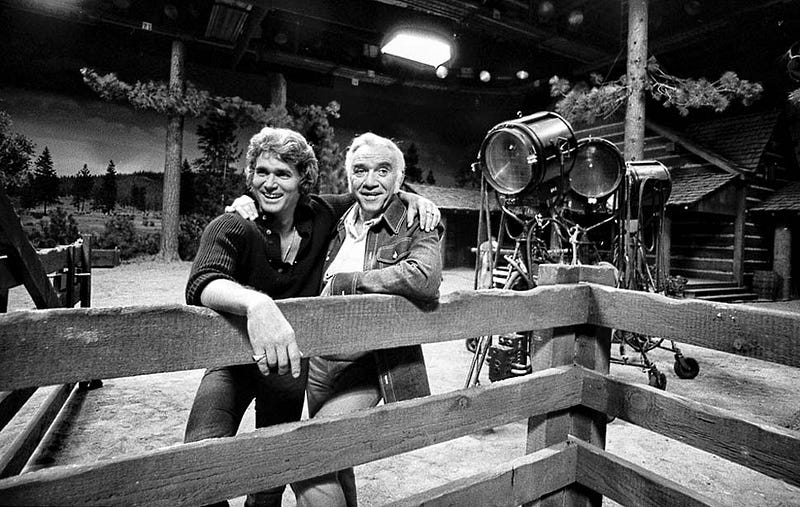
Ratings on Sundays were still respectable. Why did NBC decide to move the show to Tuesdays?
NBC reran episodes of Bonanza — some as far back as the 1967 season — on Tuesday nights during the summer of 1972 under the title Ponderosa. Ratings were good. Gunsmoke ratings soared when CBS moved it from Saturday nights to Mondays. NBC reasoned the same strategy might work for Bonanza, since it had fallen out of the Nielsen Top 10 the previous season. Chevrolet perceived that Bonanza’s audience was getting too old and not buying a new car every two years. The days of a single sponsor had ended by the early ’70s, and Bonanza had no problems attracting multiple sponsors in season 14.
Mike’s two-hour season premiere episode, “Forever,” turned away viewers in droves. Ratings were very high for that first, heavily-promoted show. Fans wanted to see Little Joe marry. After his pregnant bride Bonnie Bedelia dies in an arson fire instead of living happily ever after with Little Joe, the ratings plummeted.
A disillusioned fan told me a typical story. She was thrilled when she heard NBC announce an unprecedented two-hour season premiere episode to featuring the wedding of Little Joe. She carefully cut out photos from a big promotional spread in Parade magazine and put them in a scrapbook. Her parents let her stay up one hour past her bedtime to watch the special show. She was so upset by the tragic fate of Joe’s bride that she wrote a letter of complaint to NBC. The network reportedly received many similar letters.
Mike explained that he wanted to do a catharsis show for the cast, crew — and by extension — the viewers. By this time, Mike was the de facto producer of the show. I’m sure Dortort and Collins didn’t like Mike’s power status, but they didn’t have much choice in the matter. Mike acknowledged that various people urged him to do a tribute show to Dan, but he couldn’t bring himself to do that. He also tried to put his thoughts on paper for possibly a book but abandoned the idea because it was “too personal” to write about Dan. Too bad. Lost opportunities.
Mike truly could’ve taken the show in a bold, new direction — like keeping Little Joe’s wife alive and having a child come along. He eventually got that with Little House on the Prairie and re-purposed several of his late-era Bonanza episodes [“A Dream to Dream,” “It’s a Small World,” “A Matter of Circumstance,” “He Was Only Seven,” and “The Sound of Sadness”] as Little House scripts.
With the benefit of hindsight — always 20–20 — a tribute show to Dan full of clips and intros by his fellow cast members would’ve been well-received. Mike could’ve had a less public catharsis by holding a wake for Dan, and pals and colleagues could’ve spent an afternoon telling rollicking and uproarious stories of their departed, larger-than-life beloved friend. Lorne lamented the glaring omission of tribute words for Dan at the Emmy Awards, telecast on May 14, 1972, the day after Dan passed away. Certainly a tribute show approach has been taken numerous times since. But before? I cannot recall.
Bonanza was not running out of steam at the end. The quality of the 15 last episodes was still high, including “Forever,” albeit heartbreaking. Incidentally, I have made numerous inquires, and I regret to report NBC cannot locate the original, complete film elements of the two-hour version of “Forever.” All that remains is an edited two-parter made for syndication.
Some episodes were outstanding. Some were merely very entertaining. “Duffy” is a bit weak because the plot veers into incredulous territory. “The Hunter” borrows too liberally from The Most Dangerous Game trope. But the balance have stood the test of time. “Stallion” is a sentimental story beautifully photographed on location. “The Twenty-Sixth Grave” is a fine mystery, spooky enough to justify its telecast on Halloween. “The Witness” and “Heritage of Anger” are tense thrillers. “The Bucket Dog” and “First Love” give Golden Globe-nominee Mitch Vogel a chance to shine in strong, heart-warming stories. “Riot!” and “Heritage of Anger” are gripping and full of action. “The Sound of Sadness” [written and directed by Landon], “The Initiation,” and “The Hidden Enemy” raise thought-provoking and controversial issues relevant to contemporary audiences.
When all is said and done, not enough people were watching Bonanza in the fall of 1972. They were watching Maude instead. But Bonanza remains a powerhouse in syndicated reruns around the world, on streaming sites, and in DVD libraries of cherished collectors. Where is Maude today?
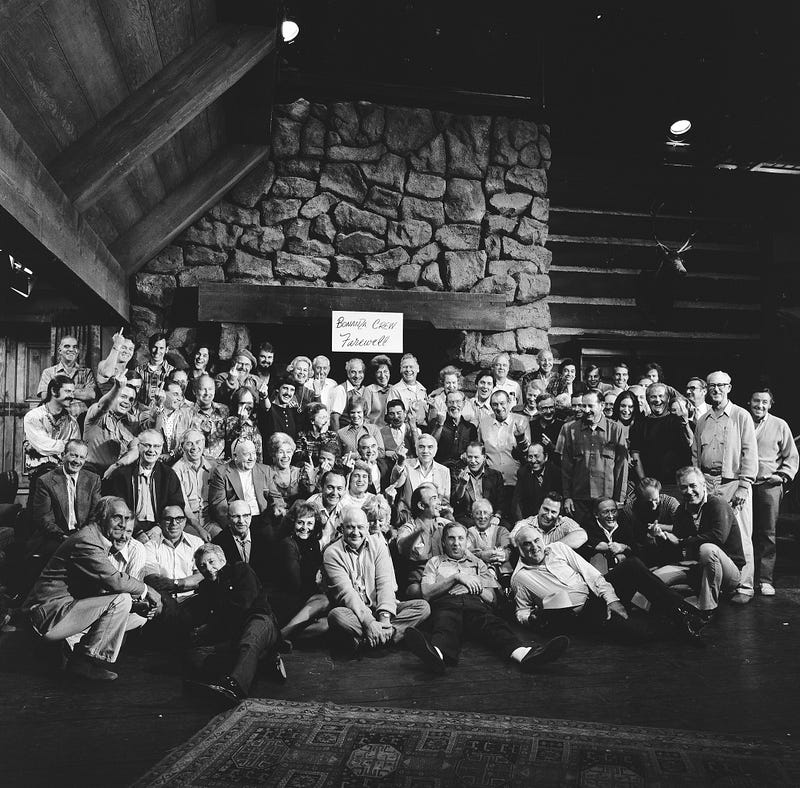
[Author’s Note: After a two and a half-year delay aggravated by COVID-19 and supply chain disruption, the twelfth, thirteenth, and fourteenth seasons of Bonanza are finally available on DVD. Every “episode is full-length with original music and has been completely remastered and restored from the original 35mm film elements for superior picture and sound.” Bonus content encompassing “rare performances, photos, personal appearances, interviews with cast members, audio and a slideshow from the ‘wake’ gathering of the Bonanza company days after the series’ abrupt cancellation, footage from The Tonight Show Starring Johnny Carson, The Ed Sullivan Show, Sesame Street, plus a never-before-seen blooper reel” are all part of the enticing package. Seasons may be purchased separately or as part of a Herculean complete series box distributed by Paramount / CBS Home Entertainment].
Tell us about the inaugural TV WestFest in Tucson, Arizona, which occurred during the third weekend of March 2023.
I was invited to attend TV WestFest by organizers Ginger Cook and Penny McQueen. Mitch Vogel, Charlotte Stewart [“The Stalker”, 1969, “The Grand Swing,” 1971, and Miss Beadle on Little House on the Prairie], Michael Dante [“The Brass Box,” 1965], Robert Carradine [“A Home for Jamie,” 1971], and Michael McGreevey [“Gabrielle”, 1961] were part of the lineup. And Pernell’s pal Bo Svenson [one of the imposing Walking Tall protagonist’s formative roles was as a German outlaw in The Bravos TV western movie] was there. Hosting a panel discussion was a lot of fun.
We took a side trip 110 miles north to Lorne’s former home, the Ponderosa II, in Mesa. The current owners graciously consented for the first time to allow fans to tour the famous residence — built from the same plans used to construct the ranch house in Nevada and the set on the Paramount and Warner Bros. soundstages. It was extra special since Mitch joined us. Anytime I can meet fellow Bonanza fans is a delight, and I hope to be part of TV WestFest again next year.
DON’T GO ANYWHERE YET! IN PART TWO of the interview, Klyde convincingly posits that “the sole reason William Witney didn’t stay past the start of ‘Bonanza’s ninth season is because of Michael Landon.” Witney directed 27 “Bonanza” scripts, including Landon’s sterling rendering of a tormented Little Joe in “Between Heaven and Earth,” and was a B-western kingpin lionized by Quentin Tarantino.
© Jeremy Roberts, 2023. All rights reserved. The Andrew J. Klyde interview was edited for clarity and sequenced cohesively. To touch base, email [email protected] and mention which story led you my way. I appreciate it sincerely.