
Dynamite, cowboy boots, horse falls, and toupee hijinks with Steve McQueen’s costar Mitch Vogel
Pocketing a Golden Globe nomination as Best Supporting Actor in ‘The Reivers,’ the King of Cool’s red-haired apprentice also brought a teen demographic to ‘Bonanza’
Mitch Vogel, the adopted rainmaker son of Ben “Pa” Cartwright during Bonanza’s twilight seasons, tenders a buffet of souvenirs about his late Ponderosa ranch family, Dan Blocker’s mic-dropping dynamite prank and toupee aversion, reuniting with Michael Landon in a shoeless Little House on the Prairie episode, James Arness’ exasperation with cowboy boots shooting Gunsmoke, his breakout, Golden Globe-nominated performance in Steve McQueen’s The Reivers, starring in the Walt Disney telefilm Bayou Boy, and hanging out with “kid sister” Jodie Foster during Menace on the Mountain.
After a two and a half-year delay aggravated by COVID and supply chain disruption, Vogel’s Bonanza tenure, i.e. the twelfth, thirteenth, and fourteenth seasons, are out now. Every “episode is full-length with original music and has been completely remastered and restored from the original 35mm film elements for superior picture and sound.” Bonus content encompassing “rare performances, photos, personal appearances, interviews with cast members, audio and a slideshow from the ‘wake’ gathering of the Bonanza company days after the series’ abrupt cancellation, footage from The Tonight Show Starring Johnny Carson, The Ed Sullivan Show, Sesame Street, plus a never-before-seen blooper reel” fulfill the enticing package. Seasons may be purchased separately or as part of a Herculean complete series box.
The Mitch Vogel Interview, Part Two
What was your first day like in Steve McQueen’s presence? He produced and starred in The Reivers, directed by Mark Rydell and based on William Faulkner’s last novel chronicling two rascals [McQueen and lanky, gone-too-soon African American Rupert Crosse] and a young boy’s coming-of-age exploits in 1905-era Mississippi.
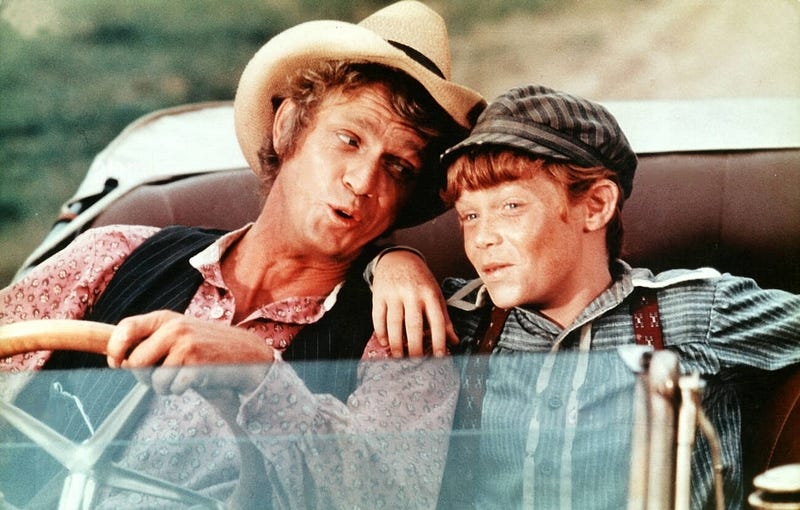
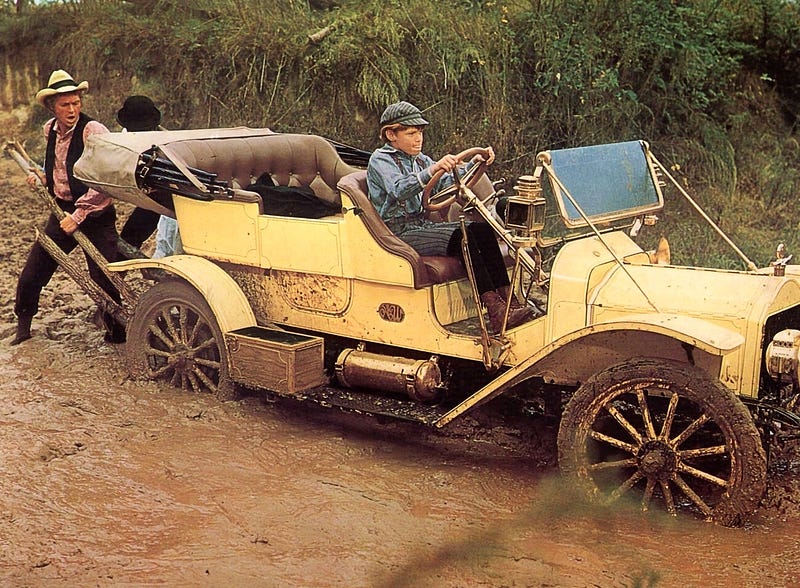
Steve and I did a publicity shoot for The Reivers at CBS Studio City [circa August 1968]. We were in the back lot, and I had to learn how to drive the yellow Winton Flyer car designed by Von Dutch since I would eventually be driving it in the movie. I was told a couple of photographers would be present and not to let them bother me. When a half dozen or more shutterbugs showed up and started snapping pictures like crazy, I became nervous.
Steve was in his element, having participated in various car and dirt bike races, and he eased my nerves considerably. He patiently taught me how to drive the Winton Flyer. My 12-year-old brain was going, ‘This is really cool!’ I forgot about the pressure of being in the movie and all those photographers. I was simply excited to be in Steve’s presence and behind the wheel of the Winton Flyer, which is basically a featured character in The Reivers. Lucius McCaslin’s parents had to go out of town for a family funeral, and Steve [Boon Hoggenbeck] was left in charge of watching Lucius. Will Geer [Lucius’ grandfather Boss McCaslin] told Boon to leave the car in the garage and not to touch it. Naturally Boon doesn’t listen, and that’s where the whole adventure starts.
Lorne Greene was famously apprehensive around horses. How about you?
Horses don’t bother me. I had already ridden western style in a few other TV shows [Dundee and the Culhane, The Virginian] but had to compete in a horse race sequence towards the end of The Reivers which required me to ride English style. It’s much different [e.g. smaller saddle, no saddle horn, reins are held with both hands, jumps frequently occur]. I had to learn how to do it, so I took lessons from a horse wrangler named Donna Webb. She and her husband Dick owned a ranch in the Newhall, California, area [John Wayne rode a chestnut quarter horse curiously spelled “Dollor,” provided by the Webb’s, in True Grit and most of his latter-day westerns].
I practiced for the horse race during my lunch hours. The Reivers crew had been working on getting the race track in shape. They were told not to turn the sprinklers on the grass while I practiced, but somebody didn’t listen. It spooked my horse, and I fell and broke my left arm. My injury postponed the production by six weeks. The break occurred about a half inch or inch below my shoulder joint. I was told by the doctors that if it had broken any closer to the joint, it could have permanently stunted my arm’s growth. Thankfully God was looking out for me.
How well did The Reivers perform at the box office?
Since it was a “Steve McQueen” movie, The Reivers was a hit domestically [earning $18 million, equivalent to over $150 million when adjusted for inflation]. The Americana subject matter may have caused it to die at the international box office. My previous film and onscreen debut, Yours, Mine and Ours, was bigger [headlined by Lucille Ball and Henry Fonda, it was the top-grossing film distributed by United Artists in 1968 and returned a soaring $26 million or $224 million today].
Steve also wasn’t known for being a comedian [besides The Honeymoon Machine and Soldier in the Rain featuring Jackie Gleason], but he loved Faulkner’s novel and produced the film through his Solar Productions.
Scenes were originally shot of Boon in bed with a couple of the female characters in a brothel. There was a painting over a bed of a naked woman. The script had a scene where my character is putting his undergarments on after taking a shower. You were supposed to see Lucius’ bare rump. In the days leading up to shooting the scene there were discussions. The director could tell I didn’t want to do it and gently reassured me that instead we would film the scene with the underwear already on me. As the producer and star, Steve agreed with Mark and said, “Let’s make this more of a family film and not go for an ‘X’ rating.” Those explicit scenes were removed from the final cut, although there were still mature themes present.
Why do you have special feelings for The Reivers?
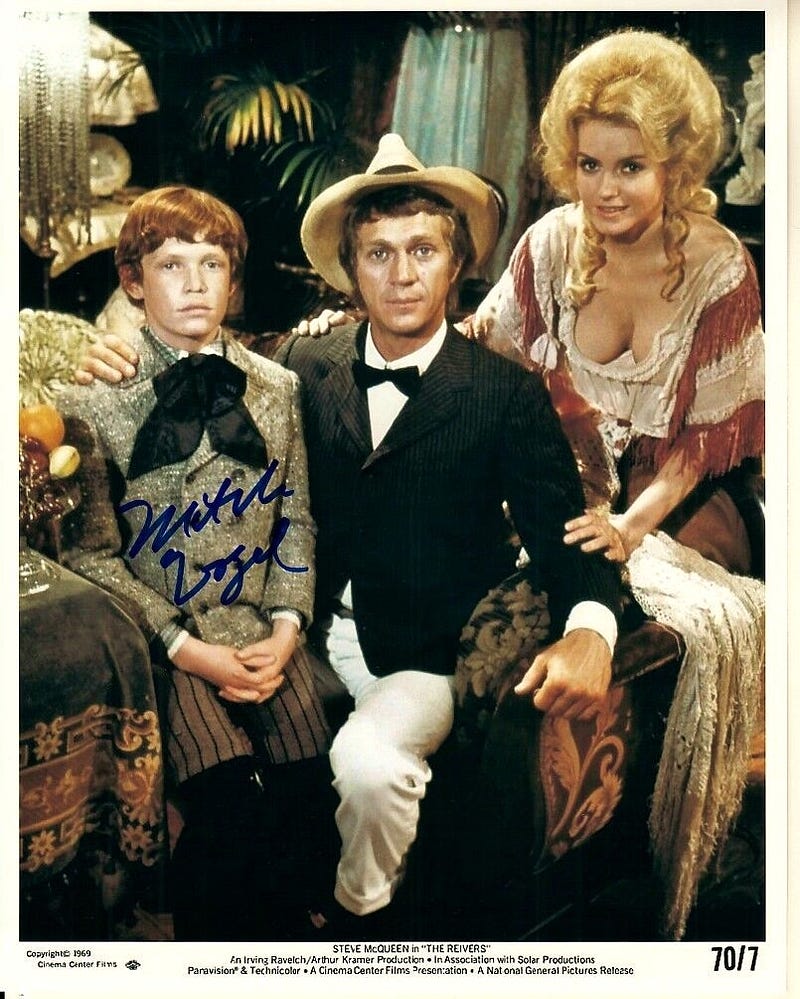
I was nominated for a Golden Globe award as Best Supporting Actor [the 1970 ceremony was not televised]. I was at a table with Patty Duke, who sat across from me. Patty was gunning for me to win and placed her hand on my hand as they read the list of nominees. When the presenter announced, “And the winner is Gig Young for They Shoot Horses, Don’t They?!,” Patty was almost crying. She consoled me and said, “I’m so sorry.” Because of The Reivers I got a lot of parts where I didn’t have to audition. Various producers, including Bonanza’s David Dortort, saw me in it.
Thus far Disney+ has lamentably not uploaded them to their streaming library, but you had the lead role in two TV movies for The Wonderful World of Disney on NBC.
Disney, as well as other studios, used to package certain series episodes and movies-of-the-week for theatrical release overseas. That’s how they significantly increased their profits. I’m pretty sure that’s what happened with Menace on the Mountain and Bayou Boy.
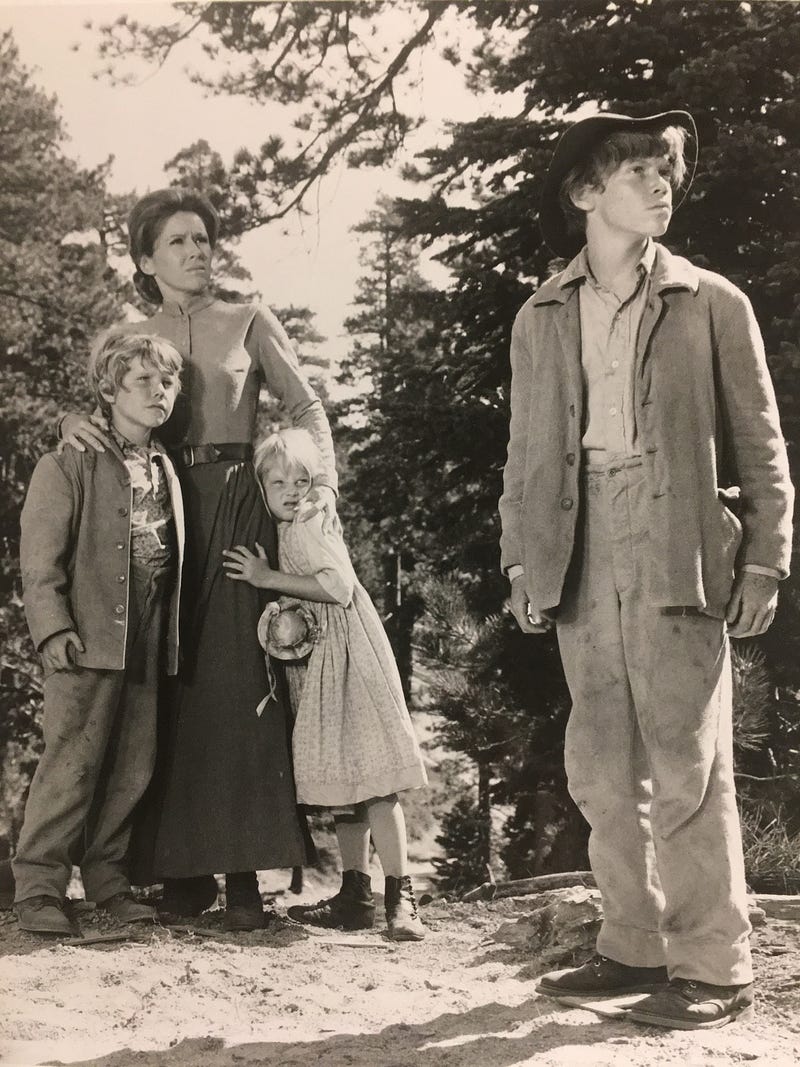
I’m proud of both of them to be honest with you. Menace on the Mountain was a Civil War drama [telecast over two one-hour segments on March 1 and 8, 1970]. I was driven to the location somewhere in the Southern California mountains, so it couldn’t have been shot that far from my home. Albert Salmi was the bad guy [Salmi chewed the scenery in dozens of westerns, rarely surviving long enough to win the girl, and sat in on four Bonanza episodes including “Search in Limbo” and “Ambush at Rio Lobo,” both with Vogel].
Jodie Foster played my little sister [and eventually rendered Suzanne Pleshette’s daughter in the tedious Bonanza episode “A Place to Hide”]. I was almost seven years older than Jodie. She has a brother named Buddy [who portrayed Ken Berry’s only child for three years on Mayberry R.F.D.], so I related more to Buddy who was closer to my age. My mom Barbara got along well with Jodie’s parents, so we would go over to their house while we were filming. Our families have since lost touch, but Jodie became a wonderfully talented director and actress.
Eric Shea played my little brother. I met him on Yours, Mine and Ours, and Eric was one of the funniest kids in that family comedy. He went on to have an excellent featured role in another blockbuster — The Poseidon Adventure. I have a great picture of Jodie, Eric, Patricia Crowley, and myself during the making of Menace on the Mountain.
The second production was Bayou Boy [aired as two one-hour installments on Feb. 7 and 14, 1971; retitled The Boy from Dead Man’s Bayou in the encore 1979 screening], filmed in Louisiana and directed by Gary Nelson [e.g. Get Smart and Disney’s Freaky Friday and The Black Hole]. In one of his final roles, Frank Silvera [for all intents and purposes the indestructible Mexican bandit who kills Paul Newman in Hombre and Victoria Cannon’s wealthy landowner father Don Sebastian Montoya on The High Chaparral] played my uncle.
Mike Lookinland was chosen to be my little brother. He was on hiatus from filming The Brady Bunch [as youngest Brady son Bobby]. Mike’s hair was dyed darker for The Brady Bunch because he had to resemble his TV brothers, but in Bayou Boy you can see his natural reddish hair.
It was cool paddling a little boat known as a pirogue in Caddo Lake, located on the Texas and Louisiana border northwest of Shreveport. The trees and moss hanging from them was beautiful. As I paddled the theme song played through the opening credits [Vogel sings, “Come along, come along, bring your sorrow and joy, along with the dreams of a lone bayou boy”]. Terry Gilkyson, guilty as charged for writing the Oscar-nominated “Bare Necessities” in The Jungle Book, supplied the folk ballad with vocals courtesy of his daughter Lisa. If I ever attempted to perform it in public, I’d have to start with the Bonanza theme since everybody knows that one by heart [laughs].
Two years after one of your earliest acting assignments as the courageous, decidedly eager grandson of telegraph operator Russell Thorson in “The Real People of Muddy Creek,” you officially joined the cast of Bonanza as orphaned rainmaker Jamie Hunter. What was your first day like as a series regular? [“The Weary Willies,” filmed in May 1970 with future Waltons heartthrob Richard Thomas, was actually Vogel’s first appearance in the 12th season but was broadcast out of order; a week or two later, Vogel’s official Bonanza introduction, “A Matter of Faith,” was shot and transmitted as episode two of the 12th season on Sept. 20, 1970].
I was brought in for a wardrobe fitting. The first 10-gallon cowboy hat that Dan Blocker wore on Bonanza was very wide and tall. Over the years they toned it down, but Dan still wore a pretty big hat. Wardrobe supervisor Dario Piazza had Dan’s original hat hanging in his office. I’ll never forget noticing that.
Once we had picked out the clothes for Jamie, I was told to go over to the soundstage where Lorne and Mike [Michael Landon] were shooting and say hello. I walked in from the back of the stage, which was divided into various sections. It happened to be that the set that was the closest to the door that I came in was hot. There stood Lorne and Mike at work. They were very nice and made me feel at home right off the bat. They let me know that if I had any ideas for my character to not be afraid to speak up. Dan was just as hospitable when I saw him later.
Even from the very first day that I walked on as a guest star, the Bonanza set had a different feel compared to any other set I’d been on. It reminded me of a high school reunion or just being at home. People joked around, but it never got to a point where it was distracting or caused production to fall behind. Bonanza was a very efficient set that didn’t have the levels of stress and tension that exemplified other projects I worked on. Bonanza was always so comfortable, laid-back, and a lot of fun.
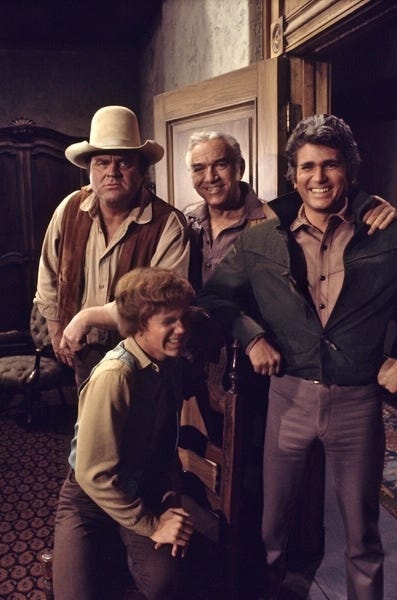
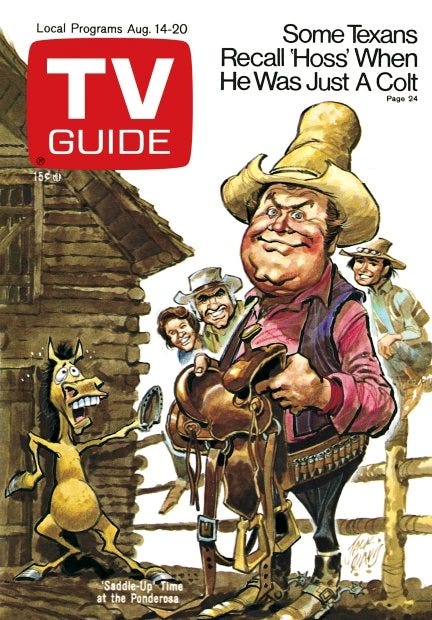
Were you part of any of the legendary on-set Bonanza pranks hatched by Blocker and Landon?
Not a lot because I wasn’t really good at keeping a straight face [laughs]. Dan hid up in the catwalk one time when the cast and crew were setting up the next scene to be shot in the Ponderosa living room. Dan had found some phony dynamite in the prop department, and he decided to light the fuse and throw it down on the set. Of course, it didn’t blow up. Everybody screamed and ran but laughed when they realized it was a joke.
In the later years, Dan wore a toupee which he hated. Whenever Dan [as “Hoss Cartwright”] had a scene without his hat, the toupee was required. We had to do a scene outside the Ponderosa where an actress rode towards the ranch house in a buckboard. Lorne, Dan, Mike, and myself had to come out and say hello.
We rehearsed the scene and the director says, “Dan, you are meeting this lady for the first time. To be authentic to the period, you should take your hat off to her.” Dan goes, “What?!” “I need you to go put your hairpiece on.” “Aw, really? Are you sure?” “Yeah.” “All right.” You could tell Dan wasn’t too thrilled about it. The crew went ahead and lit the scene. Dan was back in the makeup room.
The director eventually sent out the alert — “Okay, Dan, we’re ready for rehearsal.” I could hear Dan saying, “I don’t need to rehearse. Come on, let’s just shoot this thing!” He was famous for avoiding rehearsal. Dan comes out with his hat on, and they start rolling the camera. The lady steps off the buckboard, and Dan says, “How do you do, ma’am?” Dan takes off his hat, bows, and leans his head right into the camera. Turns out he’d drawn a face with blue eyes and a mouth with a big red tongue sticking out on the top of his head [laughs]. I imagine it was shown on the blooper reel that they used to play at the end of each season during our wrap-up party. That was the kinda guy Dan was. He was very intelligent and had taught English and drama before acting.
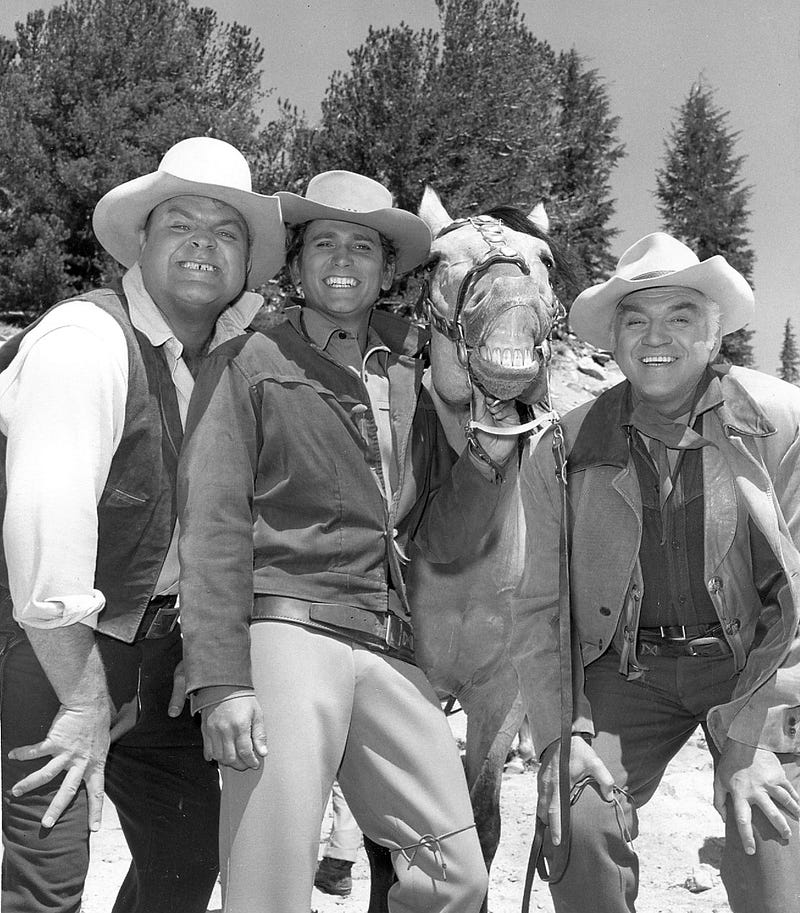
Did the horsing around bother the Bonanza directors?
I never saw a director get really irritated. After all, Dan was one of the stars of the show. That doesn’t mean they weren’t, but they knew where their bread was buttered [laughs]. If Dan wanted to take some time to do a joke, so be it.
But knowing Lorne, Dan, and Mike like I did, they were also true professionals. If a director or executive producer-series creator David Dortort, line producer Richard Collins, or associate producer John Hawkins had said, “Guys, we’re running behind and really need to get these scenes done today,” then they would have recognized the seriousness of the issue.
A lot of times when I do interviews I only share the lighthearted moments. But they’re way outnumbered by professional actors that knew their characters inside and out and did a really good job when it came down to business. I’m grateful I was able to work with Lorne, Dan, and Mike because I learned a lot.
You graced three episodes of another ground-breaking series that vies with Bonanza for the best TV western of all time — Gunsmoke.
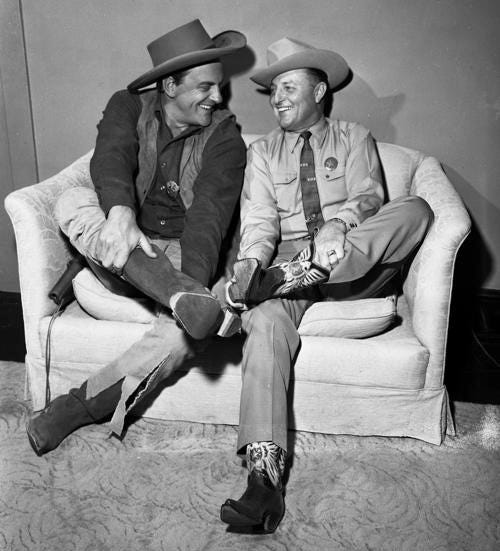
Gunsmoke is my second-favorite TV experience after Bonanza. I loved working with James Arness [“McCabe” aired Nov. 30, 1970, during Gunsmoke’s 16th season while Vogel was also acting on Bonanza, “Lynch Town” with David Wayne was seen several years later during the 19th season on Nov. 19, 1973, and “The Hiders” alongside villain Ned Beatty was a final season episode telecast on Jan. 13, 1975; all can be streamed in stunning quality on Paramount+]. Jim was a terrific actor and nice man. Meeting him was an incredible experience, since he was already a TV icon. He put me at ease immediately.
Jim didn’t like wearing his cowboy boots unless a scene absolutely called for it. They’d do what they call the master, which was a shot where you can see the entire room. Then they’d cut and go in to do all the closeups. That’s when his boots would come off, and he’d put on tennis shoes since the camera wasn’t filming his feet. Jim felt the same way about his boots as Dan did about his toupee [laughs].
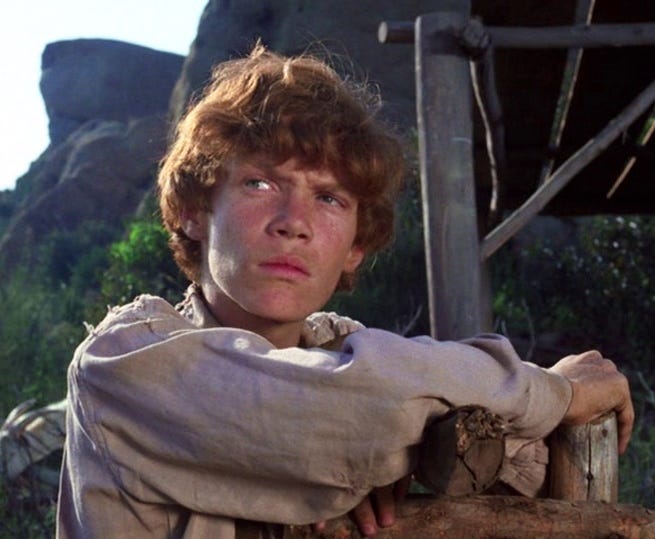
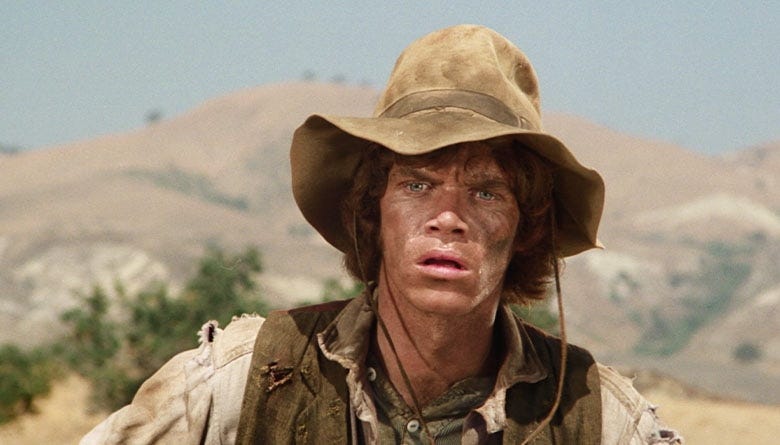
You reunited with Landon in two sentimental, light-hearted Little House on the Prairie scripts.
I landed a recurring role as Johnny Johnson in season one — “The Love of Johnny Johnson” [Oct. 9, 1974] and “To See the World” [March 5, 1975]. I went to Paramount Studios, where Bonanza had been filmed from 1959–1970, on an audition for another show that I ended up not getting. I knew that LHOTP was filming there. I was done with my audition, and I could see LHOTP on the outside of a stage. I thought, ‘I should go in and say hello.’
Mike saw me, came over, and said, “Mitch, it’s so good to see you.” All of a sudden Mike’s eyebrows darted up and down. He was looking me over. He called out to Melissa Sue Anderson and Melissa Gilbert, who played Charles and Caroline Ingalls’ eldest children, “Come here.” He asked me, “Mitch, take off your shoes and go stand by the girls.” As Mike is observing us, he goes, “Yeah, I think that might work. Follow me to my office, Mitch.” He had a script there for “The Love of Johnny Johnson,” written by Gerry Day. He said, “Take a look at this. Does it sound like something you’d like to do?” I read the beginning of it and found that Johnny was a new kid in school. Melissa Gilbert had a crush on him. Johnny actually had feelings for Melissa Sue, but she didn’t wanna have anything to do with him. I said, “Of course, I’d love to do it.” Mike took most of the Bonanza crew to LHOTP, and it felt like a family reunion.
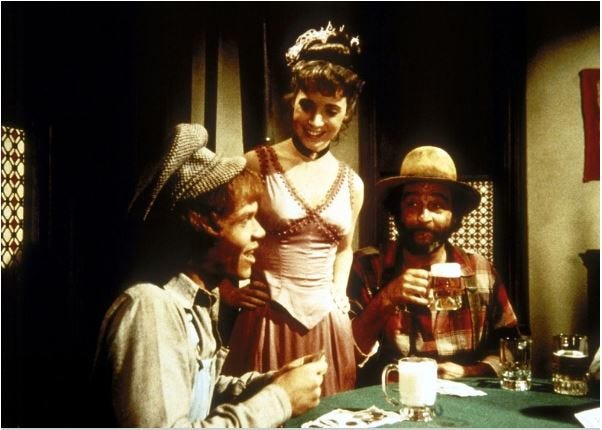
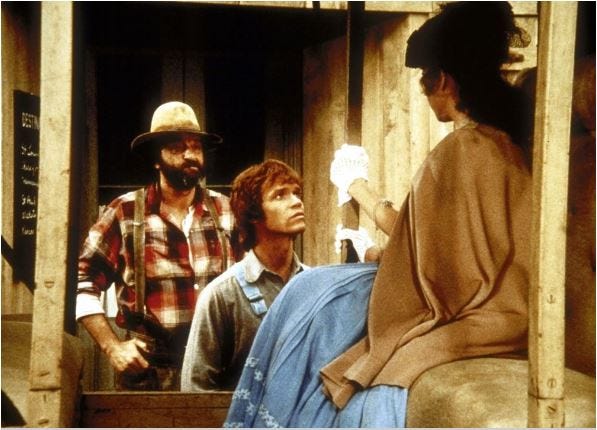
In the penultimate episode of the first season, Gerry also contributed “To See the World,” where Johnny and Charles’ best friend Mr. Edwards [Victor French] leave Walnut Grove for an adventure in the bustling city of Mankato. Johnny develops a crush on a saloon girl named Miss Mimi who ends up taking him for all of his money. Mr. Edwards had cleverly devised this scheme so Johnny would learn a valuable lesson and see the error of his ways and return home to his worried father.
There’s a scene where Johnny is on his horse and sees Miss Mimi walk by. A look of love comes upon his face. He gets off his horse and just stands there, gawking at Miss Mimi. The camera pulls back, and Johnny is in a water trough [laughs]. He had no idea where he was standing. Mike probably threw that moment in since it sounds like his sense of humor. I tried so hard to keep a straight face because it was so silly. If not for a chance audition at Paramount, I never would have had the opportunity to be on LHOTP.
Tell us a little more about the late, great Victor French, who went on to emblazon Landon’s earthbound sidekick on Highway to Heaven before falling victim to lung cancer at age 54 in 1989.
Victor was a very nice, cool, and talented individual. He cared about his work and wanted everybody to bring their A-game. Before we shot “To See the World,” he asked some of the actors to get together for an informal script reading at his house instead of at the studio. I was there as was Jane Alice Brandon, who played Miss Mimi. It made us comfortable with the scenes and the moments that were supposed to be funny and tender. We all had a great idea of being on the same page as far as our characters were concerned. I really enjoyed working with Victor a lot.
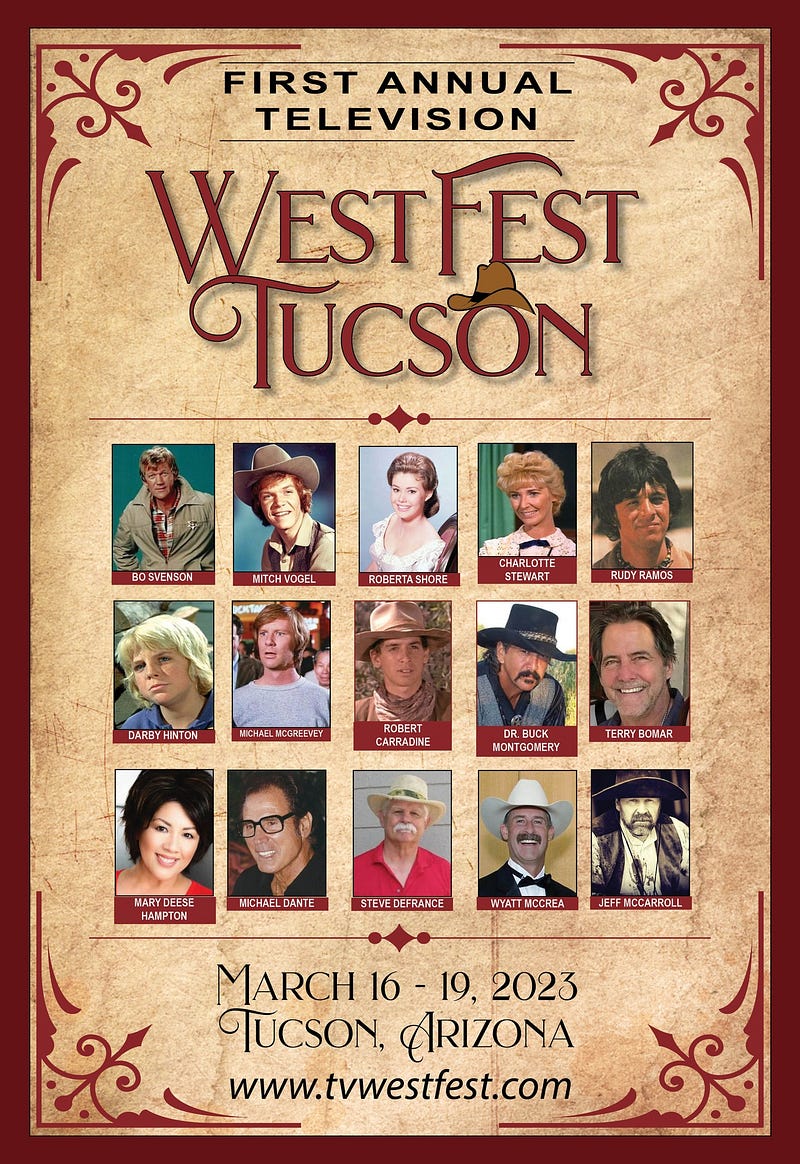
Who convinced you to participate in the very first TV WestFest convened in Tucson, Arizona?
I got involved with TV WestFest because the person who co-organized it with Penny McQueen — Ginger Cook — has been a good friend of mine for many years. Ginger is really smart and talented.
I’ve done close to 10 Bonanza Convention fan gatherings in Lake Tahoe, but I’m at an age now where I wanna slow down. I worked 10 years for Stanley as an automatic sliding door service technician. I had to quit due to a workplace injury in 2015. I then became a guest service agent for a hotel in Pismo Beach until I retired in August 2022. I had made up my mind that I wasn’t gonna do any more Bonanza-related appearances. But when Ginger approached me about the idea for TV WestFest, I thought, ‘This would be kinda different and sounds like a lot of fun.’ I told Ginger, “Sure, I’d be happy to attend, as long as you think there would be enough people that would want to meet me still” [laughs].
TV WestFest centers on Westerns, and the genre remains popular. It’s in Arizona, which is a great location. I’m aware of all the wonderful actors and actresses involved [15 guests made up the lineup, including Bo Svenson, aka Sheriff Buford Pusser of Walking Tall fame, Roberta Shore of The Virginian, Rudy Ramos of The High Chaparral, red-haired Snowball Express Disney stalwart Michael McGreevey, and Audie Murphy’s arch sagebrush nemesis Michael Dante].
I’ve worked with Robert Carradine [one of John Wayne’s malleable Cowboys] on Bonanza [“A Home for Jamie,” 1971] as well as Charlotte Stewart [“The Grand Swing,” 1971]. I reunited with Charlotte, who played Miss Beadle the schoolteacher on Little House on the Prairie, in the season one LHOTP episode “The Love of Johnny Johnson.” I’ve been good friends with Darby Hinton [Fess Parker’s son on Daniel Boone] ever since we did a celebrity meet and greet event. TV WestFest was a blast!
Don’t go anywhere yet! Back up to PART ONE of the exclusive Mitch Vogel interview, which charts the Golden Globe-nominated actor’s journey to “Bonanza” creator David Dortort’s front door and “The Real People of Muddy Creek.”
© Jeremy Roberts, 2023. All rights reserved. The Mitch Vogel interview was edited for clarity, brevity, and sequenced cohesively. To touch base, email [email protected] and mention which story led you my way. I appreciate it sincerely.


