
Michael Landon kicked action master William Witney off ‘Bonanza’
“William Witney is the greatest action director, underrated guy of all time.” So swears Brad Pitt’s badass stuntman Cliff Booth while screening flicks alongside washed-up TV cowboy Rick Dalton [Leonardo DiCaprio] in Quentin Tarantino’s latter-day buddy epic Once Upon a Time in Hollywood. Since the late ‘90s Tarantino, who drafted the afore-mentioned dialogue, has sung the praises of the World War II combat cameraman turned wide prairie auteur who coaxed gritty performances out of Roy Rogers, Audie Murphy, Charles Bronson, and even Cleveland Browns icon Jim Brown.
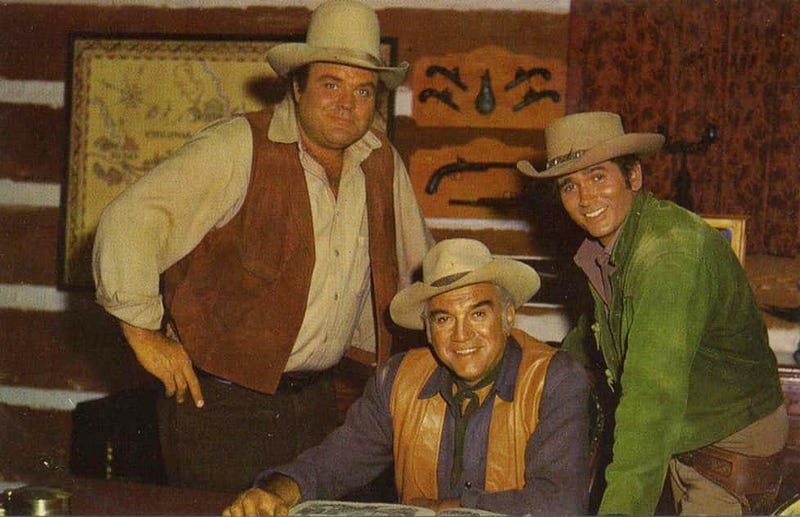
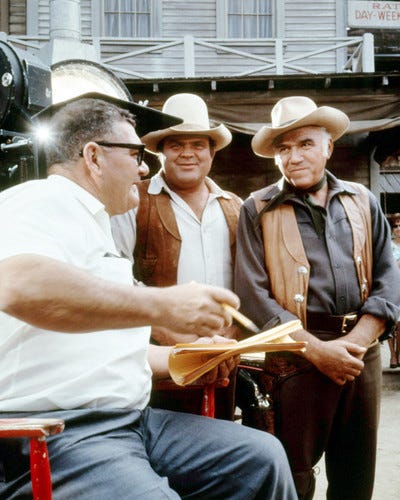
Witney effortlessly weaved amongst the big and small screens, hitting his stride commandeering 27 color episodes of ratings colossus Bonanza from 1961–1967. Ranked fifth on the list of Bonanza’s most frequent directors, Witney seemed destined for more Ponderosa hijinks until meeting his Waterloo in a clash with the multihyphenate Michael Landon, already churning out scripts and just eight months away from submitting his directorial bow, “To Die in Darkness.”
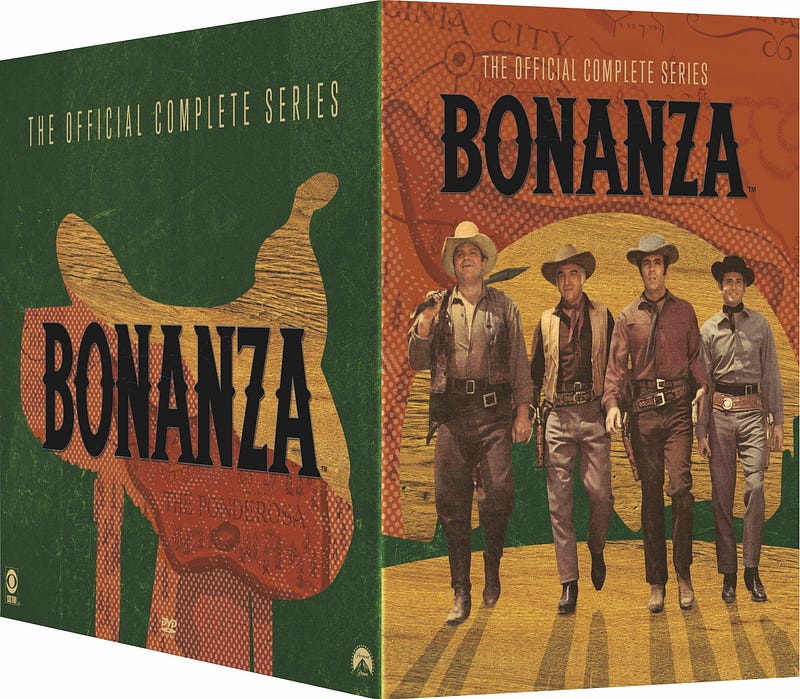
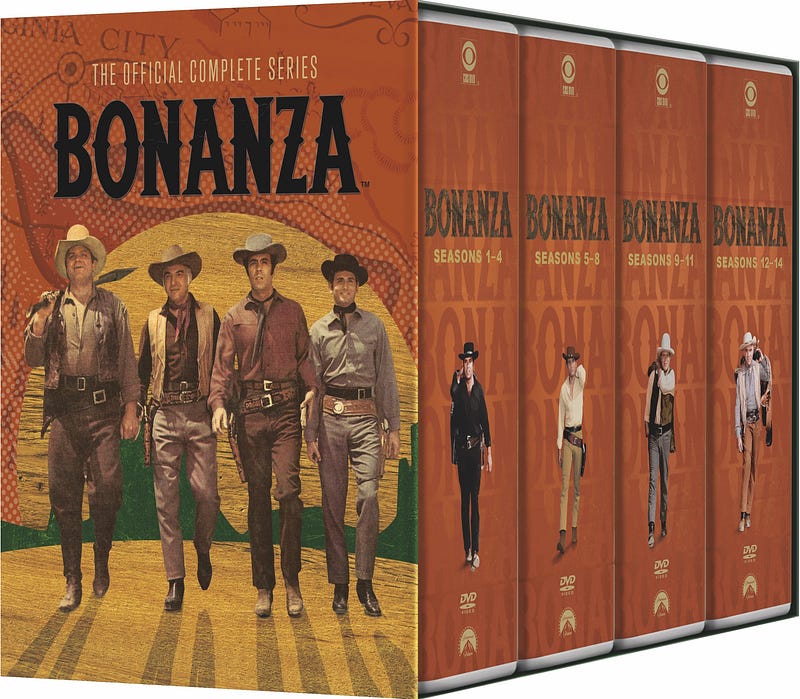
Andrew J. “Andy” Klyde, executive producer of Bonanza: The Official Complete Series, a gigantic DVD box set whose remastered episode prints and buyer-enticing bonus content surpasses most any classic TV series imaginable, bridges the gaps of the ruptured Witney-Landon alliance in the second volume of an exclusive interview below. Feast on “No Graceful Exit for NBC’s Longest-Running Western” if you’re late to the party. Jay Dee Witney keeps his father’s memory alive with video interviews, books, photos, and other precious memorabilia on his official website and Facebook.
The Andy Klyde Interview, Part Two
Where does William Witney fit in the pantheon of Bonanza directors, and why did he exit after six seasons?
William “Bill” Witney [1915–2002] was a master when it came to directing action sequences. He had the ability to move the camera and dolly in for close-ups and move it back at such a fluid, fast pace. Witney’s style really suited the action adventure genre generally and Westerns specifically.
If there was any sort of fast horse riding, there was nobody better in my book than Witney, although honorable mention to fellow helmer William F. “Bill” Claxton [who holds the record for directing Bonanza at 57 episodes in addition to the 1987 telefilm Bonanza: The Next Generation] for Charles Bronson’s conniving “Underdog,” Ben Johnson’s tour-de-force performance in “Top Hand” [1971], and The High Chaparral pilot [“Destination Tucson,” 1967]. Claxton was a big fan, friend, and supporter of Michael Landon. He knew where his bread was buttered and was guaranteed a job for many years because he went with Michael on his post-Bonanza productions — Little House on the Prairie, Father Murphy, and Highway to Heaven.
Witney told me there was a rivalry, not necessarily a good-natured one, between he and Claxton. One time Claxton said to Witney, “Why do you keep getting all the two-parters?” Claxton had wanted to direct “Ride the Wind” [season seven, January 1966, costarring Star Trek’s DeForest Kelley, Victor Jory, and Rod Cameron] and “The Pursued” [season eight, October 1966, featuring Rawhide trail boss Eric Fleming, Dina Merrill, and Lois Nettleton].
Witney retorted, “Because I’m a better director than you are” [laughs]. Of course, that didn’t endear him to Claxton. Not too long after that, Witney was out and Claxton got the coveted assignment of directing the Chaparral pilot, which I’m sure Witney would’ve done had he still been a member of Bonanza creator-executive producer David Dortort’s company. Michael had Witney kicked out because he just couldn’t stand him. The sole reason Witney didn’t stay past the start of Bonanza’s ninth season is because of Michael Landon.
Michael was a tremendously talented director. Michael’s step-son Mark Landon [1948–2009] divulged to me that he asked Dan Blocker, “Who’s the best Bonanza director?” Dan said without hesitation, “Your father.” Mark replied, “You’re just saying that to be nice.” “No, I’m not. Mike really is the best.” I absolutely 100% agree, especially if you watch the early shows that Mike directed [e.g. “To Die in Darkness,” “The Wish,” “Dead Wrong,” “Decision at Los Robles,” and “The Love Child”]. Michael admitted that he learned his technique at the best school in the business — Bonanza — which included directors like Witney, Claxton, and Robert Altman [eight episodes over Bonanza’s second and third seasons, 1960–1961].
But it got to a point where Michael was challenging directors like Witney [he ironically directed Landon’s screenwriting debut, a taut Cartwright frame-up dubbed “The Gamble” and sculpted arguably Landon’s best performance from the classic Pernell Roberts era with “Between Heaven and Earth”]. Whereas Claxton was sort of a timid personality and wouldn’t say much and would just go along with the flow and keep quiet, Witney was a very different kind of guy. His attitude was, ‘I’m the director, don’t tell me what to do. I was directing when you were wearing short pants in elementary school.’
So Witney sounds like a bosom buddy to a John Ford, Henry Hathaway, or Otto Preminger.
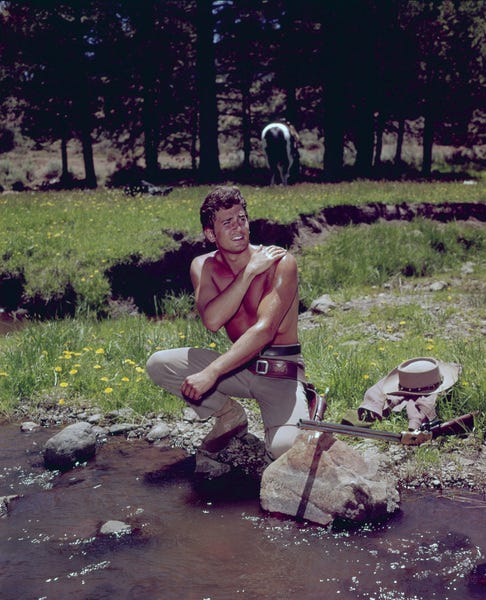
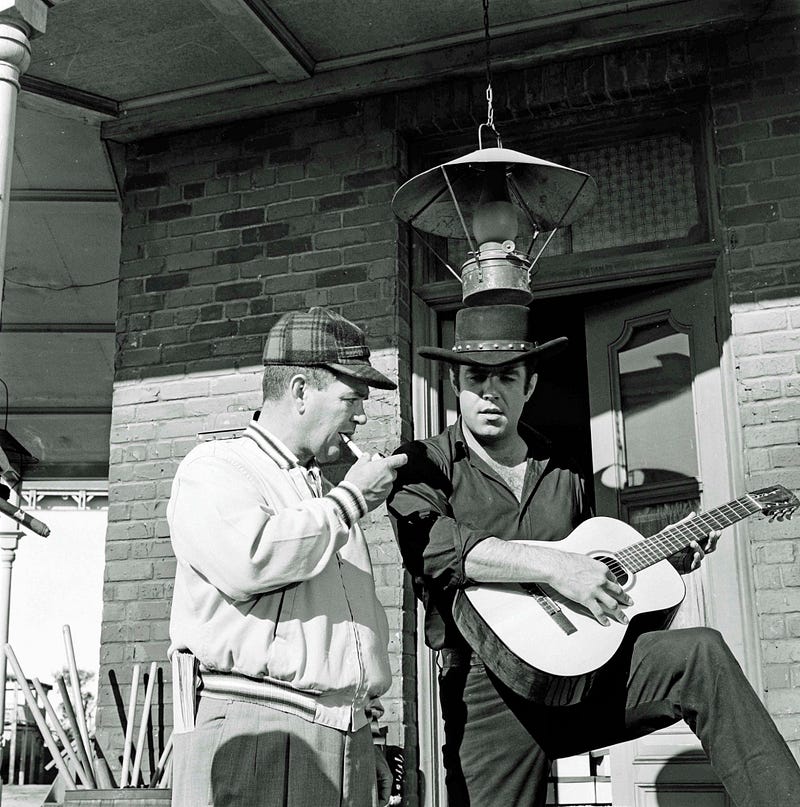
Correct [laughs]. How dare you question Ford? Michael would sit in Witney’s director’s chair. Obviously that would piss Witney off. They were shooting “Sense of Duty” [between May 15 and 22, 1967], David Canary’s first show as Ponderosa foreman Candy Canaday, which turned out to be Witney’s last [based on broadcast date, “The Sure Thing,” enlivened by a pre-True Grit Kim Darby, was Witney’s final Bonanza contribution but was actually filmed a week prior to “Sense of Duty”]. It was a very important episode. They had location work in the middle of the Mojave Desert at Red Rock Canyon. I think Michael had been drinking, and I’m sure Witney had been drinking. There was a loud argument, and Witney threatened to throw Michael off the balcony of the hotel where they were staying [laughs].
With Landon’s athleticism and predisposition to stuntwork, he would have rebounded from such a fall.
I guess that’s true [laughs]. It just came to the point where it was either Witney or Michael, and certainly Michael wasn’t gonna go anywhere because he was the star of the show. Witney was banished from Bonanza and never worked with Michael again. Witney came back into the fold in a roundabout manner, directing four episodes of Chaparral [split between the first and second seasons, 1967–1968] and five episodes of The Cowboys [1974], both Dortort productions [Claxton kept nipping at his antagonist’s heels, directing the most Chaparral scripts with a total of 22 and then leaping to The Cowboys for four episodes].
So far I haven’t laid eyes on the short-lived, virtually lost TV adaptation of John Wayne’s second-best film of the ’70s.
As a little kid, I watched The Cowboys when it was on the air. It was cool to see kids who were cowboys. I was probably most excited by the theme song, written by John Williams [a five-time Oscar champ for Fiddler on the Roof, Jaws, Star Wars, E.T.: The Extra Terrestrial, and Schindler’s List]. I don’t recall missing the Duke [who meets his maker in the Mark Rydell-directed film]. Unfortunately, I don’t have any memories of specific episodes.
David, who I knew for 20 years [as Bonanza’s leading lawyer for merchandising and licensing], was very disappointed with The Cowboys. He envisioned it as a one-hour series. At the last possible moment, ABC cut the budget and decided to make it a half-hour. That really took the wind out of David’s sails.
Besides Bob Denver and Forrest Tucker’s Gilligan’s Island rip-off Dusty’s Trail, I can’t think of any other 30-minute westerns on the air in the early ‘70s.
Ironically, when westerns first went on the air, they were all 30 minutes. That certainly suited shows like Gunsmoke, which developed over time these very taught, tightly-written dramas that resolved themselves in 25 minutes. Anything more than that would seem like it was padded and fat. By the seventies the 60-minute format was the norm. If you’re a producer like David Dortort who’s used to 60-minute shows — although he started out on The Restless Gun with John Payne — it’s hard to shift gears when you don’t have much notice.
DON’T GO ANYWHERE YET! IN PART ONE of the interview below, Klyde investigates why the unforgettable family horse opera that sustained the Peacock network from 1959–1973 was suddenly cancelled, how the cast was unceremoniously told, how Dortort tried to rescind the shattering news, Blocker’s passing, why Canary was brought back, if Tim Matheson’s character mattered, and Landon’s unusual creative misfires.
‘Bonanza’ Episodes Directed by William Witney
********titles in bold reflect exemplary work*************
- “The Tax Collector” [season two, 1961]
- “The Gift” [with Martin Landau, season two, 1961]
- “The Infernal Machine” [with George Kennedy, season two, 1961]
- “The Lonely House” [season three, 1961]
- “The Burma Rarity” [season three, 1961]
- “The Auld Sod” [season three, 1962]
- “The Jackknife” [season three, 1962]
- “The Gamble” [with Ben Johnson, season three, 1962]
- “The Long Night” [with James Coburn, season three, 1962]
- “The Deserter” [with Claude Akins, season four, 1962]
- “The Deadly Ones” [season four, 1962]
- “The Wild One” [with Aldo Ray, season six, 1964]
- “Between Heaven and Earth” [with Richard Jaeckel, season six, 1964]
- “The Saga of Squaw Charlie” [season six, 1964]
- “The Trap” [season six, 1965]
- “Lothario Larkin” [season six, 1965]
- “The Lonely Runner” [with Gilbert Roland, season seven, 1965]
- “Ride the Wind:” Part One [season seven, 1966]
- “Ride the Wind:” Part Two [season seven, 1966]
- “Peace Officer” [with Eric Fleming, season seven, 1966]
- “Something Hurt, Something Wild” [season eight, 1966]
- “Horse of a Different Hue” [season eight, 1966]
- “The Pursued:” Part One [season eight, 1966]
- “The Pursued:” Part Two [season eight, 1966]
- “Tommy” [season eight, 1966]
- “Sense of Duty” [season nine, 1967]
- “The Sure Thing” [season nine, 1967]
© Jeremy Roberts, 2023. All rights reserved. The Andrew J. Klyde interview was edited for clarity. To touch base, email [email protected] and mention which story led you my way. I appreciate it sincerely.