
Michael Landon confesses ‘Bonanza’ screenwriting origin
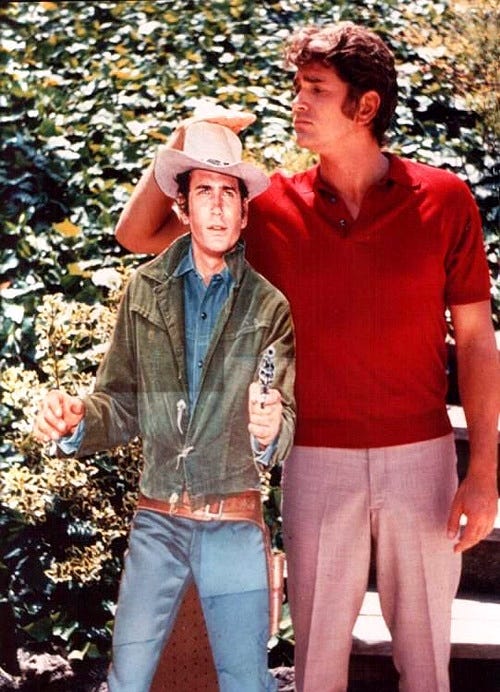
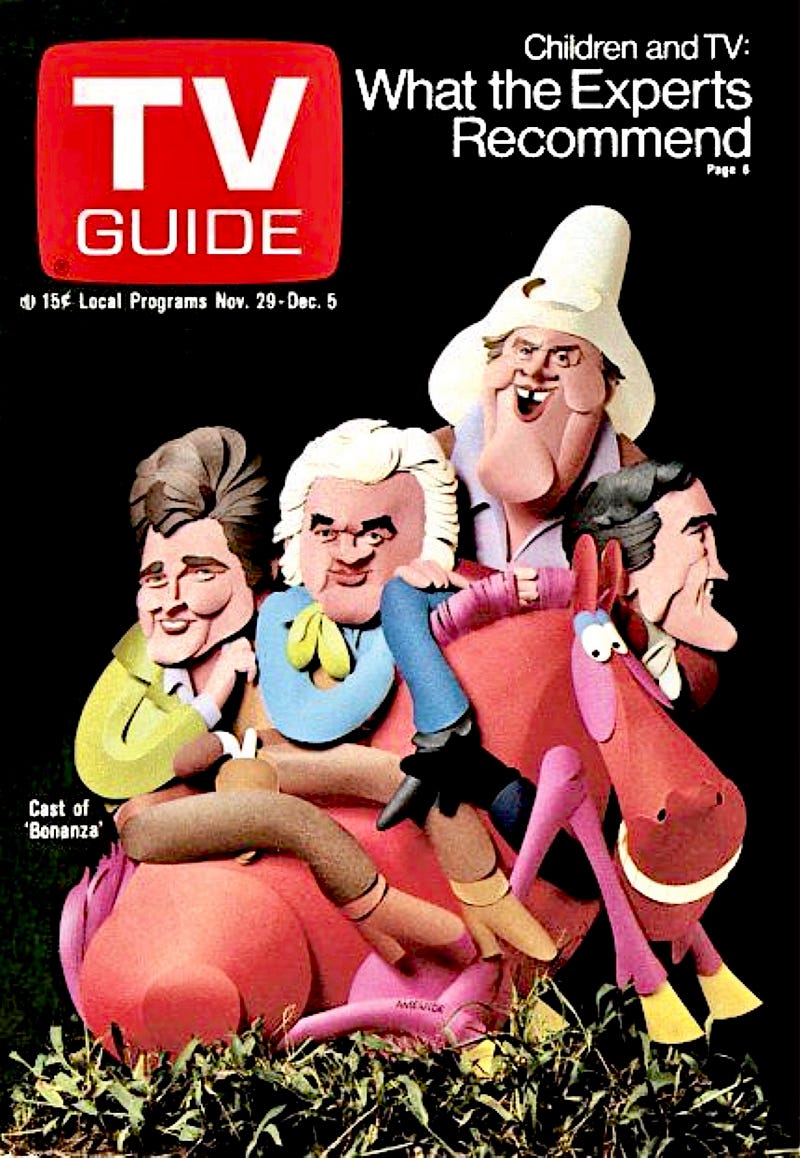
Michael Landon authored 20 teleplays for Bonanza, originating with “The Gamble,” a fittingly named, adrenaline-soaked episode which surfaced on April Fool’s Day 1962 near the tail end of the epic family western’s third season. So why did the youngest Cartwright pup take up ink slinging? A primary source is the Nov. 29-Dec. 5, 1969, issue of TV Guide, featuring caricatures of Ben Cartwright [Lorne Greene], middle son Hoss [Dan Blocker], Landon, and Ponderosa ranch foreman Candy Canady [David Canary] all straddling a willin’ but tuckered out horse on the cover.
The interviewer, who was oddly not given a byline for the scrupulously researched article entitled “For Michael Landon Happiness Is a Slice of Salami [And Not a Thin One, Either],” nevertheless prompted Landon to remember, “One Friday night when we finished work, we were all told to take the next week off. Some nonsense about not having a suitable script. Driving home, I kept mulling an idea I had about the Cartwrights being blamed for a bank robbery in another town.” With pencil in hand and a yellow tablet, Landon fleshed out his proposal, along with necessary camera angles, by Sunday evening.
Series creator and executive producer David Dortort could not believe his eyes and hurriedly added Landon’s suspenseful script to Bonanza’s production schedule with film noir mainstay Charles McGraw and beloved real life cowboy Ben Johnson, atypically emblazoning a rotten deputy sheriff, rounding out the guest cast. William Witney, “the most underrated action director in the history of Hollywood” according to Quentin Tarantino, was hired.
The 25-year-old Landon divulged to Australian TV Week in 1962 that he pocketed the full going rate at that time — $2,200 — for his inaugural Bonanza script. His TV family had also been gently teasing him whenever Landon insisted that he was capable of stepping outside of his lane. “They kept saying, ‘Ah, you can’t write, little brother, so stop dreaming.’ But their attitudes changed when I strolled on to the Paramount sound stage one day and flashed that check under their noses.”
Dortort, Landon’s elder by 20 years, contributed to Marsha Daly’s 1987 Michael Landon: A Biography and acknowledged that the eureka weekend may not have materialized so out of the blue. “Michael constantly pestered me for a chance to write,” said Dortort. “So I showed him how to put a script into proper form and advised him to make it a bit less mawkish.” Previous Bonanza scripts, obviously in a professional state, were at Landon’s disposal for “encouragement and guidance.”
Dortort significantly analyzed the trials and errors of Landon’s preliminary writing attempts in his three-hour interview for the Television Academy in 2002, eight years before his passing at age 93. “Michael was one of my stars of the number one show in the world,” said Dortort. “He was a wonderful, very handsome young man, and a great athlete. He came from a dysfunctional family and bore the psychological scars. I had no knowledge of whether he could write or how skilled he was. But how could I say no to him?
“Michael asked me one day, ‘Would you read something if I have an idea for a script?’ ‘Of course, Michael.’ ‘Oh, thank you.’ Eventually he handed something in that was only 28 pages long. I pointed out to him, ‘Michael, we’re doing an hour-long show, which requires roughly 60 pages.’ ‘Well David, you write the rest!’ ‘No, no, Michael. I will help you, but I will not write this script for you. You have to write it, otherwise you can’t claim to be a writer.’
“Michael was one of the worst spellers in the world and would also make horrible mistakes in essential grammar. I have a world of patience and would have him sit by my side. I would say, ‘This is how you spell this word.’ He could never figure out the difference between ‘t-h-e-r-e’ and ‘t-h-e-i-r’, but many people have trouble with that. Finally after going through every single word of every line with him, he began to improve.” Dortort encouraged his eager protégé to “keep a dictionary under your bed when you sleep. In the middle of the night you’ll think of a word and can check the spelling. You should be too proud to allow yourself to make mistakes like that. You’re intelligent.” Dortort’s “basic psychology” tactics gave Landon the necessary tools to study and learn the art of scriptwriting.
In a sign that Dortort was not exaggerating Landon’s inexperience, 1961–1965 Bonanza story consultant Frank Cleaver further polished the script for “The Gamble” and is credited onscreen. Seven years after “The Gamble” aired, Landon was overly harsh in his assessment to TV Guide, deeming it a “shallow plot thing without much substance, a gimmick show, like too many we do.”
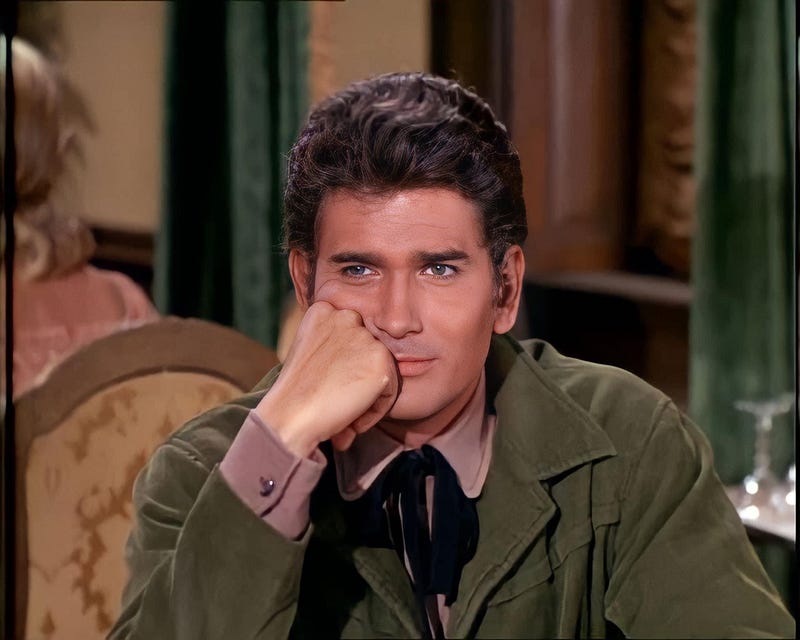
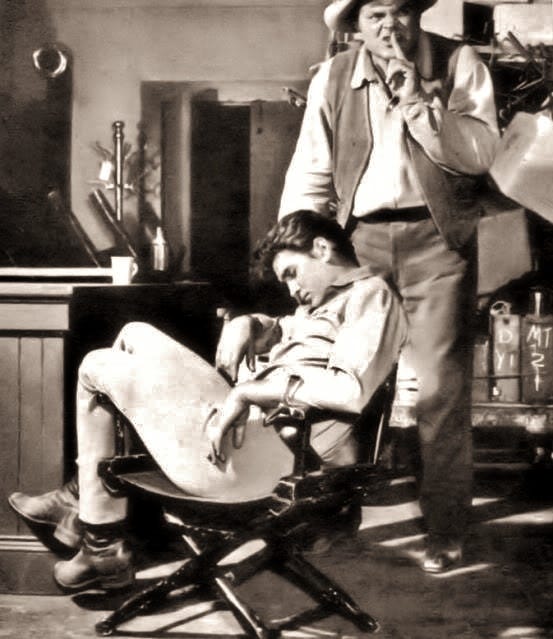
On store shelves less than two months after Landon’s death in 1991 from pancreatic and liver cancer, Aileen Joyce’s Michael Landon: His Triumph and Tragedy included an unattributed quote that demonstrated another avenue for training. “The producers [i.e. Dortort, Jim Lane, and Richard Collins] were often so busy on Bonanza they would send us scripts with scenes without dialogue,” confirmed Landon. “So I started writing dialogue for those missing two-minute scenes. I tried to inject some humor into them, like having Dan do something silly, like throw me out the window, at the end of a scene. It was fun, and it added something special to the show.”
Blocker and Greene expressed no desire to write, as did Pernell Roberts. The firstborn Cartwright child complained repeatedly to the brass as well as to the media about the substandard quality of the show’s writing and argued for more socially conscious storylines. Dortort confirmed that if an episode was not centered upon Roberts’ character of Adam, the Waycross, Georgia, native tended to sleepwalk through his part. Landon harbored similar feelings. However, he didn’t rely upon others to remedy the problem and took action himself.
As is the wont of other talented writers, Landon’s process lent itself to arduous torture until creativity rang out. “I’ll think about the characters for weeks,” the future Little House on the Prairie dad mused to TV Guide. “I may lie on the bed and stare at the ceiling for hours. Then, when it’s all straight in my head, I work very fast, getting it down on paper in two days.”
Not until the eighth season of Bonanza would Landon sell his second script, “Ballad of the Ponderosa,” tackling an angry, revenge-seeking Randy Boone [nephew of Have Gun — Will Travel’s Richard Boone] who’s set his sights on Pa Cartwright. It’s possible he suffered writers’ block and/or rejection in the four and a half-year dry spell. Landon also traveled extensively on weekends to rodeos and other personal appearances and had to take red eye flights so he would be back in Bonanza’s makeup department come early Monday mornings.
Third script “Joe Cartwright, Detective” from the same eighth season is a home run of a farce with an enjoyable Batman fight scene homage. Starting with season nine’s “A Dream to Dream,” the 31-year-old stunt aficionado’s sixth script listed no collaborator. From then on Landon preferred isolation and no outside interference. Tearjerkers mining uncomfortable family issues, laugh out loud buffoonery, no holds barred gunplay—Landon’s prolific Bonanza writing streak lasted 20 total episodes and culminated with “The Hunter,” the minimal dialogue, unintended series finale.
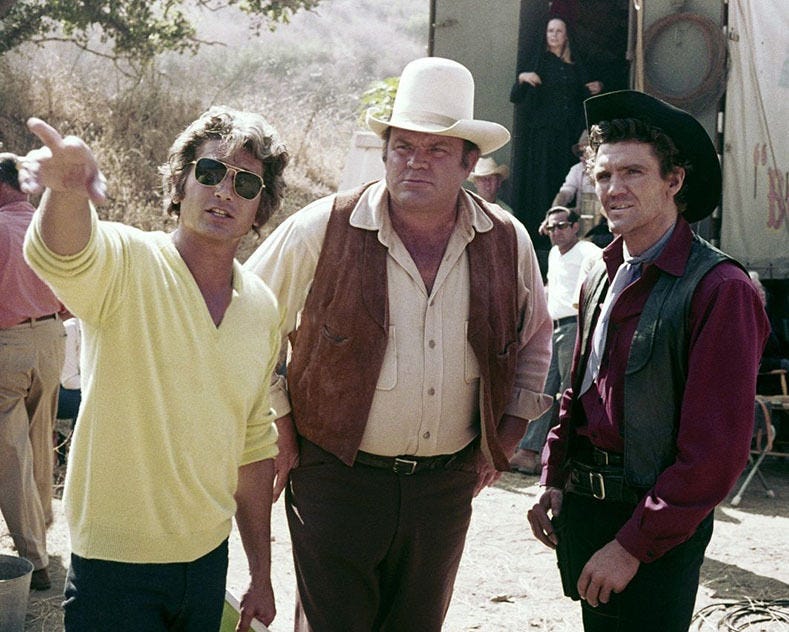
In the aftermath of the brutal Sharon Tate and Jay Sebring murders that sent shockwaves through Tinseltown, the Screen Writers Guild member grappled with being taken seriously as a writer. “People aren’t just surprised that I write scripts,” declared Landon to TV Guide. “They’re surprised I can even write my name. Now what if I had started out as a writer, and then I decided to branch out into acting? With that kind of switch, going from a writer to actor, would anybody have said, ‘Look how Landon is maturing’?
“After my first script, I heard that several writers around town called another writer who’s done a lot of Bonanza’s. ‘Who wrote that script for Landon?’ they asked him. ‘Oh, he wrote it himself, did he? Well, then who polished it, who put it into shape?’ They were dumbfounded to learn that Mike Landon, the kid in the cowboy suit, had done it all himself, every last word [braggadocio aside, Landon’s first five Bonanza scripts actually bear co-writing credits ranging from Cleaver to Rik Vollaerts, Oliver Crawford, Joy Dexter, and William Jerome; granted, he was writing unaccompanied when this interview transpired].
“And that’s a part of it, the cowboy-actor stigma, the feeling in this town about guys in Westerns, the assumption that we’re all no smarter than our horses. What if Mike Connors [Mannix], Martin Landau [Mission: Impossible], Leonard Nimoy [Star Trek], or Tony Franciosa [The Name of the Game] had written a script for their shows? Would anybody be so surprised?’”
It was not overnight, but Hollywood did sit up and take notice. Landon convinced Dortort to let him direct his claustrophobic, emotionally-draining script “To Die in Darkness” during a press conference announcing Canary’s addition to the cast as a quasi replacement for Roberts prior to the 1967–1968 ninth season. Fourteen episodes through the final 14th season found Landon behind the camera. His directorial career on Bonanza and beyond deserves its own article.
Pondering his triple threat rank of actor, writer, and director, Landon confided to UPI’s Vernon Scott in December 1971 that the middle talent was probably “the most important. A director can help the material somewhat. So can the actors. But it helps everybody if you have a good premise that doesn’t require a lot of padding with dialogue. My scripts are short as far as the number of pages go. People in real life don’t communicate as fast as they do on most television shows. So I slow it down. I don’t put in a lot of directorial notes. After all, I direct the shows I write these days.”
Landon did not deviate from his credo and worked relentlessly to establish his own family entertainment production empire in the ’70s and ’80s, retaining much of the Bonanza crew for Little House on the Prairie, Father Murphy, Highway to Heaven, TV movies-of-the-week [e.g. The Loneliest Runner, Where Pigeons Go to Die, and US], and Sam’s Son, a rare theatrical foray. Creative passions were limitless for the long-haired javelin thrower who dreamed of someday escaping Collingswood.
The Entire List of Michael Landon’s ‘Bonanza’ Script Oeuvre
1. “The Gamble” [season three, 1962, co-written with Frank Cleaver] 2. “Ballad of the Ponderosa” [season eight, 1966, co-written with Rik Vollaerts] 3. “Joe Cartwright, Detective” [season eight, 1967, teleplay by Landon; story by Oliver Crawford; a decade later Landon assigned Little House on the Prairie writer John T. Dugan with the task of rewriting this as “The Creeper of Walnut Grove”] 4. “The Wormwood Cup” [season eight, 1967, co-written by Joy Dexter] 5. “Six Black Horses” [season nine, 1967, co-written by William Jerome] 6. “A Dream to Dream” [season nine, 1968, modified as “Someone Please Love Me” for LHOTP] 7. “To Die in Darkness” [season nine, 1968] 8. “The Wish” [season 10, 1969] 9. “Dead Wrong” [season 11, 1969] 10. “It’s a Small World” [season 11, 1970; reimagined as “Little Lou” on LHOTP] 11. “Decision at Los Robles” [season 11, 1970] 12. “The Love Child” [season 12, 1970] 13. “Terror at 2:00” [season 12, 1971] 14. “Kingdom of Fear” [actually filmed in June 1968 for the 10th season but withheld in the wake of Martin Luther King, Jr. and Robert F. Kennedy’s assassinations; finally broadcast in season 12, 1971] 15. “Don’t Cry, My Son” [season 13, 1971] 16. “He Was Only Seven” [season 13, 1972; repurposed by writer Paul W. Cooper as the two-part “He Was Only Twelve” of LHOTP] 17. “The Younger Brothers’ Younger Brother” [season 13, 1972; recycled as “The Older Brothers” on LHOTP] 18. “Forever” [a two-hour episode premiering season 14, 1972] 19. “The Sound of Sadness” [season 14, 1972; remade as “The Silent Cry” for LHOTP] 20. “The Hunter” [season 14, the final episode, 1973]
© Jeremy Roberts, 2023. All rights reserved. To touch base, email [email protected] and mention which story led you my way. I appreciate it sincerely.