
Nappe
The Spelling Bee was caught nappe-ing with this word (groan)
Today’s New York Times Spelling Bee letters:
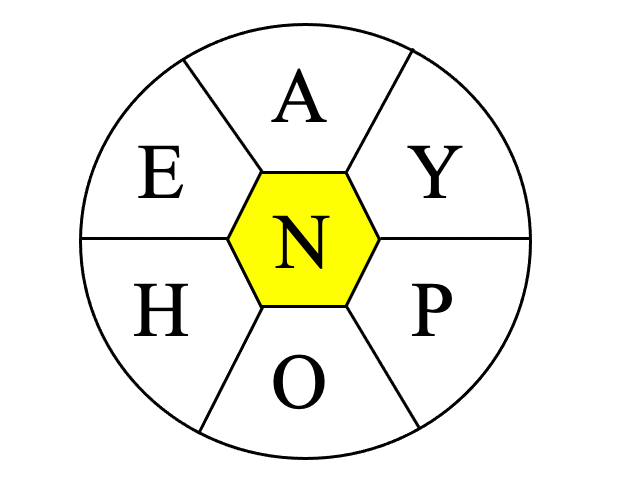
A, E, H, O, P, Y, and center N (all words must include N)
Merriam-Webster says…
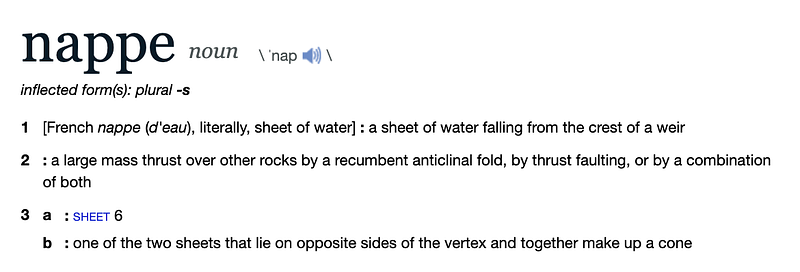
Silly little dictionary! Don’t you know that nappe can’t possibly be a word if the New York Times says it ain’t?
For further fascinating facts, check out the Spelling Bee Master.
What’s your favorite dord* from today’s puzzle?
My Two Cents
Spoiler alert right off the bat, in case you’re still working on today’s game: I’m going to mention some stats about it, including the total number of words and points. Also, if you don’t play the game and find this type of stuff boring, skip right ahead to the next section. Just remember to please scroll slowly so I can earn my daily 13 cents.
Today’s pangram (word with exactly seven different letters) appeared almost exactly a year ago. On June 6, 2021, to be exact, with the center letter Y instead of N. Interestingly, that game from last year had fewer words (28) than today’s version (37) but more points (136 compared to today’s 128). Since four-letter words are worth only one point, while words with five or more letters are worth the number of letters they have, the logical conclusion would be that last year’s puzzle must have had fewer four-letter words. And the stats provided by the Spelling Bee Master bear that out. Today’s version of the pangram offers 18, while last year’s had only 5.
Also interesting is today’s list of rejected words…
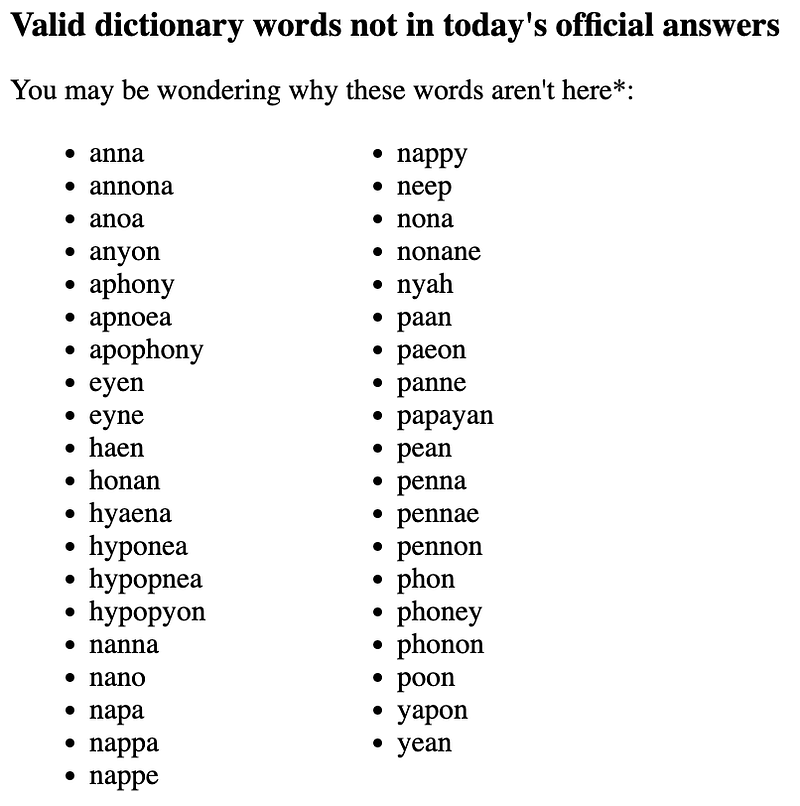
There are a few I’ve already written about, including apophony, nappy, pennon, and phonon. Apophony was the word I chose when today’s puzzle showed up last year with center letter Y.
Anyway, there are three meanings to tackle today, so let’s get to it.
To cone or not to cone
The collegiate version of Merriam-Webster, which is free, does not provide the first entry shown in the unabridged dictionary, which is subscription-based. Instead, the first entry in the collegiate version is “SHEET Sense 6", so we clicked on the link to discover that sheetsense6 means “a surface or part of a surface in which it is possible to pass from any one point of it to any other without leaving the surface. The example given is a hyperboloid of two sheets, so I clicked on hyperboloid and immediately regretted it:
a quadric surface whose sections by planes parallel to one coordinate plane are ellipses while those sections by planes parallel to the other two are hyperbolas if proper orientation of the axes is assumed
But then I looked for a picture (because it’s worth a thousand words) and found this:
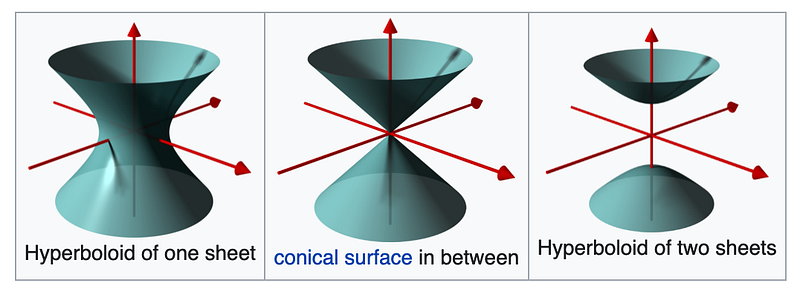
Well, okay, three thousand words, in this case. But the important thing is that the image in the middle connects with definition 3b, “one of the two sheets that lie on opposite sides of the vertex and together make up a cone.” Normally when we hear or read the word cone, most of us think of this:
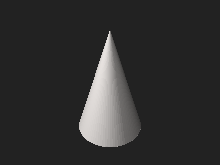
The way the cone above is geometrically constructed is by drawing finite line segments from the point at the top (called the apex) to the flat surface at the bottom (called a plane). In this case, the flat surface appears to be a circle, but an oval would also work. Now, if instead of line segments we use lines (lines extend infinitely in both directions) we get a double cone, or conical surface, like the one in the middle of the three images shown earlier.
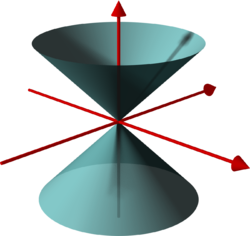
Now, here is where things got complicated for me. You see, according to some authors, the nappe is each half of the above conical surface. Which means that nappe might be a synonym for “cone” itself. But only when there are two of them superglued by their apexes?
In other places, like bartleby.com, the definition of nappe is “the lateral surface of the cone”. And that seems to match the definition provided by Merriam-Webster. Experts can’t seem to agree, and I’m concerned this war of concepts might escalate at some point. So I’m proposing that nappe be assigned both definitions, and that way we stop all the needless blood spilling by vicious geometricians. Or perhaps Hemanth can clear this up for us. He not only has one of the coolest names I’ve encountered so far on Medium, but is also an expert on mathematics –-by the power of Grayskull!
Anyway, while we we wait for a resolution to this vital issue that affects none of our lives, we move on to the other nappes.
Forces of nature
Our friends at Merriam-Webster explain that nappe was borrowed from the French word meaning “tablecloth”. The geological use (definition 2 in the dictionary) seems to stem from the fact that this land feature looks like a rumpled tablecloth that was pushed across a table.
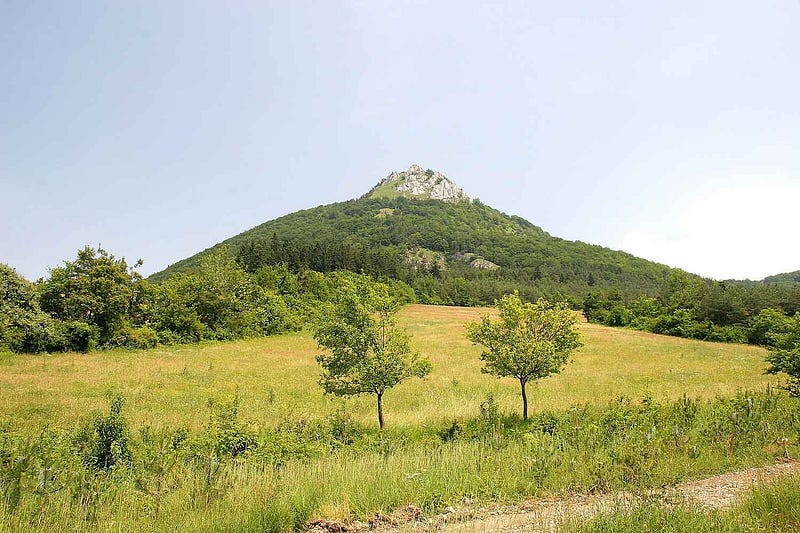
Okay, I admit you’re going to have to use your imagination with the tablecloth simile. Like, a lot.
The above is a klippe of a nappe in Slovakia. A klippe (German for “cliff”) is an isolated portion of a nappe. This happens after erosion has slowly removed any connecting elements between them. Nappes can also produce windows, which are eroded sections that are surrounded by the rest of the nappe. This illustration borrowed from Wikipedia is worth only seven words, but can give you a good idea of what a nappe looks like, if it were drawn in grayscale, that is.
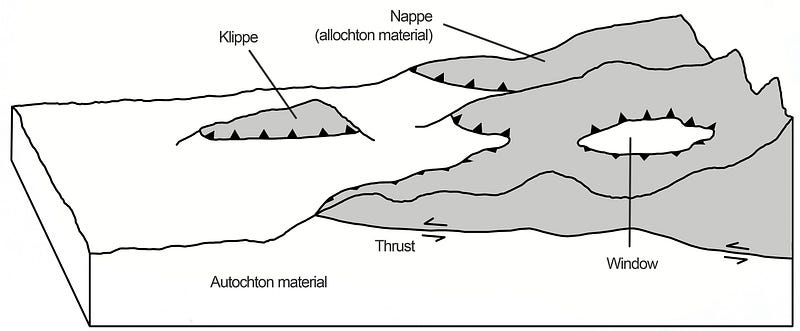
In the above image, “autochton material” should really be “autochthonous material” and refers to rock that wasn’t displaced by the thrust. The “allochthon” is the block of rocks that have been moved along the thrust fault (thrust) from their place of origin.
A thrust fault is a break in the crust of the Earth during which older rock layers are pushed above the younger layers they were originally lying under. In the case of a nappe, the displacement of rocks moves more than 2 km (1.2 miles) or 5 km (3.1 miles), depending on whom you ask. So there is a difference of opinion here, just like with the cone nappe. Oy vey!
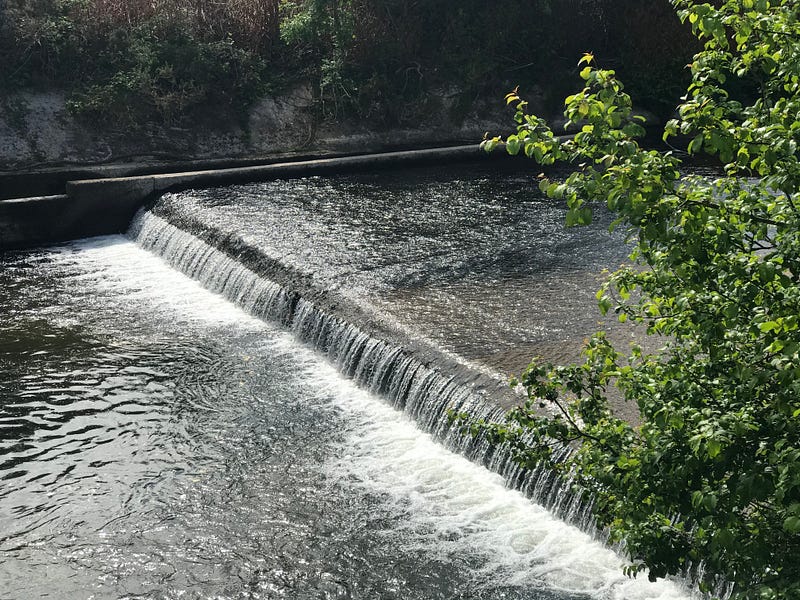
We therefore flee this controversy to the safety of liquid nappes, which you have probably seen a bunch of times without even realizing it. In essence, a nappe is a concept of hydraulic engineering, defined as a sheet of water that flows over a weir or dam. The photo at the top of today’s article shows a bunch of them, and our advanced tech allows us to replicate that image so you don’t need to scroll up:
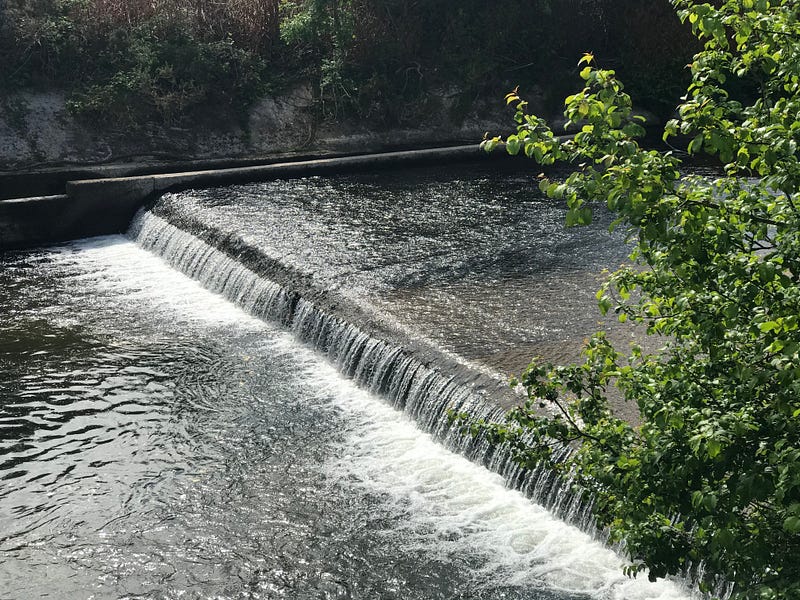
Yep, that short but very wide waterfall is, in reality, a nappe. Or, rather, a few dozen of them.
Most of know what a dam is, but just in case, here is a picture of one that is always being destroyed in movies, for some perverse reason:
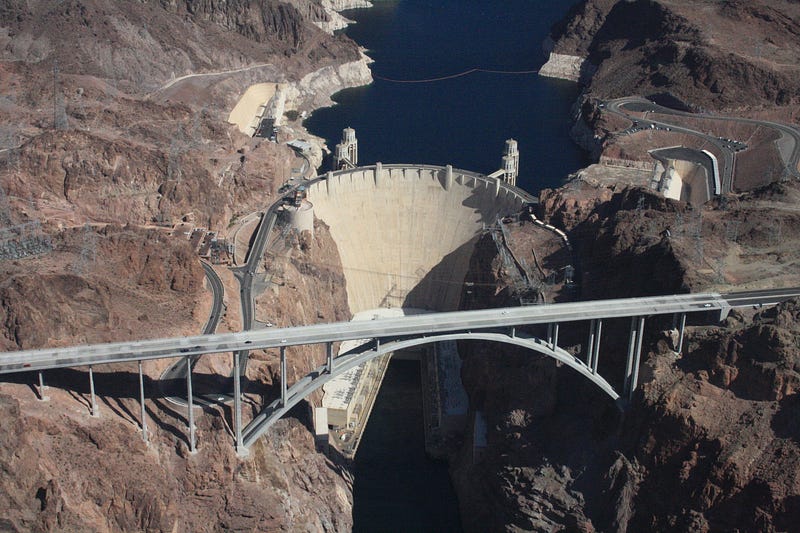
Yep, that’s the Hoover Dam, which Lex Luthor destroyed in 1978. But thankfully Superman turned time back around and everything ended up okay. At least until Zod and his gang came along in the sequel.
A weir is sometimes defined as a “small dam” or a “low head dam” because it does not back up water and create a reservoir the way real dams do. Damn! A weir changes the way water flows and can also change the height of the river level itself. Weirs can be used to control the flow of water for outlets of lakes, ponds, and reservoirs. Which is why weirs are sometimes placed in dams. Damn!
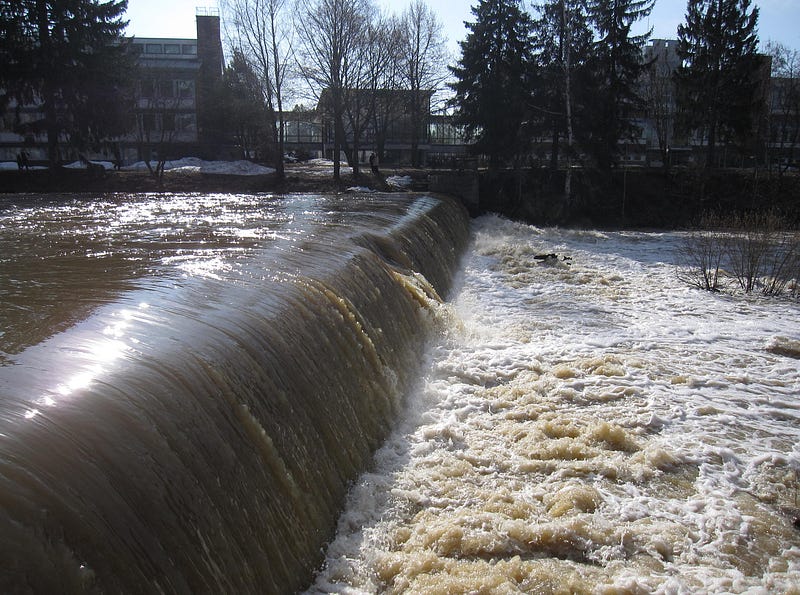
In the above Finlandic weir, all that water curving downwards is the nappe. And if a picture is worth a thousand words, then certainly a video is worth about a million. In this one you can clearly see the nappes in a stepped flow regime. The air space between the nappe and the wall (in this case, the steps) is known as an ogee.
There are three types of nappes, depending on how much air there is between them and the weir:
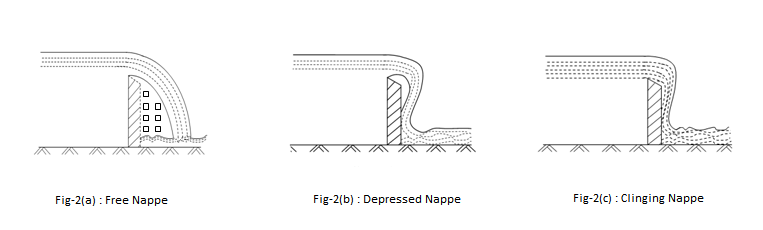
Free, depressed, and clinging. Those three words not only describe nappes, but also types of relationships between couples. Hmmm… and now we’ve stepped into controversy again! I better quit while I’m ahead.
Now you know. If you ever visit the Hoover Dam that Superman reconstructed, you can check for its weirs and tell your friends that the water flowing over them forms nappes. Don’t be surprised, though, if your friends tell you that you need is a nap… because the editors of the Spelling Bee decided that nappe is a dord*.
You can check out my previous entry on another dord* here:
*What the heck is a dord, you ask? Here’s the answer: