
Nappy
Mind the gap… between the British and American meanings
Today’s New York Times Spelling Bee letters:
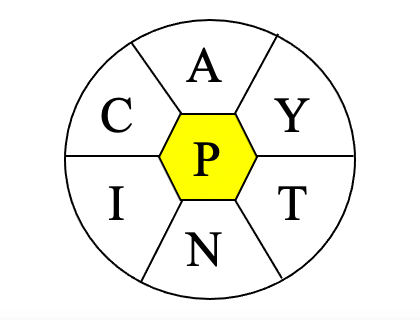
A, C, I, N, T, Y, and center P (all words must include P).
Merriam-Webster says…
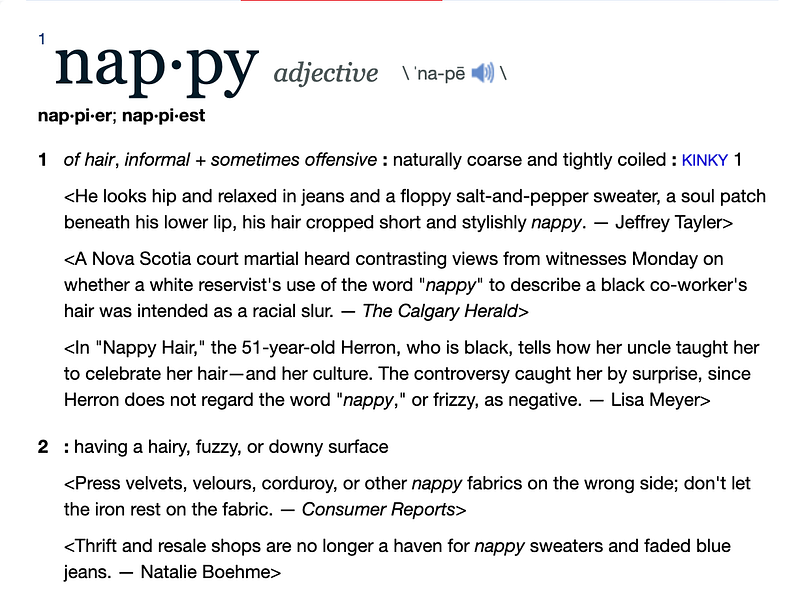
AND ALSO…
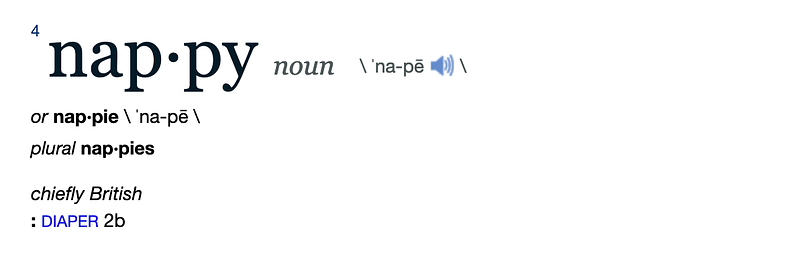
Silly little dictionary! Don’t you know nappy can’t possibly be a word if the New York Times says it ain’t?
For further fascinating facts, check out the Spelling Bee Master.
What’s your favorite dord* from today’s puzzle?
My Two Cents
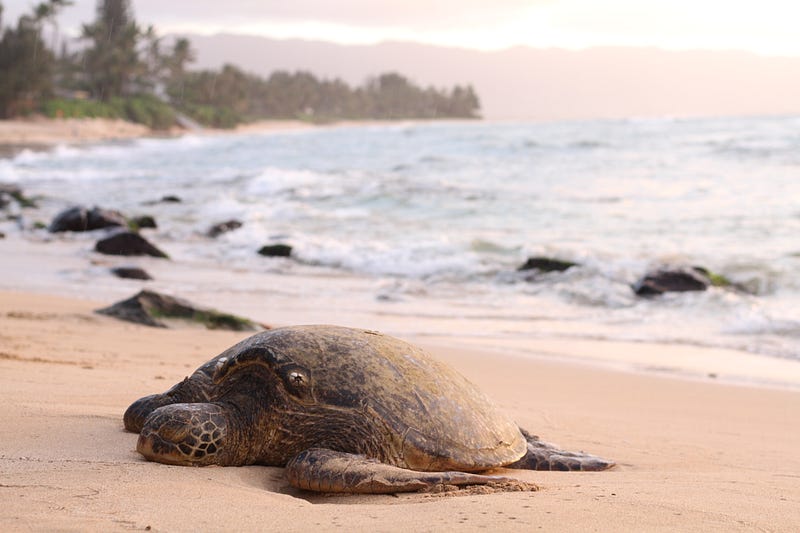
Just out of curiosity, I searched for “nappy” using the Unsplash feature Medium provides. I was expecting photos of people with nappy hair and photos of diapers, both of which did appear. I wasn’t expecting a photo of a sea turtle.
Obviously, I had to use that photo.
Was it tagged as “nappy” for searches because the wittle tuwtle is taking a napsie? I mean, I looked hither and yonder and couldn’t find any definition or association that had to do with any type of reptile, seaworthy or terrestrial.
I did find a plethora of meanings for the word nappy, however. Most of them not related to hair.
Pelo malo
Literally, “bad hair”. This is the expression I most often heard in Venezuela, where I grew up, in reference to the what is politely called kinky, or afro-textured hair. There were also variations on the expression, like “pelo chicha” or “bachaco”, which was used to refer to people with dark skin and red hair. This last term, based on the slang for a type of leaf-cutter ant , was considered even more offensive than the other two.
Andre Walker, best-known for being Oprah’s hair stylist, created a hair category system that has practically become the standard for evaluating hair types. The system has been criticized for its hierarchy, as it lists straight hair with a number 1 and kinky-coily with a number 4. Wavy is type 2 and curly is type 3. There are also subtypes for each category.
The term afro-textured is a bit of a misnomer, since this type of hair is also seen in certain populations of Southeast Asia and the Oceanic region. Because its low density and elastic helix shape give it an airy effect, it is theorized that kinky hair may have been an adaptive feature to help regulate body temperature in open lands of the African continent.
I don’t think I heard the word nappy very often until I moved to the U.S. Around the time I did, there had been intense scrutiny and backlash over a white teacher in New York City who had assigned the book Nappy Hair to her class. Her school was in Bushwick, a mostly Black and Hispanic Brooklyn neighborhood. The book’s author, Carolivia Herron, who was born in that school district and had intended her work as “a celebration”, saw in Sherman’s students the ideal target audience for her identity-affirming story.
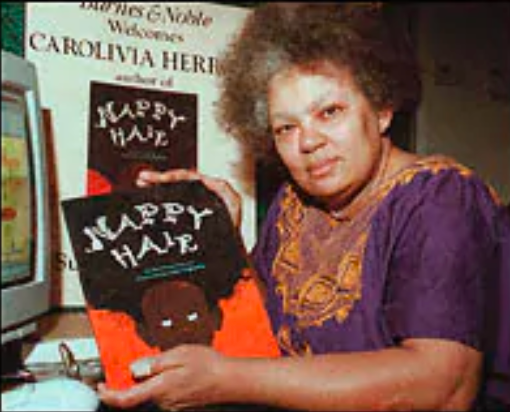
Many parents in P.S. 75 disagreed. Things got heated during the course of several meetings between school personnel and angry parents. Although the school eventually backed its teacher and only a handful of parents complained, Sherman ended up requesting a transfer to a different school.
During the Civil Rights movement of the 1960s in the U.S., it became a point of pride for many African-Americans to let their hair grow into Afros, which became associated with the Black Power Movement. This was in stark contrast to the effort of many Blacks (and especially Black women) to style their hair in a “European” or “white” way. Jesse Jackson commented at that his hairstyle “was an expression of the rebellion of the time”.
So what’s the deal with nappy? First of all, it’s akin to another highly-politicized word that begins with “n”, and common sense guidelines would indicate that if you’re not Black, you should probably abstain from using either one.
In second place, the term nappy (as opposed to kinky, or coily) has a lot to do with the history of how people of African descent — and particularly African slaves — were regarded as subhuman by Europeans. How do you rationalize that? Well, one way is to base on phenotype, that is, the observable, exterior characteristics of a person. That includes skin color, of course, but also build, facial features, and… hair.
As someone with Jewish heritage, I’m historically familiar with this type of behavior. Heck, may grandparents on my father’s side went through the horror of having their families exterminated during World War II. Nazis used the term Untermenschen to describe Jews. The word means “under human”, or subhuman. Jews were also commonly referred to as rats, to reinforce that notion. And Nazi philosophy eventually got around to considering the Jews the “anti-race”, a key to justifying the Final Solution and the genocide of millions in just a few years. (This as opposed to Poles and other Slavic people, who were simply considered “inferior races”.)
The key to understanding the issue — and I see this missing in a lot of discussions about racism — is the word subhuman. In the way Merriam-Webster defines it: “of or relating to a taxonomic group lower than that of humans”. Text in bold is mine, for emphasis.
It’s easier to hunt down people in another continent and ship them over to yours if you think they are of a different taxonomic species than you. It’s easier to rip apart families and send them to concentration camps if you see them as lower than humans.
It can seem completely acceptable to enslave and torture people, or to send people to their death in gas ovens, if you think they are subhuman.
Subhuman.
You see, when slurs or stereotypes or tropes are used with Black people, it’s not that Black people take offense because they’re “overly sensitive” or “progressive” or “snowflakes”. Certain words and phrases have a real, historic association not just with hatred and bigotry and racism… but with a literal dehumanization of an entire group of people.
For goodness sake, even the Constitution had a clause declaring that “for purposes of representation in Congress, enslaved blacks in a state would be counted as three-fifths of the number of white inhabitants of that state.”
How about we all start treating each other a little more humanely… and humanly.
Nappy across the pond
Across the pond? Is that why Unsplash shows a picture of a turtle as an option for nappy?
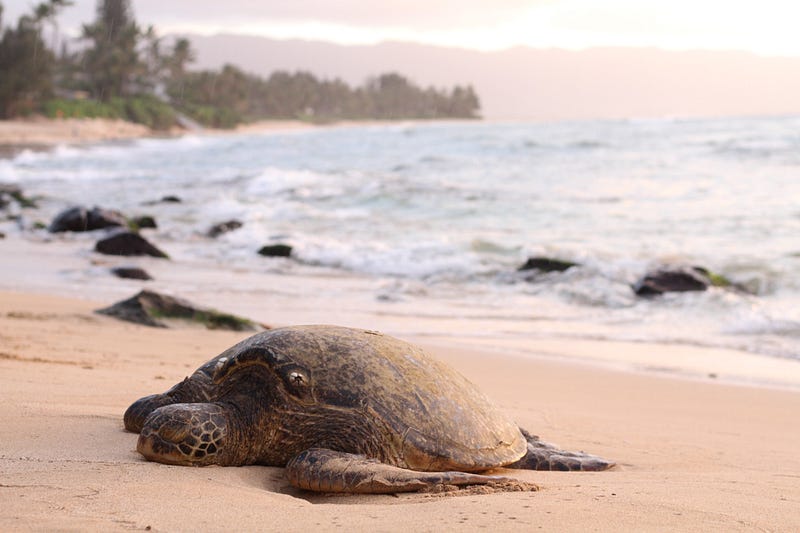
He crossed the Atlantic, and is now waiting for someone to put a diaper on him, because he’s all pooped out. (Cue rim shot.)
Speaking of diapers…
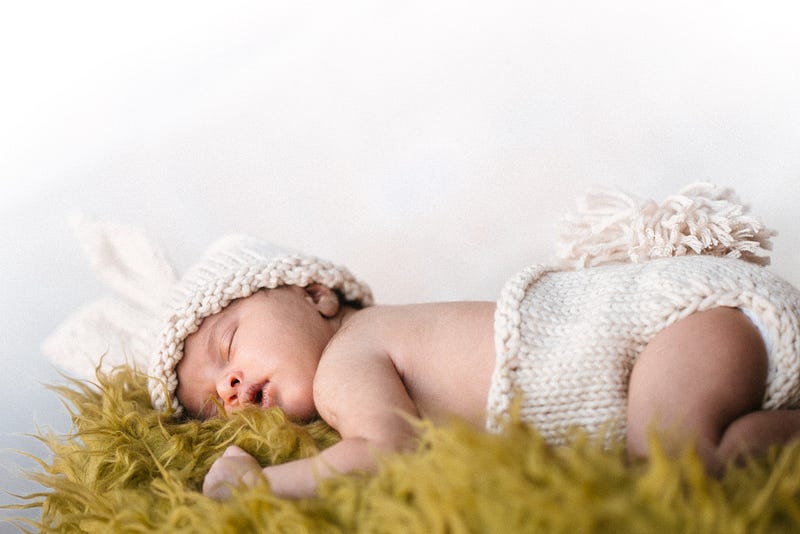
That’s what nappy usually means in British English, Australian English, and a few other Englishes.
And although I picked an extremely cute and heart-melting picture of a diaper (you’re welcome), that’s not what most diapers are usually made of. Especially when you look inside…
Now, why is a diaper called nappy in some parts of the English-speaking world? It seems the origin has to do with a shortening of the word napkin and the “cutesy” suffix -y. That’s as far as I got today with that. Other explanations are welcome in the comments section.
Here are other (rarely used) meanings of nappy:
▹ ale, especially foamy ale
▹ a shallow, open serving dish sometimes having one handle
▹ said of a horse: given to sudden tricks or starts
In conclusion, unless you’re Black or have nappy hair, please avoid using the word nappy in the United States. If you’re in the United Kingdom, you might think it’s okay to use the word nappy to refer to your baby’s diaper… or your own diaper —hey, I don’t judge.
But you’d be wrong. You can’t say nappy anyway. Because according to the editors of the Spelling Bee game, nappy is a dord.*
You can check out my previous entry on another dord* here:
*What the heck is a dord, you ask? Here’s the answer: