avatarAlvin T.

Free AI web copilot to create summaries, insights and extended knowledge, download it at here

6766

Abstract

d=2ahUKEwj5hID0tOiBAxXLk1YBHWKRDCUQFnoECAkQAw&url=https%3A%2F%2Fwww.mti.gov.sg%2F-%2Fmedia%2FMTI%2FResources%2FEconomic-Survey-of-Singapore%2F2022%2FEconomic-Survey-of-Singapore-2022%2FCh1_AES2022.pdf&usg=AOvVaw3_gMX7y_jh5p-CY9J4-Uq3&opi=89978449">644 billion SGD (470 billion USD)</a>, that gives a budget-to-GDP ratio of <b>0.065%</b>.</p><p id="acb9">In contrast, Japan’s Tourism Agency was allocated a budget of 142.5 billion Japanese yen (roughly 955 million USD at the time of writing) in the same year. Since Japan’s GDP in 2022 was 644 trillion Japanese yen (4.3 trillion USD at the time of writing), that gives us a budget-to-GDP ratio of<b> 0.022%</b>.</p><p id="63d9">On a GDP basis, <i>Singapore spends 3 times more money than Japan to promote tourism</i>. Given that Singapore is probably better known for having <a href="https://www.worldairportawards.com/singapore-changi-airport-named-worlds-best-airport-2023/#:~:text=Singapore%20Changi%20Airport%20has%20been,World%27s%20Best%20Airport%20Leisure%20Amenities.">the world’s best airport</a> than the fact that we have a conscription program, this strategy seems to have worked.</p><p id="870c">It’s little wonder though — unlike Japan — in Singapore, tourism has to be <i>manufactured </i>as a product. Singapore’s iconic Merlion, which now attracts tourists from all over the world, <a href="https://www.roots.gov.sg/en/stories-landing/stories/celebrating-50-years-of-the-merlion-stories-behind-the-national-icon/story">was initially created as a corporate logo for the Singapore Tourism Board in 1964.</a> There’s nothing mythical or legendary about the creature at all — another shock to many of my Japanese friends when I tell them the truth.</p><h1 id="6a1b">“North Korea, but Brighter”</h1><p id="4be3">Many Japanese people anecdotally connect Singapore with the Merlion and in recent years, the Marina Bay Sands hotel and casino complex. The latter association was thanks to a massive advertising campaign featuring the <a href="https://www.youtube.com/watch?v=TFP2vJVOI6c">Jpop idol group, SMAP</a>.</p><p id="4552">With the Merlion and the Marina Bay Sands taking up most of the headspace in the minds of Japanese people, few of my Japanese friends and colleagues suspect that <a href="https://readmedium.com/i-was-trained-in-the-military-but-i-hope-i-never-have-to-go-to-war-819eadcb459b">I used to train in several weapons: semi-automatics, automatics, grenades, grenade launchers, rocket launchers, and even explosives.</a></p><figure id="4403"><img src="https://cdn-images-1.readmedium.com/v2/resize:fit:800/0*9zRkaSF5BPRqV8eR"><figcaption>Photo by <a href="https://unsplash.com/@sv_jpg?utm_source=medium&amp;utm_medium=referral">Sven Verweij</a> on <a href="https://unsplash.com?utm_source=medium&amp;utm_medium=referral">Unsplash</a></figcaption></figure><p id="36e9">Those in the know, however, refer to Singapore as 明るい北朝鮮 (literally, bright North Korea). Yes, it’s funny and perhaps even over the top. But a 2015 visit to Shanghai made me sense the truth of this statement.</p><p id="dc87">That year, I visited Shanghai with some friends. <a href="https://readmedium.com/youll-never-believe-the-weirdest-thing-that-happened-to-me-in-china-a824f7114383">Apart from a bizarre encounter with a Chinese man</a> who claimed that robots were masquerading as humans within the Chinese population, I also visited a North Korean restaurant, part of an empire of restaurants all sponsored by the North Korean government.</p><p id="b77f">It’s probably the closest I will ever come to visiting North Korea itself. The restaurant was very nicely decorated. The food was much better than I thought it would be.</p><p id="ae2c">But the highlight was the entertainment.</p><p id="9fdc">Several North Korean women — all very beautiful, young, and talented — entertained us with song, dance, and musical accompaniment. All of them were extremely skilled. Every one of them could play 4–5 instruments each. As they performed, all of them smiled like, as those they were high on drugs, praising the beauty of their country and the wisdom of their government. I knew because the lyrics they sang were translated on a karaoke screen.</p><p id="fa3f">Unfortunately, I don’t have any videos or photos from that day. I’m not the only one to have visited a North Korean restaurant. <a href="https://www.usatoday.com/story/news/world/2016/05/09/inside-north-koreas-surreal-restaurant-empire/84129576/">Other visitors have reported the experience.</a></p><p id="a3c7">It was surreal, yes. But most importantly, the entire space was orchestrated and controlled to create a pleasant image of the reality it was concealing.</p><p id="cfda">Very much like Singapore.</p><h1 id="e447">Crazy Rich Asians</h1><figure id="b5a7"><img src="https://cdn-images-1.readmedium.com/v2/resize:fit:800/0*_LMa4LwAJBUWPAT6"><figcaption>Photo by <a href="https://unsplash.com/@pokmer?utm_source=medium&amp;utm_medium=referral">Jingming Pan</a> on <a href="https://unsplash.com?utm_source=medium&amp;utm_medium=referral">Unsplash</a></figcaption></figure><p id="6067"><i>“You’re from Singapore? Why don’t you move back to Singapore? You can earn more money that way, no?”</i></p><p id="5480">In the minds of my Japanese colleagues, Singapore is all about money. This image has solidified ever since the 2018 Hollywood hit, <i>Crazy Rich Asians</i>. For the record, I have no interest in watching the movie. I am certainly not crazy rich. I cannot relate to the lifeworld of the characters in the movie.</p><p id="2f2f">The main cast isn’t even played by Singaporeans.</p><p id="5c73">But movies reflect life. Today, the super-rich know exactly where to park their money. Ultra-rich people like investor <a href="https://www.businessinsider.com/jim-rogers-if-you-want-your-heirs-to-be-wealthy-then-leave-america-and-move-to-asia-2010-8">Jim Rogers</a>, and Facebook co-founder <a href="https://edition.cnn.com/2012/05/16/business/singapore-saverin-facebook/index.html#:~:text=The%20co%2Dfounder%20of%20Facebook,became%20a%20permanent%20Singapore%20resident.">Eucador Saverin</a> are just some of the people that have moved themselves and their wealth to Singapore.</p><p id="9c82">In recent years, the <a href="https://www.aljazeera.com/economy/2023/3/27/chinas-rich-flee-crackdowns-for-asias-switzerland-singapore">Chinese megarich have started pouring their money into Singapore</a>, and the result this has had on real estate prices has not been pretty. <a href="https://www.japantimes.co.jp/news/2023/05/08/asia-pacific/singapore-high-rent-political-problem/">It’s become a political issue</a>.</p><p id="9d3f">In Singapore, money flows like water, and my countrymen are obsessed with it. To be otherwise would not on

Options

ly be to reject the religion of pragmatism but also to court death <a href="https://sg.style.yahoo.com/singapore-named-most-expensive-city-121411417.html#:~:text=Singapore%20Named%20The%20Most%20Expensive%20City%20In%20The%20World%20For%202023,-Trinetra%20Paul&amp;text=Swiss%20banking%20corporation%20Julius%20Baer,the%20second%20and%20third%20spots.">in the most expensive city in the world</a>.</p><p id="0b73">I didn’t realize how money-obsessed my fellow countryfolks were, until I moved to Japan. That doesn’t mean money is unimportant in Japan. Still, for most people, money is an afterthought, not the goal itself. And the longer I have lived in Japan, the more I feel that money by itself is not very interesting.</p><p id="7400">And yet, when I wrote about the “<a href="https://readmedium.com/5-things-i-learned-about-japan-after-my-trip-home-5282e2199a4e"><i>5 Things I Learned about Japan after My Trip Home</i>,</a>” Japonica editor <a href="undefined">DC Palter</a> commented that:</p><blockquote id="b944"><p>“All of these observations are about money and payments. What did you notice about lifestyles and attitudes of people?”</p></blockquote><p id="36ca">I was stumped. A week back in Singapore, and all I could notice was money.</p><h1 id="c212">Singapore — Now Sitting on Top of the World?</h1><figure id="8242"><img src="https://cdn-images-1.readmedium.com/v2/resize:fit:800/0*mxoG20NBaOTL6DVK"><figcaption>Photo by <a href="https://unsplash.com/@zhuzhutrain?utm_source=medium&amp;utm_medium=referral">Zhu Hongzhi</a> on <a href="https://unsplash.com?utm_source=medium&amp;utm_medium=referral">Unsplash</a></figcaption></figure><p id="6261" type="7">Pragmatic Singapore has decided to pursue wealth at the cost of these qualities. And perhaps, there is no other viable for an independent country that shouldn’t even have existed in the first place. In that sense, Singapore might as well be a zombie, kept alive only by the magic of mages…</p><p id="b556">Singapore, according to a columnist, is now “<a href="https://www.malaymail.com/news/opinion/2022/10/16/singapore-sitting-on-top-of-the-world/33846">sitting on top of the world.</a>” By all economic metrics, it is.</p><p id="3a8c">Surekha A. Yadav wrote in October 2022, that the country had changed more in the last 10 years than it had in the last 30. I moved to Japan in 2016. <a href="https://readmedium.com/i-traveled-home-to-singapore-for-the-first-time-since-the-pandemic-11ffaabbed9a">When I returned to Singapore for a short trip in 2022 — the first time after the COVID pandemic </a>— I felt like I had returned to a very different place than the one I remember.</p><p id="23da">Most visible of all were the blatant indicators of wealth — beginning with lots of Rolex boutiques in the city. She goes on to write that in her article that:</p><blockquote id="dbc3"><p>Singapore is open for business.</p></blockquote><blockquote id="0fe8"><p>Its reserves of capital are some of the largest on Earth. With an ever increasing suite of financial services and asset management services on offer, more and more funds have been pouring in.</p></blockquote><blockquote id="e01d"><p>It’s a growing snowball of money propelling us to the forefront of global finance: We are setting the pace.</p></blockquote><blockquote id="56ae"><p>And this transition isn’t just abstract, it is visible across the country. The scale and sophistication of the shops, restaurants in the city now are almost unparalleled anywhere.</p></blockquote><blockquote id="dd22"><p><a href="https://www.malaymail.com/news/opinion/2022/10/16/singapore-sitting-on-top-of-the-world/33846">Singapore: Sitting on top of the world | Malay Mail</a></p></blockquote><p id="e28e">I cannot disagree with her.</p><p id="c354"><i>Singapore is overflowing with money. </i>And yet, why do I feel like something is missing from this vision of Singapore? Where is the mention of spontaneity, creativity, freedom, beauty, and elegance — values that I have always sought to pursue in my own life?</p><p id="a325">“Poetry, beauty, romance, love, these are what we stay alive for,” or so Robin’ William’s character proclaimed in the movie Dead Poet’s Society.</p><p id="4f1e">Pragmatic Singapore has decided to pursue wealth at the cost of these qualities. And perhaps, there is no other viable for an independent country that shouldn’t even have existed in the first place. In that sense, Singapore might as well be a zombie, kept alive only by the magic of mages…</p><p id="b1c1">In 1905, the German sociologist Max Weber made a rather gloomy pronouncement. He foresaw the logical endpoint of a culture that pursued the accumulation of wealth as one might of sport, dreading the dehumanizing qualities of such a society. In <a href="https://www.marxists.org/reference/archive/weber/protestant-ethic/ch05.htm"><i>The Protestant Ethic and the Spirit of Capitalism, </i>he wrote</a>,</p><blockquote id="1096"><p>For of the fast stage of this cultural development, it might well be truly said: “Specialists without spirit, sensualists without heart; this nullity imagines that it has attained a level of civilization never before achieved.”</p></blockquote><p id="5ff1">He might as well have been writing about Singapore.</p><p id="6ecc">Ultimately, I don’t really write much about Singapore because the country doesn’t inspire me. I never truly identified with the prescribed values of the country.</p><p id="4a12">All my life, I sought an alternative way to live, and that is the biggest reason why I moved to Japan.</p><p id="b36c">Japan might not be perfect. I’ve <a href="https://readmedium.com/the-dark-side-of-the-japanese-virtue-of-gaman-c9a0ac79d3b4">endured countless nights working dead into the night</a> at the cost of my mental health, and even <a href="https://readmedium.com/how-i-moved-to-japan-at-the-age-of-31-without-being-an-english-teacher-d435acaa82e2">the path I took to move to Japan was not easy and required long-term planning and sacrifice</a>. But in Japan, for some weird reason, I feel freer than I do in Singapore.</p><p id="02ed">Whenever I read about foreigners living in Japan complaining that they’ll never be Japanese, I scratch my head. Why would anyone want to be something else other than what they are?</p><p id="e3f1">But perhaps they are talking about the sense of belonging to a place and community — to which, I also cannot relate.</p><p id="ee1e">I have never truly felt it as a Singaporean in Singapore either.</p><p id="ce5f"><i>I write frequently about Japan-related topics on <a href="https://medium.com/japonica-publication">Japonica</a>, where I am also an editor. Discover my most-read stories <a href="https://readmedium.com/hi-im-alvin-b2e27849a944">here</a>.</i></p></article></body>

Culture & Society

Why This Singaporean Doesn’t Write Much about Singapore

A country that’s both crazy rich and “Disneyland with the Death Penalty” doesn’t inspire one to put pen to paper
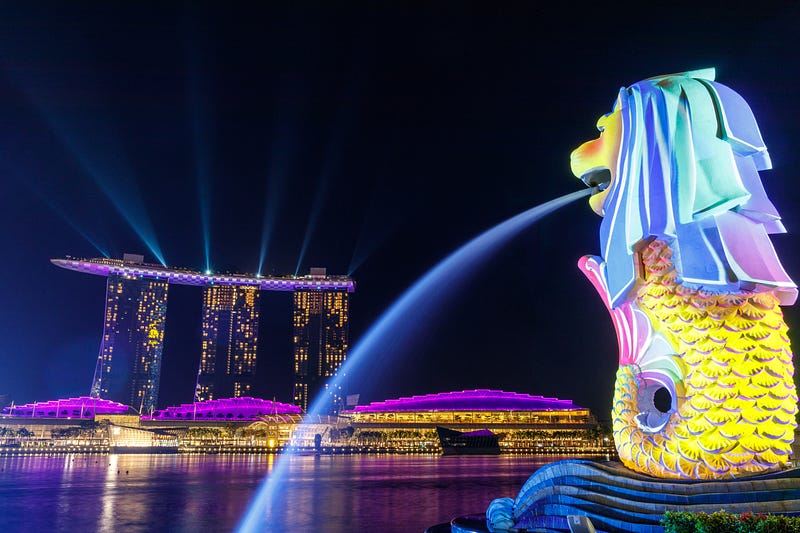
Photo by Joshua Ang on Unsplash

A Singaporean friend who read my articles about Japan once asked me why I didn’t write about Singapore.

It’s a fair question to ask.

After all, before moving to Japan at the age of 31, I had spent the entirety of my life — save a couple of months as an exchange student in Japan — living in the Lion City. I grew up in Singapore. Completed my mandatory military service in Singapore. Went to university in Singapore.

In every way that mattered, I was thoroughly Singaporean.

And yet, most of my articles deal with Japan. I’m even a co-editor at Japonica, a Japan-focused publication.

Part of the answer is pretty straightforward. I live in Japan now, not Singapore, and it’s always easier to write about what you know best. Plus, lots of people around the world are fascinated with Japan and want to read more about Japanese culture and life in the country.

But there is a deeper reason, and it starts with the fact that modern Singapore is a completely manufactured entity.

“The Little Red Dot”
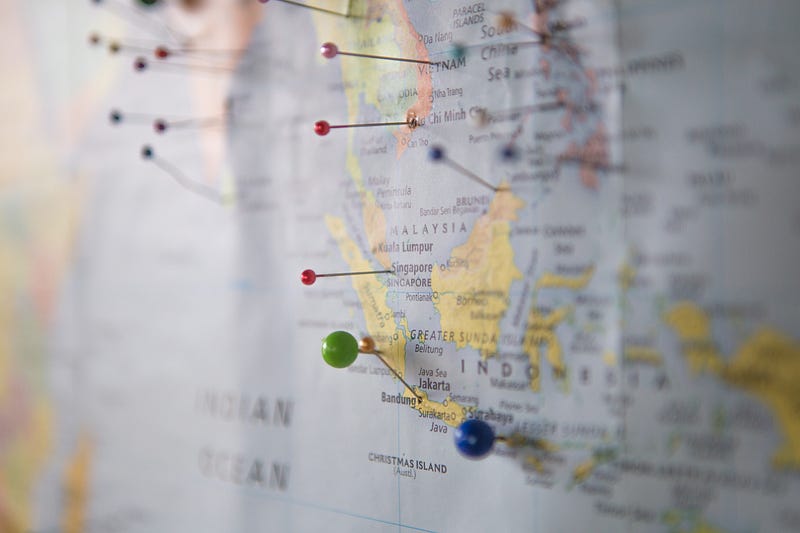
Photo by Z on Unsplash

My country shouldn’t even exist.

And yet, it has become a magnet for wealth, that it has earned the moniker “the Switzerland of Asia.”

It’s only 728.6 km², slightly larger than the 23 special wards of Tokyo. It lacks natural resources and even has to import water from Malaysia. It’s a miracle that the country has managed to remain sovereign for nearly 60 years.

When I was growing up, the country was referred to as the Little Red Dot by then-Indonesian president Habibie, referring to the minuscule point that Singapore appears as on a world map — in contrast to the massive chain of islands that make up the Indonesian archipelago.

But Singapore’s had other nicknames.

Disneyland with the Death Penalty
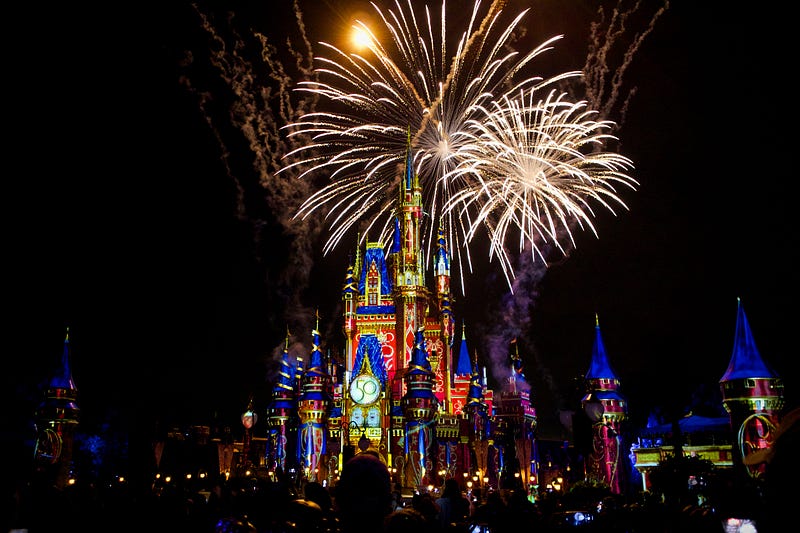
Photo by Brian McGowan on Unsplash

In 1993, William Gibson wrote a 4500-word article about Singapore for the magazine WIRED. In it, he wrote the following:

Singapore is a relentless G-rated experience, micromanaged by a state that has the look and feel of a very large corporation. If IBM had ever bothered to actually possess a physical country, that country might have had a lot in common with Singapore. There’s a certain white-shirted constraint, an absolute humorlessness in the way Singapore Ltd. operates; conformity here is the prime directive, and the fuzzier brands of creativity are in extremely short supply.

The article was titled “Disneyland with the Death Penalty,” referring to the artificiality of the environment co-existing with the capital punishment laws that still exist to this day.

Unsurprisingly, the Singaporean government banned the magazine. The title was deliberately provocative, but it was on point.

From March 2022 to July 2023, 15 people were executed for drug trafficking. Many NGOs like Amnesty International continue to speak out against this exaltation of order at all costs. Yet, what is undeniable is the near absence of any drug-related social ills that have plagued countries like the United States of America. Drug overdose deaths rose 6 times from 1999 to nearly 107,000 cases in 2021, with 75% of these cases caused by opioids. Even the US CDC calls it an Opioid Overdose Epidemic.

One can argue that Singapore does not respect human rights. One cannot argue that it is ineffective.

The Merlion… Singapore’s Answer to Disneyland’s Mickey
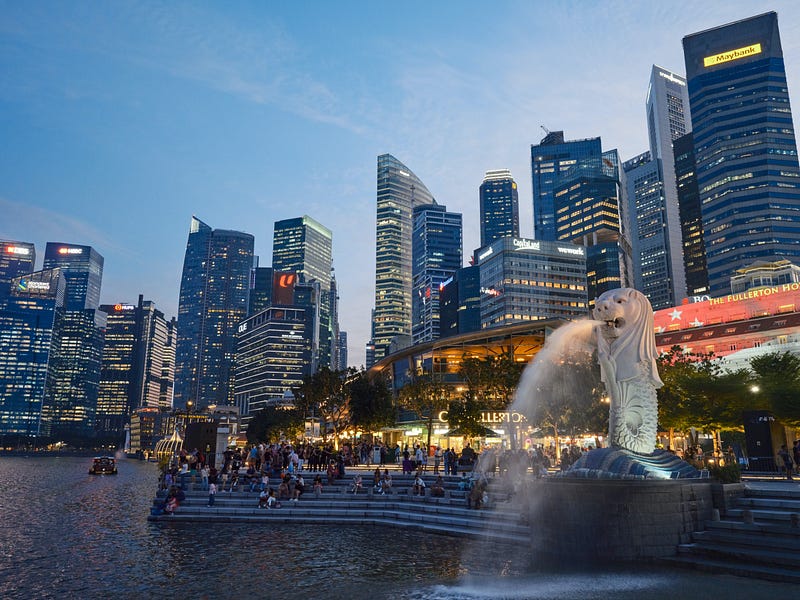
Photo by Stephen H on Unsplash

Whenever I tell Japanese people that I had to serve more than two years in the military, they’re often surprised. Conscription in South Korea? Most people have heard of that. Conscription in Singapore? More people probably know that Singapore is famous for chilli crab and chicken rice than the fact that we have a civilian army. And for good reason. The Singapore government spends a lot of money promoting tourism than it does on advertising its military prowess.

In 2022, the Singapore Tourism Board — a statutory board that operates under the Government of Singapore was allocated a budget of 419.5 million Singapore dollars (roughly 306 million USD at the time of writing). Since Singapore’s GDP in 2022 was 644 billion SGD (470 billion USD), that gives a budget-to-GDP ratio of 0.065%.

In contrast, Japan’s Tourism Agency was allocated a budget of 142.5 billion Japanese yen (roughly 955 million USD at the time of writing) in the same year. Since Japan’s GDP in 2022 was 644 trillion Japanese yen (4.3 trillion USD at the time of writing), that gives us a budget-to-GDP ratio of 0.022%.

On a GDP basis, Singapore spends 3 times more money than Japan to promote tourism. Given that Singapore is probably better known for having the world’s best airport than the fact that we have a conscription program, this strategy seems to have worked.

It’s little wonder though — unlike Japan — in Singapore, tourism has to be manufactured as a product. Singapore’s iconic Merlion, which now attracts tourists from all over the world, was initially created as a corporate logo for the Singapore Tourism Board in 1964. There’s nothing mythical or legendary about the creature at all — another shock to many of my Japanese friends when I tell them the truth.

“North Korea, but Brighter”

Many Japanese people anecdotally connect Singapore with the Merlion and in recent years, the Marina Bay Sands hotel and casino complex. The latter association was thanks to a massive advertising campaign featuring the Jpop idol group, SMAP.

With the Merlion and the Marina Bay Sands taking up most of the headspace in the minds of Japanese people, few of my Japanese friends and colleagues suspect that I used to train in several weapons: semi-automatics, automatics, grenades, grenade launchers, rocket launchers, and even explosives.
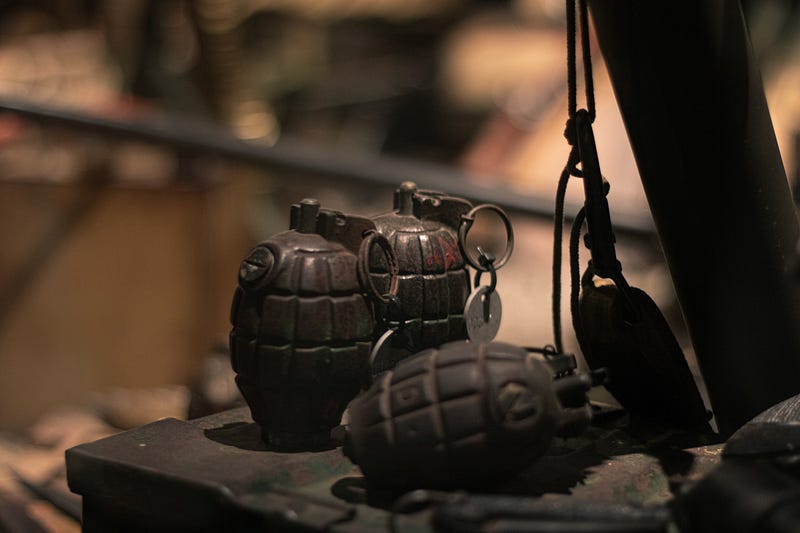
Photo by Sven Verweij on Unsplash

Those in the know, however, refer to Singapore as 明るい北朝鮮 (literally, bright North Korea). Yes, it’s funny and perhaps even over the top. But a 2015 visit to Shanghai made me sense the truth of this statement.

That year, I visited Shanghai with some friends. Apart from a bizarre encounter with a Chinese man who claimed that robots were masquerading as humans within the Chinese population, I also visited a North Korean restaurant, part of an empire of restaurants all sponsored by the North Korean government.

It’s probably the closest I will ever come to visiting North Korea itself. The restaurant was very nicely decorated. The food was much better than I thought it would be.

But the highlight was the entertainment.

Several North Korean women — all very beautiful, young, and talented — entertained us with song, dance, and musical accompaniment. All of them were extremely skilled. Every one of them could play 4–5 instruments each. As they performed, all of them smiled like, as those they were high on drugs, praising the beauty of their country and the wisdom of their government. I knew because the lyrics they sang were translated on a karaoke screen.

Unfortunately, I don’t have any videos or photos from that day. I’m not the only one to have visited a North Korean restaurant. Other visitors have reported the experience.

It was surreal, yes. But most importantly, the entire space was orchestrated and controlled to create a pleasant image of the reality it was concealing.

Very much like Singapore.

Crazy Rich Asians
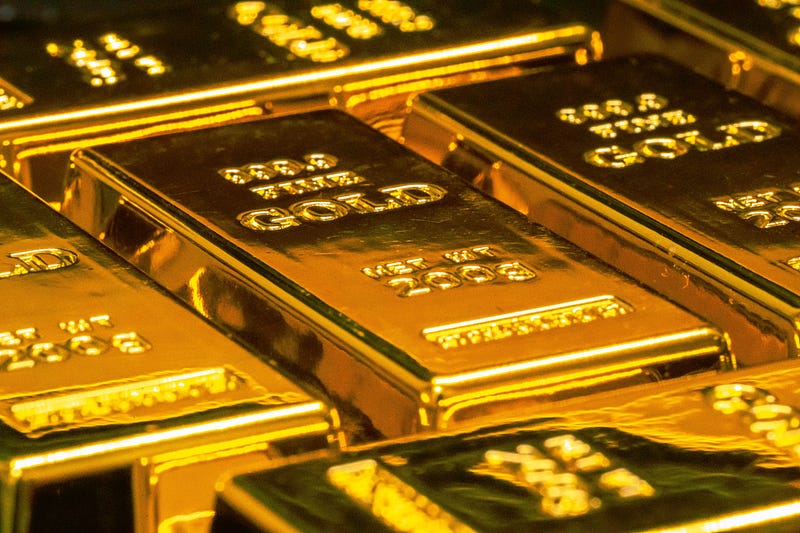
Photo by Jingming Pan on Unsplash

“You’re from Singapore? Why don’t you move back to Singapore? You can earn more money that way, no?”

In the minds of my Japanese colleagues, Singapore is all about money. This image has solidified ever since the 2018 Hollywood hit, Crazy Rich Asians. For the record, I have no interest in watching the movie. I am certainly not crazy rich. I cannot relate to the lifeworld of the characters in the movie.

The main cast isn’t even played by Singaporeans.

But movies reflect life. Today, the super-rich know exactly where to park their money. Ultra-rich people like investor Jim Rogers, and Facebook co-founder Eucador Saverin are just some of the people that have moved themselves and their wealth to Singapore.

In recent years, the Chinese megarich have started pouring their money into Singapore, and the result this has had on real estate prices has not been pretty. It’s become a political issue.

In Singapore, money flows like water, and my countrymen are obsessed with it. To be otherwise would not only be to reject the religion of pragmatism but also to court death in the most expensive city in the world.

I didn’t realize how money-obsessed my fellow countryfolks were, until I moved to Japan. That doesn’t mean money is unimportant in Japan. Still, for most people, money is an afterthought, not the goal itself. And the longer I have lived in Japan, the more I feel that money by itself is not very interesting.

And yet, when I wrote about the “5 Things I Learned about Japan after My Trip Home,” Japonica editor DC Palter commented that:

“All of these observations are about money and payments. What did you notice about lifestyles and attitudes of people?”

I was stumped. A week back in Singapore, and all I could notice was money.

Singapore — Now Sitting on Top of the World?
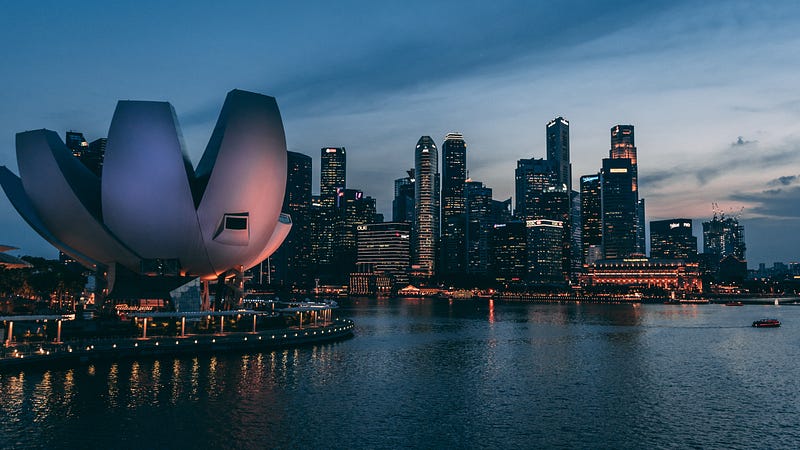
Photo by Zhu Hongzhi on Unsplash

Pragmatic Singapore has decided to pursue wealth at the cost of these qualities. And perhaps, there is no other viable for an independent country that shouldn’t even have existed in the first place. In that sense, Singapore might as well be a zombie, kept alive only by the magic of mages…

Singapore, according to a columnist, is now “sitting on top of the world.” By all economic metrics, it is.

Surekha A. Yadav wrote in October 2022, that the country had changed more in the last 10 years than it had in the last 30. I moved to Japan in 2016. When I returned to Singapore for a short trip in 2022 — the first time after the COVID pandemic — I felt like I had returned to a very different place than the one I remember.

Most visible of all were the blatant indicators of wealth — beginning with lots of Rolex boutiques in the city. She goes on to write that in her article that:

Singapore is open for business.

Its reserves of capital are some of the largest on Earth. With an ever increasing suite of financial services and asset management services on offer, more and more funds have been pouring in.

It’s a growing snowball of money propelling us to the forefront of global finance: We are setting the pace.

And this transition isn’t just abstract, it is visible across the country. The scale and sophistication of the shops, restaurants in the city now are almost unparalleled anywhere.

Singapore: Sitting on top of the world | Malay Mail

I cannot disagree with her.

Singapore is overflowing with money. And yet, why do I feel like something is missing from this vision of Singapore? Where is the mention of spontaneity, creativity, freedom, beauty, and elegance — values that I have always sought to pursue in my own life?

“Poetry, beauty, romance, love, these are what we stay alive for,” or so Robin’ William’s character proclaimed in the movie Dead Poet’s Society.

Pragmatic Singapore has decided to pursue wealth at the cost of these qualities. And perhaps, there is no other viable for an independent country that shouldn’t even have existed in the first place. In that sense, Singapore might as well be a zombie, kept alive only by the magic of mages…

In 1905, the German sociologist Max Weber made a rather gloomy pronouncement. He foresaw the logical endpoint of a culture that pursued the accumulation of wealth as one might of sport, dreading the dehumanizing qualities of such a society. In The Protestant Ethic and the Spirit of Capitalism, he wrote,

For of the fast stage of this cultural development, it might well be truly said: “Specialists without spirit, sensualists without heart; this nullity imagines that it has attained a level of civilization never before achieved.”

He might as well have been writing about Singapore.

Ultimately, I don’t really write much about Singapore because the country doesn’t inspire me. I never truly identified with the prescribed values of the country.

All my life, I sought an alternative way to live, and that is the biggest reason why I moved to Japan.

Japan might not be perfect. I’ve endured countless nights working dead into the night at the cost of my mental health, and even the path I took to move to Japan was not easy and required long-term planning and sacrifice. But in Japan, for some weird reason, I feel freer than I do in Singapore.

Whenever I read about foreigners living in Japan complaining that they’ll never be Japanese, I scratch my head. Why would anyone want to be something else other than what they are?

But perhaps they are talking about the sense of belonging to a place and community — to which, I also cannot relate.

I have never truly felt it as a Singaporean in Singapore either.

I write frequently about Japan-related topics on Japonica, where I am also an editor. Discover my most-read stories here.

Singapore
World
Memoir
Politics
Culture
Recommended from ReadMedium