5 Things I Learned about Japan after My Trip Home
The best way to learn about a place’s uniqueness is to contrast it with another
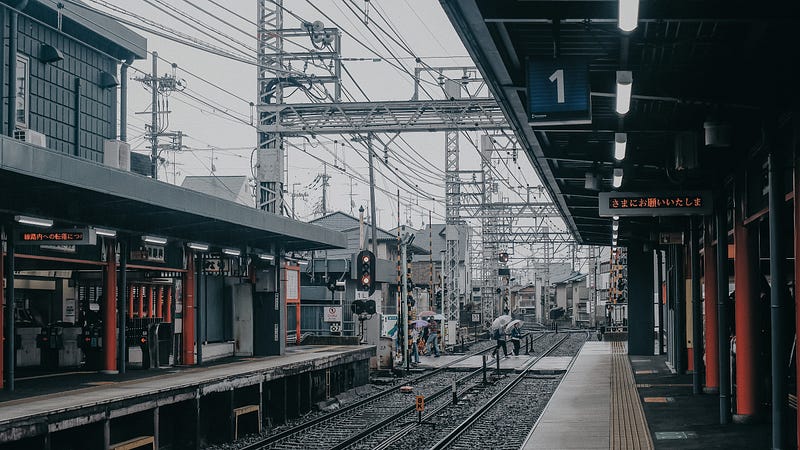
After you’ve been living in Japan for a while, some of the quirks of Japan that would have sounded the culture shock alarm fade into the background and lose their novelty.
On my recent trip home to Singapore, I had my reverse culture shock moment. I had been stuck in Japan for over 2.5 years due to the COVID-19 pandemic.
These things made me appreciate some unique things about Japan, and I also made new observations.
After all, traveling somewhere else is a great way to gain clarity and objectivity. A fish doesn’t know it’s living in water until it’s taken out of it.
Japan has been experiencing deflation for so long that inflation feels odd
For decades, Japan has been plagued by deflation.
A good thing for senior citizens who are retired, since the real purchasing power of their savings increases — and there are a lot of them in Japan. But not fantastic at all for younger folks since deflation puts a damper on their wage increments.
Annual real wages in Japan only increased 3% in the last three decades. Compare that to the United States, where real wages increased 47% in the same period.
Some people, like this entrepreneur that I interviewed, believe that stagnant wages contribute to the doom-and-gloom mood that young people in Japan are afflicted with.
What’s worse, in May 2022, Japan saw real wages decline by 1.7% — not good news at all.
I’d become accustomed to prices remaining the same that I was very, very surprised to see prices up by 20–30% compared to what I remember they were about six years ago when I left Singapore.
In the aftermath of the post-pandemic supply chain disruption, increased money supply, and war-related energy price increase, inflation is not a surprise at all. One estimate placed inflation in Singapore at around 6.7% in June 2022!
How about Japan? I looked up the numbers and it was around 2.4% for June of 2022.
In Japan, the deflationary mindset that has taken root means that companies are extremely reluctant to raise prices. Companies have resorted to “shrinkflation” — decreasing the volume of products while keeping the price unchanged. One popsicle maker even ran an ad to apologize for raising prices!
For me, I felt it when the neighborhood bakery raised prices by 10%.
In Singapore, the extreme inflation made me realize that I had taken deflation for granted. Will we finally see wages increase in Japan?
A part of me thinks that isn’t going to happen. Mostly because this inflation isn’t demand-driven; it’s driven by a supply shock — the “wrong kind of inflation.”
And yet, Japan remains surprisingly cheap for eating out
Despite the inflation we are beginning to experience in Japan for the first time in decades, I am still shocked by how cheap eating out is in Japan — even in Tokyo.
Ramen at a local ramen shop — even in Tokyo — will set you back 600–1000 yen, depending on the type of ramen and the location.
Grabbing a bento from a supermarket can be as cheap as 400–500 yen and they can get even lower when they are discounted.
A good meal with good quality ingredients, and great customer service, and alcohol will still only set you back perhaps 5000–6000 JPY.
In Singapore, ordering the same thing will likely cost even more, especially after adding the 10% service charge which is charged at all restaurants — which is like forced tipping.
How is Japan able to do this?
I suspect it is because of the reputed “black” working conditions that are rampant within the F&B industry. After all, the costs to run a restaurant are high, the industry is very competitive, Japanese customers have high service standards, and Japanese workers often do not get paid for overtime.
As a consumer, I enjoy getting high-quality food and service without the high costs, but I think it would not be odd for prices for eating out to be at least 30% higher.
The Japanese yen is now extremely weak, even by historical standards
Since I earn my salary in Japanese yen, I felt poor in Singapore.
Yes, the massive depreciation of the Japanese yen in 2022 has been covered by many economic and financial analysts and I won’t go into the reasons for it. Suffice to say, this is the first time I felt poor traveling from Japan to Singapore.
When I was studying in Japan as an exchange student in the year 2009, the exchange rate was around SGD/JPY=66, (USD/JPY=98).
Now, the exchange rate for SGD/JPY is nearly 100 (USD/JPY is over 136).
That’s a massive decline of 50% in Singapore dollar terms!
Back then, 1000 yen was around 15 dollars. For 15 dollars, I could eat 3 set lunches of the famed Hainanese Chicken Rice.
Now, 1000 yen is equivalent to 10 Singaporean dollars. And since inflation has rocketed prices in Singapore, the standard price for the same thing at most food courts appears to be around $7. Now, 1000 yen will only get me 1.5 meals of the same thing.
The last time the Japanese yen got cheaper than this was in 1998 — more than two decades ago.
If the cheap Japanese yen continues, I expect outbound tourism to decline substantially as Japanese tourists find themselves getting less from their yen. As soon as travel restrictions are fully lifted, I expect tourists to come swarming to Japan dying to spend cheap Japanese yen.
To be honest, I can’t wait for it. The low Japanese yen isn’t doing any favors for Japan, especially considering that Japan needs to import a staggering 90% of its energy needs and pay for it in US dollars.
Given the energy crisis due to the Ukraine-Russian war, coupled with the weak Japanese yen, the cost of energy in dollar terms has gone up a shocking 70%!
Japan is more cashless than most people think
All kinds of contactless payment options and platform apps proliferated during my time away from Singapore.
- There were QR code payment systems.
- There were bank-linked payment and fund transfer apps.
- Credit card contactless payment had become integrated with public transport.
- And even “super-apps” modeled after WeChat!
You might think that I would have been unfamiliar with how all of these apps and systems work. After all, it’s well-known that Japan is a cash-based society.
Yet, when I returned to Singapore, I wasn’t all that unfamiliar with these types of payment options because most of them have equivalents in Japan.
- There’s PayPay, launched by Yahoo Japan.
- There’s also LINE Pay — and almost everyone who lives in Japan has a LINE account.
- There’s Mercari Pay for those who frequently buy and sell on the used goods marketplace platform.
- Telcos are also coming out with their payment apps like d-harai (Docomo) and AU Pay.
- You can ride the metro with your Suica App on your iPhone.
- Credit card payment is accepted by most merchants — perhaps except your hole-in-the-wall ramen shops.
So cashless payment has penetrated Japan to a far larger extent than one would suspect. Indeed, the Japanese government wants to raise the penetration of cashless payment to 40% by 2025.
Yet, digitalization still has a long way to go in Japan
But my time spent in Singapore showed me how far digitalization could proceed.
Even fundamental tasks like transacting with the Singapore government are now done via an app.
Without a smartphone, one is effectively cut out. There are training programs for the elderly to teach them how to use apps so that they can perform basic functions like receiving or checking their welfare payouts from the government.
If you don’t have a smartphone, then what do you do?
I asked around and it seems like you’re out of luck. In Japan, it’s not that extreme yet. You can still get by exclusively with cash. I think that’s getting increasingly harder in Singapore.
As much as I complained about the low penetration of digital tools in Japan, I can see why a country where more than 29.1% of the population is over the age of 65 would hesitate to push for digitalization.
© Alvin T. 2022
For more observations about Japan and Japanese culture, check out the following articles by the same author.
The author is an editor of Japonica and also writes on a wide variety of topics. His key topics are society, culture, modern work, and cryptocurrency, with the occasional fictional story, creative piece, or reflective essay. Discover his most-read stories here.
If these topics interest you, consider subscribing to receive new stories from the author via e-mail.