
Murder in a Convent: When a Nun Witnessed the ‘Unholy’
Homicide in 1992, a verdict in 2020!
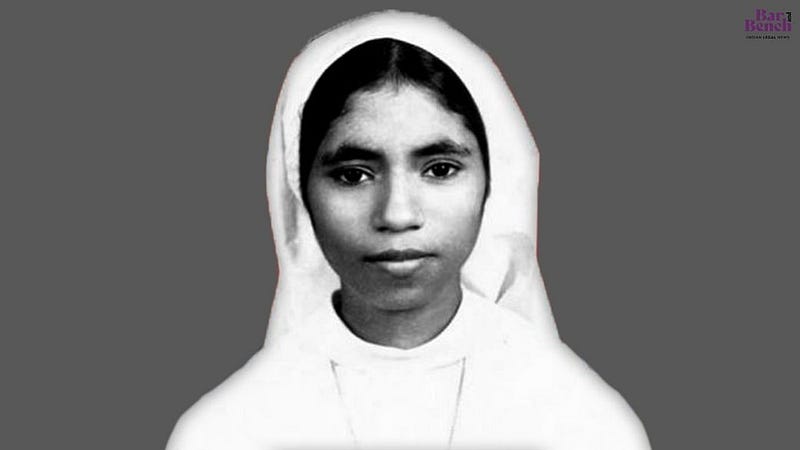
March 27, 1992, 4 AM: Sister Abhaya, a nun in St. Joseph’s Congregation for religious sisters under the Knanaya Catholic Archeparchy of Kottayam, Kerala(a south Indian state), had just woken up.
The 18-year-old Abhaya wanted to finish significant portions of her lessons early in the morning itself. She proceeded to the kitchen to help herself to a bottle of chilled water. She thought a long day was ahead of her.
But, six hours later, around 10 AM, police, firefighters, and nuns were all over the convent, as Abhaya’s dead body was found inside the well. The firefighters used pulleys and ropes to bring her corpse up. Abhaya’s parents watched her lifeless body dripping with water and weeds in disbelief.
How did Abhaya, opening a refrigerator in the kitchen, end up deep in the water well?
Believe it or not, it would take 28 years to answer this question properly.
Welcome to Kerala’s most prolonged investigation, a tale of corruption, lust, deceit and a strong resistance: The Sister Abhaya Murder.
The suicide theory
The local police investigated the Abhaya case and theorized that it was an act of suicide. But following public unrest urging a stronger body of investigators, the Crime Branch was entrusted with the probe. But even their conclusions did not falter an inch from the suicide theory.
Was it for the absence of evidence that officers jumped to this conclusion?
Not quite. There was enough detail suggestive of a murder, and I will get to that in a moment. But the officers wanted this to be dubbed a suicide, a death by drowning.
The question remains, why?
The answer lies in one fundamental aspect of Indian politics: It is a slave to religion. It was so in 1992, and it still is the case. Depending upon the territory and the demographics, the particular religion calling the shots would change. It could be Hinduism, Christianity or Islam.
In the south Indian state of Kerala, the Roman Catholic Church was rich, popular, and powerful. Catholic leaders put pressure on the investigators and politicians to declare the death a suicide.
Someone up the top had something to cover up.
The emerging resistance
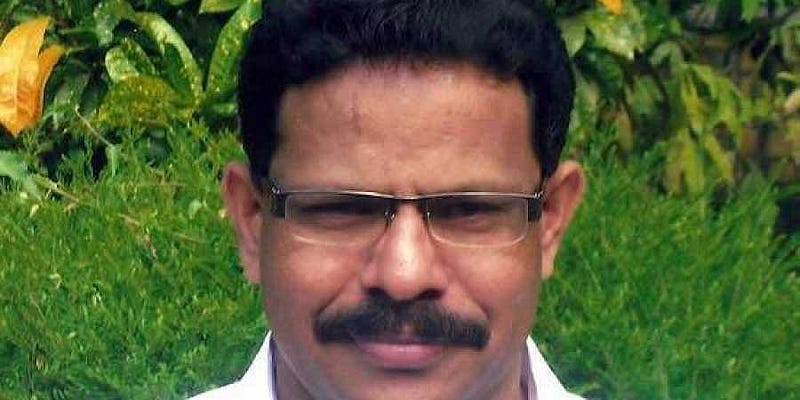
A 21-year-old man, Jomon Puthenpurackal, sensed the epic scale of hushing up in the case.
Jomon rose above petty subservience to religious authorities and led the ‘Sister Abhaya Case Action Council’. This organization, along with the help of several other interested parties, managed to transfer the investigation to the Central Bureau of Investigation(CBI)-India’s premier investigative agency.
From 1993 to 2020, several teams of CBI detectives investigated the murder. The second team had concluded that it was indeed a homicide but found not enough pieces of evidence to lead them to the culprits. In 2005, another team requested that the case be treated as closed.
But every time the agency cried helplessly, the court refused to close the case and asked them to continue probing.
Finally, on December 22, 2020, a CBI court in Kerala pronounced Father Thomas Kottoor and Sister Stephy guilty. Both of them received life imprisonment.
On that fateful day
On her last day, sister Abhaya had reached the kitchen at 4 AM. There she saw something she was not supposed to see: Father Thomas Kottoor, Father Jose Poothrikkayil and Sister Stephy in a compromising position.
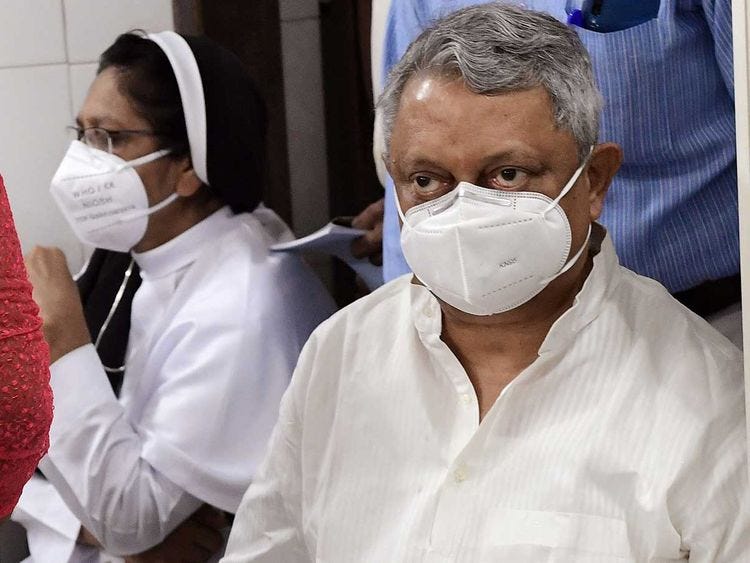
Sensing that the dignity of their position was at stake, Father Thomas strangled her. At the same time, Stephy swung the axe thrice at Abhaya’s head.
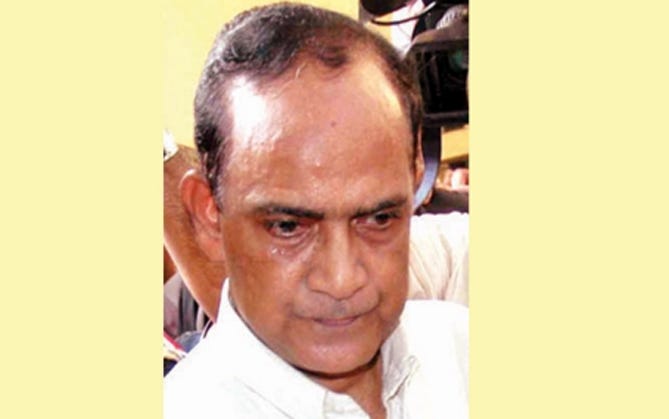
The trio, whose sexual activity was thus interrupted, figured Abhaya was dead after the wild hit with the axe. But Abhaya was still breathing as her body was dumped into the water well.
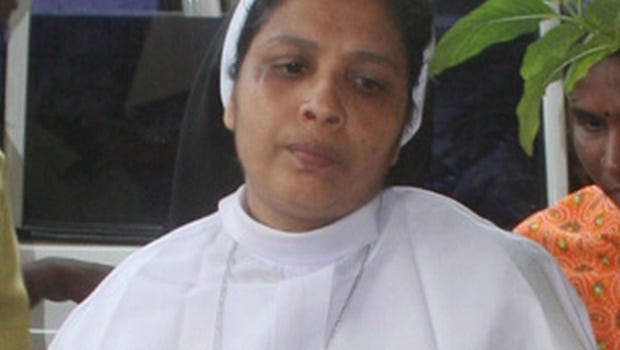
The water bottle Abhaya had taken from the refrigerator, her slippers, head covering, and axe remained at the crime scene. V.V Augustine, the Assistant sub-inspector who prepared the inquest of the body, mentioned these properties in the crime scene.
But Augustine would correct his report, preparing an alternate inquest, which omits the presence of all the articles mentioned above. He would even forge the signature of his colleagues to lend legality to his fake report. Augustine had received his orders to tamper with evidence, and years later, would commit suicide!
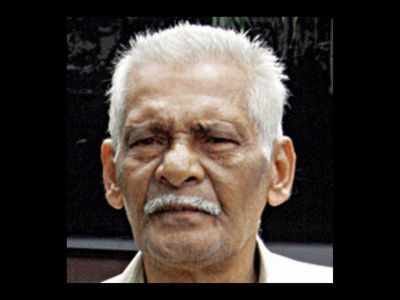
KT Michael, the crime branch SP, was another officer who had allegedly entered the crime scene and manipulated it, even before the body was removed from the well.
From day 1 of this investigation, the powerful among the powerful were trying to bury the truth about Abhaya’s death forever.
The truth serum test
The CBI investigation was always against the odds. Years had elapsed, several witnesses had turned hostile and powerful machinery was at work to destroy the evidence.
But in 2008, investigators had a hunch about the involvement of Father Thomas Kottoor, Jose and Sr Stephy. So they conducted a narco analysis test on all of them.
Narco analysis tests involve the subjects being treated with a truth serum. Their inhibitions are thus reduced, and they supposedly speak the truth in a half-awake state.
The tests proved successful for CBI, as the culprits admitted killing Sister Abhaya. Later, these visuals were leaked to a TV channel, and the whole state saw the culprits retracing the events on that fateful day.
Soon, all three of them were arrested. A year later, the accused were granted conditional bail by Justice K. Hema, who had not found the investigation satisfactory.
But what CBI thought as their greatest victory, the narco analysis test, was short-lived.
In 2010, the chief justice of India K.G. Balakrishnan declared that narco analysis, brain mapping, and polygraph tests conducted on any person without their consent were ‘’illegal and a violation of personal liberty.
He also added that any confession during such tests would not be treated as evidence in the court of law.
THe CBI’s narco-analysis tests were thus rendered useless.
The hymen restoration
The CBI alleged that Sister Stephy had conducted a hymen-restoration process, known as hymenoplasty, to prove that she was still a virgin in case the need arrived. Since CBI’s case involved Abhaya walking in on a sexual act, proving Stephy’s virginity could have improved the accused’s chances.
The investigative agency said that the hymenoplasty was conducted in the church hospital. This conclusion was arrived at after several gynaecological tests. The counsel for Stephy denied it, though.
But what cannot be denied was that the crime scene was renewed, altering its shape and arrangement extensively to make the reconstruction of the crime difficult.
However, none of that saved Sister Stephy or Father Thomas Kottoor. Jose Poothrukkayil was acquitted, citing a lack of proper evidence. The officers couldn’t prove that Jose had visited the convent on that day.
The witness that no one could buy
Sister Abhaya’s roommate, who had woken up Abhaya on March 27, 1992, was the last person to have seen her alive. But most of the witnesses, including this friend, retracted their statements in the investigation.
But one man refused to withdraw his initial statement. His name was Raju, better known as Adakka Raju. He is a local thief in the town, who executed small scale thefts, and was in action on that day.
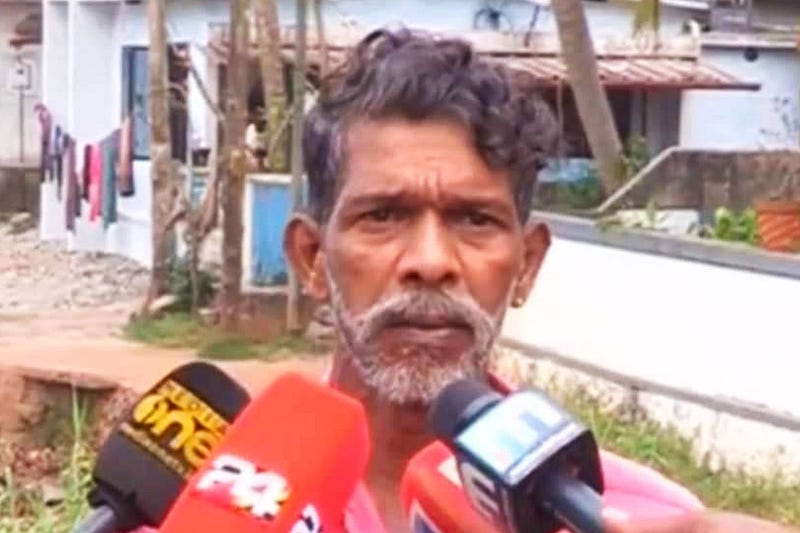
Adakka Raju had accidentally stumbled across the crime scene, watching some of the events. He had seen the accused.
Over time, Raju would receive several offers to alter his statement, but he proudly stood by his word. He could have easily taken the money and changed the trajectory of his life. But Raju says he thought about his daughter and wanted to stand by the right side.
Because of people like Raju, Jomon Puthenpurackal, judges, and several other people working in unison, the culprits could be eventually brought to justice.
Both Father Thomas Kottoor and Sister Stephy received life imprisonment and a fine of Rs 5 lakhs.
They still have the chance to prove their innocence in higher courts and might as well reduce their punishment citing health reasons. But as of now, this is some victory for sister Abhaya and the conscience of the state of Kerala.
Justice was delivered after 28 years!
They say justice delayed is justice denied, but I would say it’s better late than never.
Are you interested in more stories like this? Check out these links:
Source
“https://en.wikipedia.org/wiki/Sister_Abhaya_murder_case”
“https://www.indiatoday.in/india/story/sister-abhaya-murder-evidence-1752581-2020-12-24”


