
Wanted Since 1984: The Incredible Tale of India’s Longest Fugitive.
Perhaps you have spotted this guy
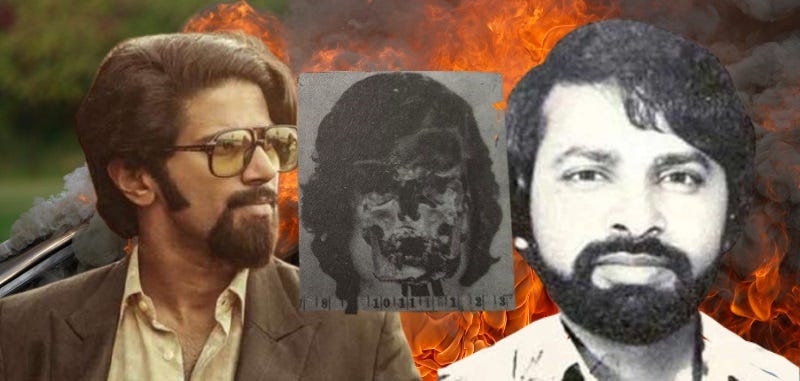
It was a chilly 4 AM on January 22, 1984. A man traveling through a south Indian village in Kerala had just picked up a frightening sight.
A black sedan engulfed in flames right in the middle of a paddy farm. Inside the burning car sat a nearly charred body in the driving seat.
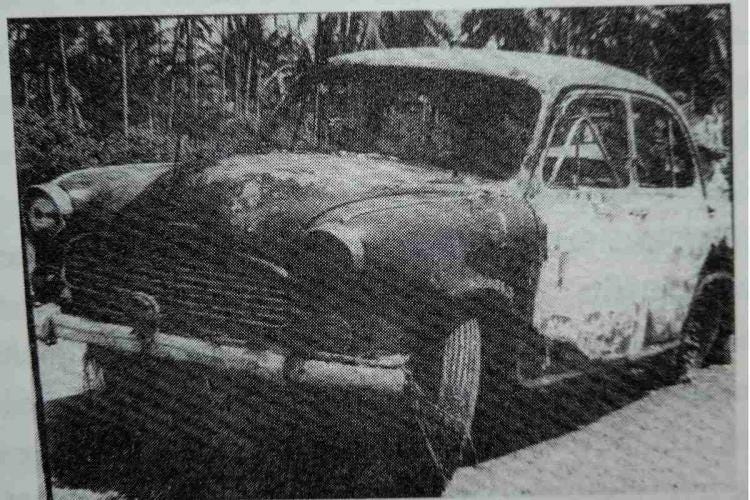
The spotter woke up the nearby residents and rushed to the police station. As the villagers woke to this horrible scene, it seemed to everyone that ‘accident’ was written all over the incident. A case of a car veering off the road and catching fire, perhaps. Quite possible.
The locals had already found the victim, for they identified the car from its partially burnt license plate-KLQ 7831.
It belonged to Sukumara Kurup.
Who is Sukumara Kurup?
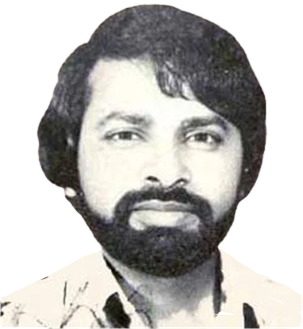
Sukumara Kurup was a native of the Cheriyanad village, a non-resident Indian employed in Abu Dhabi. He had landed in his hometown a few weeks ago while his wife and kids were still in Abu Dhabi.
The word about Kurup’s demise spread around quickly, and some of Mr. Kurup’s relatives soon rushed to the scene, weeping and yelling.
The face of the corpse was unrecognizable. But its overall dimensions were similar to that of Kurup’s. Pair it with the fact that the incident happened in Kurup’s sedan; nobody had any reason to believe that it wasn’t Kurup.
But was it him?
The first clue
A team of officers led by Deputy Superintendent of Police P.M Haridas arrived at the scene. And the crime scene was telling stories to Mr. Haridas.
He found a pair of footwear, remains of a matchbox, a rubber glove, a petrol can, and footprints that spoke of someone running away from the scene. The rubber glove had someone’s hair in it.
Haridas knew that this wasn’t going to be an open and shut case.
His primary objective, though, was to determine the identity of the deceased.
Was it really Kurup?
Interestingly, Mr. Haridas, in his official request to the surgeon to carry out the post mortem, mentioned the deceased as a ‘person who is said to be Sukumara Kurup.’
He wasn’t convinced it was him.
The revealing postmortem
Police surgeon Umadathan, who did an on-the-spot examination, confirmed suspicions of foul play.
He found no traces of ash or charcoal in the respiratory tract of the dead. Had he died in the car, it would have been impossible not to inhale the thick soot and smoke from the burning.
The surgeon theorized that the victim was possibly killed elsewhere, and the body was then placed in the car.
On further examination, Mr. Umadathan also picked up traces of alcohol with a strange odour that looked like a reaction to some poisonous substance. There was no dress on the body except the underwear he wore, no wristwatch, no wallet, no ring, and nothing that could possibly identify the victim.
However, the remains of the body were handed over to the family of Kurup, under the condition that they would bury the body and not burn it.
To the village folk, Sukumara Kurup was officially dead.
The unusual outfit!
Bhaskara Pillai, the brother-in-law of Sukumara Kurup, went to the police station the next day and testified that the dead was indeed Mr. Kurup. He said the affluent, powerful Kurup had enemies.
But what caught officer Haridas’ attention was the strange outfit of Bhaskara Pillai. He was wearing a full sleeve shirt, covering the entire length of his arm.
Full sleeve shirts were not unusual in this part of the world, but in the tropical climate of Kerala, people mostly rolled the shirt back halfway.
Not Bhaskara Pillai, though. He had not rolled the shirt back and had buttoned it, as if he was a youngster set out on an interview in a corporate company.
Haridas wasted no time in pulling back the shirt and what revealed was burn marks stretching over both his arms. Burns, which were less than 24 hours old.
Further, part of his eyelashes and eyebrows were also burnt. Pillai’s bathroom had traces of burnt hair too.
Mr. Bhaskaran Pillai was truly driven to the wall. He had to speak.
Pillai’s confession
Bhaskara Pillai eventually admitted to killing Sukumara Kurup. The reason? Kurup had taken money from him, promising a prosperous job in the gulf country.
And neither did Kurup deliver on the promise, nor did he return the money. Bhaskara Pillai was ever since vying for an opportunity to settle scores. When he got a chance, he capitalized on it and killed Mr. Sukumara Kurup.
Pillai’s confession was thus quite comprehensive.
Mr. Haridas had found a culprit, voluntary confession, strong motive, and enough pieces of evidence. But inside, he could sense that something was fishy. Something was not adding up.
Haridas one step ahead
When Haridas first heard from the villagers that the dead person could be Sukumara Kurup, he had sent a couple of officers in disguise to Mr. Kurup’s home.
What they saw there were family members of Kurup carrying out their daily chores, with not so much a hint of despair. Also, the officers could smell chicken curry- which during the 1980s in Kerala, was a special dish reserved for festivities.
Besides, Hindu followers observed strict veganism for several days when someone in the family passed away. The officers informed Mr. Haridas that Kurup’s house did not look like it was mourning a death.
Haridas also noted that the corpse had no ring or wristwatch, and he found it unreal that a wealthy gulf employee wouldn’t even wear a wristwatch.
It is these observations that made Haridas write in his request for post mortem ‘a person who is said to be Sukumara Kurup’.
He wasn’t entirely convinced.
Enter Ponnappan
While Haridas was verifying the testimony of Bhaskara Pillai, elsewhere, Ponnappan- Kurup’s driver had just come to the village.
Mr. Sukumara Kurup owned two cars, and Ponnappan arrived in the second one. The disappearance of the second car was a talking point of the villagers ever since they found the burnt car.
Now, Ponnappan’s ‘mysterious disappearance’ and ‘late entry’ raised suspicion among the villagers.
The driver Ponnappan stood by his word- that he had been to a place for a private trip and just came to know about the incident at the outskirts of the village. But the mob ganged up against Ponnappan, and it was a relative of Kurup who managed to save him from the fury of people.
And to this relative, Ponnappan narrated his account of yesterday’s turn of events.
Ponnappan’s version
Ponnappan said that while driving at night, along with Mr. Kurup, he had accidentally hit a pedestrian. He wanted to hush up his act, and therefore he collected the body and burnt it along with the car.
So, according to him, it was not Kurup but an unknown pedestrian who perished in flames. He said Kurup was with him during the incident, and he had later dropped him at a lodge.
Ponnappan’s version reached Haridas, but it made no sense to him.
It seemed implausible to everyone in the investigative team that even if Ponnappan wanted to cover up a ‘hit and run,’ he would go to the extent of burning the entire body, thus wasting a car in good condition.
The immediate instinct would obviously be to push the gas pedal harder and flee the scene, leaving the pedestrian behind. The post mortem report found no clue to suggest that the deceased was hit by a car.
In all probability, Ponnappan was lying.
However, with Ponnappan’s account having a live Kurup, Bhaskara Pillai’s version of the dead Kurup had serious question marks over it.
Was Kurup along with Ponnappan and later left to a lodge?
Or was Kurup killed by Bhaskara Pillai?
Who was telling the truth?
Haridas knew the answer. Both of them were lying through their teeth.
The real version
On further interrogation, Haridas managed to dig out the truth from Bhaskara Pillai.
Sukumara Kurup, when he landed in his hometown two weeks ago, was accompanied by a man named Shahu. The duo had a vicious plan.
Mr. Kurup had an insurance policy in his name. If he was dead, and that too in an accident, Kurup was going to receive a hefty sum of Rs 30 lakhs in Abu Dhabi. ( about $40000 dollars, an incredible amount in 1984).
The idea was to find a corpse that matched the build of Sukumara Kurup and somehow convince the world that it was Kurup who passed away. An official report of Kurup’s death from the authorities in Kerala was all his family at the gulf needed to claim his insurance.
Ponnappan, Shahu and Pillai, were all offered handsome shares of the insurance claim. A dangerous team, blinded by greed, had just been born.
The search for a body
The team had no plan to kill someone but find a body that looked like Kurup and burn it beyond recognition. Their search was mostly centered around the mortuaries in medical colleges, but when they knew that dead bodies were preservered using formalin at the mortuary, they had to look elsewhere.
The presence of formalin would certainly show up in the forensic examination.
Kurup and co then focussed on graveyards, trying to dig out fresh corpses. Once again, the search bore no fruit.
January 21, 1984, night: The hunt for a body was stuck, and they were driving through at night, discussing further plans. Everyone except Kurup was in one car, and Kurup was tailing them in a second car.
The trio in the first car spotted a man from far, requesting a ride. They didn’t know who it was, but they knew that the elusive ‘corpse’ was standing there for them to grab.
With plenty of money at stake, Pillai and the team were not going to be deterred by the dangerous prospects of killing a man. The car stopped.
The victim
The unfortunate man, at the wrong place at the wrong time, was Chacko. He worked as a film representative and was looking for a ride to get home soon. Chacko had promised his pregnant wife a visit together to church the next day, and he wanted to be on time.
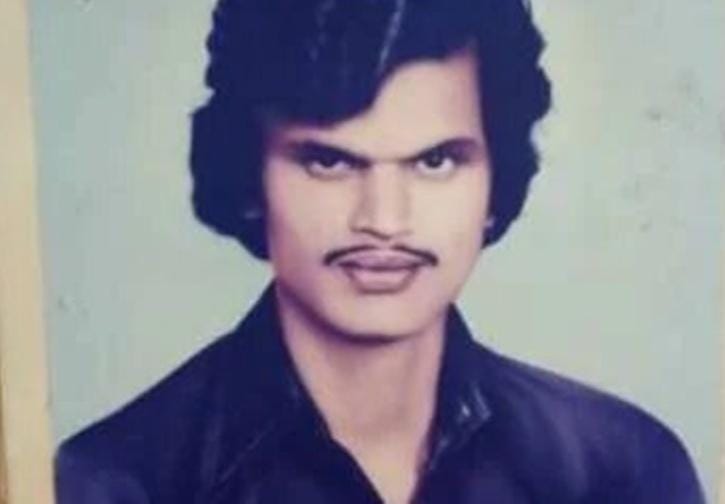
None of the four members in the team knew Chacko or his identity. To them, he was a complete stranger, waiting to be killed.
Once Chacko entered the car, Shahu and Pillai forced alcohol mixed with a poisonous chemical down his throat. As he started losing his sobriety, Pillai used a towel to strangulate Chacko to death.
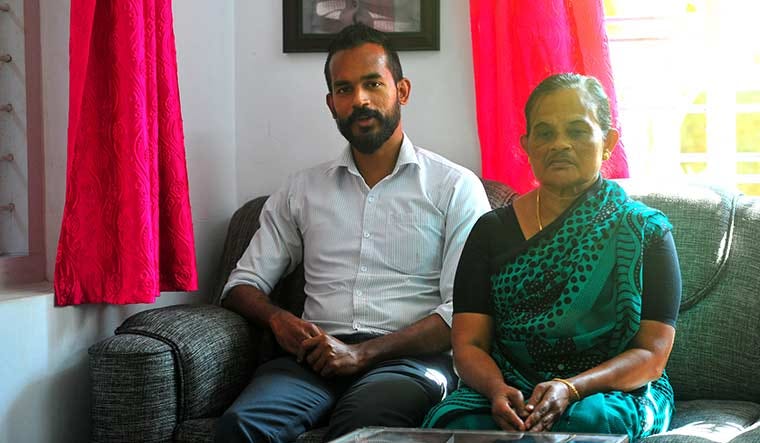
Along with Kurup, the team then went to Pillai’s home, where they burnt his face and removed every detail from his body that would scream his identity. Inside Pillai’s bathroom, Chacko’s face was rendered unrecognizable.
The body was then placed in the car; the car was pushed into the paddy farm, petrol was poured all over it. The car was soon devoured by flames as the team watched their plan take off in devious satisfaction.
But the careless and hasty Bhaskara Pillai managed to burn his arms in the process, and in a hurry, left his rubber gloves and matchbox in the scene. Forensic analysts had matched the trace of hair in the glove to that of Pillai’s.
Haridas zeroing in on the victim
Officer Haridas now had to find the identity the victim and catch the missing Kurup.
He searched in the Alankar lodge, as per the statement of Ponnappan, but Kurup sensed the danger in advance and had escaped before the force showed up at his room.
Little did Haridas or Kerala Police know that this escape act of Kurup was going to be a recurrent motif in this case.
Meanwhile, Haridas ran through different missing cases registered in the area to find the real victim, and he zeroed in on Chacko.
Everything suggested that the dead person was the innocent Chacko, but the officers had to be absolutely sure. The team exhumed the remains of Chacko’s body. The parts that remained somewhat intact were the skeletal remains and the bones of the right leg.
Umadathan, the surgeon, superimposed the image of Chacko over the partially burnt skull to confirm his identity. He also recreated Chacko’s feet, connecting them using wires and using clay as flesh to ensure Chacko’s footwear fitted the reconstructed feet. It was for the first time in India that a person’s feet were thus recreated.
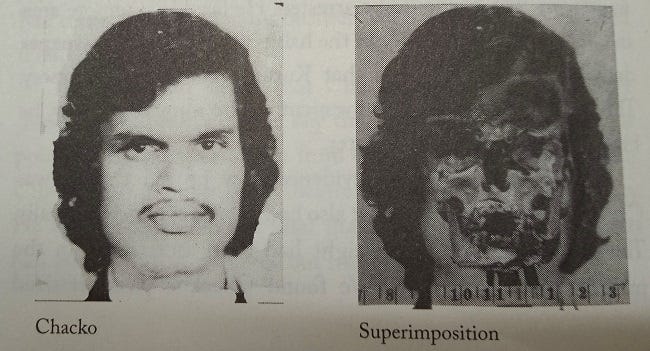
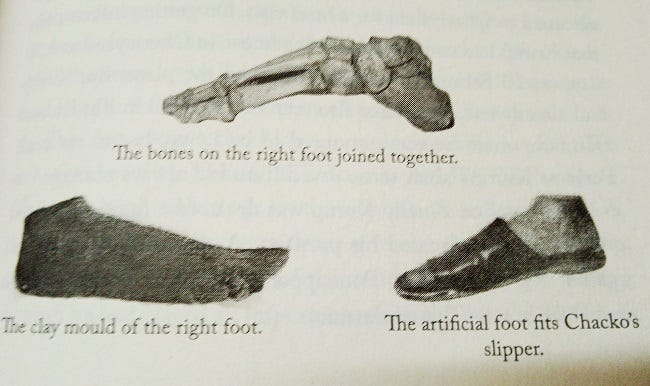
The story was crystal clear now. The deceased was Chacko. Bhaskara Pillai, Shahu, and Ponnappan were arrested. Sukumara Kurup was still missing.
The manhunt for Kurup
Kerala police then started an elaborate manhunt, which, sadly to this date, had produced no result. Reports emerged from different parts of the country that Kurup was spotted, but he managed to escape every time before the force could reach him.
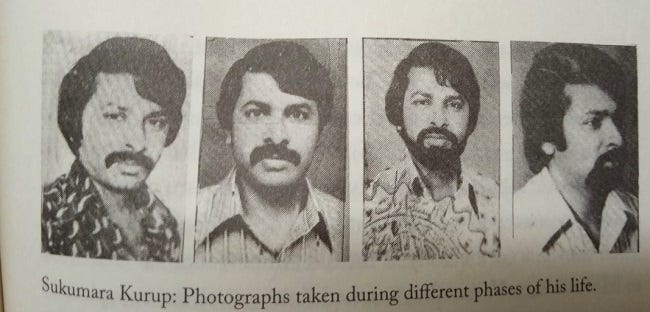
From North Indian states of Bihar, West Bengal, Maharashtra to countries like Bhutan and Nepal, the search only got wider and wider. The police had also stationed two officers near Kurup’s home for eight years, in case he decided to show up at his house.
Meanwhile, the general public of Kerala was fascinated by the tale of Kurup. Newspapers celebrated the case through a series of stories. What stood out for the public was Kurup’s modus operandi, which was unheard of in this part of the world.
It is said that Kurup got this idea from a similar incident that happened in Germany.
Kerala Police soon requested public assistance, and the result was a ton of letters that reached the police station every day. It was incredibly difficult for them to go through all the letters and find out which tip was genuine because many had started using this as a means of avenging their enemies.
For instance, if someone had a land dispute with his neighbor, he could easily write an anonymous letter to the force, passing on the false information that Kurup was hiding in his neighbor’s house. Then just stand back, watch and enjoy the force entering his neighbor’s home and wreaking havoc.
Somewhere in the midst of all this confusion, the trial went on for the other culprits. Both Bhaskaran Pillai and Ponnappan were sentenced to life imprisonment, while Shahu was made an approver and later released.
The letter from Assam
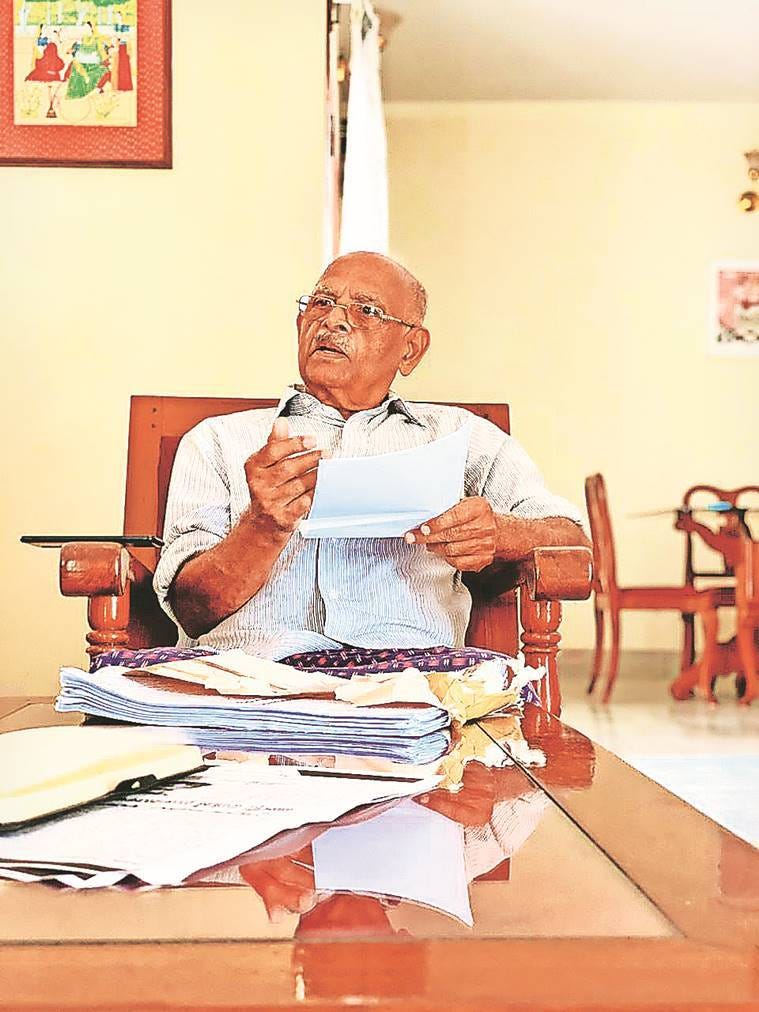
There was one letter that caught the police’s attention, which reported a Kerala native working in Assam as a doctor. The letter claimed that the doctor was Kurup. The force found the information credible.
A couple of officers were dispatched to Assam, almost 4000 kilometers away, to know the whereabouts of the target. The officers reached the spot, feigned as travelers who just got flu, and then heard about a Kerala doctor working in Assam, and therefore decided to drop in.
As the officers sat before the doctor, they couldn’t figure out if it was Kurup sitting across the table next to them. Some facial features matched, some didn’t. He was almost the same size as Kurup.
The officers started asking indirect questions about the doctor’s whereabouts. The doctor answered them, even giving them his home address in a place called Vaikom in Kerala.
The doctor then took a break, went into another room, but didn’t return! The officers searched everywhere, but the doctor had escaped.
A few days later, the doctor’s home at Vaikom was swarming with police officers, and they were surprised to find the doctor himself there!
He wasn’t Sukumara Kurup. But he was a fraud doctor, practicing with a forged certificate. He thought the police had come to arrest him for his malpractice.
Thus, the force didn’t find Kurup but unraveled another grave crime.
The last sighting of Sukumara Kurup
Another letter, which the police found interesting, was from a nurse in Bihar. She was a Keralite and familiar with the story of Kurup. And she had met this man in a saffron dress, which she vouched for as Kurup.
It was indeed Kurup.
The name the man used was PC Joshi. But before the force could arrive, Kurup had left the hospital. Police searched in many hospitals and found that Kurup had sought medical assistance in as many as eight district hospitals.
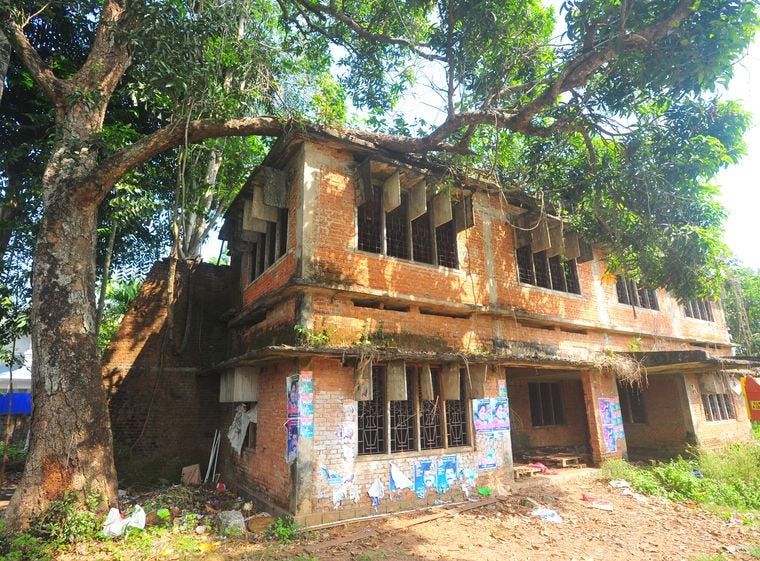
Each time he vanished from a hospital, he also carried all the medical records with him so that he wouldn’t have to go through preliminary tests at the new hospital. The last confirmed sighting of Kurup was at one such hospital- where Kurup sought treatment with a severe cardiac condition. But he had vanished from there too.
The doctor said that Kurup could not have survived many days without proper treatment.
Did he manage to get that treatment somehow? Or did he end up as one among the thousands of nameless corpses in the country?
The second possibility seems more likely to me, although people enjoy weaving tales after tales regarding Kurup’s life after the murder. I have grown up hearing stories of Kurup in Saudi Arabia, Kurup in Nepal, Kurup in Chennai, and Kurup everywhere.
The Kurup film
On 12th November, 2021, released a film Kurup, which was based on his life story. It is a bilingual film starring Dulquer Salman, currently parked on Netflix.
While I didn’t like the film for some of its underwhelming performances, over stylization of a criminal, and some cinematic liberties, if you feel like getting a feel of the different characters in the incident, you should give it a go.
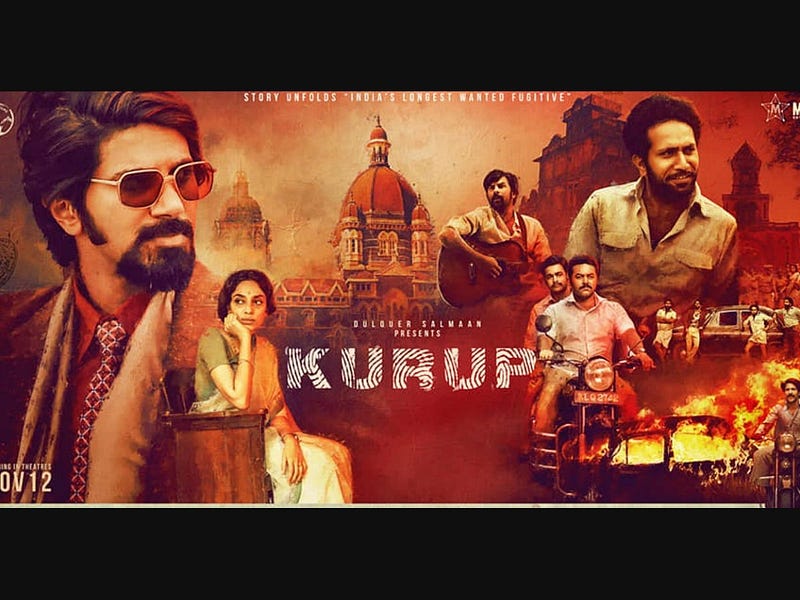
If Kurup is alive, he would be 75 by now. Could the real Kurup have watched the reel Kurup? Who knows! Chacko’s wife and son are alive, and they have watched the film.
After a week of the film’s release, new spotters have emerged claiming to have seen Sukumara Kurup. It seems as if people would continue to see him, even after another 100 years.
On January 21, 1984, Chacko, the film representative, had come to a theatre named Harisree to deliver some film reels. It was after this successful delivery that Chacko ran into his nemesis, his final journey.
The film reels he had just delivered was that of a movie called KENI. And the word Keni translates to The TRAP, exactly what Chacko had walked into.
Interested in reading more stories like this? Check out the following links:


