
GLOBETROTTERS JANUARY CHALLENGE
More African Signs Between Elephants at Camp and Long Drop Toilets
And a never-ending list of entertaining travel experiences
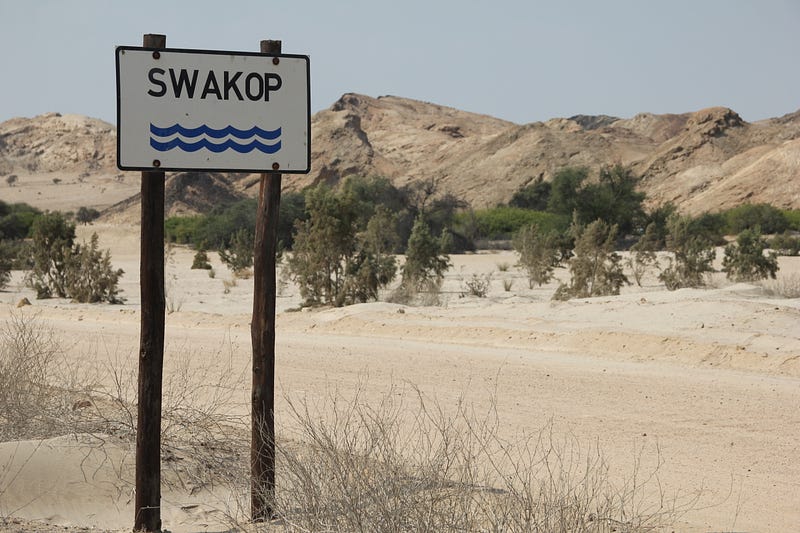
While my hard drives revealed the lack of many signs I remembered of my travels across the vast and diverse continent, I stumbled upon a few others I had forgotten about.
Not wanting to be one of the people generalizing Africa’s population to one nation as I know much better how many countries are located on the large continent and how many more different tribes wander across, I still found similarities in the creativity their people used to put up signs. One way or the other.
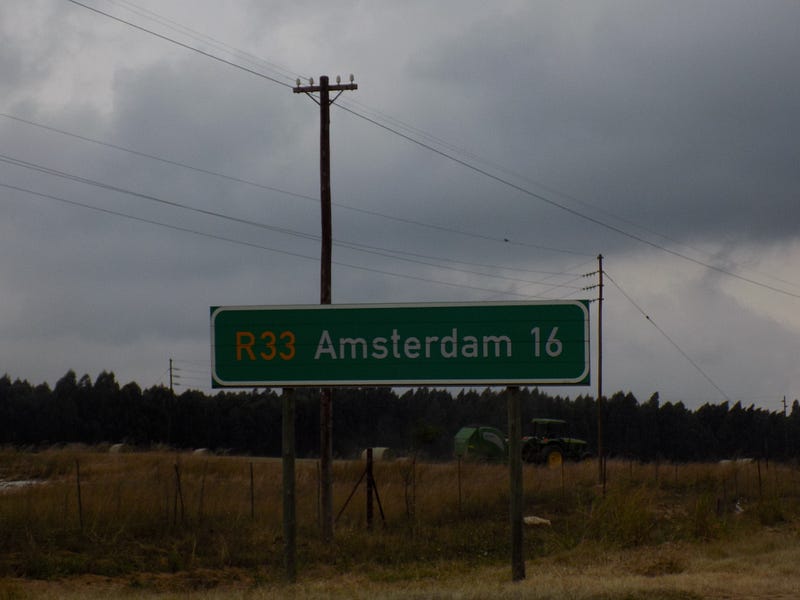
After a long article displaying many different signs, I’m moving on to signs of confusion. I found some weird towns and cities on the map when I was studying the route I wanted to take traveling down the coast from St. Lucia to Cape Town.
I passed Amsterdam.
And while you might have been able to get around speaking Dutch thanks to the connection to the Afrikaans spoken language in many parts of South Africa, the city looked a lot different than its more popular, bigger brother.
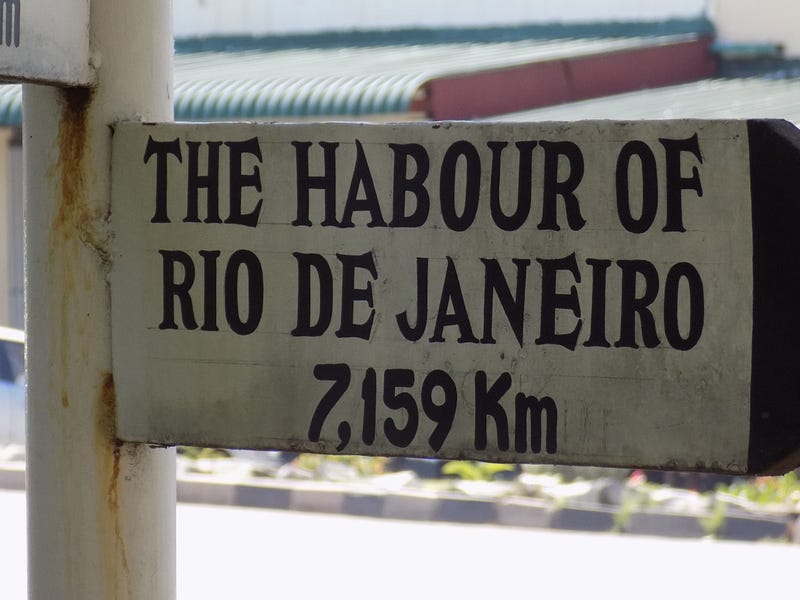
After some signs of dispute and confusion, I’ll head to the next category of helpful signs I’ve found on the African continent. Like the sign giving me the direction and distance to the 7,159 kilometers distant Rio de Janeiro.
Just in case you were wondering where the harbor was.
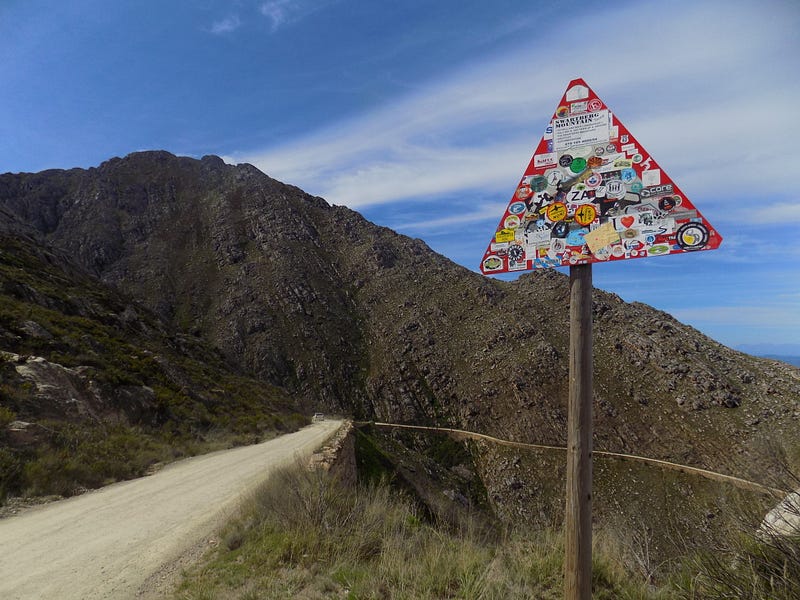
Another very helpful sign was located atop Swartberg Pass in South Africa. Driving down a very windy and dangerous gravel road, this one was a warning sign I could not identify anymore what danger it was referring to.
A few stickers too many were applied here.
I’d call it a sign of human invasion and activity. Sadly, we can’t go anywhere without leaving our marks and traces behind while I still prefer stickers on this sign over graffiti on natural rocks or carving out names in the bark of living trees.
We’re humans. The challenge of leaving no trace, only footprints on this planet has long been a lost sign of hope.
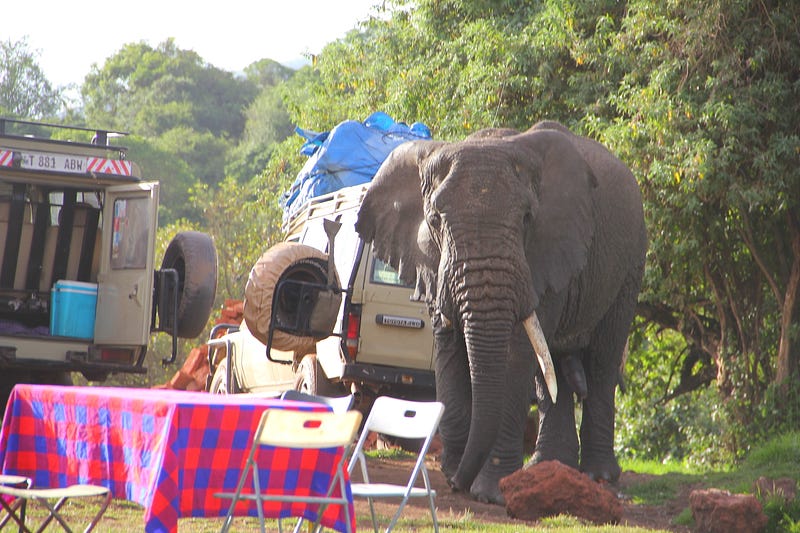
Heading on to signs of invasion, I’m not sure who invaded whom. The elephant the human camp or the humans the elephant’s home. The Ngorongoro Crater.
Luckily, we had all finished breakfast already and were well-informed about the visitor. He was on his routine walk to the camp’s water tank, open toward the sky, where he’d take his daily ration of drinking water.
Heading on to, yip, toilets. We all need them, in one way or another, unless we just go behind a bush. But if too many of us are doing that, the country gets littered with human waste and toilet paper. Not a nice sight.
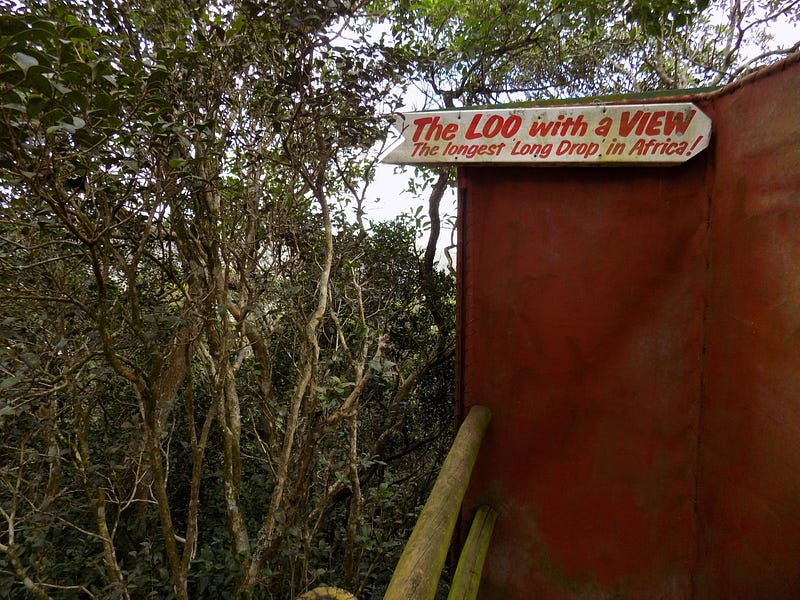
So, I know many of you prefer Western toilets over a hole in the floor, which personally, I think is often much more hygienic. Either way, long drop toilets are often found in remote locations such as this one in South Africa.
Located at the edge of a mountain, this very long drop ensures a non-smelly toilet cabin. However, I would not recommend going for a hike at the bottom of the canyon.
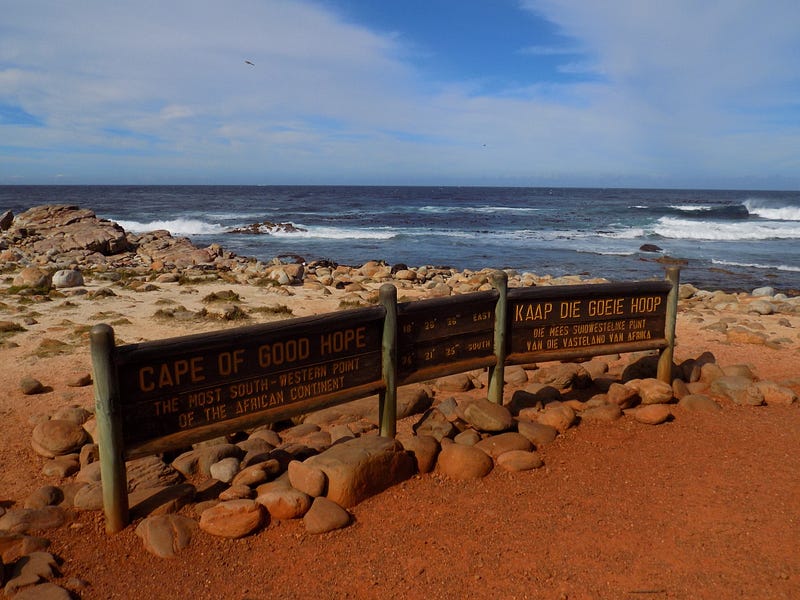
More signs I have encountered on my travels through Southern Africa are those marking a specific point. I’ve visited the southernmost tip of Ghana as well as the better-known Cape of Good Hope. Located in South Africa, this rocky shoreline is said to be the most southwestern point of the African continent.
There is, however, a more spectacular one, geographically, not scenical as Cape of Good Hope is incredibly beautiful especially when visited in springtime with countless wildflowers blooming.
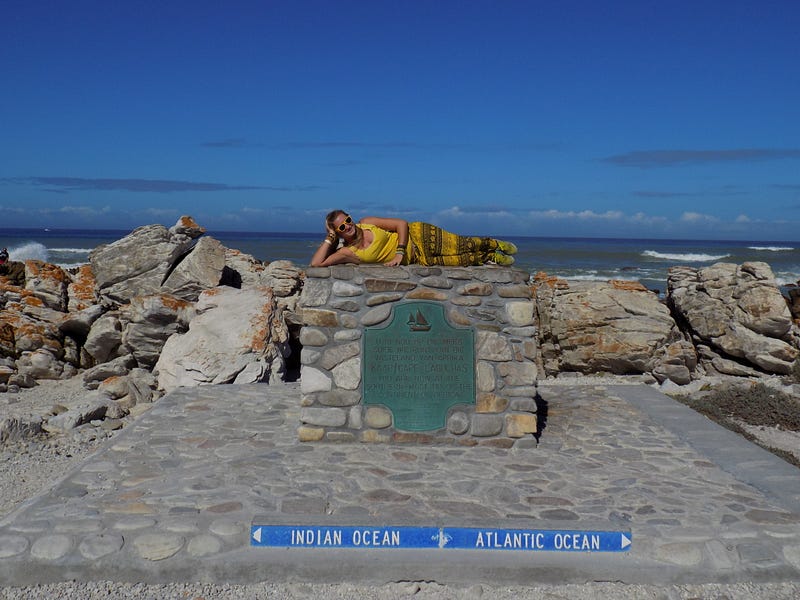
Cape Agulhas might be less known but has a more significant position. The southernmost point of the African continent isn’t just the shortest distance between Africa and Antarctica, two continents that couldn’t be more opposing, but it is also where the Indian and the Atlantic Ocean meet. Or mix. Not sure what oceans do. Do they shake hands or give hugs?
More African signs for you? Well, the next ones are a mixture of Europe and Africa. Italian greetings on beach stalls in Zanzibar, an East African island.
Why? Most tourists here come from Italy and if we know one thing about that nation, it is that they love their mother tongue and do not like speaking English. Most, at least.
For this reason, the Massai (even if not native to the island but migrated from the mainland) and other locals have adapted and learned to speak Italian instead of, or on top of English.
So while walking along this very tropical island with my feet in the white sand and my eyes on the turquoise blue water, I was once again presented with the sign of how much stronger African nations are compared to their Western Friends.
They adapt and learn new languages to accommodate the comfortable tourists on their honeymoon.
So, if you’ve learned to speak Italian but have seen the entire country and want to practice the language somewhere else, head to this East African island nation. Zanzibar.
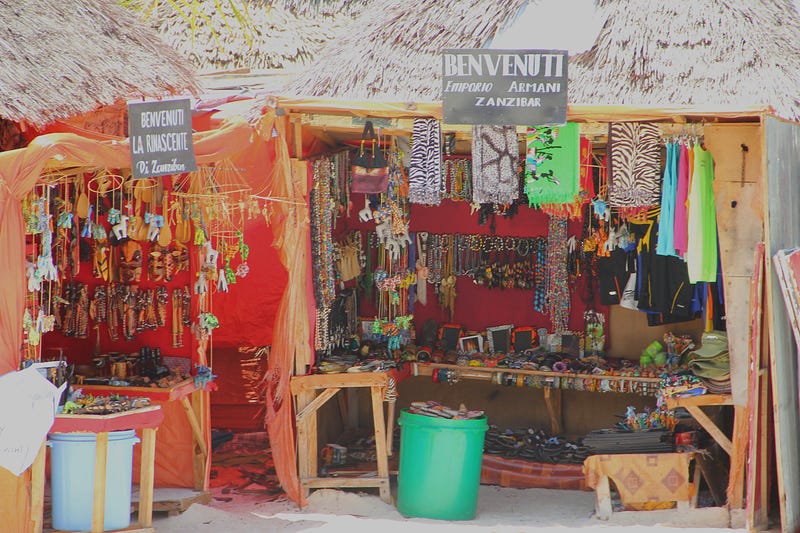
Wasn’t the topic of signs originally about road signs?
Well, I’ve found a few more.
And while you can easily get overwhelmed on Germany’s road passing a forest of signs (often called Schilderwald as we have as many signs as trees in the forest), those boards are rather scarce when traveling through a vast country like Namibia.
This means when you do encounter one, do not ignore it. Even if it doesn’t tell you the percentage of the steep gradient, I can guarantee you the road climbs straight up that mountain just behind the bend.

Coming back to the title image and endless signs of ‘rivers’.
To 99 percent of the time, you will not encounter any water on the stretch behind the sign in Namibia. And yet, it is necessary during the wet and the dry season. Of course, during the rainy season, many roads are flooded as no bridges exist in this country known for endless gravel roads.
But during the dry season, you should also slow down as the road will dip down into the riverbed and while the dip is often not very broad, you could hit the rear of your car coming too fast through the ditch.
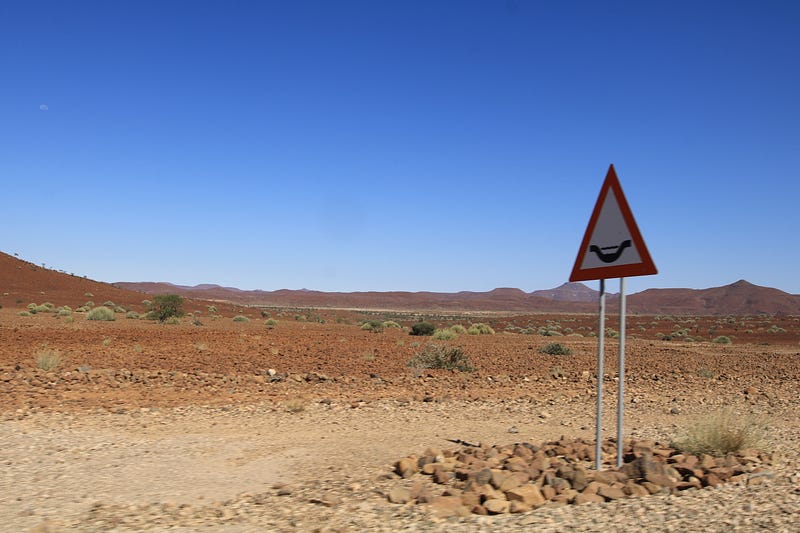
Last but not least the famous sign we all know.
A speed hump.
A speed hump, bump (for our American friends) or a sleeping policeman (?!) for our British followers is not just that. A hump in the road.
Slowly my friend. While often speed bumps in Germany can be survived even when hitting at higher speeds, Romania doesn’t even build any as their roads come naturally with large humps and other countries make them from tar, silicon or rocks.
And then, the sizes.
Driving across the African continent, I have seen speed humps barely noticeable and sometimes as large as I had to go into low range to make it up the ‘hill’.
So yes, while this sign is all too familiar to all of us, if you do see it in a foreign, African country, slow down. And inspect carefully. If taxis are driving up sideways you’ll know it’s a large one. And don’t get fooled by buses. They never slow down for any hump in the road. Disregarding of its size.
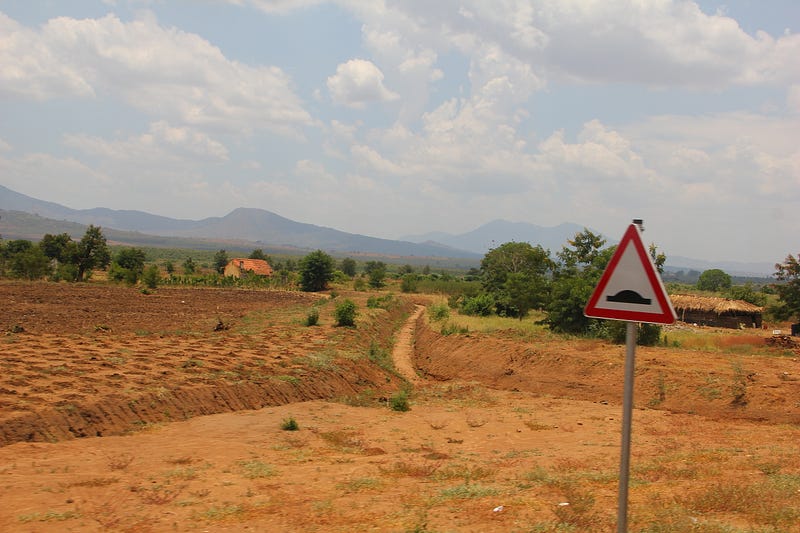
This was it. A big diversity of African signs spread from West to East and all the way to South Africa. I know, I’m still missing the North of the continent and everything in between. But what hasn’t happened yet, can still happen.
To that, I say cheers.
With a safari in the Serengeti. Two beers, brewed in Tanzania.
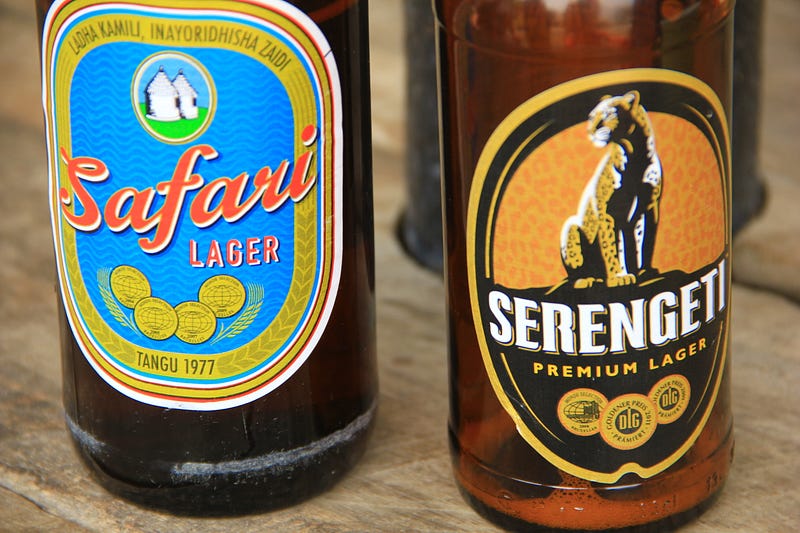
This is a prompt response to January’s writing challenge. I have written already about “An African Version of Signs That Lead the Way (or Not)” and “Ghana Welcomes You With Open Arms and a Load of Hopeful Signs”.
Read other participants and their responses. A funny and creative one and then a heartfelt one filled with kindness and love:
Michele Maize with “I Saw The Signs When I Opened Up My Eyes”
Adrienne Beaumont with “Did These Signs Have a Message for Me?”
Matthew David with “What’s in a Name?”
Tara Torres with “The Signs Of The Troubles”
Join my email list here if you would like to read more photo essays.
Shutterstock | Instagram | YouTube | Mailchimp | Amazon | Redbubble


