
The Signs Of The Troubles
Looking for my Heritage amongst the Resistance And Loyalty of Northern Ireland
As a young boy, my great-grandfather immigrated to America from Ireland. However, I was 12 years old when I realized we were not like other Irish Americans.
I visited my grandmother’s house on St Patrick’s. Like other students, I wore green that day to keep from getting pinched and celebrate our Irish heritage. That day was the only time I saw my sweet, darling grandmother upset as she looked at my green shirt.
“We’re Protestant. You wear orange!” she yelled at me. Being neither Catholic nor Protestant, I had no idea what that meant, but I quickly agreed and never wore green on St Patrick’s Day again.
Years later, I learned the Protestants identify themselves by wearing orange in Northern Ireland. The orange represents William of Orange, a Protestant who defeated the Catholic King, James II. I was baffled at why color was such a big deal and went searching for answers that would lead to several trips to Northern Ireland.
Learning about the subtle differences between the two religions reminded me of my time in the Middle East, where religious strife would sometimes take place between the Sunni and Shia Muslims. There didn’t seem to be much difference to an outsider, but it can be scary how quickly humans can find the subtle differences in each other.
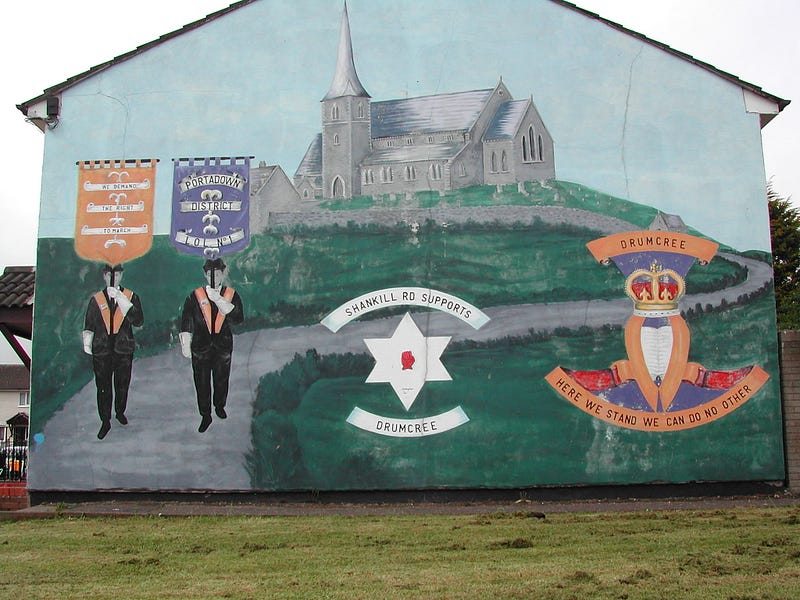
During my first trip to Belfast in my ancestral lands of County Ulster, my friend suggested we take a black taxi tour. There are many things to do and see in Northern Ireland, such as Giant’s Causeway and the Titanic Museum. But off we went, and my friend asked the driver to take us to see the troubled areas.
At the time, I didn’t understand much about the division in Northern Ireland or why wearing the right color was such a big deal. Our driver was very kind and knowledgeable. He asked us to guess if he was catholic or protestant at the end of the tour.
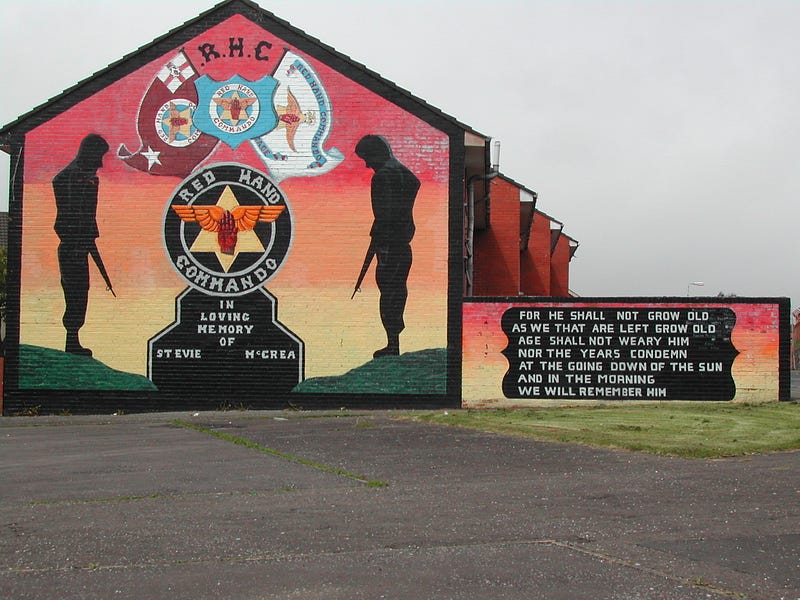
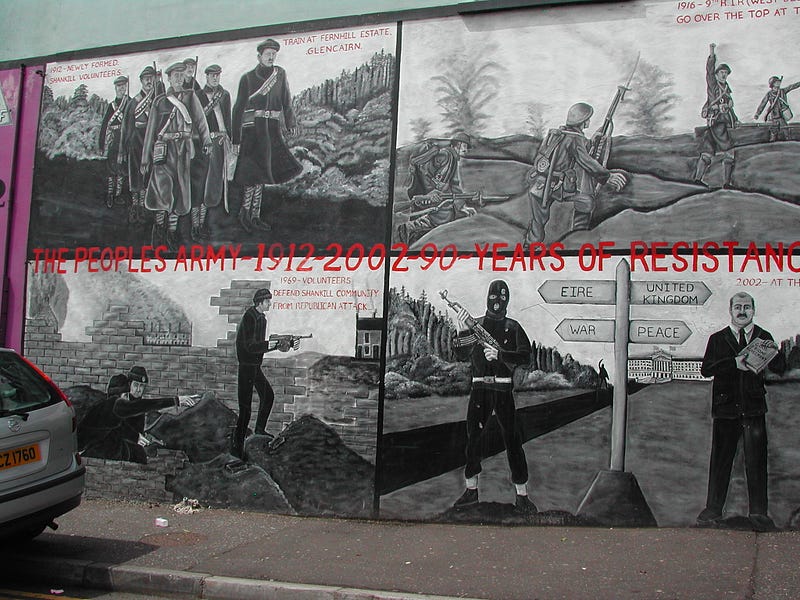
We drove away from where we were staying and went into the neighborhoods at the center of the Troubles. There, we would see these beautifully painted murals of terrifying images on the sides of buildings. The signs of violence and division were everywhere.
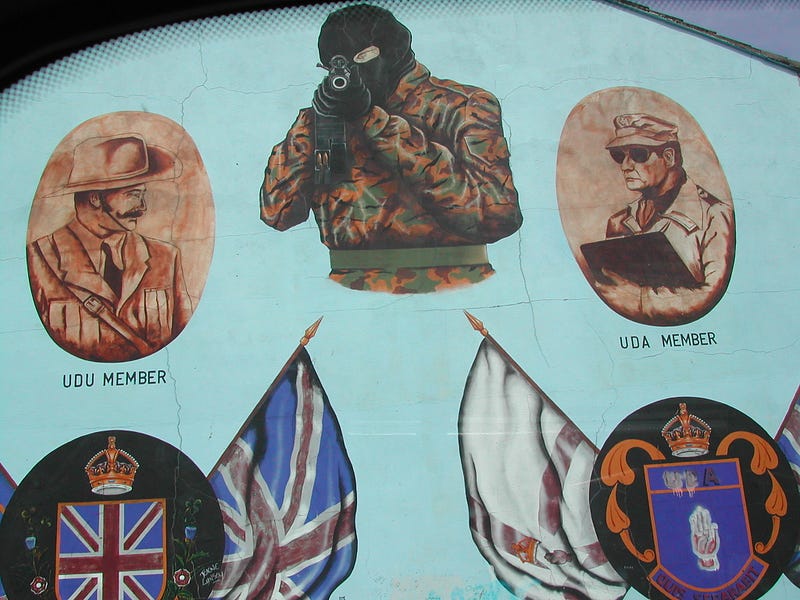
I had a hard time imagining what it must be like living surrounded by reminders of murder and sectarian violence. I tried imagining being a child going to school, passing murals of armed men in ski masks pointing a rifle at you.
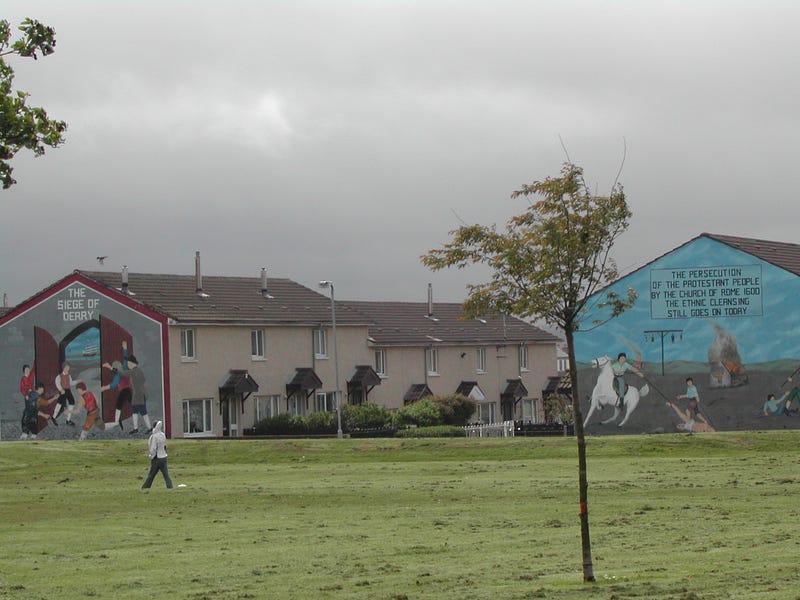
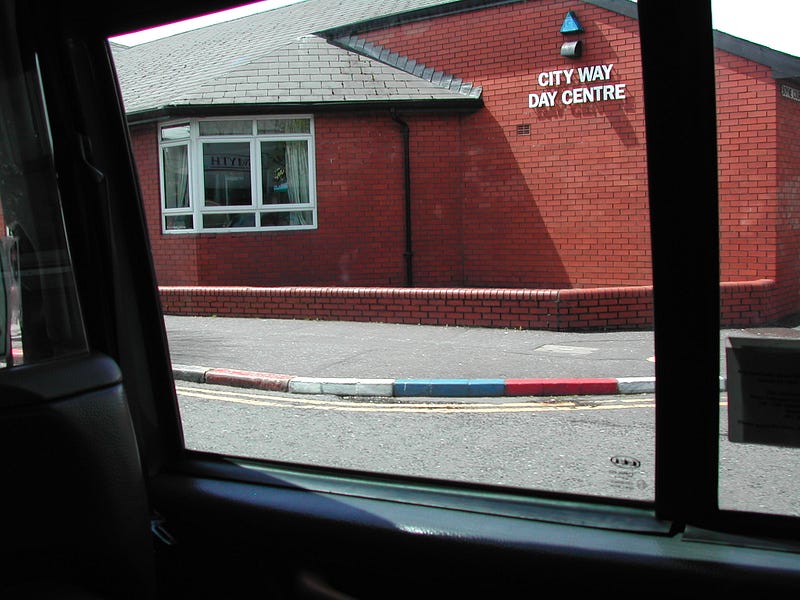
During the tour, I would learn about the painted curbs. Curbs painted red, white, and blue represented Protestant neighborhoods loyal to the British crown. Then, there were the Catholics whose curbs were painted green, white, and orange for their loyalty to Ireland.
For someone raised in Southern California, it reminded me of the gang wars in Los Angeles in the 1990s. Blue was the color for the Crypts and red for the Bloods. The mere wearing the wrong color in the wrong place could get you mistaken for a gang member and get you killed.
Why are colors so frequently used to distinguish ourselves from other humans? Is it because our similarities are too many, we need colors to identify the invisible perceived differences in each other?
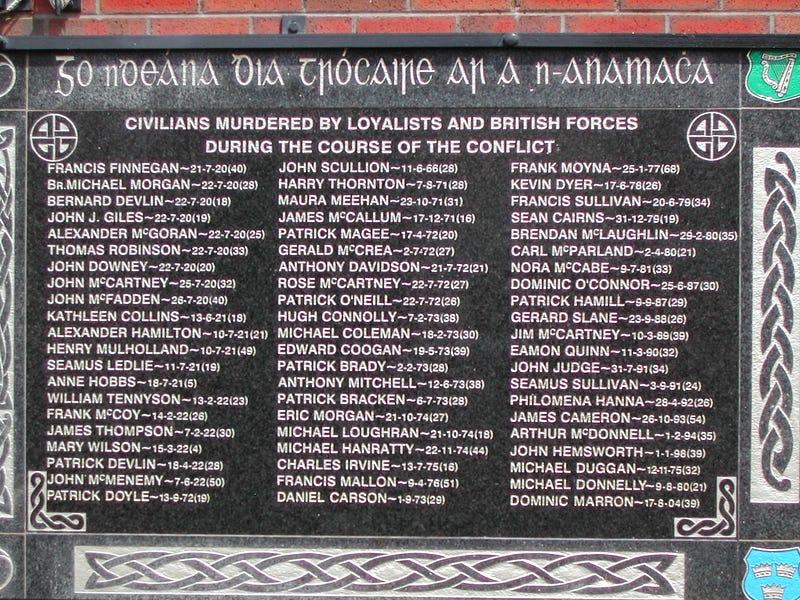
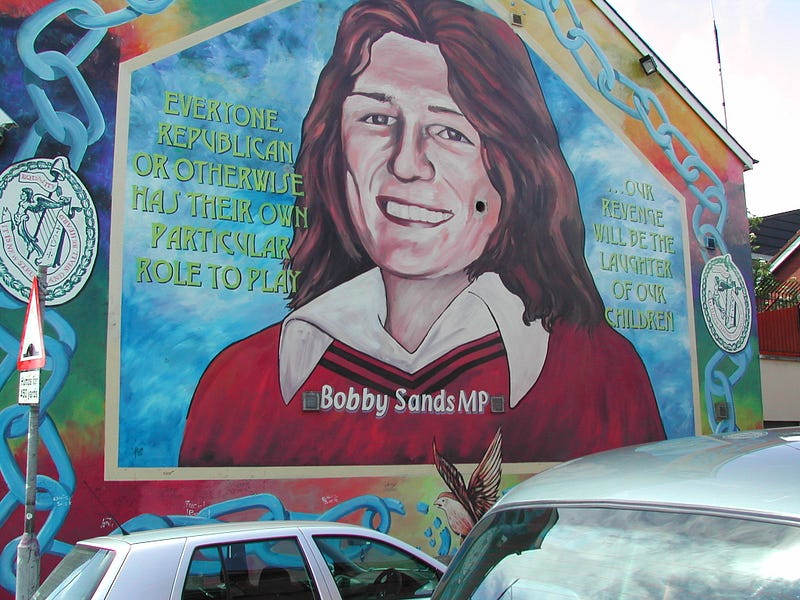
We drove on, and murals covered the sides of buildings representing the peace accords and those who fought for peace. We learned about the portrait of a smiling Bobby Sands. He was a member of the Irish Republic Army (IRA), which is an Irish Republican paramilitary force whose goal is to end British rule in Ireland. While in prison, he embarked on a fatal hunger strike protesting the prison conditions.
On the other side is a mural of Jackie Coulter, a member of the loyalist paramilitary group, the Ulster Defence Association (UDA). He was killed in 2000 by another loyalist paramilitary group, the Ulster Volunteer Force. It boggled my mind how much violence these people had lived with.
In April 2023, Jackie Coulter’s daughter gave an interview to the newspaper Sunday World. She pleads for common sense among the rival factions of the Protestant paramilitary groups as violence has broken out recently. The Troubles continue to this day.
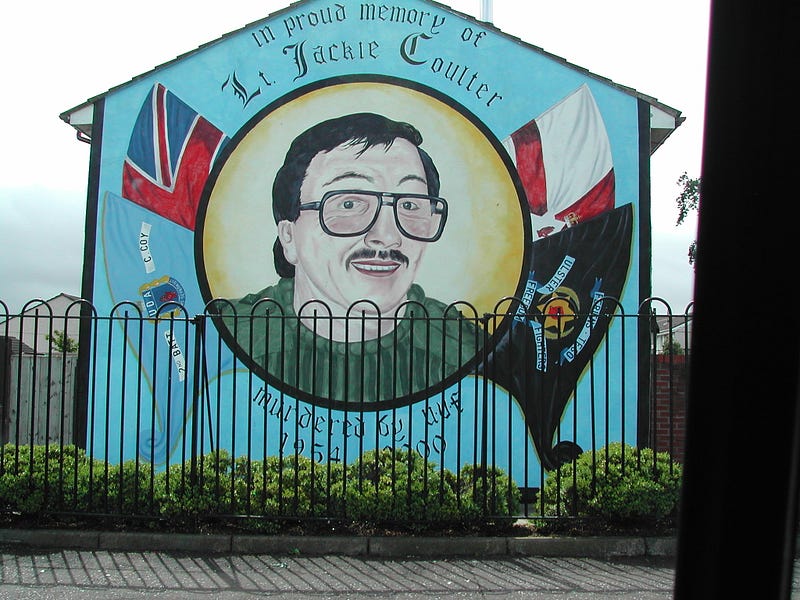
I learned of the UDA and the IRA and that it was more than a difference of religion but a difference in what country they wanted to rule their homelands. Learning about the deep-seated and centuries-old turmoil, I could see why my grandmother, who had never stepped foot on Irish soil, reacted so strongly.
Then we approached the “Peace Wall,” as the fighting between neighborhoods became so bad that walls were erected to reduce tensions. The main wall is between the Shankill and West Falls Roads, which was supposed to be torn eventually but still stands separating the neighborhoods.
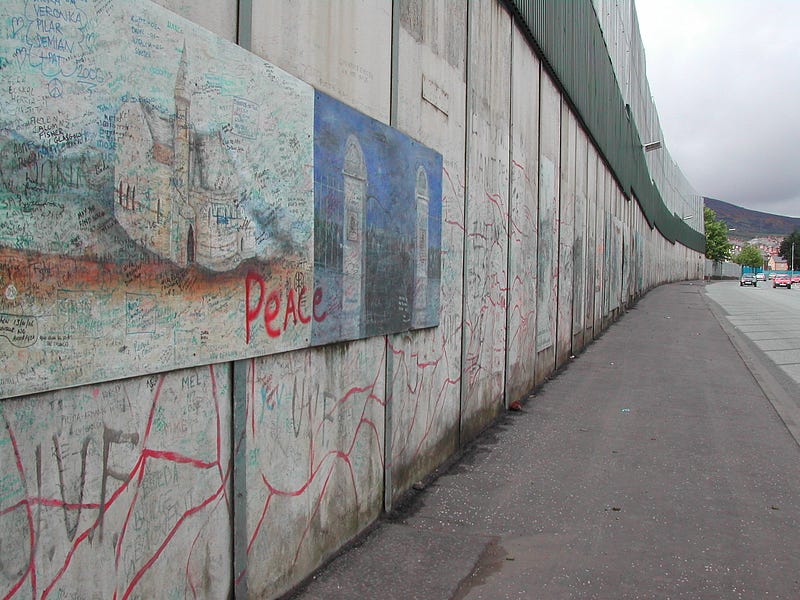
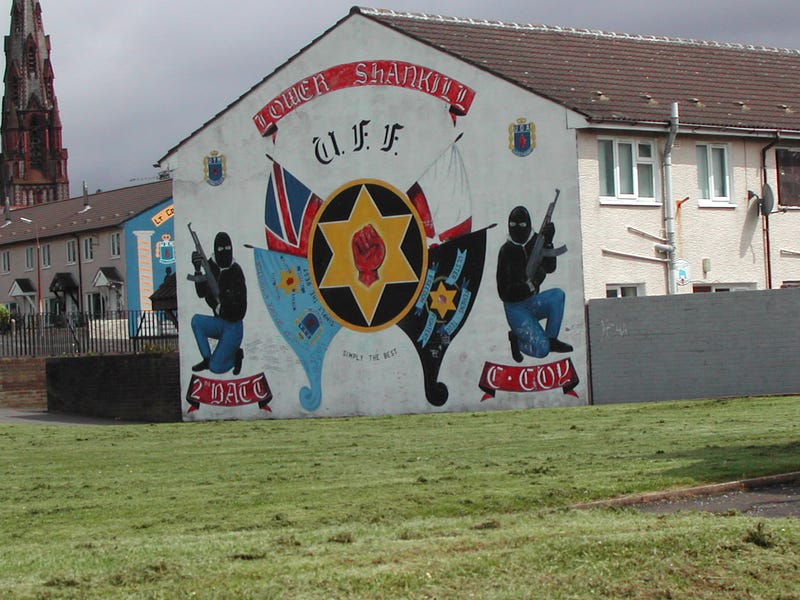
After the tour, I guessed the driver was protestant and was right, but he did an excellent job of not being biased.
The sign that affected me the most was a mural of Oliver Cromwell. Cromwell was a driving force behind the execution of Charles I, King of England. Cromwell was chosen to be the Lord and Protector of England during a brief period when England had no monarch.
Cromwell would lead a violent invasion into Ireland, where he would ban Catholicism. His face words are painted on the side of a building in Belfast today.
“Catholicism is more than a religion, it is a political power. Therefore, I’m led to believe there will be no peace in Ireland until the Catholic Church is crushed.”
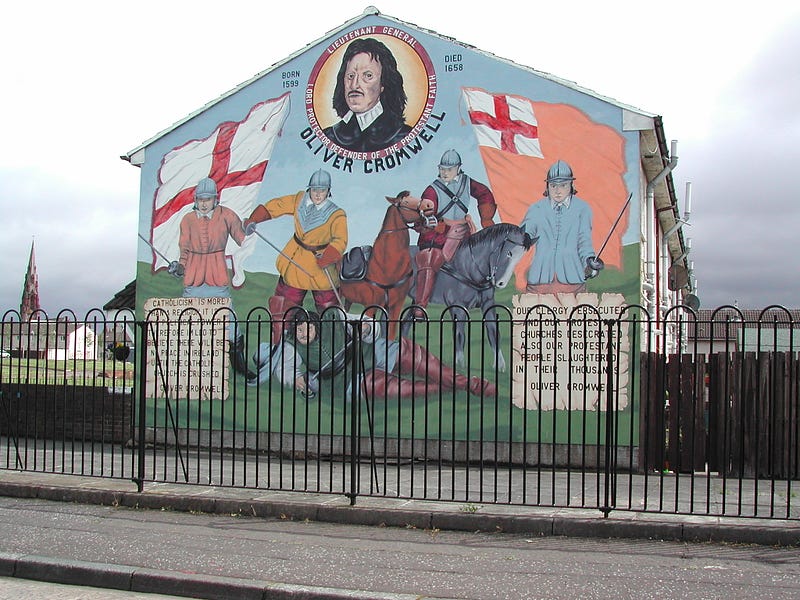
The BBC reports to this day, the violence continues, with police officers and British soldiers being targeted.
Years after my first visit, I returned to Northern Ireland, where I spent a few days at the archives looking for records regarding my family. I found the address and town that they lived in.
I also found records for some of the family that had stayed. Mostly, it was police records. A man who shared my great-grandfather’s name had been arrested many times before he was found murdered while still in his 40s.
A friend from Belfast accompanied me to the little town of Dromore, where my great-grandfather had lived before moving to America. He quickly noticed we were getting looks from the people in the town.
“They don’t like these Dublin plates on your rental car,” he said. I realized that they could suspect us of being Catholics and had no business being there. I had no idea that searching for one’s roots could be dangerous.
Two permanent signs proudly displayed the royal family and British flags in the town center. There was no question that this was a Protestant town. We stopped for lunch, and I asked a man at the bar if he knew anyone by my family name.
“Never heard of them,” he said quickly, refusing to make eye contact.
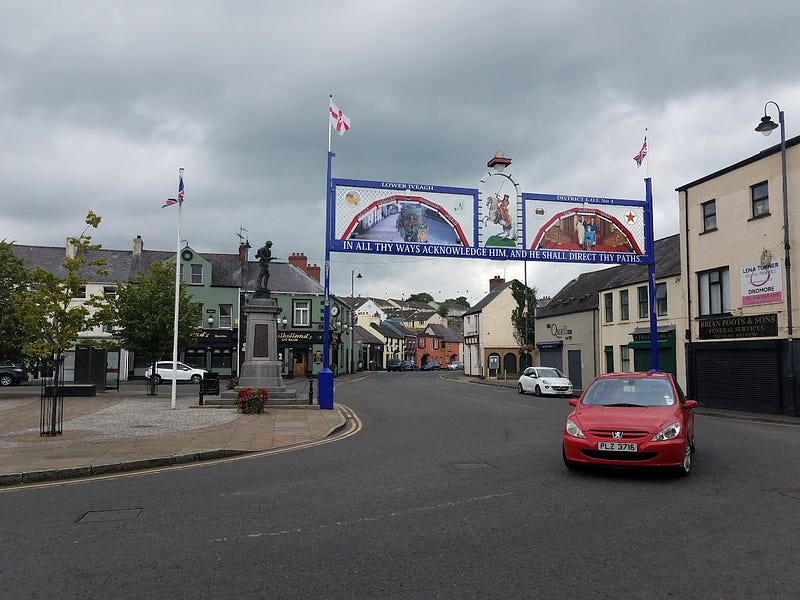
Later, I found the family plot at the church, which solidified I was in the right place.
I also found the tenant farm my family had once worked. I wondered if they could see the troubled times coming and if that was why they sought a new life in America. I thought of my mother, an Irish Protestant who married my Catholic Spanish father, and how happy they are together.
Today, I wear neither green nor orange on Saint Patrick’s Day now that I know the full significance of the colors.
I decided my search for answers was over. I knew all I needed to know. I waved goodbye to the suspicious town, and like my family before me, I left the troubles behind me.
This article was written in response to the Globetrotter’s monthly challenge, signs. If you would like to read other fantastic submissions, I recommend Erie Astin, who shares the signs of Dublin, and Adrienne Beaumont, who beautifully describes the Paris catacombs.
Please see the link below if you want to read my other submission.
Thank you to the incredible editors at Globetrotters, Jillian Amatt - Artistic Voyages, Anne Bonfert, Michele Maize, Adrienne Beaumont, and JoAnn Ryan , who have been so supportive and professional in the running of this publication. Please consider giving Globetrotters a follow.


