
The Signs To Avoid Getting Ebola And The Quest To Get Home
Traveling to Liberia during the Ebola outbreak and the adventure of getting home
In December 2014, my accountant called to tell me I was about to get smacked with an enormous tax bill, and I did not have the money to pay it. I spent a week wondering how in the world I would come up with the money when a solution presented itself. I was offered a contract with a hefty paycheck to work with an NGO for ten days in Monrovia, Liberia.
Why was the pay so much? Because it was in the middle of the Ebola outbreak. Also, I had to leave in three days. Thinking of my tax bill, I took the job and overnighted my passport to DC to get my visa.
Being this was my third trip to Africa, my vaccinations were up to date, and after several bad experiences with anti-malarial pills, I decided to lather myself in bug spray and do my best to keep from being bitten. It was uncertain whether or not mosquitos could transmit Ebola, and I prefer to avoid malaria and dengue fever.
Only two airlines were flying in and out of Monrovia at the time, Royal Air Maroc and Brussels Airlines. The rest of the airlines pulled out at the first signs of the epidemic. I was booked on Royal Air Maroc on the way in and Brussels on the way out.
I arrived in Monrovia at the ungodly hour of 4 am. The plane was full of expats, who I assumed were all NGO or UN workers. We stood around the baggage claim carousel, and a few people grabbed their bags while the rest of us waited…and waited. Then, the carousel stopped. About forty of us remained bagless and looked around at each other with a look that said, where are our bags!?
We then formed a long line at the lost baggage desk waiting to make a claim. The woman before me cursed Moroccan Air and said some NGO probably paid the airline to bring supplies, so they dumped our bags. She probably was right.
The airline worker said my luggage would be delivered seven days from now. I explained in a frustrated tone that I would be leaving by then. Somehow, it was then reduced to four days.
Like an idiot, I had taken my spare clothes out in London and put them in my checked suitcase, so I had my work equipment in my backpack and the clothes I was wearing. The women at the NGO I worked with were very supportive and loaned me some clothes.
I arrived at the Royal Grand Hotel, a palatial five-star hotel with every luxury imaginable. The hotel was what I expected for a country that the UN had occupied for a long time: something grand for the expats that the locals could never afford.
I have learned the UN does not like to rough it any more than the State Department. With that said, I welcomed the complete toiletries kit the hotel provided. It was almost like the lost luggage thing happens a lot.
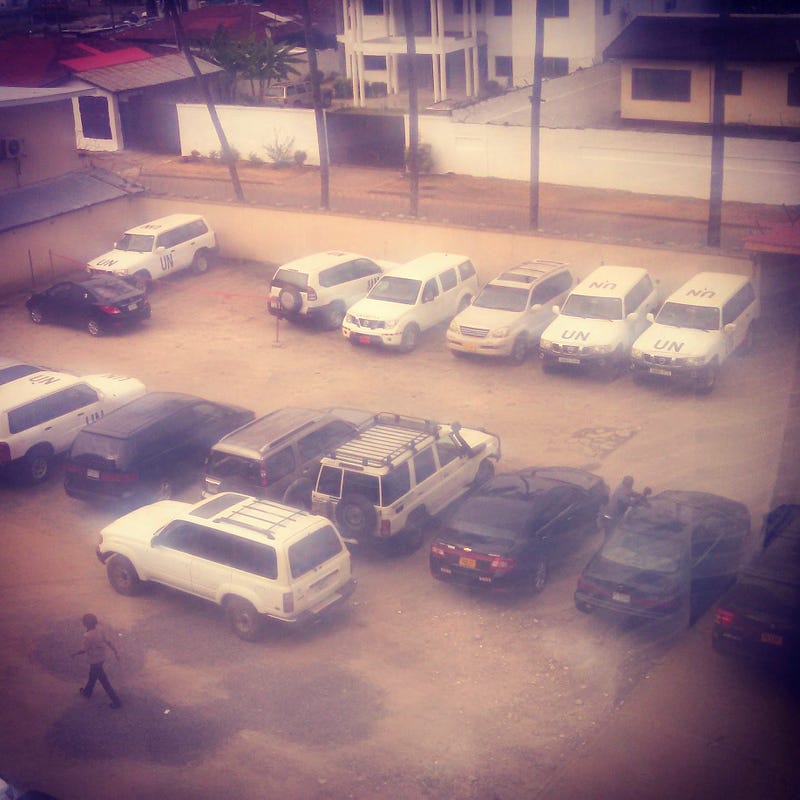
I carried out my work in the office during the day, mainly helping the NGO navigate the very confusing medical situation in the country in case of a medical emergency. I would continue at the hotel rooftop bar and restaurant after hours.
The NGO I was working with did not have a medical mission, so my risk of Ebola was very low as it is a blood borne virus. Everyone had adapted to the outbreak. Handshakes were forbidden, and everyone opted to tap elbows instead. Our temperature was taken at every entrance as fever was one of the first signs of Ebola.
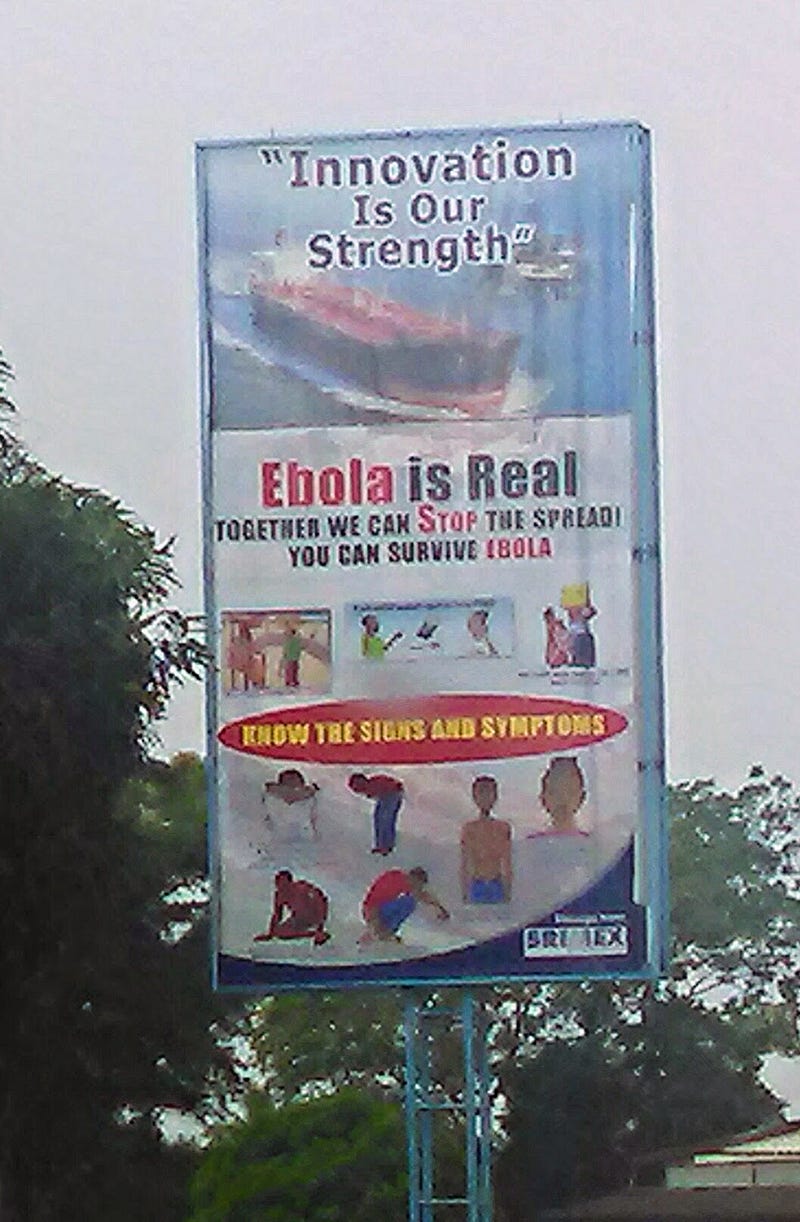
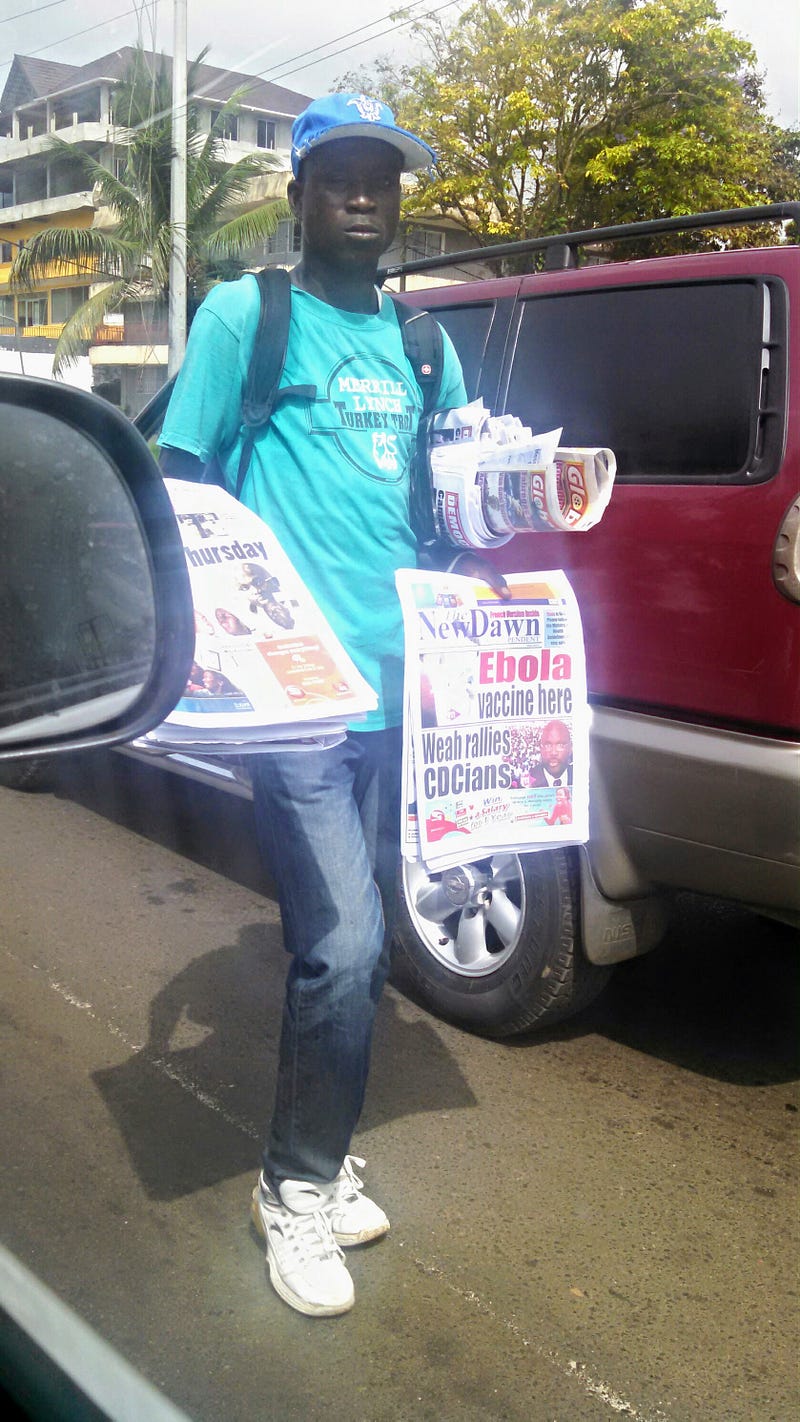
What were the rest of the symptoms? You wouldn’t have to look far as they were placed on billboards and pamphlets and even painted on the walls. There were signs of the signs everywhere.
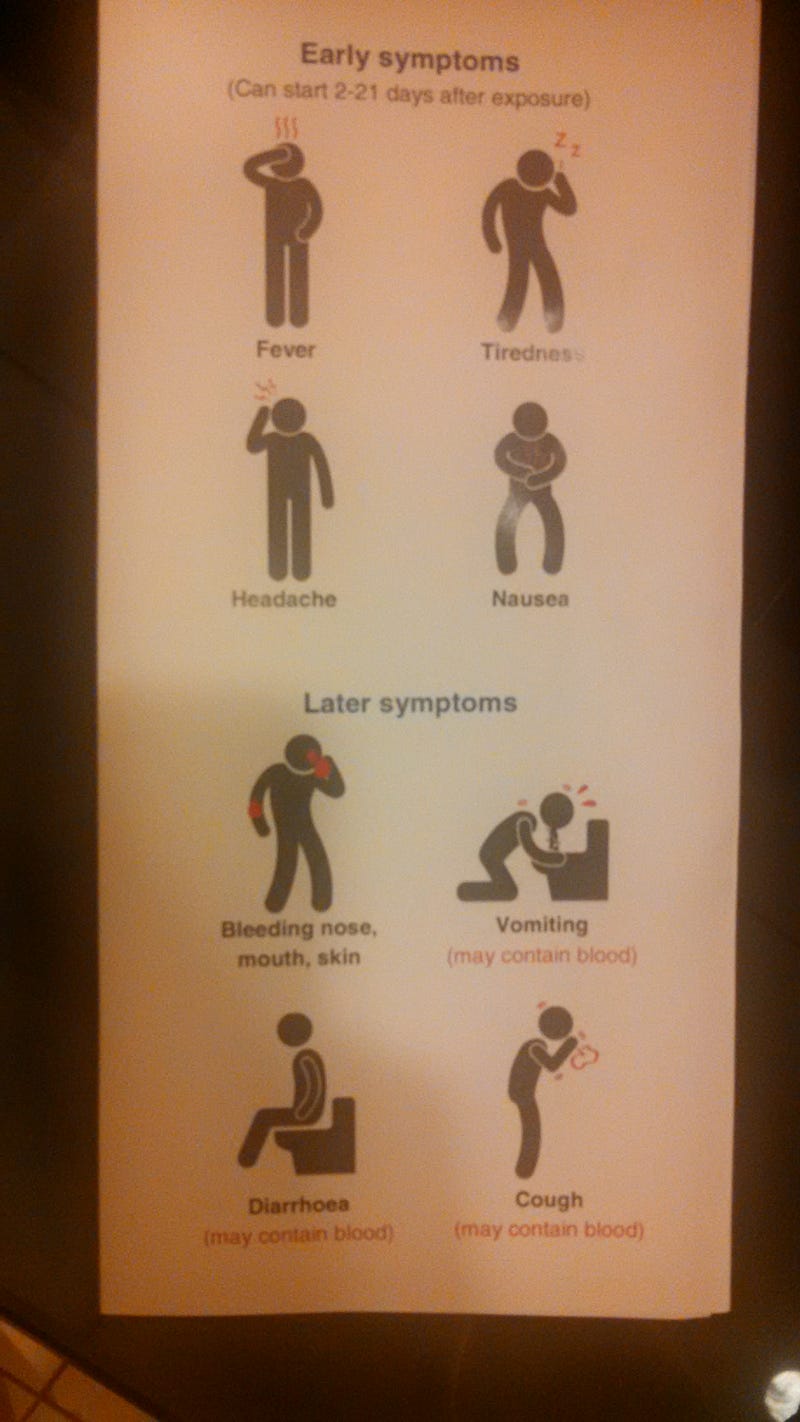
Essentially, it would start like malaria or the flu, but then you’ll begin to bleed out of all of your orifices. The thought of exsanguinating one’s self out of your eyes, nose, mouth, and butt is what made this virus so frightening and led to a cautious response to those returning from the Ebola areas.
The trip itself was not very adventurous. I went to and from the office and spent a lot of time on my laptop and the phone. The adventure began when it was time to go home to California.
A friend I had made at my hotel was traveling on the same flight to Brussels, so we decided to go to the airport together. We arrived at the Monrovia airport and waited in line for about two hours to get in the airport. During that time, we had a temperature check no less than six times and were questioned multiple times about our exposure to Ebola. For example;
Were you around anyone diagnosed with Ebola?
Did you go to the hospital or receive medical care in the country?
Did you handle any dead bodies?
Fortunately, I answered no to all the questions and was allowed to board the plane to Brussels. During the flight, I was provided another pamphlet from the Belgian government explaining what to expect upon landing.
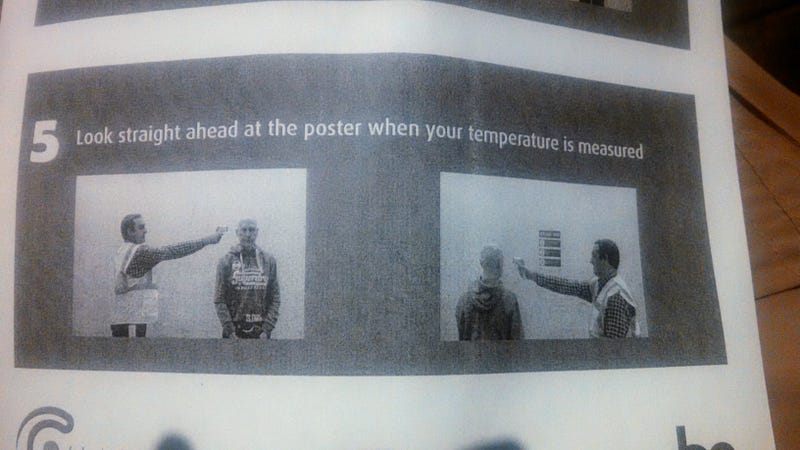
I looked at my friend and asked him if we were going to be executed upon landing in Belgium. He began to laugh. Seriously, why did they pose them like an execution to show your temperature would be taken?
A crew armed with no-touch thermometers was waiting at the gate in Brussels. We passed through them like cattle as they shot us in the side of the head with a thermometer, and that was it. I then boarded my flight to Newark, where the US would, of course, take the routine Ebola screenings and make it extra.
I landed in Newark and was told to have our passports out after deplaning. A customs officer had a list of people who were sent off to the side for special customs interviews.
Being one of those special people, I went to a room off the side, which was full of people in full hazmat suits. It looked like something from a Hollywood pandemic movie, and I almost laughed.
My name was called quickly, and I was sent to another room where a customs agent sat at a raised desk that looked like a judge’s bench, wearing a mask and face shield. I walked up to the bench, and he yelled at me, “Stay behind the barrier!”
I jumped and apologized. I walked back to behind the belt barrier. He proceeded to ask me all the same questions about my exposure to Ebola. I answered no to all the questions, and only then was I allowed to approach the bench.
He explained I would need to report to my local public health office within 24 hours of arriving home, who would give me instructions for my quarantine.
The Ebola incubation period is a whopping 21 days, whereas COVID-19 is only 14 days. I would be encouraged to stay home as much as possible and take my temperature twice daily.
I was then sent to an Ebola counselor who was a lovely woman, but when she started to explain the symptoms of Ebola as if it was my first time, I lost it.
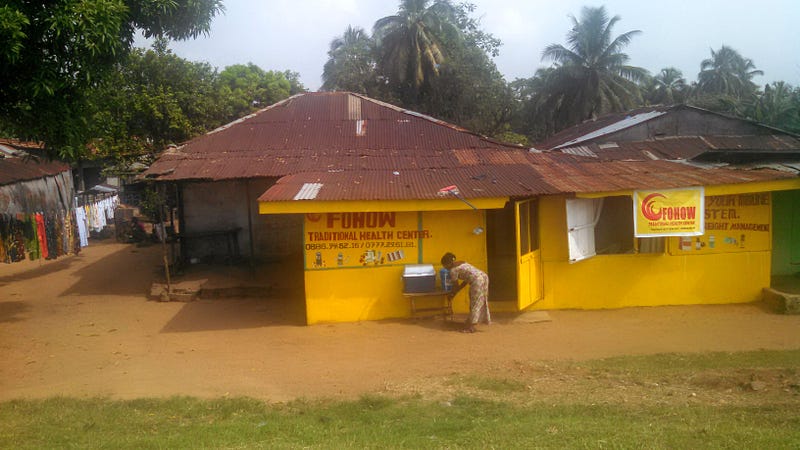
“Come on! The symptoms are literally painted on the walls, and billboards are everywhere in Liberia. I am aware,” I told her. The ridiculous theatrics of all this was making me impatient.
She then gave me a flip phone so public health could contact me. I told her I had a cell phone and didn’t need it. She insisted I take it anyway. My tax dollars hard at work. I took the phone.
When I finally arrived back in California, I received a call on my personal cell phone from public health. They ordered me to come in within the next 24 hours. I asked if it was absolutely necessary to come in that soon as I was exhausted and wanted to sleep. She said it was.
I went to the public health office, and I was told what the symptoms of Ebola were again. I was provided with a thermometer and a log. A nurse would be calling daily to get my temperature readings.
So, for the next twenty-one days, I prayed I wouldn’t spike a temperature as I would surely be put into a bubble at a hospital. I did get a cold, but thankfully, no fever. The public health office had a meeting about my cold. I was not asked to join.
Then, I made it through the twenty-one-day quarantine with no fever. I was officially declared Ebola-free and released from the government Ebola watch. I paid my tax bill, and to this day, that reentry remains one of the most bizarre experiences of my life.
This was written in response to Globetrotters Monthly Challenge prompt signs. If you enjoyed this article, you might enjoy the following from Globetrotter writers Jillian Amatt - Artistic Voyages, and Adrienne Beaumont.


