avatarErie Astin

Free AI web copilot to create summaries, insights and extended knowledge, download it at here

5220

Abstract

</figure><p id="7201">Here is one of the quadrangles of Trinity College. Beautiful, although I could do without the modern art sculpture (I like old things). It was around noon when I walked here and mostly sunny out — perfect weather for Dublin in the spring.</p><figure id="65d6"><img src="https://cdn-images-1.readmedium.com/v2/resize:fit:800/1*sV54Da_WgGRo6taf14NKxw.jpeg"><figcaption>Sign for the Book of Kells, Trinity College Dublin. Photo credit: <a href="undefined">Erie Astin</a></figcaption></figure><p id="22f4">I hadn’t realized the Book of Kells was at Trinity College. I had studied this gorgeous illuminated manuscript as an example of the art that was produced in Ireland and Scotland in the so-called “Dark Ages” of the 9th century. My professor’s argument was that the early Middle Ages weren’t dark at all if people were creating such beautiful books. I tend to agree.</p><figure id="489c"><img src="https://cdn-images-1.readmedium.com/v2/resize:fit:800/1*oB_U35s4hfOrPruLsXQrTw.jpeg"><figcaption>Sign for St. Patrick’s Close. Photo credit: <a href="undefined">Erie Astin</a></figcaption></figure><p id="64a7">I don’t usually take pictures of street signs, but I made an exception for St. Patrick’s Close. St. Patrick’s stands for St. Patrick’s Cathedral, a great Gothic building set on a glorious green space in the heart of the city.</p><figure id="7246"><img src="https://cdn-images-1.readmedium.com/v2/resize:fit:800/1*CjevQjlqkLPbZddsSPJZsg.jpeg"><figcaption>St. Patrick’s Cathedral graveyard. Photo credit: <a href="undefined">Erie Astin</a></figcaption></figure><p id="c218">By this time my legs were getting a little tired — it was no mean feat to try to explore all of Dublin in a day — but I couldn’t resist wandering the graveyard outside St. Patrick’s. It was quiet and peaceful, a welcome respite from the bustle of Dublin.</p><figure id="447e"><img src="https://cdn-images-1.readmedium.com/v2/resize:fit:800/1*bUyCKYcpgucPWRvbe2SYKw.jpeg"><figcaption>Celtic cross. Photo credit: <a href="undefined">Erie Astin</a></figcaption></figure><p id="1860">I found this beautiful Celtic cross lit up in sun and shadow. Look at the intricate knot carvings in the stonework on the sides. I had seen pictures of these sort of tall crosses before, and ruins of them in Scotland, but this was the first intact one I had seen in person. I was impressed, and stood before it for a moment in appreciation.</p><figure id="e7bb"><img src="https://cdn-images-1.readmedium.com/v2/resize:fit:800/1*hIgP7bX0R7kAQ83uyi-Dig.jpeg"><figcaption>Inside St. Patrick’s cathedral. Photo credit: <a href="undefined">Erie Astin</a></figcaption></figure><p id="2be1">Inside, the cathedral’s stone vaults soared to the sky, signs of their builders’ belief in the works of men mirroring the great works of God. St. Patrick’s was founded in 1191 by John Comyn, the first English archbishop of Dublin. The English had recently conquered a small part of Ireland and were eager to impose their culture, which included Gothic architecture, on the country.</p><figure id="0267"><img src="https://cdn-images-1.readmedium.com/v2/resize:fit:800/1*RHN1cZf9qswDaJfh2labow.jpeg"><figcaption>The great men of Ireland. Photo credit: <a href="undefined">Erie Astin</a></figcaption></figure><p id="e618">In one of the cathedral aisles, I found statues of the great men of Ireland, including St. Patrick and Jonathan Swift, the author of <i>Gulliver’s Travels. </i>I hadn’t known that Swift was dean of the cathedral, too, giving sermons here for 30 years.</p><figure id="5424"><img src="https://cdn-images-1.readmedium.com/v2/resize:fit:800/1*oZ2HsgkSh1YGTRJ2oRugEw.jpeg"><figcaption>Sign for Jonathan Swift’s grave. Photo credit: <a href="undefined">Erie Astin</a></figcaption></figure><p id="1c2d">As I discovered by this sign, Swift was buried in St. Patrick’s, just like his close friend, Stella. Swift lived to 78 and also exercised every day, so that’s a sign for me to get off my butt! Gone are the days when I could stride around all of Dublin without getting out of breath.</p><figure id="5c39"><img src="https://cdn-images-1.readmedium.com/v2/resize:fit:800/1*n-lztezNbcNvqno-kmD21g.jpeg"><figcaption>Jonathan Swift’s grave, St. Patrick’s Cathedral. Photo credit: <a href="undefined">Erie Astin</a></figcaption></figure><p id="08b5">Here is Swift’s grave itself. The lettering is hard to read in the photo, but it states that Swift became dean in 1713 and died on October 19, 1745 at age 78.</p><figure id="d4ef"><img src="https://cdn-images-1.readmedium.com/v2/resize:fit:800/1*fQsWS30I6bOZ0HEaOxOP0A.jpeg"><figcaption>Dublin tulips. Photo credit: <a href="undefined">Erie Astin</a></figcaption></figure><p id="05e3">When I stepped back outside, I found some of the most beautiful tulips I’d ever seen — all orange and yellow fire. Some remained supple, while others were beginning to wither, a definite sign of early spring passing into warmer days.</p><p id="5279">I was ready to pass into a new phase, too. My year of graduate school abroad was ending in three weeks and I’d be returning home. This trip to Ireland was my last gasp of adventure before I settled into my routines again. I loved to travel, but I’d grown homesi

Options

ck and wanted the comforts of family.</p><figure id="a352"><img src="https://cdn-images-1.readmedium.com/v2/resize:fit:800/1*N2Br8H9te4SpG0MS3mEmwA.jpeg"><figcaption>Sign for St. Patrick’s well. Photo credit: <a href="undefined">Erie Astin</a></figcaption></figure><p id="012e">Near the tulips, I found this sign carved in stone. We all think of St. Patrick when we think of Ireland, but I had yet to connect him to the real, physical place beneath my feet. Here was a sign claiming that he had baptized local inhabitants from a well near the cathedral back in the 5th century.</p><p id="ab7c">I was dubious — where was this well? If they could find it, the sign would be <i>at</i> it, not <i>near</i> it. But what if it were true? That would be amazing, to be able to connect a physical site to a historical figure about whom not much is written down.</p><figure id="3322"><img src="https://cdn-images-1.readmedium.com/v2/resize:fit:800/1*_wp9z1S8MuamL4Vt2JqCMw.jpeg"><figcaption>Temple Bar district. Photo credit: <a href="undefined">Erie Astin</a></figcaption></figure><p id="5043">I got a jolt coming back from the quiet of the cathedral grounds into the Temple Bar district, where crowds milled around the shops and began to fill the restaurants even though it wasn’t yet 6 p.m.</p><p id="e08a">I laughed at these two guys dressed as leprechauns waiting for people to put money in their hat. They could have at least performed or something. I guess leprechauns are popular enough as a vision of Ireland that tourists will pay random people dressed up as them (probably for selfies).</p><figure id="4bd6"><img src="https://cdn-images-1.readmedium.com/v2/resize:fit:800/1*aFZqCbfLfr9S1etM4TdK7A.jpeg"><figcaption>Temple Bar. Photo credit: <a href="undefined">Erie Astin</a></figcaption></figure><p id="fb17">I would have found the world-famous Temple Bar even without the sign — that’s where all of Dublin was, standing-room only. I went in to get a glimpse and found myself elbow to elbow with people as I wiggled my way across the room.</p><p id="8710">When I finally worked myself free through the doorway into the adjacent building, I found myself in the Temple Bar gift shop, which was nearly as crowded as the bar itself. I fell prey to the Ireland marketing ploys and bought a necklace with a glass charm that encased a real shamrock.</p><p id="8f57">Then I pushed my way out and headed down the street back toward the hotel. No nightlife for me. I was thoroughly spent from my day in Dublin and wanted to crash in bed before I ventured out into the countryside in the morning.</p><p id="3f9d"><b>Thanks for reading, and thank you to the editors at <i>Globetrotters</i></b> (<a href="undefined">JoAnn Ryan</a>, <a href="undefined">Anne Bonfert</a>, <a href="undefined">Jillian Amatt — Artistic Voyages</a>, <a href="undefined">Adrienne Beaumont</a>, <a href="undefined">Michele Maize</a>) <b>for running a great publication.</b></p><p id="80e8">I was inspired by <a href="undefined">Adrienne Beaumont</a>’s story about the signs she found during her travels:</p><div id="ceb0" class="link-block"> <a href="https://readmedium.com/signs-what-they-taught-me-wandering-around-romania-73629e77e364"> <div> <div> <h2>Signs: What They Taught Me Wandering Around Romania</h2> <div><h3>About history, culture, and language</h3></div> <div><p>medium.com</p></div> </div> <div> <div style="background-image: url(https://miro.readmedium.com/v2/resize:fit:320/1*[email protected])"></div> </div> </div> </a> </div><p id="a7f2"><a href="undefined">Jillian Amatt - Artistic Voyages</a> paints beautiful signs around the world:</p><div id="377f" class="link-block"> <a href="https://readmedium.com/im-happy-when-i-see-the-signs-3009f4028b78"> <div> <div> <h2>I’m Happy When I See the Signs</h2> <div><h3>An editor's response to the Globetrotters’ January prompt — SIGNS</h3></div> <div><p>medium.com</p></div> </div> <div> <div style="background-image: url(https://miro.readmedium.com/v2/resize:fit:320/1*of3WhhMkk-tzmzFXfN9c-A.jpeg)"></div> </div> </div> </a> </div><p id="89b6">I’m counting this story toward both the ‘Signs’ challenge and my personal “A-Z” travel challenge (which I’m doing out of order). Dublin is 12th letter. The list of my articles is here:</p><div id="ae3c" class="link-block"> <a href="https://medium.com/@ErieAstin/list/0755de98b40d"> <div> <div> <h2>Favorite Travel Destinations A-Z</h2> <div><h3>Challenge for Globetrotters Publication.</h3></div> <div><p>medium.com</p></div> </div> <div> <div style="background-image: url(https://miro.readmedium.com/v2/resize:fit:320/0*ecdf1ae2bbc0816769e05b38e280df7f8a147c24.jpeg)"></div> </div> </div> </a> </div></article></body>

The Signs of Dublin

My A-Z of favorite travel destinations: D
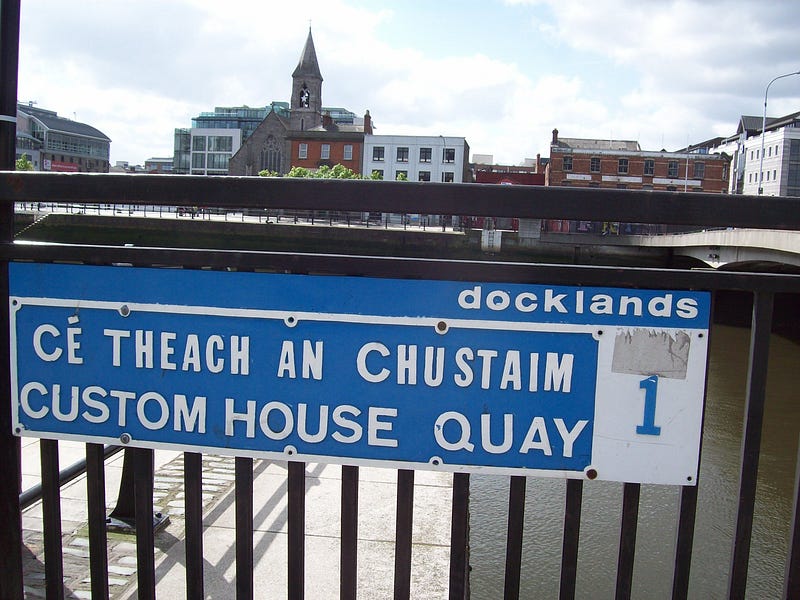
Sign for Dublin Custom House Quay. Photo credit: Erie Astin

Like Adrienne Beaumont, I doubted at first whether I had any photos for the Globetrotters January ‘Signs’ Challenge. But when I looked back on my Dublin trip from 2009, it turns out I took quite a few.

This is in large part due to my fascination with the Gaelic language, which appears alongside English on many Irish signs — making even the Custom House Quay look poetic.

Although the English had invaded Ireland in the late 12th century, it’s believed that Gaelic remained the majority tongue until 1800. The Great Famine hit a disproportionately high number of Gaelic speakers, who lived in poor and rural areas. Immigration and famine deaths wiped these speakers out.
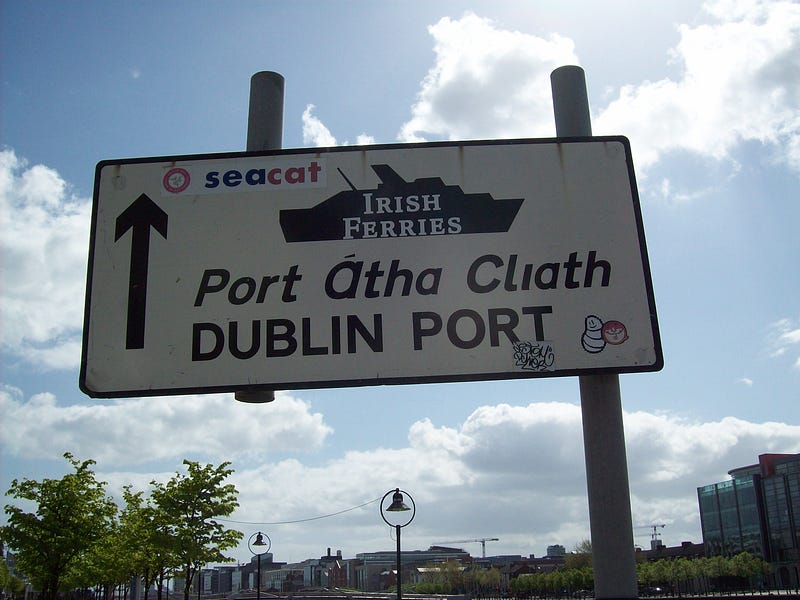
Sign for Dublin Port. Photo credit: Erie Astin

I was in Ireland for a long weekend at the beginning of May, escaping my horrible housemate who had made my year of graduate school in Scotland a living hell. He trashed the house, smoked cigarettes contrary to the lease, and played music until 4 a.m.

One night in a fit of paranoia, I shoved my dresser in front of my bedroom door because I was scared he would come in with a gun and shoot me.

Taking a break in Dublin was just what I needed.
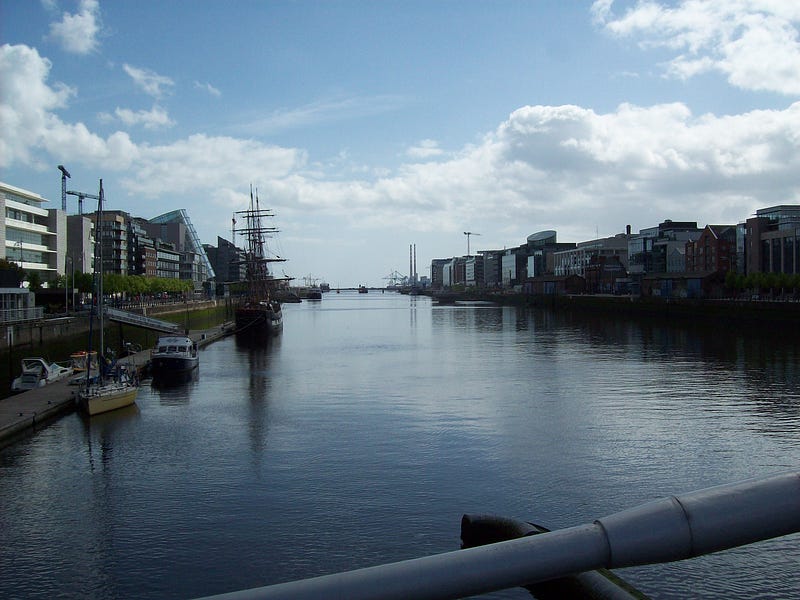
Dublin Port on the River Liffey. Photo credit: Erie Astin

My first stop was a bridge over the shining water of Dublin Port, where Vikings once sailed in to settle the city. After Dublin became a Viking town in 841 AD, it became the most important settlement in Ireland as well as a hub for Viking expansion and trade.

I never knew until I took a class on the Vikings in my junior year in college that the Vikings raided and settled all along the coast of Ireland and intermingled with the population. The modern Irish have Viking ancestry and Scandinavian words made their way into the Gaelic language.
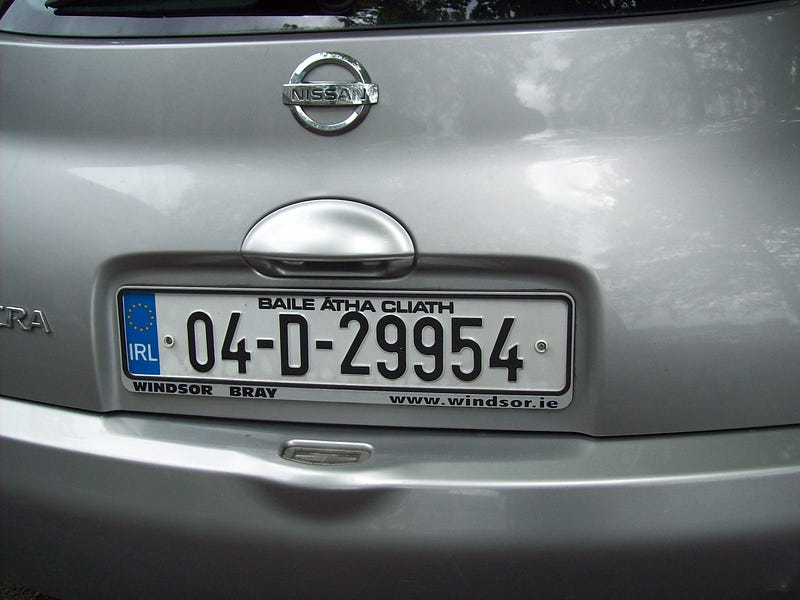
Dublin license plate. Photo credit: Erie Astin

The Gaelic language is being revived in Ireland today, with many children studying it in school. I was glad to find it on Dublin license plates — Baile Atha Cliath is a name for the city that means “town of the hurdled ford.” The name Dublin comes from the Gaelic word Duibhlinn, meaning “black pool.”

Campaign poster. Photo credit: Erie Astin

After the port, I walked through some residential neighborhoods where the apartment blocks were built of red brick, reminding me of Boston in the United States. I came upon this Sinn Féin campaign poster, which seemed exotic to me. A few years ago in college, I had learned about Sinn Féin and their historic links to the IRA.

Interestingly, Mary Lou McDonald has risen quite a bit in rank since the time I took this photo. She was a Member of the European Parliament in 2009, but is now President of Sinn Féin and Leader of the Opposition in Ireland.
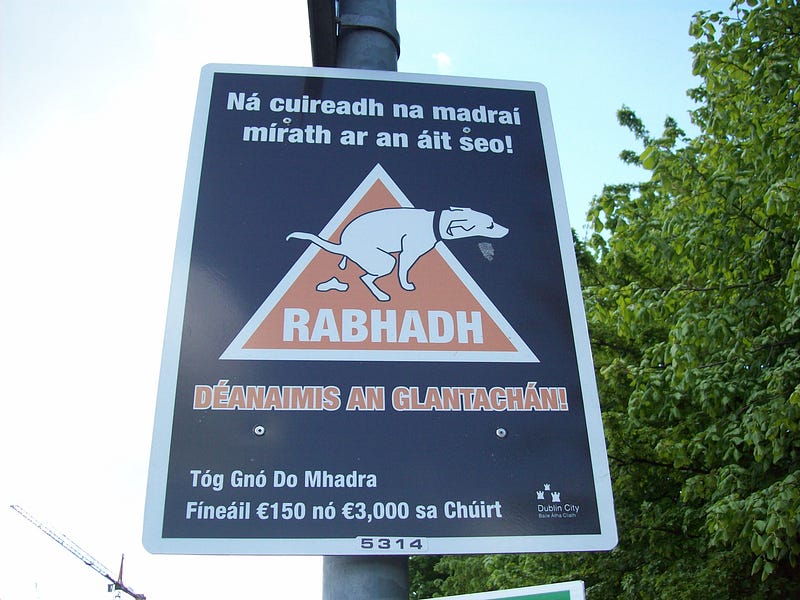
Funny sign in Gaelic. Photo credit: Erie Astin

This sign was my favorite — a warning in Gaelic about picking up your dog’s poop. The illustration is rather graphic! It’s funny that there’s no English on the sign. Either it presumes that the entire population speaks Gaelic (which it doesn’t), or it figures that the meaning is clear enough.
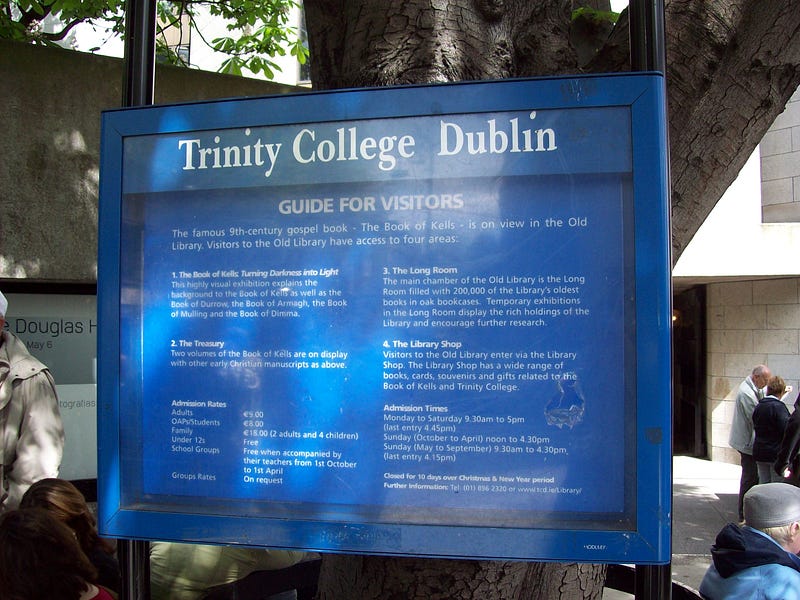
Sign for Trinity College Dublin. Photo credit: Erie Astin

I couldn’t go to Ireland without visiting Trinity College Dublin. I love college campuses wherever I am — having attended two colleges and two graduate schools myself — and ancient colleges are the best. Trinity College Dublin was modeled after Oxford and Cambridge and founded in 1592.
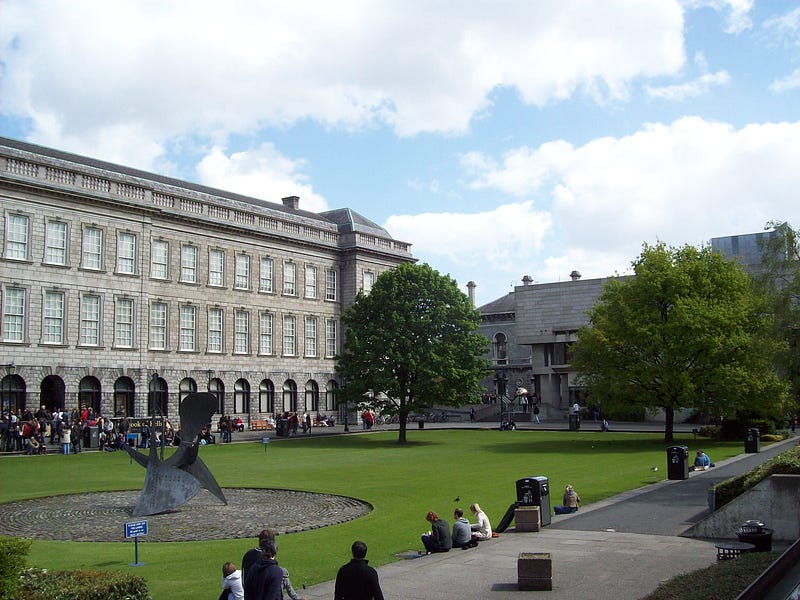
Trinity College Dublin. Photo credit: Erie Astin

Here is one of the quadrangles of Trinity College. Beautiful, although I could do without the modern art sculpture (I like old things). It was around noon when I walked here and mostly sunny out — perfect weather for Dublin in the spring.
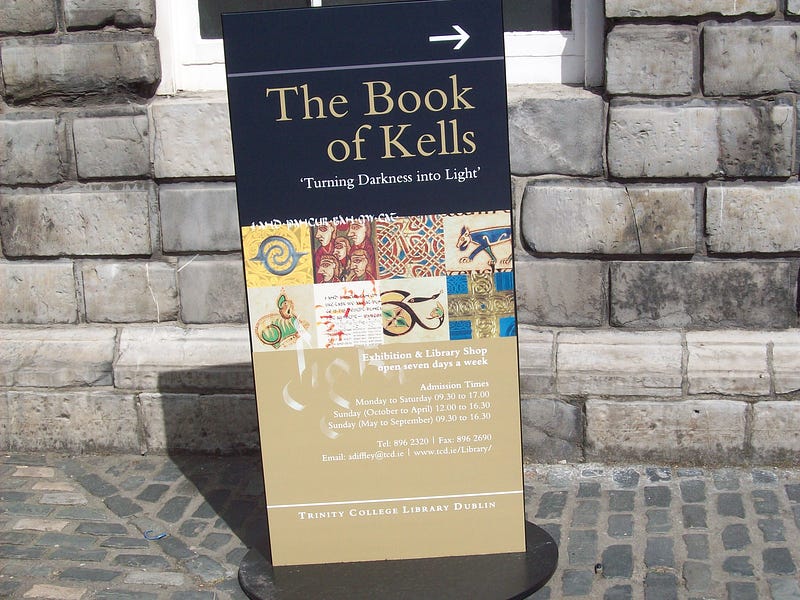
Sign for the Book of Kells, Trinity College Dublin. Photo credit: Erie Astin

I hadn’t realized the Book of Kells was at Trinity College. I had studied this gorgeous illuminated manuscript as an example of the art that was produced in Ireland and Scotland in the so-called “Dark Ages” of the 9th century. My professor’s argument was that the early Middle Ages weren’t dark at all if people were creating such beautiful books. I tend to agree.
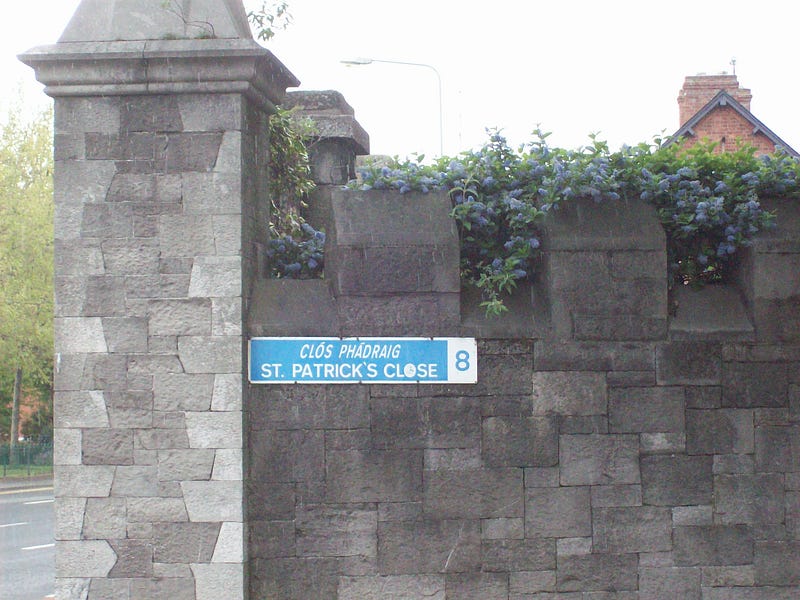
Sign for St. Patrick’s Close. Photo credit: Erie Astin

I don’t usually take pictures of street signs, but I made an exception for St. Patrick’s Close. St. Patrick’s stands for St. Patrick’s Cathedral, a great Gothic building set on a glorious green space in the heart of the city.
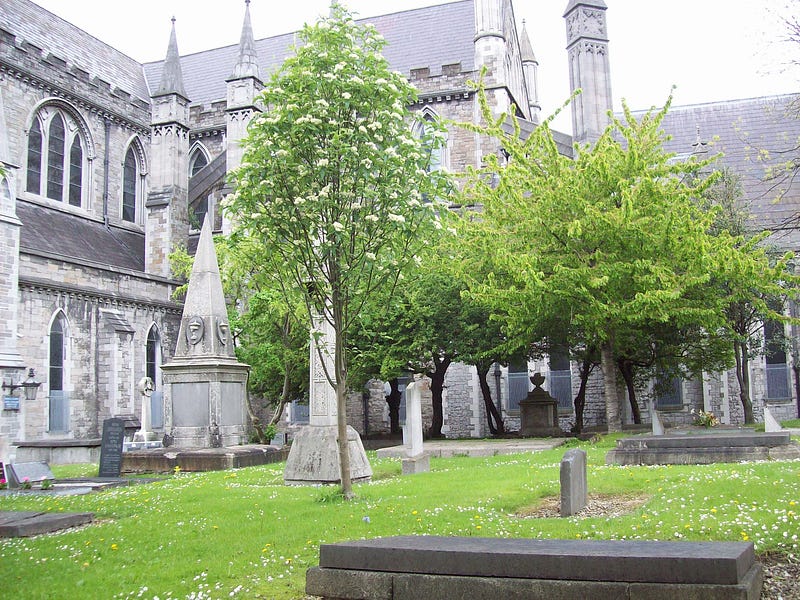
St. Patrick’s Cathedral graveyard. Photo credit: Erie Astin

By this time my legs were getting a little tired — it was no mean feat to try to explore all of Dublin in a day — but I couldn’t resist wandering the graveyard outside St. Patrick’s. It was quiet and peaceful, a welcome respite from the bustle of Dublin.
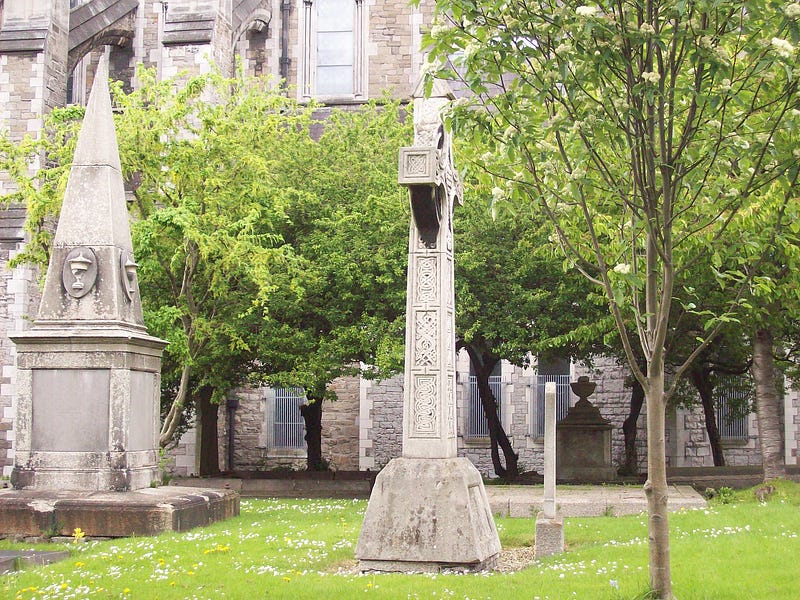
Celtic cross. Photo credit: Erie Astin

I found this beautiful Celtic cross lit up in sun and shadow. Look at the intricate knot carvings in the stonework on the sides. I had seen pictures of these sort of tall crosses before, and ruins of them in Scotland, but this was the first intact one I had seen in person. I was impressed, and stood before it for a moment in appreciation.
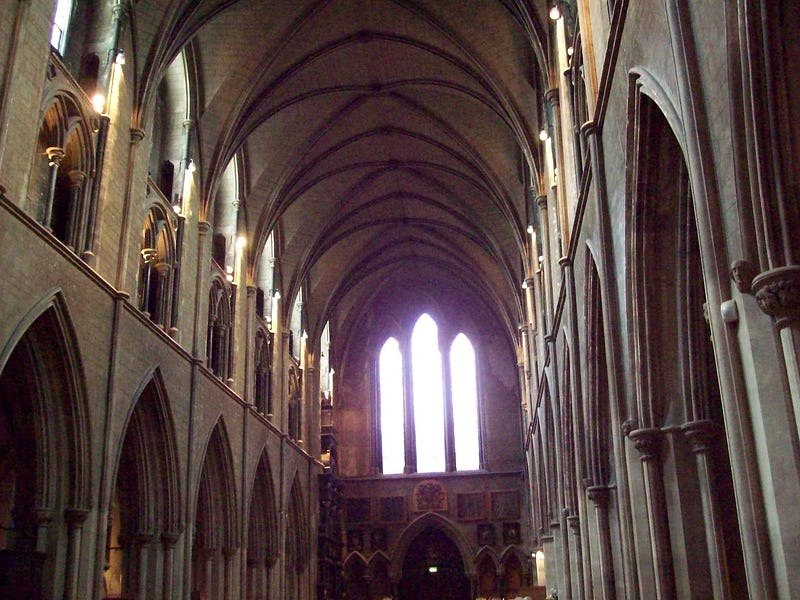
Inside St. Patrick’s cathedral. Photo credit: Erie Astin

Inside, the cathedral’s stone vaults soared to the sky, signs of their builders’ belief in the works of men mirroring the great works of God. St. Patrick’s was founded in 1191 by John Comyn, the first English archbishop of Dublin. The English had recently conquered a small part of Ireland and were eager to impose their culture, which included Gothic architecture, on the country.
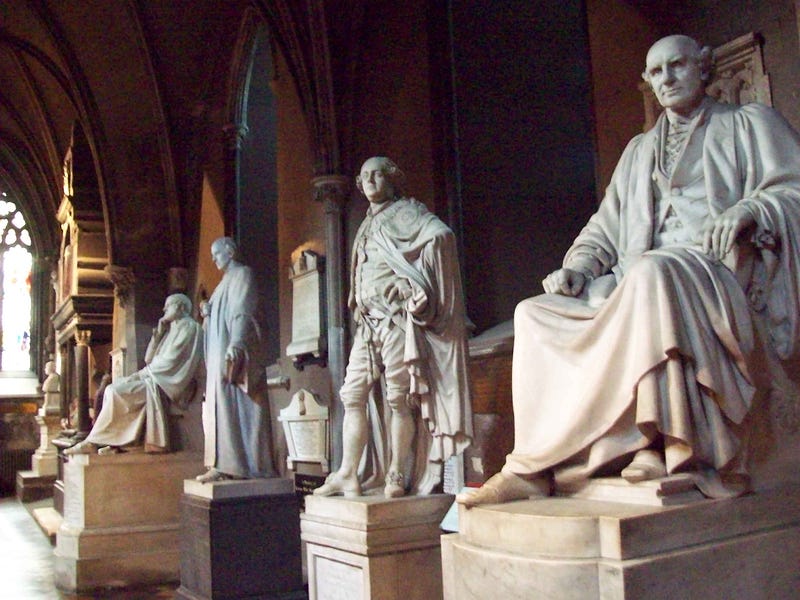
The great men of Ireland. Photo credit: Erie Astin

In one of the cathedral aisles, I found statues of the great men of Ireland, including St. Patrick and Jonathan Swift, the author of Gulliver’s Travels. I hadn’t known that Swift was dean of the cathedral, too, giving sermons here for 30 years.
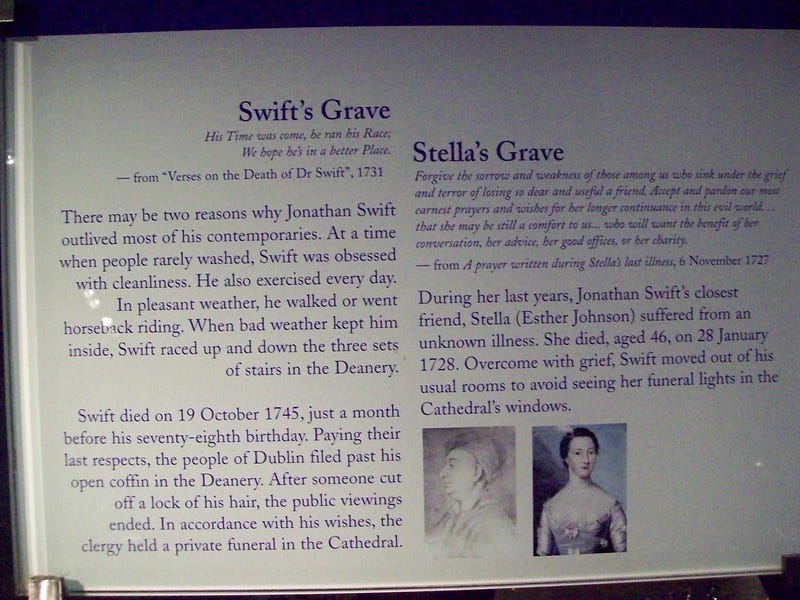
Sign for Jonathan Swift’s grave. Photo credit: Erie Astin

As I discovered by this sign, Swift was buried in St. Patrick’s, just like his close friend, Stella. Swift lived to 78 and also exercised every day, so that’s a sign for me to get off my butt! Gone are the days when I could stride around all of Dublin without getting out of breath.
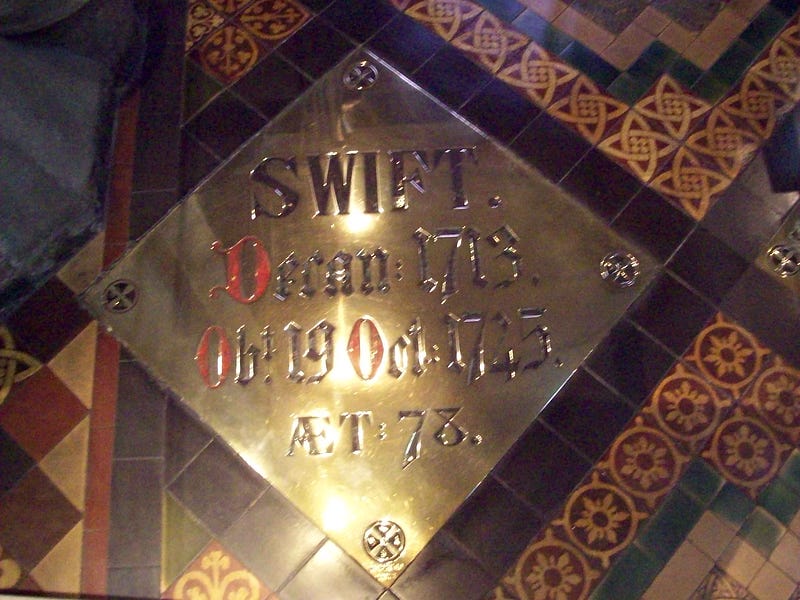
Jonathan Swift’s grave, St. Patrick’s Cathedral. Photo credit: Erie Astin

Here is Swift’s grave itself. The lettering is hard to read in the photo, but it states that Swift became dean in 1713 and died on October 19, 1745 at age 78.
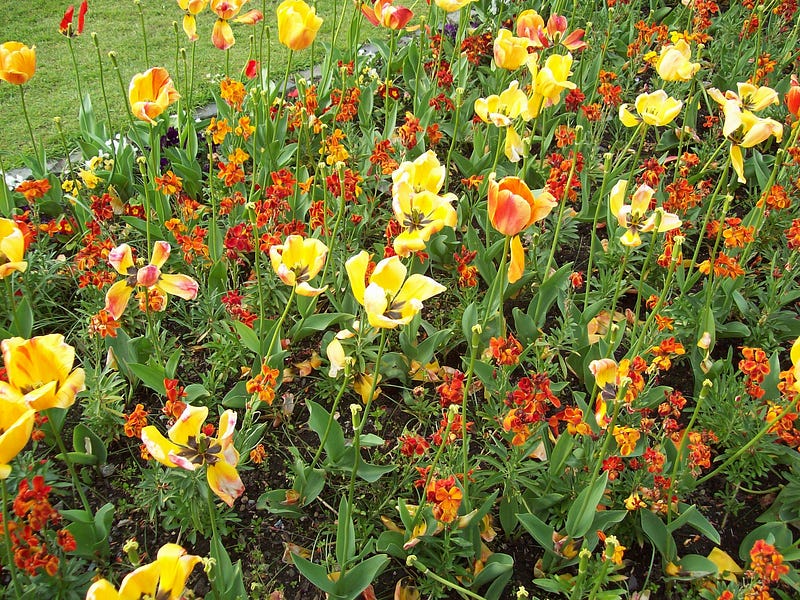
Dublin tulips. Photo credit: Erie Astin

When I stepped back outside, I found some of the most beautiful tulips I’d ever seen — all orange and yellow fire. Some remained supple, while others were beginning to wither, a definite sign of early spring passing into warmer days.

I was ready to pass into a new phase, too. My year of graduate school abroad was ending in three weeks and I’d be returning home. This trip to Ireland was my last gasp of adventure before I settled into my routines again. I loved to travel, but I’d grown homesick and wanted the comforts of family.
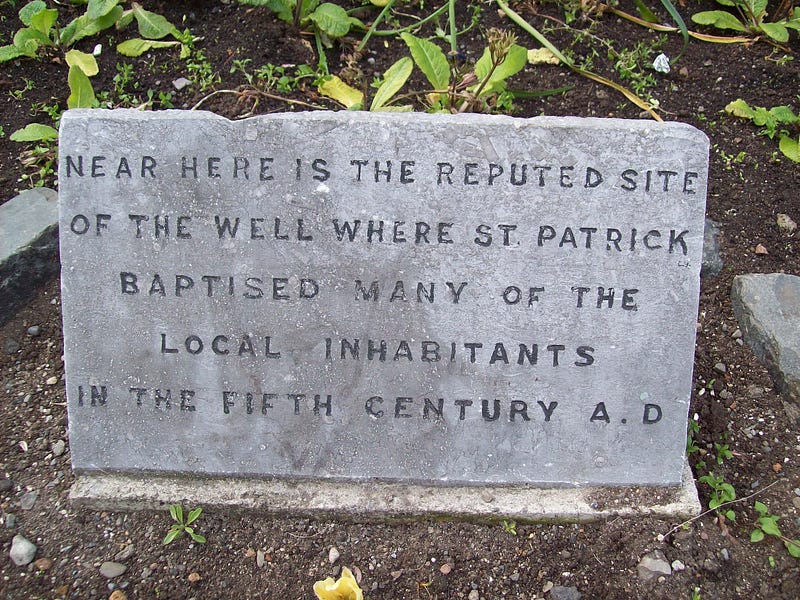
Sign for St. Patrick’s well. Photo credit: Erie Astin

Near the tulips, I found this sign carved in stone. We all think of St. Patrick when we think of Ireland, but I had yet to connect him to the real, physical place beneath my feet. Here was a sign claiming that he had baptized local inhabitants from a well near the cathedral back in the 5th century.

I was dubious — where was this well? If they could find it, the sign would be at it, not near it. But what if it were true? That would be amazing, to be able to connect a physical site to a historical figure about whom not much is written down.
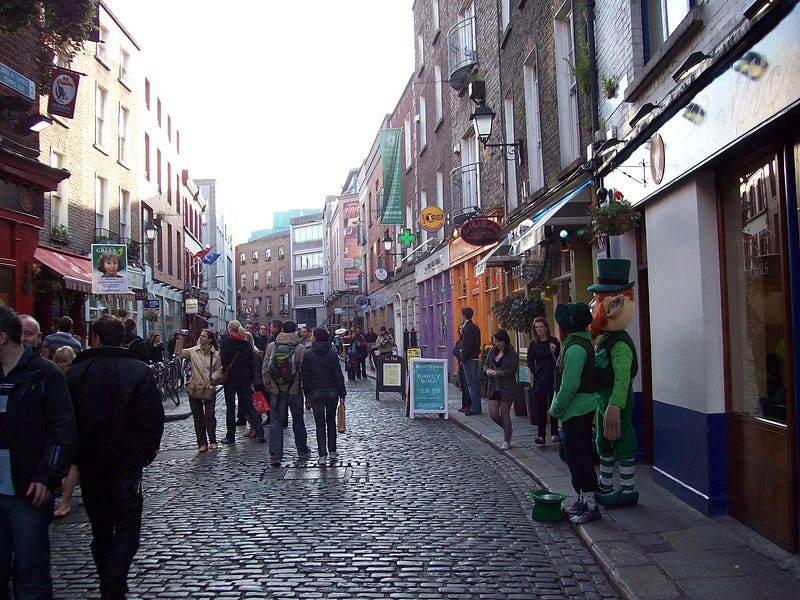
Temple Bar district. Photo credit: Erie Astin

I got a jolt coming back from the quiet of the cathedral grounds into the Temple Bar district, where crowds milled around the shops and began to fill the restaurants even though it wasn’t yet 6 p.m.

I laughed at these two guys dressed as leprechauns waiting for people to put money in their hat. They could have at least performed or something. I guess leprechauns are popular enough as a vision of Ireland that tourists will pay random people dressed up as them (probably for selfies).
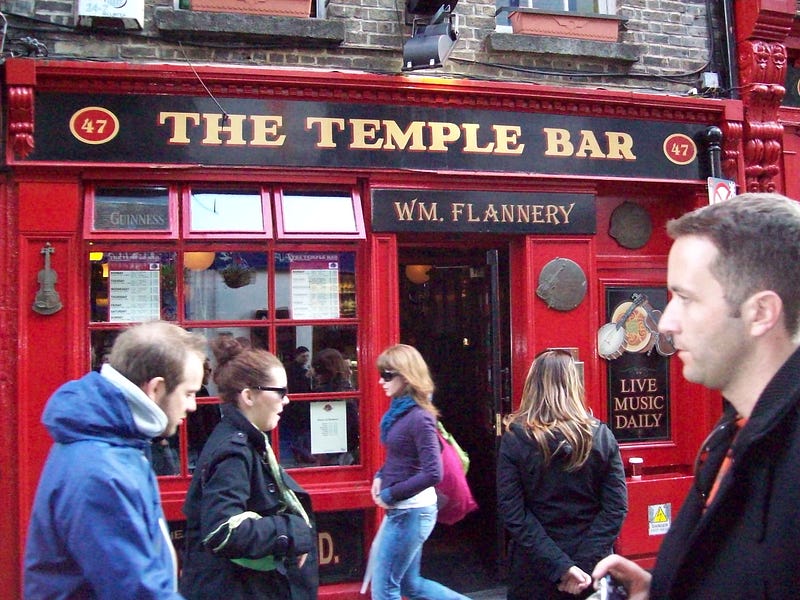
Temple Bar. Photo credit: Erie Astin

I would have found the world-famous Temple Bar even without the sign — that’s where all of Dublin was, standing-room only. I went in to get a glimpse and found myself elbow to elbow with people as I wiggled my way across the room.

When I finally worked myself free through the doorway into the adjacent building, I found myself in the Temple Bar gift shop, which was nearly as crowded as the bar itself. I fell prey to the Ireland marketing ploys and bought a necklace with a glass charm that encased a real shamrock.

Then I pushed my way out and headed down the street back toward the hotel. No nightlife for me. I was thoroughly spent from my day in Dublin and wanted to crash in bed before I ventured out into the countryside in the morning.

Thanks for reading, and thank you to the editors at Globetrotters (JoAnn Ryan, Anne Bonfert, Jillian Amatt — Artistic Voyages, Adrienne Beaumont, Michele Maize) for running a great publication.

I was inspired by Adrienne Beaumont’s story about the signs she found during her travels:

Jillian Amatt - Artistic Voyages paints beautiful signs around the world:

I’m counting this story toward both the ‘Signs’ challenge and my personal “A-Z” travel challenge (which I’m doing out of order). Dublin is 12th letter. The list of my articles is here:

Travel
Photography
Globetrotter
Monthly Challenge
Ireland
Recommended from ReadMedium