
GLOBETROTTERS JANUARY CHALLENGE
An African Version of Signs That Lead the Way (or Not)
Some funny, sad or obscure sightings from the big continent
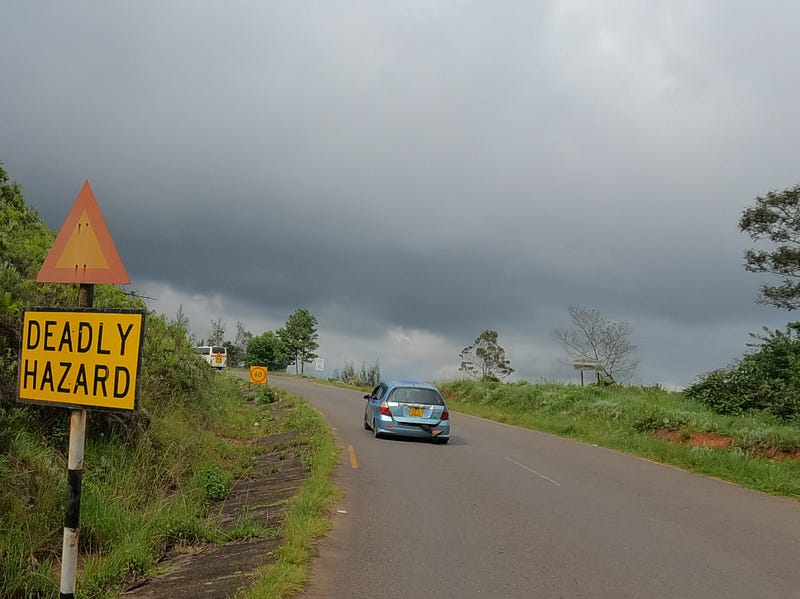
The skies were gray and hanging low and dark with threatening storm clouds as we were climbing in altitude driving the dwindling mountain road through the Eastern Highlands in Zimbabwe.
Not that we weren’t aware of the dangers of steep drop-offs next to the road and lack of barriers but a road sign was ensuring we knew of a deadly hazard ahead. Not sure which one though.
Until I saw that foot hanging out of the boot of the car ahead of us. Yip, that was someone's foot who was traveling in the boot. Yes, that’s Africa. No more questions about the deadly hazard, I guess.
Over the past ten years, I have spent more time living and traveling through and across Africa than I have spent time on any other continent. As you might assume, I did love it. Every country I visited, with all its challenges and setbacks, still brought me joy.
But it’s not just joy and happiness I took with me and still carry with me every time I leave the continent. I have learned so much in my time there, you will only understand if you’ve been.
Anyhow, even in Africa, there are signs put up at places you might not expect them and while you’ll find fewer warning signs, you’ll find more entertaining ones, I’d say.
One of the first things I learned as a very punctual and organized German girl was that nothing would happen quickly. If I was late or needed something to get done, nobody would ever feel stressed or get in a rush to get something done.
At first, it was very frustrating but with time I learned to deal with it. After all, if I needed something quickly, I could or should just do it myself.
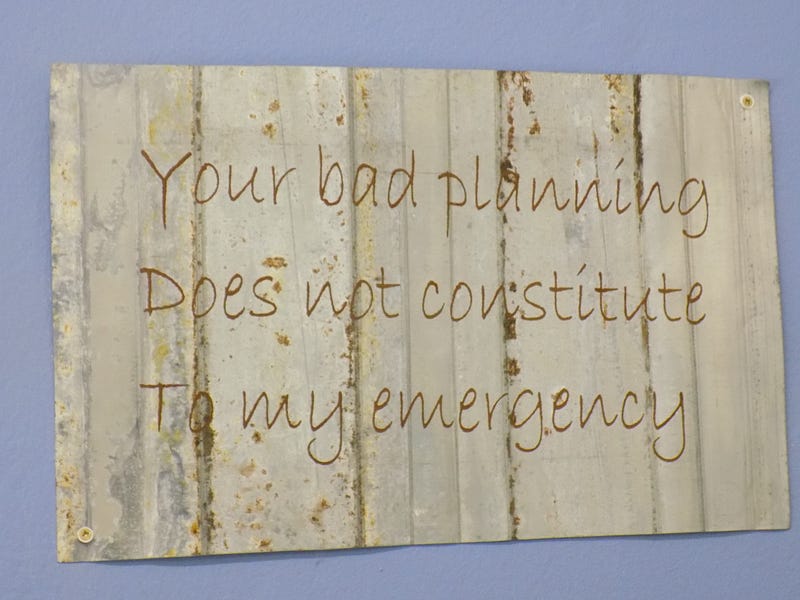
However, the sign below sums up their mindset the best. Just because you messed up something and planned a late arrival, does not mean a taxi driver needs to rush you to a destination or whatever else you are requesting to get done.
“Your bad planning does not constitute to my emergency.”
The one thing I still love about many places in Africa is the lack of warning signs. Nobody needs to warn the locals not to put their cats into the microwave or to look up when crossing a road. People still use their common sense because if they don’t they most likely will die.
You could say that is a bad thing, I think it’s a good one. Thinking is what brought us this far and using our brain cells has never caused any harm. This is why you can swim atop a waterfall with the risk of being swept down while in most Western countries but Europe for sure, they'd have a big fence up around the entire area.
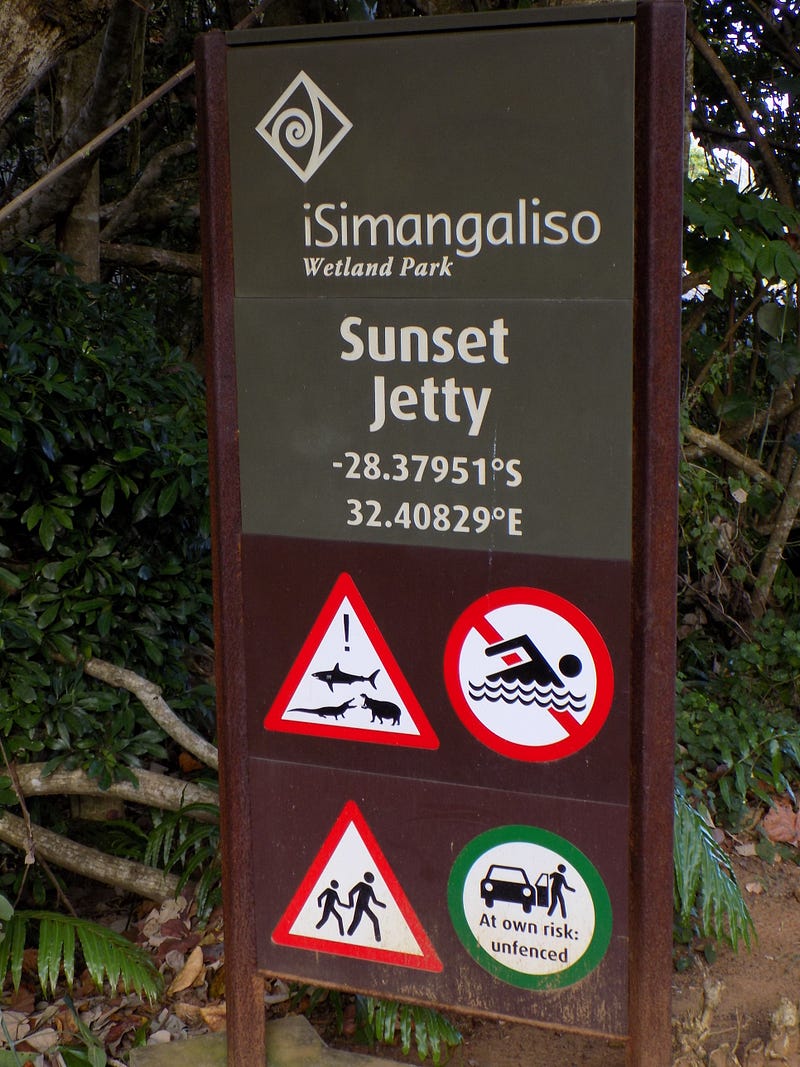
Anyway, sometimes some dangers aren’t so obvious. Like snakes hiding in the bushes or crocodiles in the water. And while most locals know the whereabouts, they seemed nice enough to warn its visitors. What you do with it, is up to you. No fence is stopping you from heading closer to the water but if you lose an arm, don’t try to sue them.

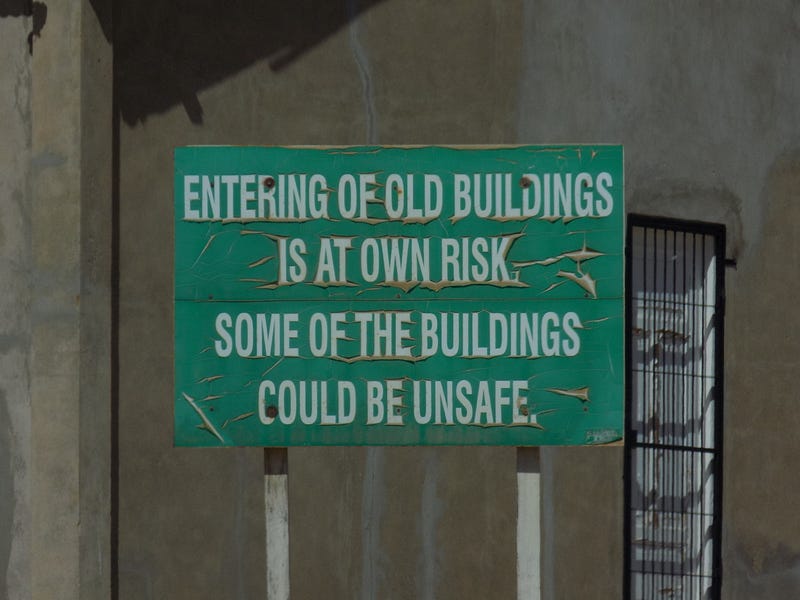
Visiting the abandoned mining town of Kolmanskup in Namibia was one of those places with obvious and not-so-obvious dangers. The ghost town had been empty for decades and it was visible how the desert took back its land.
The houses were covered in sand and the wooden beams supporting the constructions appeared old and fragile. A sign was warning you of the, in my eyes, obvious. The collapse of buildings. What they did not warn of though are snakes, spiders and scorpions residing now in those homes.
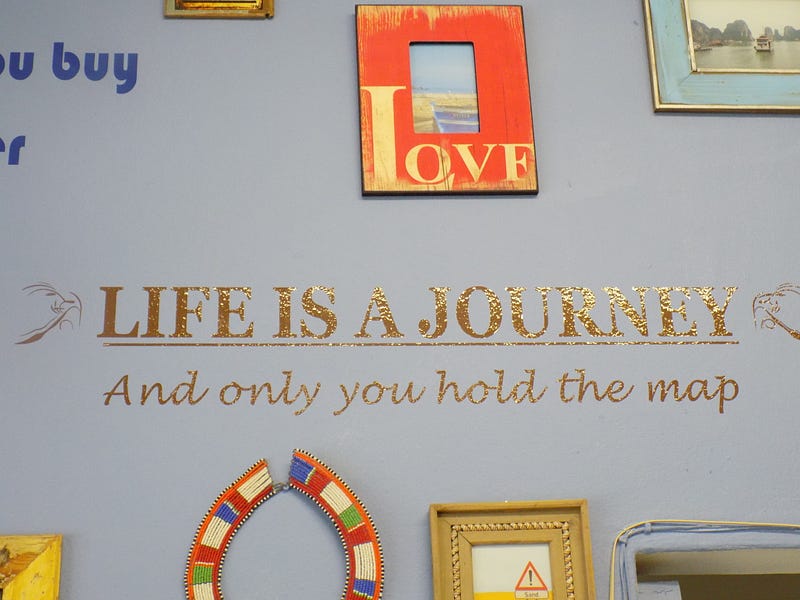
On a more positive note, I found a few happier quotes and mantras printed on the walls of a hostel. They are both popular ones and that is for a reason. They are true.
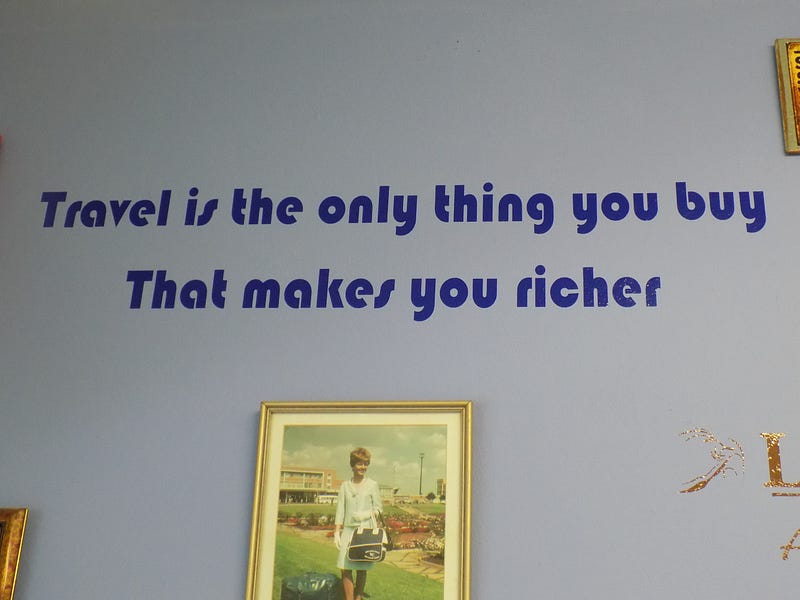
It’s on you to take the next turn in your journey called life. You decide on left or right and if you go fast or slow. I’m not here to judge, I’m just saying you hold the map in your hands, so choose your destination wisely.
Also, there might not be anything else you spend money on, and end up being richer afterward. At least richer in experiences and knowledge.
I’ve always been an ocean girl, taking a plunge in the rough Atlantic ocean over a swim in the pool anytime. While my time tanning on the beaches is over, I now much rather walk along the shorelines, watch people and wildlife and avoid the midday sun altogether.
From Ghana to Tanzania and all the East coast down via Mozambique to South Africa, I’ve surfed in the Atlantic, went scuba diving in the Indian Ocean and plunged in the cold waters off the coast of Namibia.
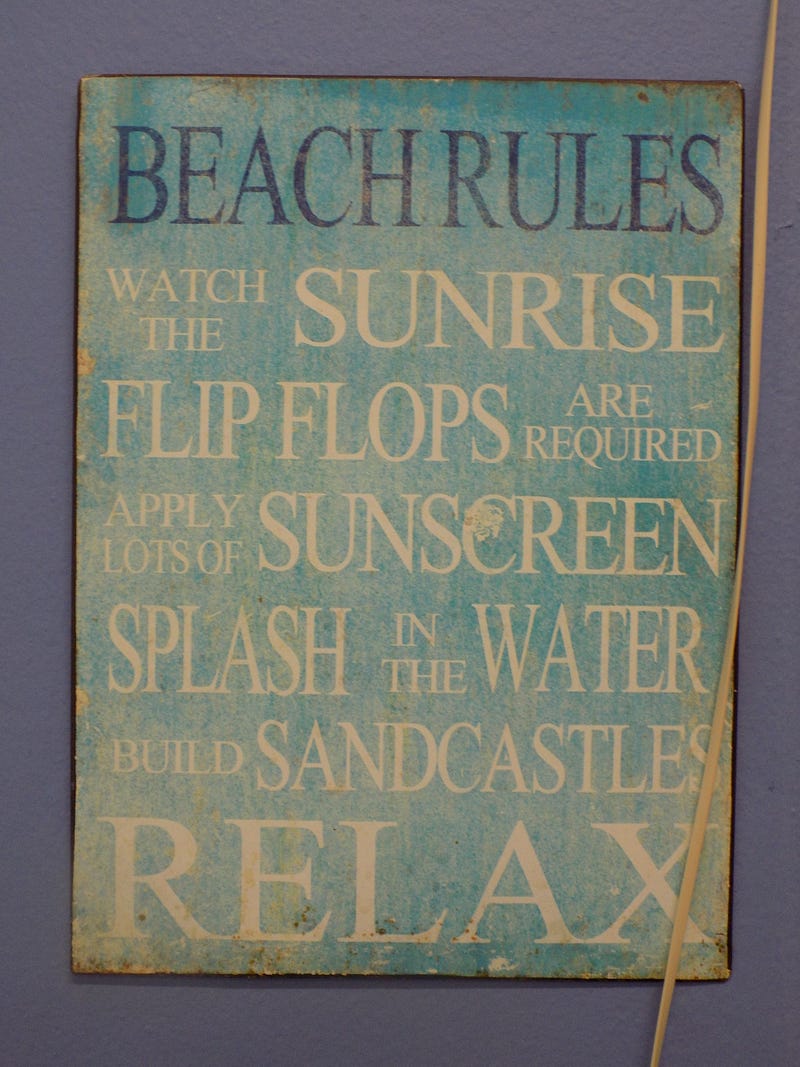
Listen to the rules that apply to any beach in the world, even though I’d say I walk more often barefoot than in flip-flops.
- Watch the sunrise
- Flip-flops are required
- Apply lots of sunscreen
- Splash in the water
- Build sandcastles
And most importantly
Relax.
Filled with obscure and weird places, many African countries have presented some very unique towns and small villages. Most of them invited you with creative signs because if there is one thing the Africans aren’t lacking, it is creativity.
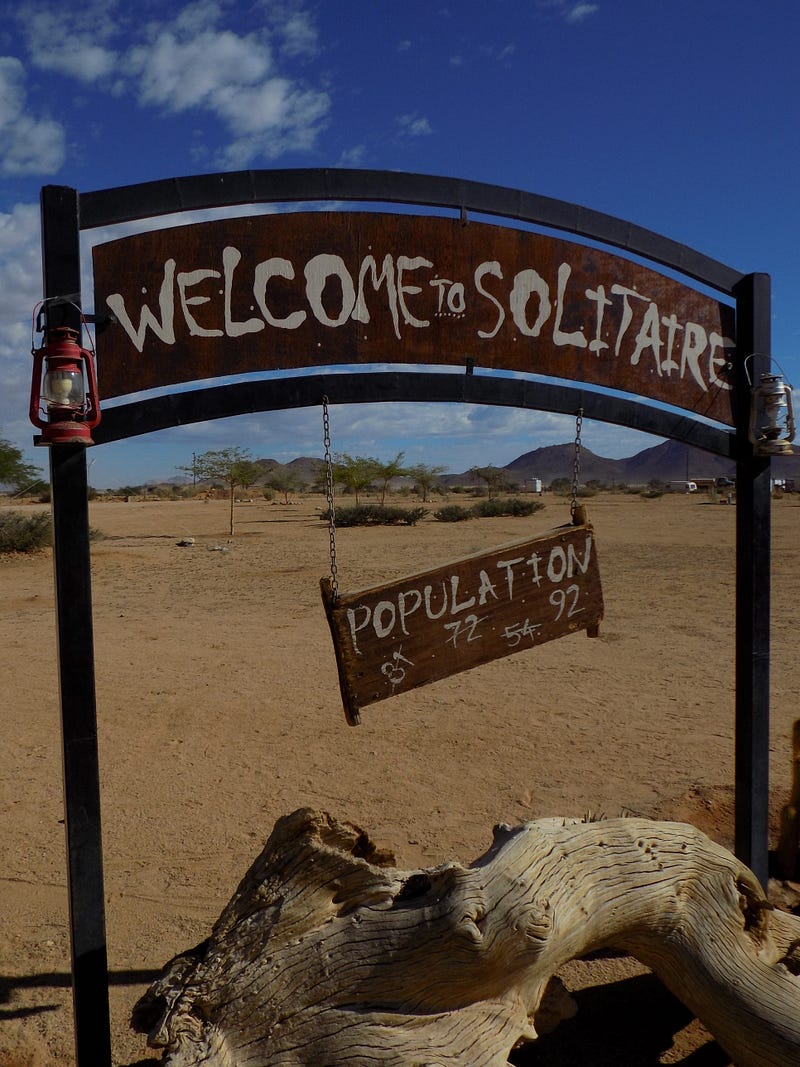
Solitaire is a sandy town in the oldest desert in the world, the Namib. I had heard about its bakery and the best apple pie in the world before I could point a finger on a map saying where this place was located.
While I might not confirm they do have the world's best apple pie, that pie was certainly delicious and the weirdest place I had ever eaten one before.
Having no more than that said bakery, a fuel station and a workshop since cars break down, especially on those rough desert roads, the population has last been marked at 92. In case you were wondering.
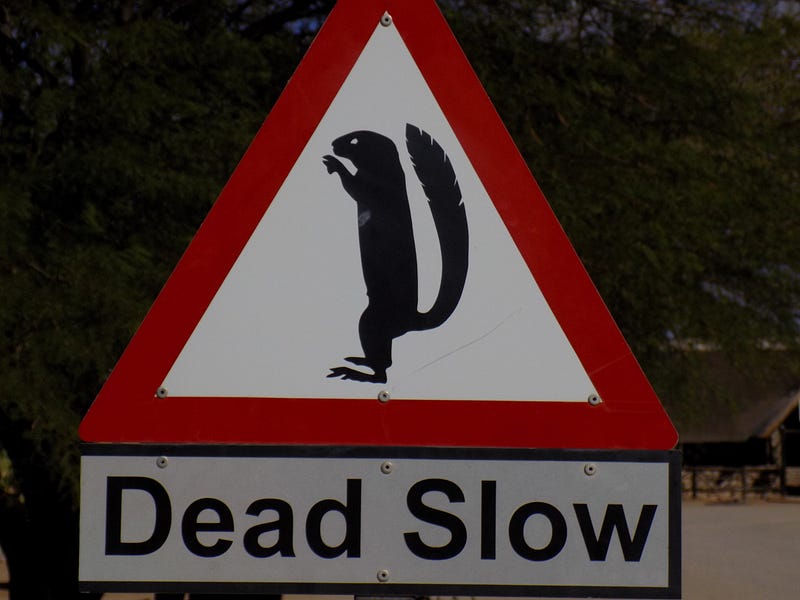
Heading further into the depth of the Namib, you get warned to be ‘dead slow’. Not sure if it means I should drive slow or could be dead otherwise or if I should be dead, so slow animals like the meerkats can cross the road.
Either way, probably a sign you wouldn't see anywhere else. At least not with those words attached.
I’m sad I never took pictures of the red warning triangle with ‘sand’ or ‘wind’ written inside as they are very common on the roads that cross the Namib Desert. Yes, both of them and especially in combination, sand and wind can be dangerous.
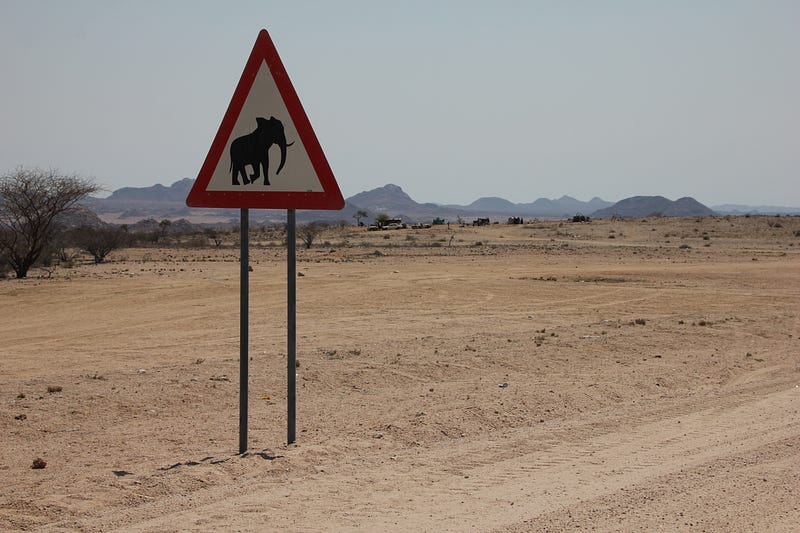
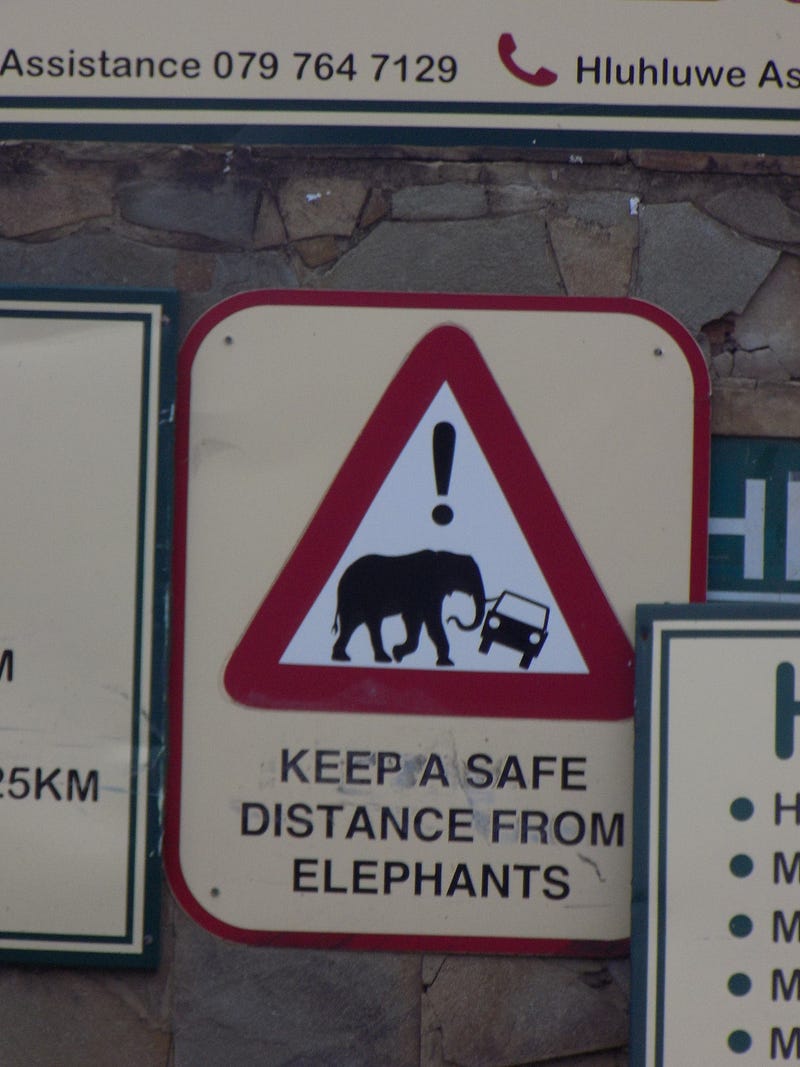
Just like an elephant. You might laugh at the sign but when you’re sitting inside a small vehicle and are driving through the countryside, not a national park, one can very much encounter an elephant in Namibia. And all of a sudden you feel small. Inside your car. So stay alert.
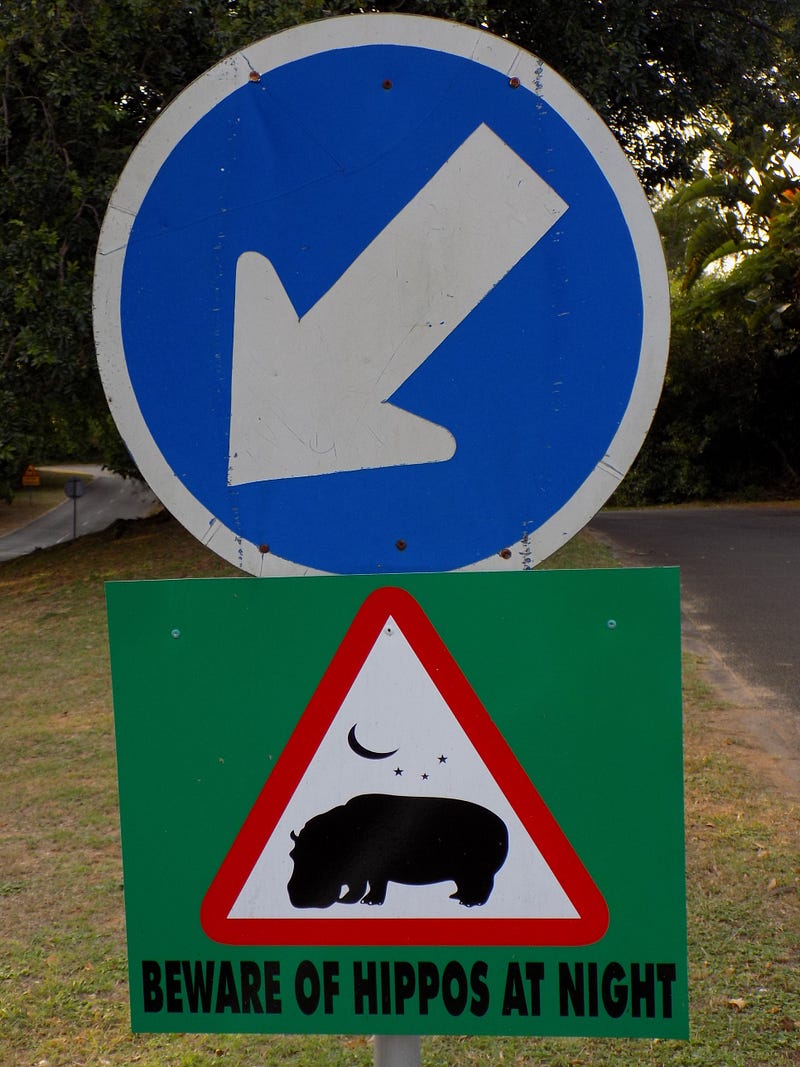
Another town known for its wildlife is in the neighboring country of South Africa. St. Lucia would probably not be such a tourist destination if it weren’t for its hippos roaming the streets at night.
Yes, you did hear that correctly. Hippos climb out of the water in the evening to feed on the lush grass of the town's lawns. And if you think what should be dangerous about this ‘cute’ animal, I need to lecture you that this species is responsible for most human deaths caused by animals. In Africa.
Yes, they might be herbivores but an upset hippo will rip your body in half. Their mouths are massive and equipped with very sharp teeth. Out of defensive reasons.
While hippos can’t swim, they walk on the bottom of the pond or river and then pop up to the surface, they are very fast on land and will catch up to you. As my guide said, once a hippo is running, your only way of survival is to trip the person next to you. Sounds harsh but is the truth.
One more survival tip from someone who has camped in the wilderness on a lake filled with hippos and crocs is to never walk between a mother and their young (as it counts for any species) and to never walk between a hippo and its direct path toward the water. Thank me later.
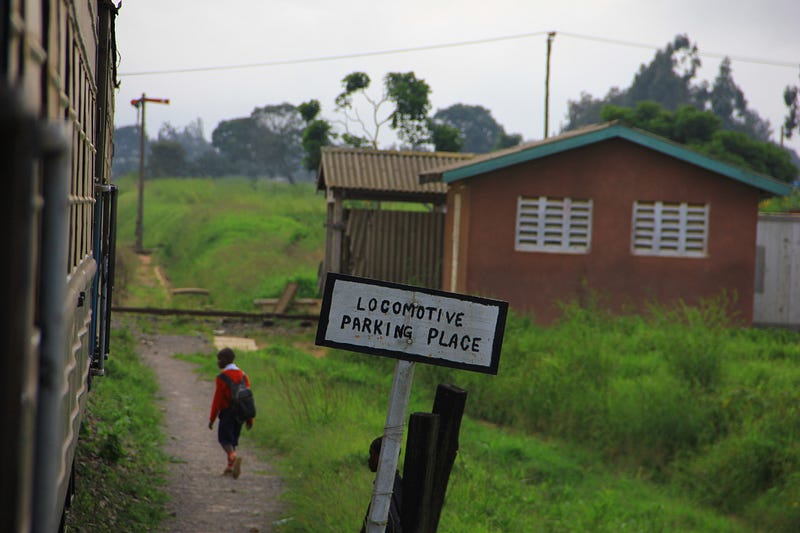
Back up the continent, we are crossing the countryside of Tanzania by train and in case you are wondering what a parking place is for, on this one you can’t park your car. It’s the locomotive’s parking place.
We stood there for about an hour waiting for an incoming train to pass as most of the way only had single-lane tracks and only in such parking places trains could pass each other.
When I traveled around Ghana, I learned Lake Volta in the East of the country was the biggest man-made lake in the world. It was quite impressive since you’d expect such a large body of water to be rather dirty but visiting an island somewhere in the middle I learned the locals were drinking its water. And it looked very clean.
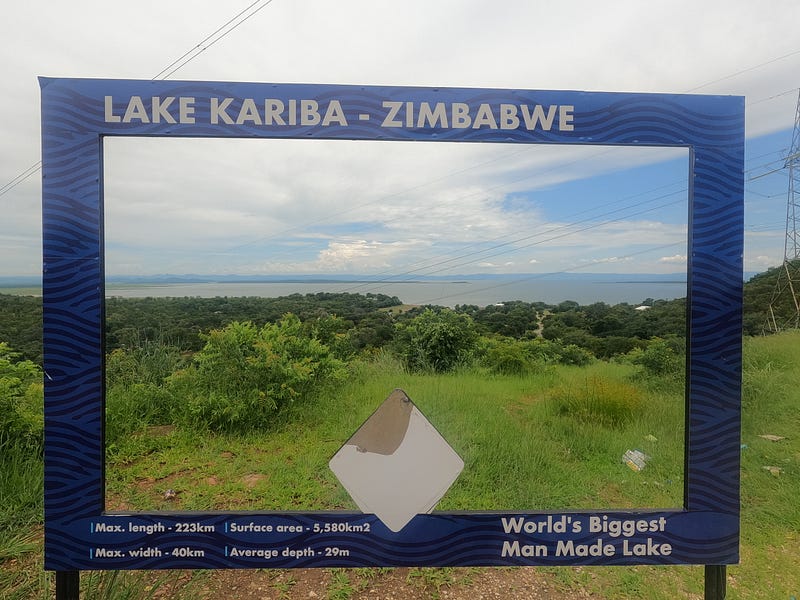
However, a few years later I traveled to another African country and stumbled upon the sign below claiming the same thing. Lake Kariba in Zimbabwe is advertised as being the ‘world’s largest man-made lake’.
So what is true?
After doing some research and finding a few different lakes atop the list of the largest man-made dams in the world, I could filter out differences in the characteristics.
While Lake Volta in Ghana is said to be the largest man-made lake by surface area, Lake Kariba on the border between Zambia and Zimbabwe has more volume. So now, you know.
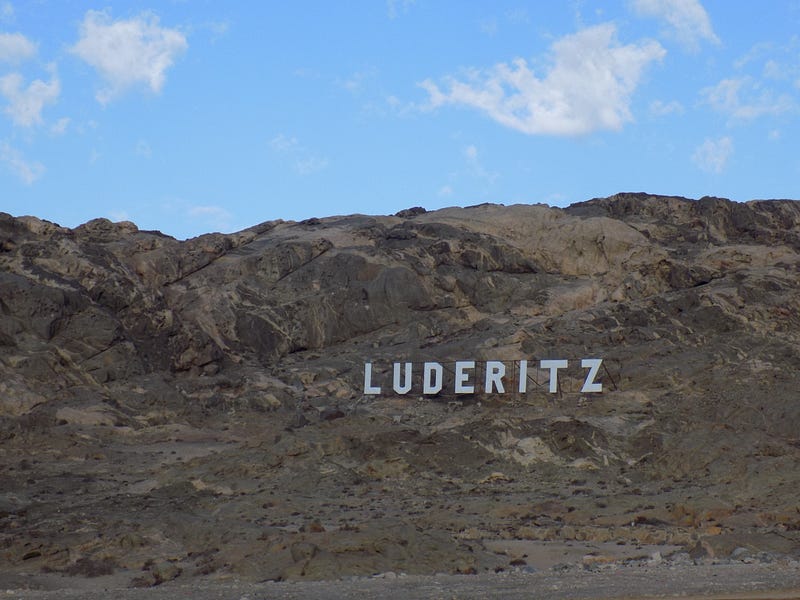
Another thing about African towns is they can put up names in places and ways you probably would say it's copyright fraud. Not here. Things rule differently in countries where weather patterns still decide whether you are going to work or not.
This is Lüderitz. A former German town and a weird place on the Atlantic Ocean on Namibia's coastline. It’s far from everything and everyone else in the country except for the ghost town of Kolmanskup which might be the reason why most people come down here.
Unless you want to see penguins off the coast where dunes rise to the skies. Yip, there are penguins up here. The only species of penguins found on the continent and while I haven’t seen them, my mom and grandmother got to see them on their visit to Lüderitz.
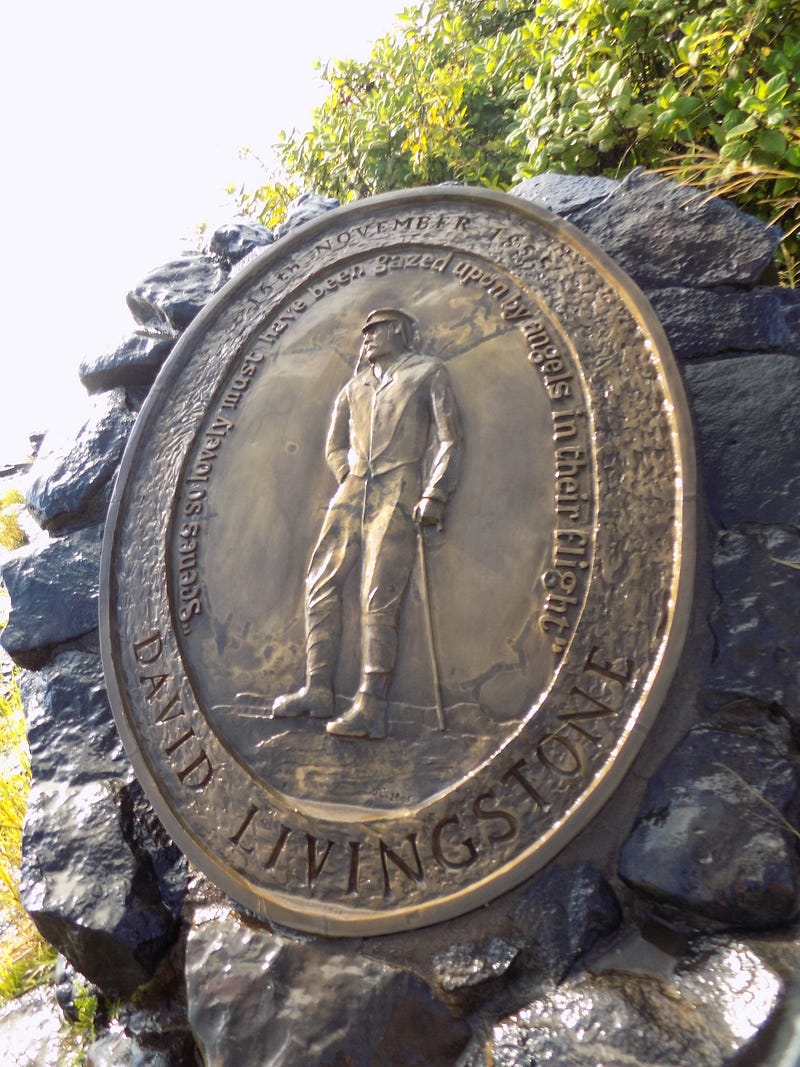
Another sign and marker causing and creating lots of conflicts. While David Livingstone might have been the first European explorer to see the beauty of the majestic Victoria Falls, locals have lived alongside nature’s spectacle for centuries before that.
And when David decided to name those falls honoring his royalty, the queen, the Victoria Falls between Zimbabwe and Zambia had a much nicer and more fitting name given by the indigenous population.
The smoke that thunders.
Because that is what I saw and heard upon my first and second visits. The fine mist rises to 400 meters into the air and sometimes even twice as high falling then back down again in the form of heavy showers creating a rainforest on the slopes of the narrow gorges. A unique ecosystem home to many species otherwise not found in the area.
That rising mist can be seen from up to 50 kilometers distance and is the smoke the locals referred to. And now imagine water dropping down a hundred meters across a length of 1,700 meters (5,600 ft) and you’ll know where the roaring sound comes from.
And since I am not seeing the end of the African sign forest, I’m taking a break right here. I hope I made you wonder, smile and laugh with this diverse selection of signs.
To be continued…
This is a prompt response to January’s writing challenge:
Read other participants and their responses. A funny and creative one and then a heartfelt one filled with kindness and love:
Rhonda Carrier with “Recycle Signs: It’s Monkey Business”
Jillian Amatt - Artistic Voyages with “Following Signs of Love Around the World”
Join my email list here if you would like to read more photo essays.
Shutterstock | Instagram | YouTube | Mailchimp | Amazon | Redbubble