
Life Lessons
Money is Time
To this day, I never equate money with class.
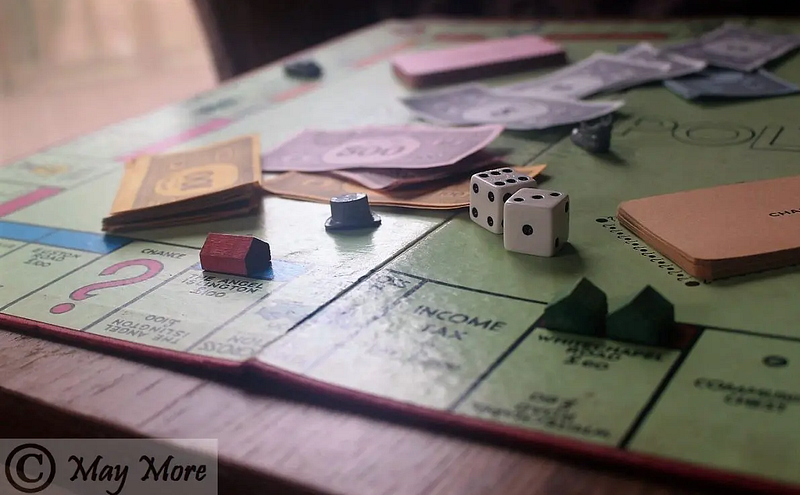
I truly believe that kids should be taught about money at school.
In a way, I suppose they actually teach themselves a little when playing “shop games” and such like. But I think the basic principles regarding money — how it works, the history of money and working to earn — should be covered in the classroom. Before the children leave primary school. Who knows, perhaps growing up with such knowledge would make a difference to choices made later in life.
Younger Days and Money
When I was about eight, my dad left — then died. I knew my mum, brother and I were not money rich. Often we were given second hand clothes. In those days wearing somebody else’s hand-me-downs was not cool. I was bullied about this for a while. But I wasn’t resentful, as I knew my mum was doing her best. She worked hard. Travelling up to London every week day. On a Friday evening my bother and I would meet her from the railway station and together we would go to the supermarket. Mum didn’t drive, so she needed our help to carry the weekly shop home. By the time I started secondary school, I was used to not asking for things that cost too much. It had become second nature to me.
What did all that teach me about life and money? I can’t say I really thought about it at the time, but I knew I was grateful to my mum for trying her best for the family. For making homemade cakes or fudge or coconut ice at the weekends. For taking me to the library and not getting on my case all the time. Making sacrifices, so I could have a brand-new skirt for my first school disco.
Sharing Money
However, I could not understand why money was not just shared around. It seemed my Aunt and Uncle had more than us, and I wondered why they simply did not give my Mum some of theirs? Of course, that is not generally how the world works. But I do remember they were very generous with their time. In the school holidays, when my mum was working, my brother and I would stay with them. They were strict, but I gained a lot by the routines they put in place. My mum was not really one for order. Also, my uncle took us swimming every week and taught me to swim. I have never grown tired of this sport.
Teenager in Paris!
I had just become a teenager when my mum remarried, and we moved into my stepfather‘s house, selling ours. We now had money. But nobody told me, so I carried on being frugal. One day a friend was round for tea and mentioned the school Easter week long trip to Paris and the Loire valley. She was excited to be going. Mum was shocked that I hadn’t even told her about it. I assumed we wouldn’t be able to afford it. But we could… And I went — finding the experience all the more amazing for never having been able to do anything like that before.
When I write a post like this, I miss my mum more than ever…
Class and Money
As a late teen, I hadn’t considered whether money was linked to class. Well not until I had dated a few private school rich lads and was shocked to the core when my stepfather told me they were in a different class to me, to us. That day he really crushed something in the teenage May. My Gran was such a classy lady. So was my mum. They were both cultured. They didn’t have money, but they acted well, with respect for all. To this day, I never equate money with class.
Genes and Money
I am quite convinced there is some kind of genetic predisposition to how we deal with and understand time and money. It is not all down to what we have been taught or learned that leads to our overall stance and behaviour.
This thought was born out of the fact that my brother and I — both adopted — but brought up in the same environment and so had similar money experiences. But right from the start he was an obsessive saver, and I was someone who spent what I had — without going above my means, but would never have dreamed of hoarding money in the bank or under my bed like him. Even though, from aged fourteen, I earned my own.
Money doesn’t grow on trees
If I was asked to mention one thing about money that I think is ultra important for young people to know, it would be the following:
Banks create money out of thin air. For example, if you ask the bank for a loan to buy a car, and it is agreed, they certainly don’t then go and get a load of actual solid money out of the safe and deposit it into your account. No. They just add some digital numbers to your account and — hey presto, you now have those numbers to take out of your account as hard cash and buy the car.
However, you also have a debt to pay the bank. Which is confusing as they made the money up in the first place…
Of course, if this happens too often, with too many people, then there will be a financial crisis.
“When banks extend loans to their customers, they create money by crediting their customers’ accounts.”
Sir Mervyn King, Governor of the Bank of England 2003–2013
Nowadays
Now I am older, my ideas about saving have changed. As a younger woman, I viewed me as my greatest asset in some ways. I knew I would always be able to go out to work and to earn what I needed to enjoy my recreational time.
I very much worked to have the money to experience all I could.
I wanted money to enjoy my time learning new things and seeing far away places, as well as chilling. This meant I didn’t think too much about saving for tomorrow.
Now I am older, I understand that it is important to put aside some £££ for the time when I won’t be so willing or able to work. Do I wish I had saved for this moment all my life? No… Life is for living, and I have had some amazing moments so far. And hope for more.
Concluding
Money may make the world go around — in some people’s eyes. But, it doesn’t grow on trees. Yet both time and trees — in my opinion — are worth more than money.
This was written for the current KTHT prompt.
Another Story by May
And one by Carmellita


