avatarDaniel Hopper

Free AI web copilot to create summaries, insights and extended knowledge, download it at here

5825

Abstract

han one glass of juice and contains fewer calories.</p><p id="343e"><i>Fun fact: I can peel and eat an orange in under 30 seconds.</i></p><figure id="d644"><img src="https://cdn-images-1.readmedium.com/v2/resize:fit:800/1*46T2MCc5m59nHPvvA0qM6Q.jpeg"><figcaption>Photo by <a href="https://unsplash.com/@nate_dumlao?utm_source=unsplash&amp;utm_medium=referral&amp;utm_content=creditCopyText">Nathan Dumlao</a> on <a href="https://unsplash.com/s/photos/vegetables?utm_source=unsplash&amp;utm_medium=referral&amp;utm_content=creditCopyText">Unsplash</a></figcaption></figure><h1 id="bf0f">Vegetables</h1><p id="aa29">Typically, vegetables are very low in carbohydrates and calories in general, meaning they should be a foundation of any diet.</p><p id="e6c3">Thus, you can eat very large amounts without greatly increasing your calories Moreover, as they’re packed full of nutrition and high in fibre, they’re great for our general health and wellbeing.</p><p id="0589">Considered <a href="https://medlineplus.gov/ency/imagepages/19529.htm#:~:text=Complex%20carbohydrates%20are%20made%20up,and%20are%20used%20as%20energy."><i>complex carbs</i></a>, the fibre in vegetables helps the food digest slower and the high water content increases the volume of food, making us feel more satiated. <a href="https://en.wikipedia.org/wiki/Satiety"><i>Satiety</i><b></b></a><b> </b>is when<b> </b>we feel satisfied after food and no longer hungry, meaning we have fewer cravings for bad foods.</p><p id="0f65">Here are five tasty, low-calorie, and notoriously dense vegetables that are a great addition to many meals.</p><p id="1764" type="7">“Satiety is positively associated with the protein, fibre and water content of foods.” — Vander Wal, 2006</p><p id="9e06"><b>Spinach —</b> One of the most nutrient-dense foods we can eat is spinach. High in fibre and packed full o<b>f </b>nutrients such as<i> iron</i>, which help to keep a healthy immune system. Spinach also helps us stay hydrated, as it's <a href="https://www.bupa.co.uk/newsroom/ourviews/ten-water-rich-foods-hydration#:~:text=Spinach%2C%2093%25%20water,a%20good%20source%20of%20iron.">93% water</a>.</p><p id="4dd6">As it's a leafy green, spinach also contains <a href="https://en.wikipedia.org/wiki/Thylakoid#:~:text=Thylakoids%20are%20membrane%2Dbound%20compartments,membrane%20surrounding%20a%20thylakoid%20lumen."><i>thylakoids</i></a> — a compound in some plants that <a href="https://www.ncbi.nlm.nih.gov/pmc/articles/PMC4539357/#:~:text=We%20have%20found%20that%20thylakoids,modulation%20of%20the%20gut%20microflora.">could increase satiety to reduce hunger</a>.</p><p id="0115" type="7">“Receiving a thylakoid-enriched meal can decrease appetite and probably food intake in short term.” — Amirinejad et al., 2019</p><p id="878f"><b>Cauliflower — </b>coming from the <a href="https://www.eatright.org/food/vitamins-and-supplements/nutrient-rich-foods/the-beginners-guide-to-cruciferous-vegetables#:~:text=Cruciferous%20veggies%20are%20a%20diverse,%2C%20collards%2C%20watercress%20and%20radishes."><i>cruciferous</i></a> vegetable family, named from their blossoms that resemble a cross, the cauliflower is packed with nutritional benefits.</p><p id="7ac8">Low in calories, with only 25 calories per 100 grams, meaning cauliflower is filling. It’s high in <i>vitamin C, potassium </i>and<i> vitamin B6</i>, to boost immunity.</p><p id="8a91">Cruciferous vegetables contain phytochemicals that could support weight loss as well as <a href="https://www.webmd.com/food-recipes/features/super-veggies-cruciferous-vegetables">fight cancer</a>.</p><p id="4e1f"><b>Broccoli — </b>another cruciferous vegetable and a great low-calorie option is broccoli. At 90% water content, and just 35 calories per 100 grams, it’s very filling. The broccoli also has healthy doses of<b> </b><i>vitamins c </i>and<i> k</i>.</p><p id="4acd"><b>Carrots — </b>One of the tastiest and most versatile vegetables is the humble carrot. A great addition to any meal and just as good raw as a snack, the carrot also happens to be low in calories and high in fibre, with three times the amount of fibre as a similar serving size of leafy greens.</p><p id="6e01">The carrot is high in <i>vitamin A </i>and<i> beta carotene</i>, to assist in lowering blood sugar levels.</p><p id="6b5d"><b>Peas —</b>As they’re a starchy vegetable, and they typically have <a href="https://www.webmd.com/diet/difference-between-starchy-non-starchy-vegetables">more calories than non-starchy vegetables</a>, peas get a bad rap. But in general, vegetables are very low in calories, so eat as many as you want!</p><p id="98a9">100 grams of peas have 81 calories, which is more than double that of broccoli. However, the pea is very fibrous and high in protein, with 5 grams of fibre each per 100 grams. Thus, peas are very satiating.</p><figure id="1df9"><img src="https://cdn-images-1.readmedium.com/v2/resize:fit:800/1*sublMotlaaUuBsnagSLDjQ.jpeg"><figcaption>Photo by <a href="https://unsplash.com/@carolineattwood?utm_source=unsplash&amp;utm_medium=referral&amp;utm_content=creditCopyText">Caroline Attwood</a> on <a href="https://unsplash.com/s/photos/fish-meal?utm_source=unsplash&amp;utm_medium=referral&amp;utm_content=creditCopyText">Unsplash</a></figcaption></figure><h1 id="b7a9">Meat & Poultry</h1><p id="02b8">Meat and Poultry are very high in protein. They also have a higher <a href="https://en.wikipedia.org/wiki/Protein_quality">protein quality</a> than that of produce or seeds and nuts, meaning it's better utilised by our bodies.</p><p id="1438">Protein is satiating, meaning you don’t feel as hungry. Therefore, a diet high in protein is beneficial for fat loss as well as for building muscle.</p><p id="c683" type="7">“Higher-protein diets… provide improvements in appetite, bodyweight management,

Options

cardiometabolic risk factors, or all of these health outcomes.” — Leidy et al., 2015</p><p id="9b61">Meat and poultry have no-to-low carbohydrates meaning they don’t have a high number of calories either. Choosing lean meat options will reduce the number of fats also.</p><p id="f258">Here are some great meats and poultry options to add to your diet for your lean protein fix.</p><p id="99e8"><b>Fish — </b>As well as being high in healthy <a href="http://omega-3 fatty acids"><i>omega-3 fatty acids</i></a> and <i>b vitamins</i>, fish is high in protein and usually low in fat, especially when compared to other meat options such as beef. Tuna and Salman are two great options in terms of nutrition and availability — the tinned variety is a good snack to keep in the pantry.</p><p id="521a"><b>Chicken breast — </b>Very high in protein but low in calories, chicken breast is a great addition to any diet. There are around 165 calories per 100 grams, most of those made up of 30 grams of protein. Chicken is also very versatile; it can be used in a variety of meals, from sandwiches to salads to stir-fry.</p><p id="c375"><b>Eggs —</b>High in protein and healthy fats (omega 3), the humble egg is also high in many essential vitamins and minerals such as <i>iron and vitamin D</i>.</p><p id="fceb">Eggs can be added to a variety of meals or eaten on their own hard-boiled. Fried, scrambled or poached eggs on wholegrain toast is a great option.</p><p id="0d96" type="7">“The inclusion of eggs in a weight management program may offer a nutritious supplement to enhance weight loss.” — Vander Wal, 2006</p><figure id="8514"><img src="https://cdn-images-1.readmedium.com/v2/resize:fit:800/1*NqUQiMu2SNjcImD_C6OpIA.jpeg"><figcaption></figcaption></figure><h1 id="c251">Other</h1><p id="8800">There are so many great options, but only a few spaces left. I’ll give an honourable mention to seeds and nuts such as the almond. But, there can only be 16. Here are the final three foods that are a great addition to any diet to reduce calories and enhance nutrition to burn body fat.</p><p id="a447"><b>Popcorn — </b>clearly, it’s not movie popcorn that makes the list. By adding a lot of butter or sugar to popcorn, the calories skyrocket quickly. But, if you pop your own popcorn at home and add a little salt or stevia, popcorn is a healthy and low-calorie snack. Three cups of air-popped popcorn contain just 93 calories.</p><p id="7241"><b>Cottage Cheese — </b>Dairy products tend to be high in protein and <i>calcium</i> and cottage cheese is no exception. At only around 100 calories per 100 grams, almost half of those calories come from protein.</p><p id="4036">In <a href="https://pubmed.ncbi.nlm.nih.gov/22642074/">a 2012 study</a>, over a year, participants on high protein diets including cottage cheese decreased their body weight by an average of 6.2 pounds (2.8 kg) in women and 3.1 pounds (1.4 kg) in men. They also experienced a reduction in waist size.</p><p id="7dcd"><b>Beans and legumes — </b><i>beans, beans, they’re good for your heart</i>… and they’re great options for sustaining a healthy weight and general health. Dense in many micronutrients, beans are high in protein and fibre, meaning they’re very satiating.</p><p id="b83e">For example, <i>lentils</i> have just 116 calories per 100 grams, with 9 grams of protein and a whopping 8 grams of fibre.</p><p id="3b63">Common bean varieties you can find in your supermarket are <i>lentils, black beans, kidney beans, pinto beans, Cannellini beans </i>and<i> chickpeas</i>.</p><h1 id="542f">Conclusion</h1><p id="46bd">In this article, we’ve explored 16 food options that are great additions to any diet to help lose body fat and maintain our health.</p><p id="1d46">Those foods are berries, kiwifruit, apples, watermelon, oranges, spinach, cauliflower, broccoli, carrots, peas, fish, chicken breast, eggs, popcorn, cottage cheese and beans/legumes.</p><p id="60df">Bear in mind that adding these foods to our diet isn’t a magical fix. Eating these foods doesn’t mean they’ll somehow magically melt off your body fat. That’s not how it works.</p><p id="530d">At the end of the day, the total number of calories we consume ultimately controls how much body fat we store. But adding these foods to your diet to replace higher calorie options means that you’ll be consuming fewer calories.</p><p id="dc3f">Eat fewer calories than last week and you’re on the road to successful fat loss!</p><p id="360d"><b>Thank you for reading.</b></p><p id="03ef">If you enjoyed the read, you might be interested in this article about five common cardio mistakes that you should avoid.</p><div id="5155" class="link-block"> <a href="https://readmedium.com/improve-fat-loss-by-avoiding-these-5-common-cardio-mistakes-a99088ee10ea"> <div> <div> <h2>Improve Fat Loss by Avoiding These 5 Common Cardio Mistakes</h2> <div><h3>It’s much easier to eat calories than it is to burn calories.</h3></div> <div><p>medium.com</p></div> </div> <div> <div style="background-image: url(https://miro.readmedium.com/v2/resize:fit:320/1*_e7hSg2EkDCXEkSntIxjcA.jpeg)"></div> </div> </div> </a> </div><h1 id="dacc">Read More Medium Articles</h1><p id="22e4"><i>Non-Medium members can only read 3 articles a month.</i></p><p id="f7ef"><a href="https://danielhopper.medium.com/membership"><b><i>Become a Medium Member</i></b></a><i> for unlimited access to my content and articles from thousands of other writers for just<b> $5 a month.</b></i></p><p id="557c"><a href="https://danielhopper.medium.com/subscribe"><b><i>Subscribe</i></b></a><b><i> </i></b><i>to be notified when I publish new content.</i></p></article></body>

Maximise Your Fat Loss by Eating These 16 Foods

If you want to lose some weight, why not do it deliciously?

Photo by form PxHere

Many of us struggle with our weight.

Many of us also have terrible diets that are high in fats and refined sugar which cause us to overconsume calories.

Funny that…

When people think of dieting, they think of the various restrictions on what they’re allowed to eat. It doesn’t have to be that way.

In this article, we’ll explore 16 tasty foods that will help you lose fat and then keep it off.

Fruit

Because of its high sugar content, the fruit gets a bad rap from some in the fitness industry. However, fruit is full of essential micronutrients (vitamins and minerals) and fibre, and there are many very low-calorie options to choose from.

“Whole, fresh fruit probably does not contribute to obesity and may have a place in the prevention and management of excess adiposity.” — Guyenet, 2019

For those concerned about blood sugar spikes, the high fibre content slows its release.

Oh, and most fruit tastes amazing to sweet tooths such as myself.

Fruit should not be avoided for people wanting to be healthy in general, nor should it be avoided on a fat-loss diet.

Hence, Keto is stupid.

Here are five of my favourite low-calorie and tasty fruit options.
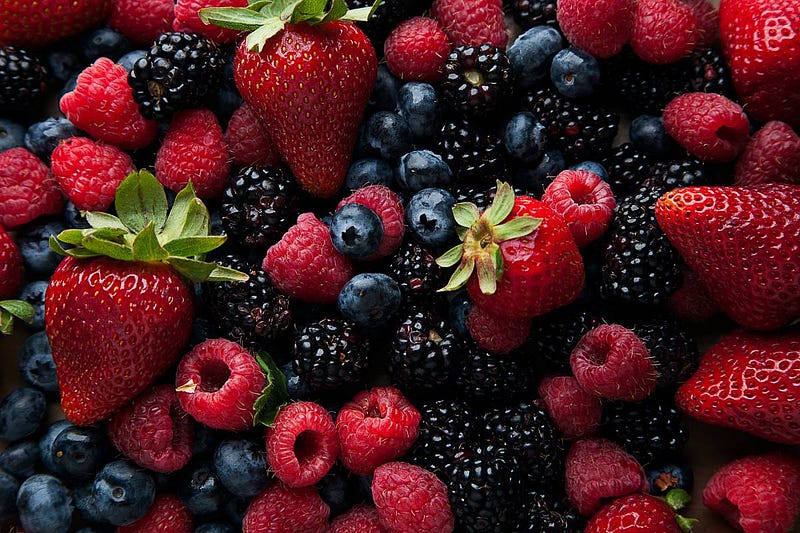
Photo by Nanxi Wei on Unsplash

Berries — Despite what many people think, berries are a low-calorie option. Because they are so sweet, many people probably assume they’re packed full of sugar, but this isn’t the case.

Two very nutritious, low-calorie and tasty berries are strawberries and blueberries. The strawberry contains just 30 calories per 100 grams and the blueberry has just 57.

Berries also contain many important vitamins and antioxidants, which could have a positive effect on cholesterol levels, blood pressure, and inflammation.

Kiwifruit — One of the most nutrient-dense foods we can eat is kiwifruit. Very fibrous, it is a great source of vitamin C, vitamin E, and folate. Some might call it a superfood.

Apples — Low in calories and high in fibre and water content, meaning apples are very filling. 116 calories and 5.4 grams of fibre per large fruit (223 grams).

An observational study of over 100,000 people indicated that people who ate apples lost an average of 1.24 pounds (0.56 kg) per daily serving over four years. Very nutritious, an apple a day keeps the doctor away!

Watermelon — I love watermelon. Because they’re so sweet, people assume the watermelon has a high sugar content — but it really doesn’t! 100 grams of watermelon contains just 30 calories.

Melons have a very high water content to fill us up. It is also high in fibre and abundant in micronutrients such as vitamin C and potassium.

“Body weight regulation is a complex process, and increased water intake should be part of the measures required to reduce the overall risk factors.” — Thornton, 2016

Oranges — Citrus fruits are low in calories and high in vitamin C and fibre. They also have a high water content making oranges quite filling. Research indicates that eating whole fruit rather than drinking juice is most beneficial. Such as oranges, which are over 86% water, filling you up.

One orange has just 45 calories, However, orange juice on average has 111 calories per glass and often has added sugar and low actual fruit content.

Eating two oranges is far more filling than one glass of juice and contains fewer calories.

Fun fact: I can peel and eat an orange in under 30 seconds.
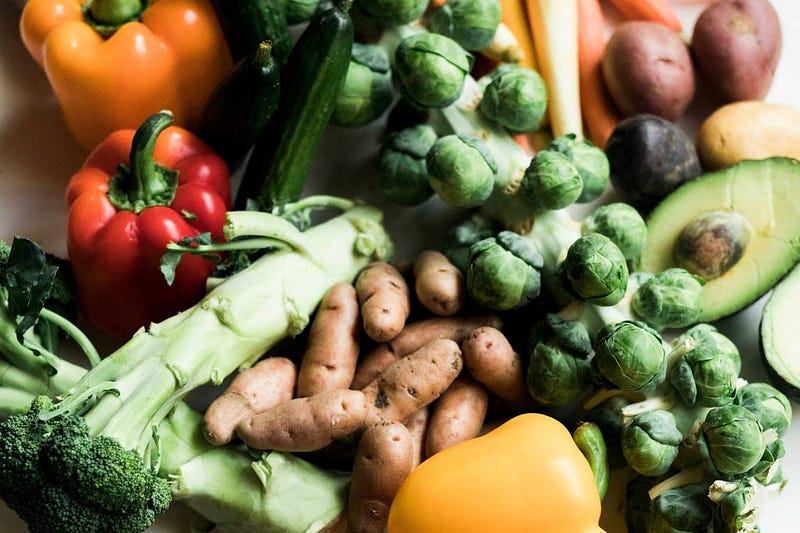
Photo by Nathan Dumlao on Unsplash

Vegetables

Typically, vegetables are very low in carbohydrates and calories in general, meaning they should be a foundation of any diet.

Thus, you can eat very large amounts without greatly increasing your calories Moreover, as they’re packed full of nutrition and high in fibre, they’re great for our general health and wellbeing.

Considered complex carbs, the fibre in vegetables helps the food digest slower and the high water content increases the volume of food, making us feel more satiated. Satiety is when we feel satisfied after food and no longer hungry, meaning we have fewer cravings for bad foods.

Here are five tasty, low-calorie, and notoriously dense vegetables that are a great addition to many meals.

“Satiety is positively associated with the protein, fibre and water content of foods.” — Vander Wal, 2006

Spinach — One of the most nutrient-dense foods we can eat is spinach. High in fibre and packed full of nutrients such as iron, which help to keep a healthy immune system. Spinach also helps us stay hydrated, as it's 93% water.

As it's a leafy green, spinach also contains thylakoids — a compound in some plants that could increase satiety to reduce hunger.

“Receiving a thylakoid-enriched meal can decrease appetite and probably food intake in short term.” — Amirinejad et al., 2019

Cauliflower — coming from the cruciferous vegetable family, named from their blossoms that resemble a cross, the cauliflower is packed with nutritional benefits.

Low in calories, with only 25 calories per 100 grams, meaning cauliflower is filling. It’s high in vitamin C, potassium and vitamin B6, to boost immunity.

Cruciferous vegetables contain phytochemicals that could support weight loss as well as fight cancer.

Broccoli — another cruciferous vegetable and a great low-calorie option is broccoli. At 90% water content, and just 35 calories per 100 grams, it’s very filling. The broccoli also has healthy doses of vitamins c and k.

Carrots — One of the tastiest and most versatile vegetables is the humble carrot. A great addition to any meal and just as good raw as a snack, the carrot also happens to be low in calories and high in fibre, with three times the amount of fibre as a similar serving size of leafy greens.

The carrot is high in vitamin A and beta carotene, to assist in lowering blood sugar levels.

Peas —As they’re a starchy vegetable, and they typically have more calories than non-starchy vegetables, peas get a bad rap. But in general, vegetables are very low in calories, so eat as many as you want!

100 grams of peas have 81 calories, which is more than double that of broccoli. However, the pea is very fibrous and high in protein, with 5 grams of fibre each per 100 grams. Thus, peas are very satiating.
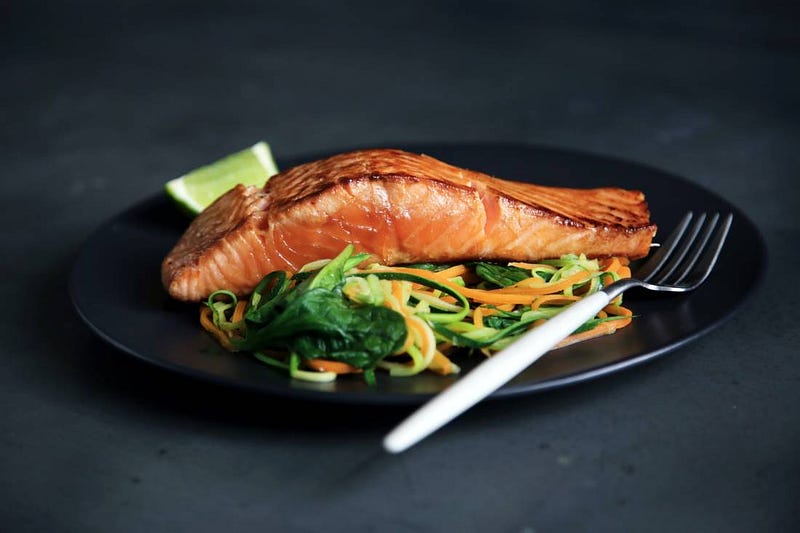
Photo by Caroline Attwood on Unsplash

Meat & Poultry

Meat and Poultry are very high in protein. They also have a higher protein quality than that of produce or seeds and nuts, meaning it's better utilised by our bodies.

Protein is satiating, meaning you don’t feel as hungry. Therefore, a diet high in protein is beneficial for fat loss as well as for building muscle.

“Higher-protein diets… provide improvements in appetite, bodyweight management, cardiometabolic risk factors, or all of these health outcomes.” — Leidy et al., 2015

Meat and poultry have no-to-low carbohydrates meaning they don’t have a high number of calories either. Choosing lean meat options will reduce the number of fats also.

Here are some great meats and poultry options to add to your diet for your lean protein fix.

Fish — As well as being high in healthy omega-3 fatty acids and b vitamins, fish is high in protein and usually low in fat, especially when compared to other meat options such as beef. Tuna and Salman are two great options in terms of nutrition and availability — the tinned variety is a good snack to keep in the pantry.

Chicken breast — Very high in protein but low in calories, chicken breast is a great addition to any diet. There are around 165 calories per 100 grams, most of those made up of 30 grams of protein. Chicken is also very versatile; it can be used in a variety of meals, from sandwiches to salads to stir-fry.

Eggs —High in protein and healthy fats (omega 3), the humble egg is also high in many essential vitamins and minerals such as iron and vitamin D.

Eggs can be added to a variety of meals or eaten on their own hard-boiled. Fried, scrambled or poached eggs on wholegrain toast is a great option.

“The inclusion of eggs in a weight management program may offer a nutritious supplement to enhance weight loss.” — Vander Wal, 2006
Other

There are so many great options, but only a few spaces left. I’ll give an honourable mention to seeds and nuts such as the almond. But, there can only be 16. Here are the final three foods that are a great addition to any diet to reduce calories and enhance nutrition to burn body fat.

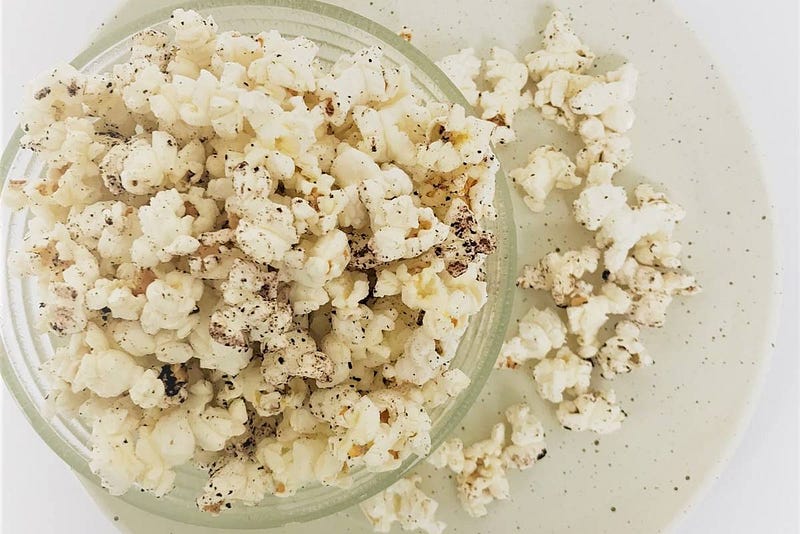
Popcorn — clearly, it’s not movie popcorn that makes the list. By adding a lot of butter or sugar to popcorn, the calories skyrocket quickly. But, if you pop your own popcorn at home and add a little salt or stevia, popcorn is a healthy and low-calorie snack. Three cups of air-popped popcorn contain just 93 calories.

Cottage Cheese — Dairy products tend to be high in protein and calcium and cottage cheese is no exception. At only around 100 calories per 100 grams, almost half of those calories come from protein.

In a 2012 study, over a year, participants on high protein diets including cottage cheese decreased their body weight by an average of 6.2 pounds (2.8 kg) in women and 3.1 pounds (1.4 kg) in men. They also experienced a reduction in waist size.

Beans and legumes — beans, beans, they’re good for your heart… and they’re great options for sustaining a healthy weight and general health. Dense in many micronutrients, beans are high in protein and fibre, meaning they’re very satiating.

For example, lentils have just 116 calories per 100 grams, with 9 grams of protein and a whopping 8 grams of fibre.

Common bean varieties you can find in your supermarket are lentils, black beans, kidney beans, pinto beans, Cannellini beans and chickpeas.

Conclusion

In this article, we’ve explored 16 food options that are great additions to any diet to help lose body fat and maintain our health.

Those foods are berries, kiwifruit, apples, watermelon, oranges, spinach, cauliflower, broccoli, carrots, peas, fish, chicken breast, eggs, popcorn, cottage cheese and beans/legumes.

Bear in mind that adding these foods to our diet isn’t a magical fix. Eating these foods doesn’t mean they’ll somehow magically melt off your body fat. That’s not how it works.

At the end of the day, the total number of calories we consume ultimately controls how much body fat we store. But adding these foods to your diet to replace higher calorie options means that you’ll be consuming fewer calories.

Eat fewer calories than last week and you’re on the road to successful fat loss!

Thank you for reading.

If you enjoyed the read, you might be interested in this article about five common cardio mistakes that you should avoid.

Read More Medium Articles

Non-Medium members can only read 3 articles a month.

Become a Medium Member for unlimited access to my content and articles from thousands of other writers for just $5 a month.

Subscribe to be notified when I publish new content.

Nutrition
Diet
Health
Fitness
Fat Loss
Recommended from ReadMedium