Kiwifruit Is the Only True Superfood
There seem to be a new “Superfood” most weeks… But this one really is.
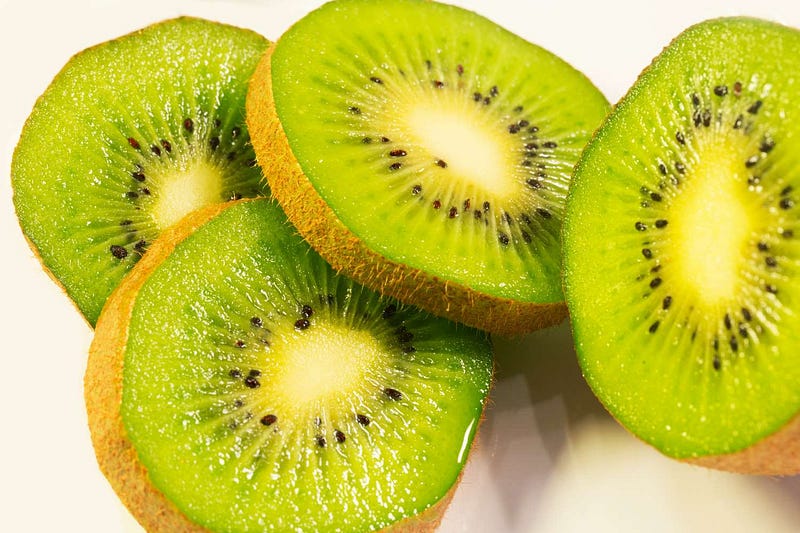
Did you know that kiwifruit contains only around 42 calories on average?
Did you know that kiwifruit contains over 20 micronutrients?
Tangy but sweet, the kiwifruit is indeed a treat.
This article explores kiwifruit and the many benefits that make it the most super of all Superfoods (probably).
What is a Kiwifruit
Considered a berry, the Kiwifruit is grown on vines, 18 to 24 feet in length.
Kiwifruit is commonly shortened to Kiwi in North America but is not to be confused with the flightless bird native to New Zealand.
Despite the name, the kiwifruit isn’t native to New Zealand — it originated in China, originally called the Chinese gooseberry.
Oval in shape with a fuzzy exterior, a kiwifruit is almost twice the size of a hen’s egg. The skin is very thin and edible, and the flesh is light green or golden in colour.
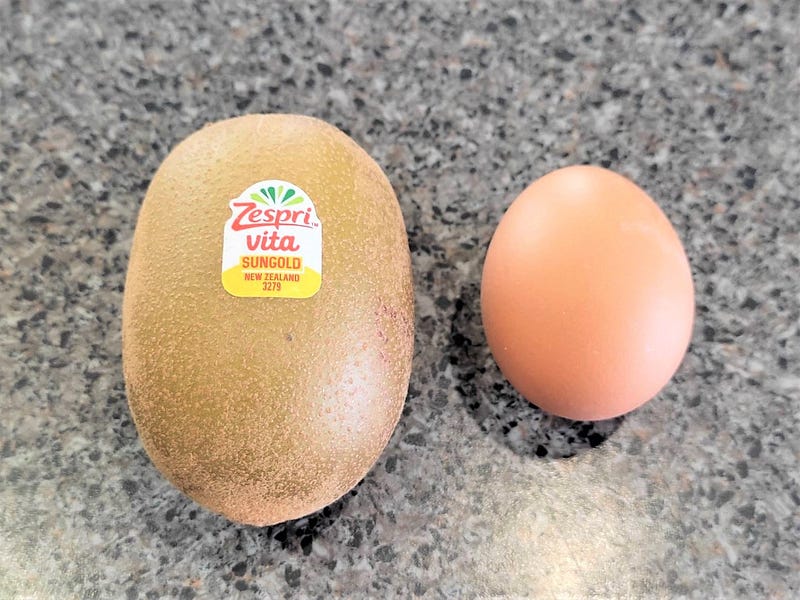
The two most common variants of the kiwifruit are green and gold Kiwifruit.
Green (A. deliciosa) has been the most common for several decades, developed a century ago. It has a fuzzy and dull brown skin with bright green flesh. It is a sweet-tasting fruit but with a hint of tartness.
On the other hand, golden kiwifruit (Actinidia chinensis) has smooth and bronze coloured skin. The flesh colour varies from bright green to yellow, and this species is sweeter than green kiwifruit.
Records of the Kiwifruit date back to the 12th century. In the early 20th century, the cultivation of kiwifruit reached New Zealand. However, it wasn’t exported until around 50 years later, with the first shipment to Great Britain and California in the early 1960s.
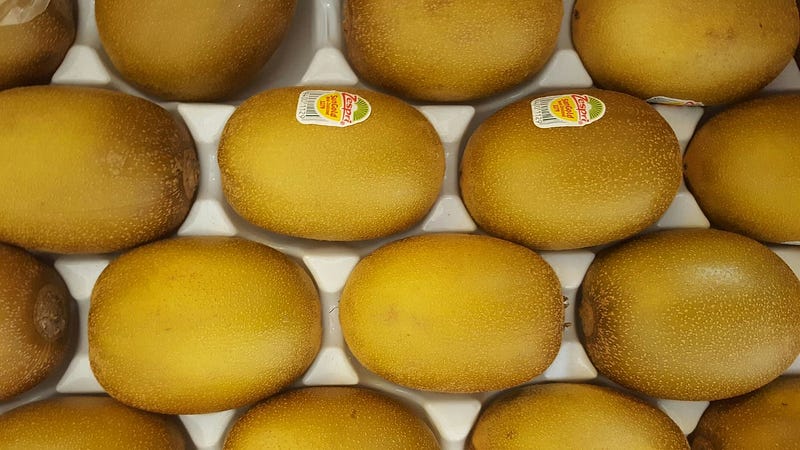
After American importers deemed that the name “Chinese Gooseberry” wasn’t very marketable for produce from New Zealand, growers began calling it the “Kiwifruit”. Its brown furry skin almost resembles the Kiwi — a bird native to New Zealand, and the name commonly given to New Zealanders, especially in the UK and Australia.
The popularity of the Kiwifruit
Exports rapidly increased from the late 1960s, and the name kiwifruit was officially commercially adopted in 1974. This name was then adopted by the rest of the world, regardless of where it was grown.
In the 1980s, the Kiwifruit became a popular export for countries such as Italy and Chile, leading to an identity crisis for the New Zealand kiwifruit industry.

The Zespri brand was founded in 1997 to market all New Zealand grown kiwifruit overseas. New Zealand kiwifruit demands a premium compared to those grown in other countries. Therefore, this helped establish brand equity for the New Zealand produce.
Despite a growing global market over the past 50 years, kiwifruit sales only account for 0.22% of the global fruit market.
The fruit market is dominated by apples, oranges, grapes, watermelon and bananas, despite having less nutritional value than the kiwifruit.
The Benefits of Eating Kiwifruit
Kiwifruit is one of the most nutritious fruits on the planet.
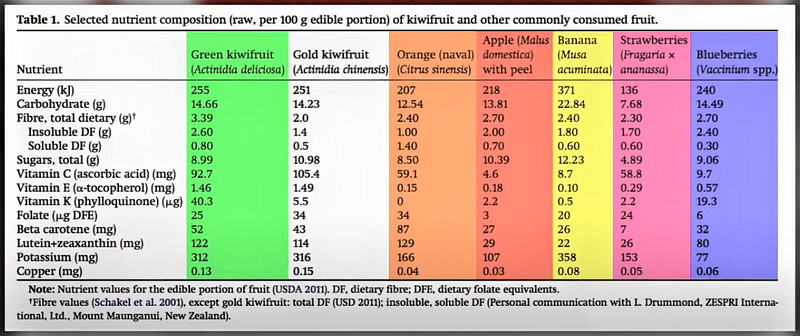
On average, 100 grams of kiwifruit contains 61 calories, primarily carbohydrates, with a small amount of fat and protein. It is rich in vitamins and minerals (micronutrients), especially Vitamin C, Vitamin K and Fibre. It varies slightly between varieties, and kiwifruit skin is also very nutritious — more so than the fruit itself.
As you can see from the table above, the kiwifruit is higher in fibre than Oranges, Apples, Bananas, Strawberries and Blueberries. Kiwis outperform these popular fruit in most nutritional areas!
Kiwifruit is also high in alpha-linolenic acid, an omega-3 fatty acid, which can lower inflammation and strengthen our joints and tendons.
Eating kiwifruit can also promote laxation by reducing the chances of constipation — probably due to the high amounts of fibre and actinidin, which improve the digestion of food and proteins.
Kiwifruit can improve people’s mood and sleep. A 2011 study found two kiwifruit one hour before bed for weeks improved sleep onset, duration, and quality, in adults with sleep problems.
The kiwifruit could reduce cravings by assisting in reducing blood sugar levels after consuming high-sugar food.
“Numerous studies have revealed that kiwifruit contains many medicinally useful compounds, among which antioxidants and serotonin may be beneficial in the treatment of the sleep disorders.” — Lin et al., 2011


How to eat Kiwifruit
You can enjoy kiwifruit in many ways. Us Kiwis love kiwifruit on a Pav (Pavalova).
Kiwifruit can be enjoyed in various desserts or just on its own. It’s commonly cut in half and eaten with a teaspoon.
But, as the skin contains so much nutrition, I eat the skin.
I slice a kiwi into 6–8 pieces and eat it by hand.
The gold variety has no fur, so it is much better for eating the skin. It is also a slightly more nutritious variety than traditional green kiwifruit. But, not as widely distributed and is twice the price (or more).
Summary
This article has explored kiwifruit and what makes it one of the most nutritious things we can eat.
Low in calories but sweet-tasting, the kiwifruit is a great option to include regularly in your diet.
Maybe we should change the saying of “An apple a day” (keeps the doctor away) to a kiwifruit.
But remember (I’m looking at you, Americans), a Kiwi is a flightless bird and a symbol of New Zealand - we don’t want to encourage people to eat those.
Just the kiwifruit.
Thank you for reading.
If you enjoyed the read, you might be interested in this article about 16 healthy foods to help you lose fat.
Read More Medium Articles
Non-Medium members can only read 3 articles a month — become a Medium Member for unlimited access.
If you would like to read more articles like this one, sign up to become a Medium member for only $5 a month.
Subscribe to be notified when I publish new content.