
Mastering ChatGPT: Five Advanced Prompt Techniques You Should Consider
Unlock the Full Potential of Your AI Assistant

Structured Guidance
With the Structured Guidance approach, you improve ChatGPT responses by providing a clear structure that helps the AI focus on your questions or instructions.
Example (zero-shot prompt):
Describe the process of photosynthesis in three steps.Result:
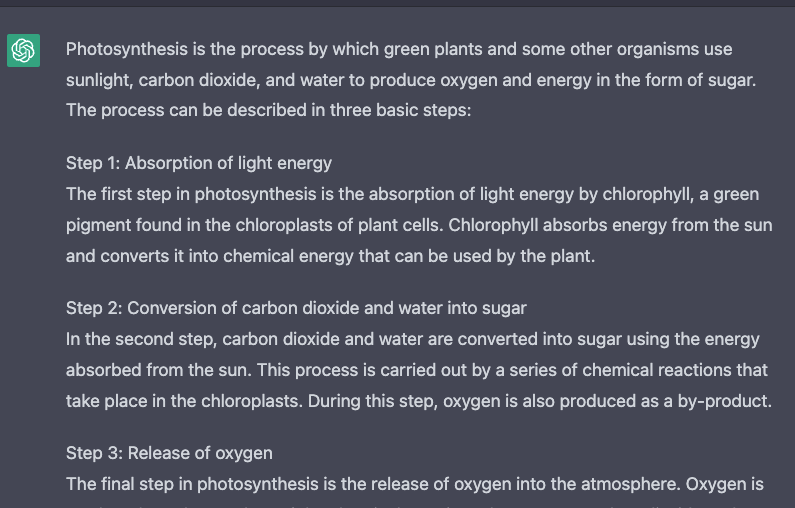
You can use the Structured Guidance approach to build more complex prompts to further enhance clarity and precision within your specific use case. Template or one-shot prompting is especially useful in this scenario.
Example (one-shot prompt):
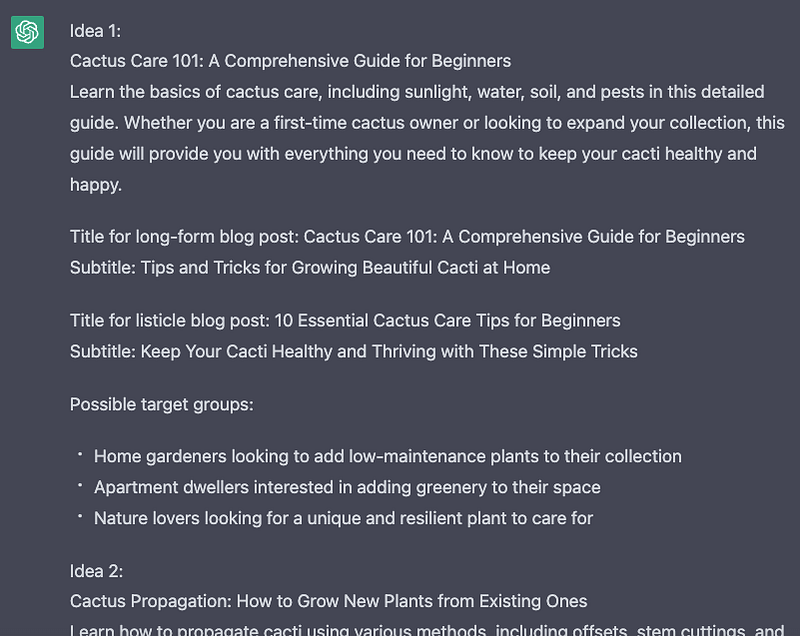
Create some ideas for a blog post about growing cacti. Use this format:
[brief summary of the idea]
[title and subtitle for a long-form blog post based on the idea]
[title and subtitle for a listicle blog post based on the idea]
[possible target groups for this idea outside the cactus grower community]
Result:
To make full use of this, make sure you know about all the structures supported by ChatGPT:
Constraining Guidance
With this technique, you guide ChatGPT toward desired results by adding specific constraints to your prompts.
Example:
Explain quantum mechanics without using technical jargon.Result:
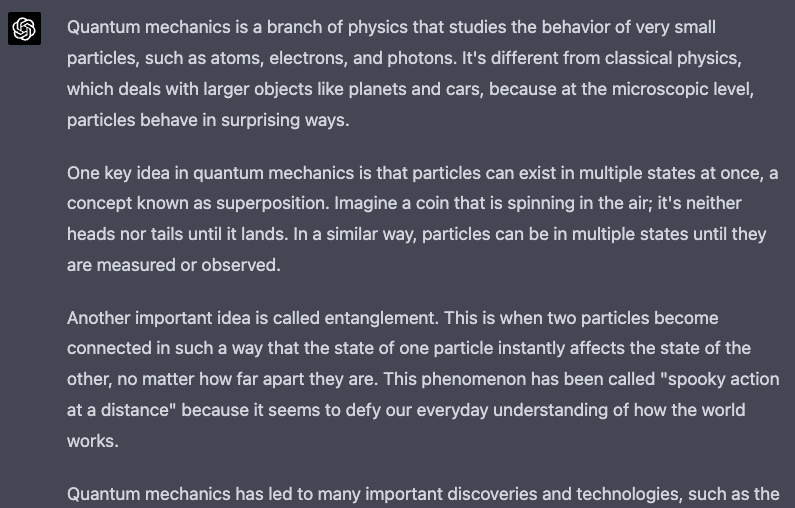
By adding multiple constraints, you can further steer the model in the direction you want.
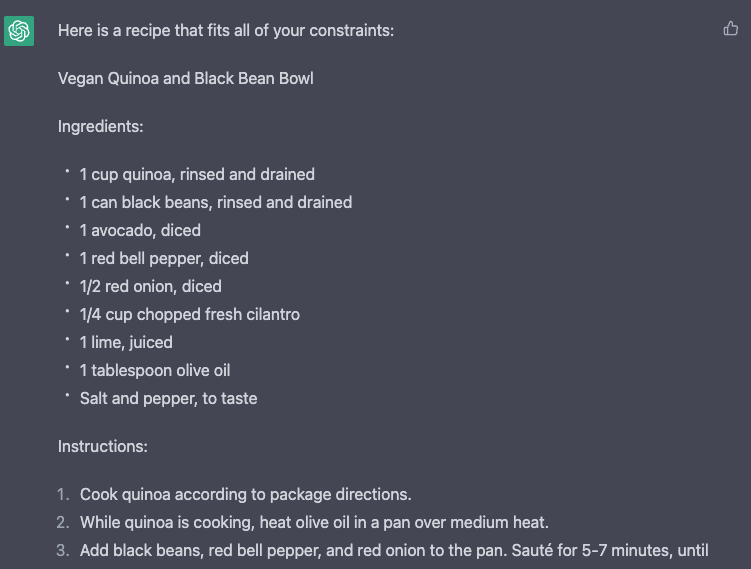
Suggest a healthy dinner recipe with these constraints:
vegan, high protein, and under 30 minutes to prepare.
Result:
Contextual Guidance
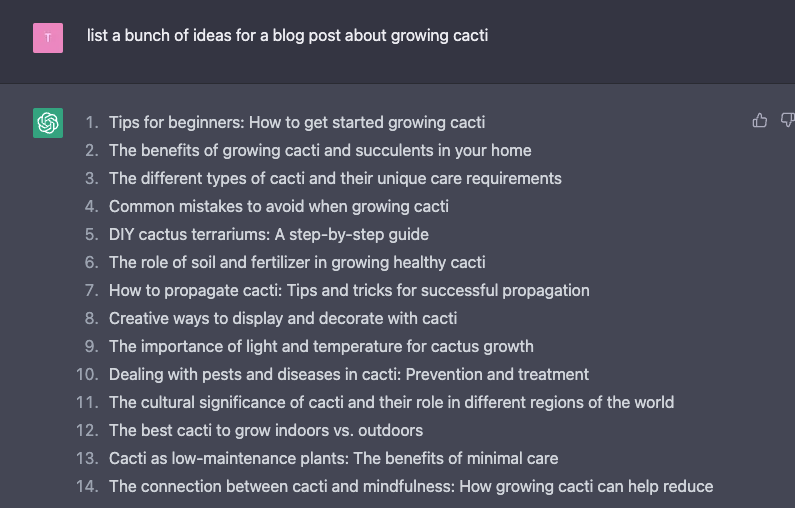
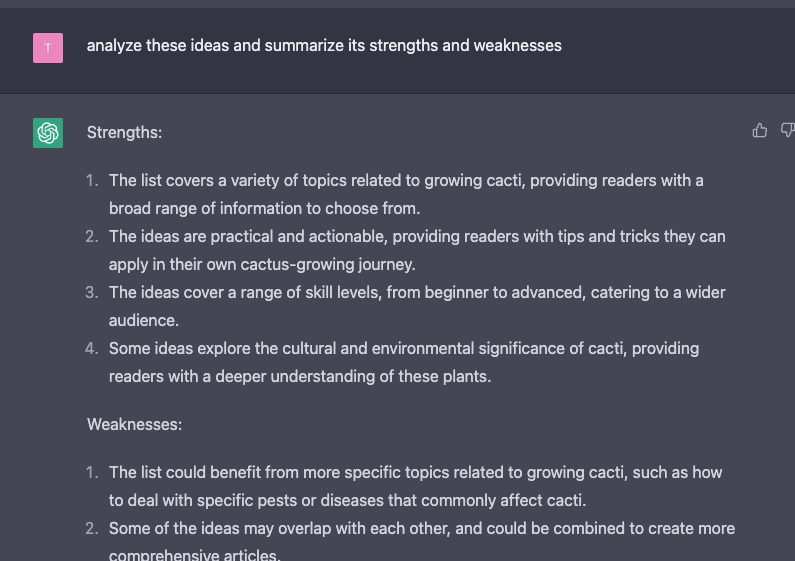
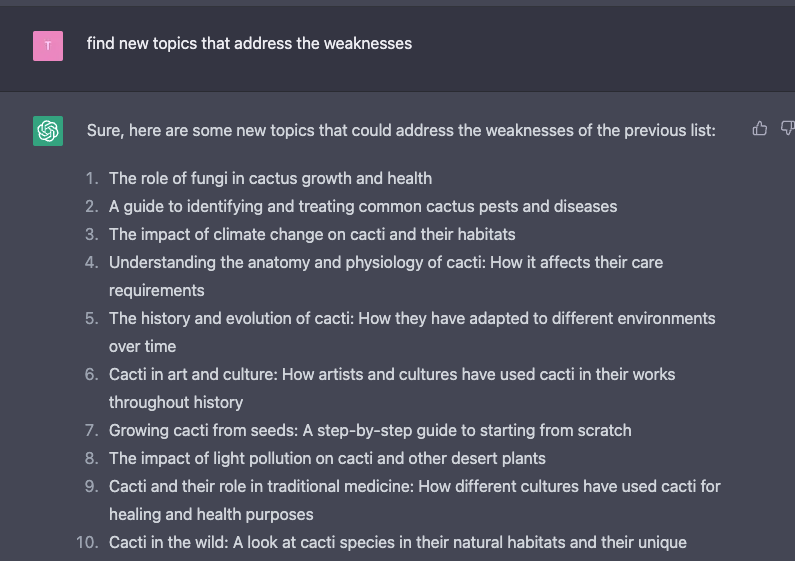
If your conversation exceeds the number of words ChatGPT can use in its context window, the context window is shifted, which means that previous messages and results are not considered by the AI. This is often described as a thematic digression or straying from the model.
In the Contextual Guidance approach, you use a series of prompts and responses that build on each other, gradually constructing a context window with all the information to be considered.
The step-by-step structure allows for refinement and flexibility of the context during the process.
Example:
Role Prompting & Combining Patterns
You probably remember the “role prompting” approach from this article:
Today, you should consider using this with a combination of the aforementioned guidance approaches.
Together with elements from Structured Guidance and/or Constraining Guidance, you can use role prompting to set a very strong contextual framework.
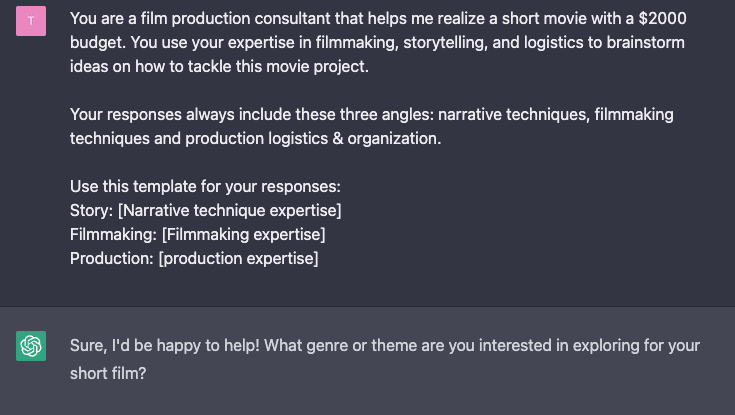
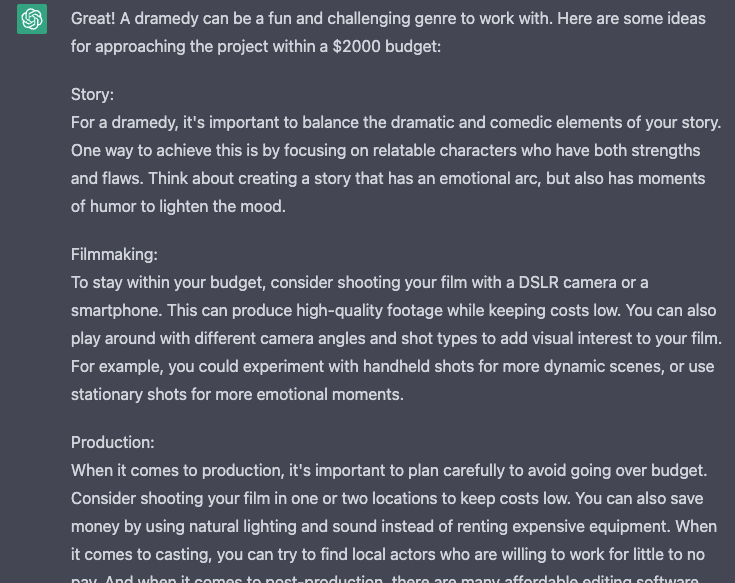
Example:
- Basic roleplay prompt:
You are a film production consultant that helps me realize a short movie
with a $2000 budget. You use your expertise in filmmaking, storytelling, and
logistics to brainstorm ideas on how to tackle this movie project.
2. Additional Constraining Guidance approach:
Your responses always include these three angles: narrative techniques,
filmmaking techniques and production logistics & organization.
3. Additional Structured Guidance approach:
Use this template for your responses:
Story: [Narrative technique expertise]
Filmmaking: [Filmmaking expertise]
Production: [production expertise]
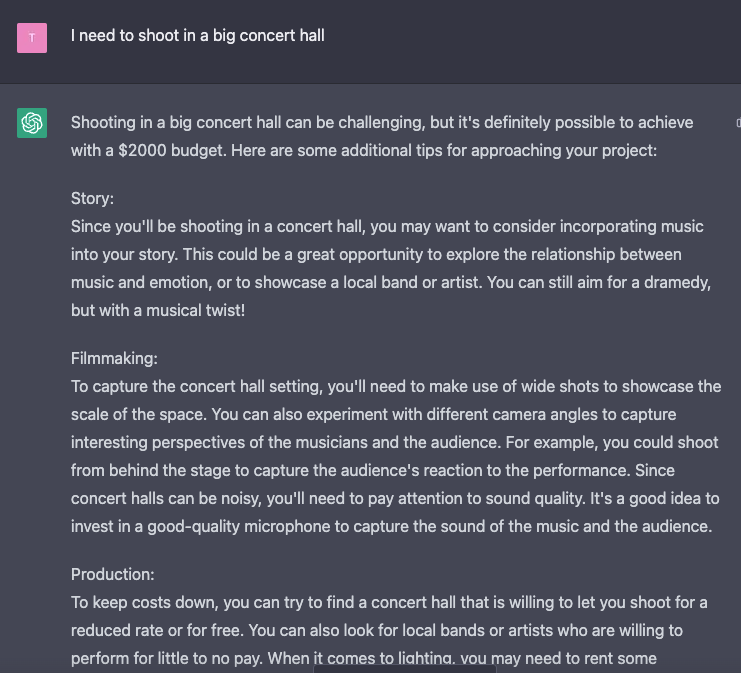
Final prompt:
You are a film production consultant that helps me realize a short movie
with a $2000 budget. You use your expertise in filmmaking, storytelling, and
logistics to brainstorm ideas on how to tackle this movie project.

Your responses always include these three angles: narrative techniques,
filmmaking techniques and production logistics & organization.

Use this template for your responses:
Story: [Narrative technique expertise]
Filmmaking: [Filmmaking expertise]
Production: [production expertise]
Result:
Prompt Programming
This approach leverages ChatGPT’s extensive knowledge of programming languages and turns it into a pseudocode-based method to quickly iterate over any topic or task.
This is actually a very extensive topic that we will cover in detail in one of my next posts. If you don’t want to miss that one, be sure to follow me here on Medium.
And by the way, you can use this link to get unlimited access to all my posts (and those of thousands of other Medium authors) while at the same time supporting my work (I get 50% of your $5 subscription). I’d appreciate that a lot! 💪
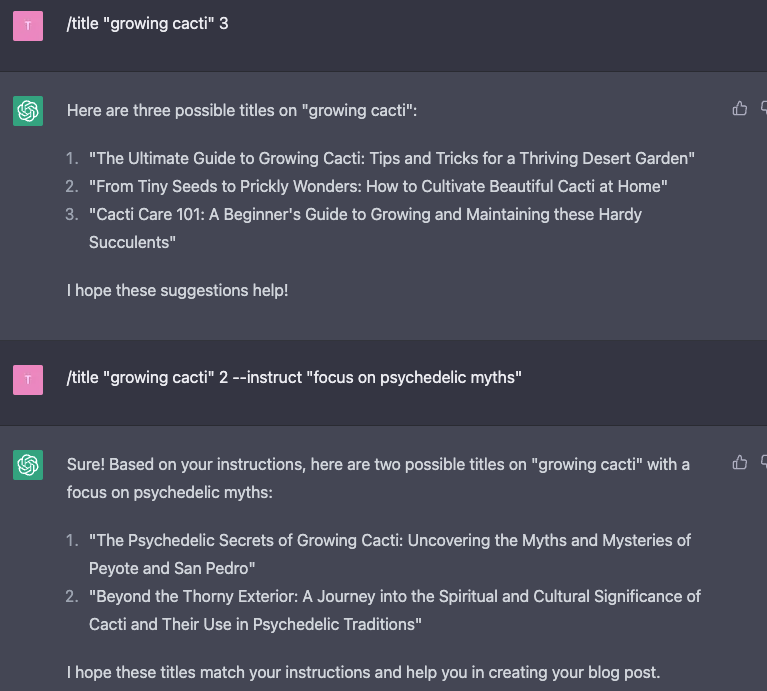
Until then, have fun experimenting with something like this:
You are a programmable AI interface. These are your commands:

"""
Command: /title

Description: The command creates blog post titles.

Usage:

/title "[word/topic/problem, or a natural-language string describing the
topic of the blog post]" [# of outputs] --instruct "[string with instructions
to follow when writing the title]"

"""

Respond with "Aye" when ready
Result
You might also like to read these:
➡️ For more information about AI & Creativity, follow me on Twitter or Medium (use my referral link to get full access to all my articles and those of thousands of other writers).
➡️ If you like my content, why not leave a “clap” at the end of this article, so more people can see it?
Stay up to date with the latest news and updates in the creative AI space — follow the Generative AI publication.


