
Marine bacteria can clean up our garbage by degrading our phosphorous-based contaminants
Scientists have found that some bacteria do this, and they even engineered lab bacteria to degrade the phosphorous-containing molecules too. New tools for bioremediation could come up.
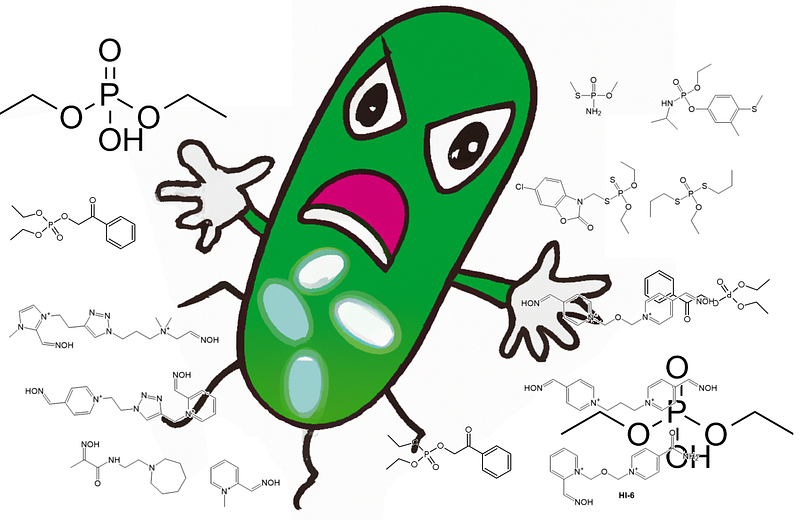
The waters of the Earth are unfortunately rich in man-made contaminants. Many of the molecules in these contaminants contain Phosphorus, an element that is of low abundance in marine settings. One then wonders whether bacteria living in the Oceans could have evolved to use this Phosphorous by decomposing the man-made molecules that carry it. This would be cool not only for the bacteria but also for us and the rest of marine life, because the process of “eating up” the Phosphorous would help to get rid of the contaminating molecules -so called “bioremediation”. Spoiler alert: this paper says yes -and here are the details.
Until recently, it was unclear if bacteria could make some use of the pollutants we throw in to the environment, especially since doing this requires the action of a highly specialized and quite unique enzyme called phosphotriesterase, that only was known in a few soil bacteria. This paper, presenting quite a big amount of work at the frontier between chemistry and microbiology, demonstrated that some quite common marine bacteria can flourish when Phosphorus-containing contaminants serve as the only source of phosphorus. The authors discovered that these bacteria “eat up” Phosphorous-containing molecules thanks to some novel phosphotriesterases coded in their genomes. The authors studied in detail two of these enzymes, and furthermore, they copied the gene that codes for one of these enzymes into a “mundane” Escherichia coli rendering it capable of degrading Phosphorous-containing chemicals. Thus, this engineered bacterium can live in media enriched with Phosphorus-containing molecules much like those found in polluted areas (indeed it could grow on a pesticide analog as the sole source of Phosphorus) standing as a biotechnological tool of tremendous use for bioremediation.
Here’s the full peer-reviewed paper at PNAS:
https://www.pnas.org/doi/10.1073/pnas.2203604119
For more science communication
www.lucianoabriata.com I write and photoshoot about everything that lies in my broad sphere of interests: nature, science, technology, programming, etc. Become a Medium member to access all its stories (affiliate links of the platform for which I get small revenues without cost to you) and subscribe to get my new stories by email. To consult about small jobs check my services page here. You can contact me here.