avatarLucianoSphere (Luciano Abriata, PhD)

Free AI web copilot to create summaries, insights and extended knowledge, download it at here

3394

Abstract

"link-block"> <a href="https://readmedium.com/we-may-finally-have-a-new-class-of-antibiotics-3e99ad02f07d"> <div> <div> <h2>We may finally have a new class of antibiotics</h2> <div><h3>And it attacks bacteria on both their outer walls and inner membranes</h3></div> <div><p>medium.com</p></div> </div> <div> <div style="background-image: url(https://miro.readmedium.com/v2/resize:fit:320/1*y1uBU928CQDqoAEq6kqupA.png)"></div> </div> </div> </a> </div><p id="f29e">And now I will cover new research that disclosed a new molecule used by <i>Streptomyces </i>bacteria to kill other bacteria: azomycin, reported recently by Bruna et al in the <i>Journal of Antimicrobial Chemotherapy </i>to prevent <i>Salmonella</i> replication at dosis that are not toxic for our cells.</p><h1 id="1ecf">Old azomycin finds a new target in Salmonella</h1><p id="425f">Just as I explained in the above article about teixobactin, current regulations require that the mechanism/s by which a molecule exerts antibiotic activity must be known for the drug to be approved. (It is just one of many other points that must be fulfilled, of course.) In other words, we must know what the target of the molecule is, i.e. which molecule/s and system/s of the target bacteria are being hijacked.</p><p id="6472">This new article reports not a new possible drug but a new target for an already existing drug: Azomycin (2-nitroimidazole, so yes, quite simple) is a natural antimicrobial antibiotic already known to combat anaerobic bacterial and parasitic infections, and to be naturally produced by strains of <i>Nocardia mesenterica </i>and <i>Streptomyces eurocidicus</i>. The new work further showed that azomycin can also target the activity of the PhoP/PhoQ system, a pair of proteins that the bacterium uses to sense its environment cations, fatty acids, pH, and antimicrobial peptides. It turns out that properly sensing the environment is critical for <i>Salmonella </i>to exert its pathogenicity; thus by hijacking the PhoP/PhoQ system one can effectively block the bacterium’s capacity to infect. In practice, Bruna et al found (through a designed screening) that azomycin specifically inhibits the PhoP/PhoQ system, in multiple conditions, and that this inhibits the replication of Salmonella inside macrophages -cells in our bodies that are supposed to engulf them to kill them out but end up being infected.</p><p id="43ed">The main practical outcome of this new work is that azomycin has a good potential to become a new way to treat infections with these bacteria. And it comes with two extra pluses: We now know the mechanism of action, thanks to this work; and we already know the drug is relatively safe at the doses required. Of course still more needs to be done, but this work sets forward a very promising starting point.</p><h1 id="af1f">References and related reads</h1><p id="13a6">The peer-reviewed paper, and the tweet promoting it by its last author:</p><div id="13fb" class="link-block"> <a href="https://academic.oup.com/jac/advance-article-abstract/doi/10.1093/jac/dkac278/6668240"> <div> <div> <h2>A natural product from Streptomyces targets PhoP and exerts antivirulence

Options

action against Salmonella…</h2> <div><h3>AbstractBackground. The overprescription and misuse of classical antimicrobial compounds to treat gastrointestinal or…</h3></div> <div><p>academic.oup.com</p></div> </div> <div> <div style="background-image: url(https://miro.readmedium.com/v2/resize:fit:320/0*YazKqXCNiQB6623U)"></div> </div> </div> </a> </div><p id="227c">For more about drug repurposing, see this authoritative review:</p><div id="7be7" class="link-block"> <a href="https://www.nature.com/articles/s41564-019-0357-1"> <div> <div> <h2>Drug repurposing for antimicrobial discovery - Nature Microbiology</h2> <div><h3>Antimicrobial resistance continues to be a public threat on a global scale. The ongoing need to develop new…</h3></div> <div><p>www.nature.com</p></div> </div> <div> <div style="background-image: url(https://miro.readmedium.com/v2/resize:fit:320/0*nM_vW2I7HKB_zvHS)"></div> </div> </div> </a> </div><p id="77b0">For more about penicillin, carbepenems and cephalosporins, presented in the introduction to illustrate how most antibiotics of clinical use originate from nature itself:</p><div id="5af2" class="link-block"> <a href="https://www.ncbi.nlm.nih.gov/pmc/articles/PMC5403050/"> <div> <div> <h2>The Discovery of Penicillin-New Insights After More Than 75 Years of Clinical Use</h2> <div><h3>After just over 75 years of penicillin's clinical use, the world can see that its impact was immediate and profound. In…</h3></div> <div><p>www.ncbi.nlm.nih.gov</p></div> </div> <div> <div style="background-image: url(https://miro.readmedium.com/v2/resize:fit:320/0*mVZZjZ9gstLzV5Qn)"></div> </div> </div> </a> </div><div id="e8ad" class="link-block"> <a href="https://www.ncbi.nlm.nih.gov/pmc/articles/PMC3195018/"> <div> <div> <h2>Carbapenems: Past, Present, and Future</h2> <div><h3>Krisztina M. Papp-Wallace, 1, 2 Andrea Endimiani, 1, 2, 3 Magdalena A. Taracila, 2 and Robert A. Bonomo 1, 2, 4, 5, *…</h3></div> <div><p>www.ncbi.nlm.nih.gov</p></div> </div> <div> <div style="background-image: url(https://miro.readmedium.com/v2/resize:fit:320/0*ctzwZwRAcB0A7hnW)"></div> </div> </div> </a> </div><div id="9382" class="link-block"> <a href="https://www.ncbi.nlm.nih.gov/books/NBK551517/"> <div> <div> <h2>Cephalosporins</h2> <div><h3>Cephalosporins are beta-lactam antimicrobials used to manage a wide range of infections from gram-positive and…</h3></div> <div><p>www.ncbi.nlm.nih.gov</p></div> </div> <div> <div style="background-image: url(https://miro.readmedium.com/v2/resize:fit:320/0*HtenyvWFGA14hhNM)"></div> </div> </div> </a> </div></article></body>

When microorganisms fight each other, we have a chance to discover novel antibiotics -here’s a new example

Examples from nature, and a new candidate to fight Salmonella
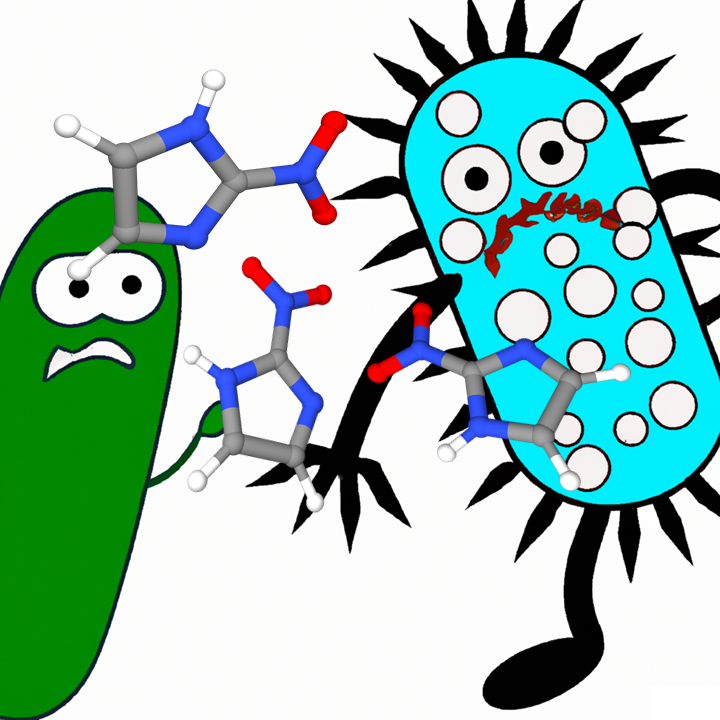
Figure composed by the author from his own drawings plus Dall-E-2 generations, whose use is allowed for commercial purposes.

Antibiotics are substances that kill or inhibit the growth of bacteria. So-called “beta-lactam” antibiotics are probably the most important class, the first one being penicillin which is probably the most famous one if you ask around. This foundational antibiotic, widely used in World War II to treat wound infections in an unprecedented way that changed medical care at the war front, was discovered from a fungus and by serendipity:

While working with bacteria, scientist Alexander Fleming noticed that they could not grow around one particular mold that had contaminated the plate. After identifying this mold as belonging to the Penicillium genus, he named the antibiotic component “penicillin”. He then determined that penicillin had an antibacterial effect on staphylococci and other Gram-positive pathogens, and published his findings in 1929. This was going to be only the first of a long series of similar discoveries of an organism defending itself from another by producing a molecule that we can then repurpose for use in the clinic.

Fleming’s discovery of penicillin was only the first of a long series of similar discoveries of an organism defending itself from another by producing a molecule that we can then repurpose for use in the clinic

Beta-lactams illustrate this “war of nature vs. nature from which we can profit” even further. It turns out that these antibiotics work by inhibiting the synthesis of the bacterial cell wall, leading to the death of the target bacteria. But bacteria evolved several mechanisms of resistance, rendering penicillin not very powerful in practice within a few decades. The clinic then moved on to the use of other antibiotics, among them other kinds of beta-lactams such as cephalosporins and carbapenems. And as you guessed, the original cephalosporins and carbapenems are themselves also examples of substances naturally produced by organisms to kill bacteria, derived in these cases from various species of the fungus Cephalosporium and from the Gram-positive bacterium Streptomyces clavuligerus, respectively.

Due to the excesive use, abuse and misuse of antibiotics, bacteria keep becoming resistant and we need to discover or create new molecules in a never-ending story. And although we can design and create new antibiotics once we know a basic core (“scaffold”) that works, such as the penicillin or carbapenem scaffold just to mention two that we discussed above, our main resource for truly new scaffolds of antibiotics is still the same that led Fleming to the introduction of penicillin: we adapt the molecules that organisms are already using in nature to kill bacteria.

I recently covered the discovery of a new potential antibiotic, teixobactin, used by certain bacteria to kill others:

And now I will cover new research that disclosed a new molecule used by Streptomyces bacteria to kill other bacteria: azomycin, reported recently by Bruna et al in the Journal of Antimicrobial Chemotherapy to prevent Salmonella replication at dosis that are not toxic for our cells.

Old azomycin finds a new target in Salmonella

Just as I explained in the above article about teixobactin, current regulations require that the mechanism/s by which a molecule exerts antibiotic activity must be known for the drug to be approved. (It is just one of many other points that must be fulfilled, of course.) In other words, we must know what the target of the molecule is, i.e. which molecule/s and system/s of the target bacteria are being hijacked.

This new article reports not a new possible drug but a new target for an already existing drug: Azomycin (2-nitroimidazole, so yes, quite simple) is a natural antimicrobial antibiotic already known to combat anaerobic bacterial and parasitic infections, and to be naturally produced by strains of Nocardia mesenterica and Streptomyces eurocidicus. The new work further showed that azomycin can also target the activity of the PhoP/PhoQ system, a pair of proteins that the bacterium uses to sense its environment cations, fatty acids, pH, and antimicrobial peptides. It turns out that properly sensing the environment is critical for Salmonella to exert its pathogenicity; thus by hijacking the PhoP/PhoQ system one can effectively block the bacterium’s capacity to infect. In practice, Bruna et al found (through a designed screening) that azomycin specifically inhibits the PhoP/PhoQ system, in multiple conditions, and that this inhibits the replication of Salmonella inside macrophages -cells in our bodies that are supposed to engulf them to kill them out but end up being infected.

The main practical outcome of this new work is that azomycin has a good potential to become a new way to treat infections with these bacteria. And it comes with two extra pluses: We now know the mechanism of action, thanks to this work; and we already know the drug is relatively safe at the doses required. Of course still more needs to be done, but this work sets forward a very promising starting point.

References and related reads

The peer-reviewed paper, and the tweet promoting it by its last author:

For more about drug repurposing, see this authoritative review:

For more about penicillin, carbepenems and cephalosporins, presented in the introduction to illustrate how most antibiotics of clinical use originate from nature itself:

Biology
Medicine
Drugs
Health
Pharmaceutical
Recommended from ReadMedium