
Man and Hubris: The Cinema of Martin Scorsese
A Thematic Analysis
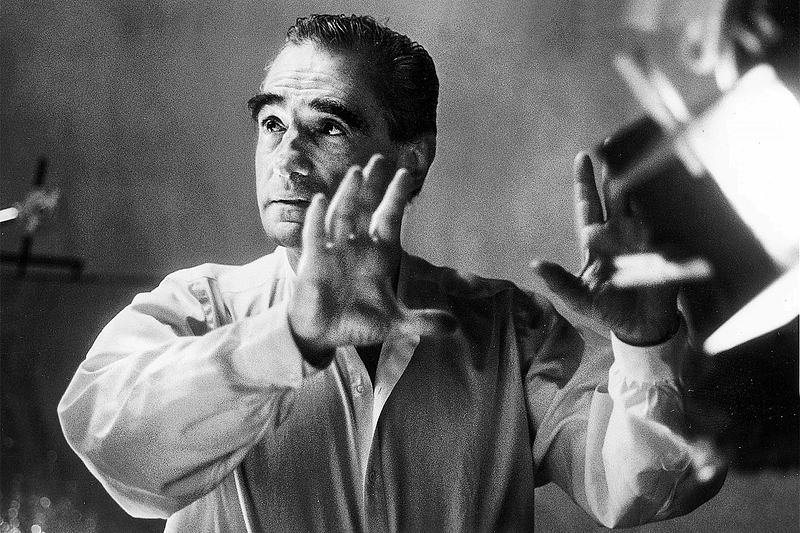
Scorsese’s extensive filmography, which spans over 50 years, has been dissected in a variety of ways and analyzed under many different lenses.
To the larger public, Scorsese is mostly known for his “crime flicks”: stories that focus on the Italian-American — and occasionally Irish-American — criminal underground (Mean Streets, Goodfellas, Gangs of New York, The Departed, The Irishman, etc.). Unsurprisingly, Scorsese is also among the many filmmakers of his generation who have been criticized for their “excessive” or “glorifying” use of violence (other names including Brian DePalma, Oliver Stone, and, more recently, Quentin Tarantino), due to his approach to the depiction of violence on-screen being less “Hollywood-like” and more realistic.¹
But to critics and cinephiles, the common themes that stand out among Scorsese’s many masterpieces are those underlying the manifest content of his stories: guilt, sin, redemption, betrayal, and a conflicted relationship with masculinity and manhood. But these many concepts can be summed up under one thematic unity: hubris.
Hubris is a concept deriving from ancient Greek tragedies (ὕβρις), where it would be sure to bring about a character’s eventual downfall in a way similar to the modern concept of fatal flaw. The Oxford Classical Dictionary defines it as an “intentionally dishonouring behaviour” that often involves “pride, over-confidence, or alternatively any behaviour which offends divine powers.” But even this definition somehow falls short of the many nuances of meaning of hubris.
Hubris indicates one’s excessive pursuit of a predetermined object of desire, often in defiance of societal institutions and values. In the case of Goethe’s Faust, hubris is the titular character’s obsessive desire for infinite knowledge, in exchange for which he sells his soul to the Devil. In Shakespeare’s Macbeth, it is hunger for power, which causes Macbeth to break his divine oath of loyalty, betray his King, and plot to murder anyone who might stand in his way.
In Scorsese’s filmography, hubris takes on many different forms. It is often portrayed as greed, with many characters pursuing richness and wealth to both unlawful and ungodly extremes. This is the case for movies such as Raging Bull, Goodfellas, Casino, The Wolf of Wall Street, and the latest Killers of the Flower Moon. In all these films, the protagonist isn’t just satisfied with ascending to wealthier social echelons from their originally lower-class backgrounds. Once they’re there, they want more. There is no limit to how much wealth or possessions they may hoard, because their primal hunger is never sated. Consequently, it is not a matter of whether or not tragedy will befall them, it is a matter of when.
Warning: Spoilers Ahead!
Hubris is a sin in the eyes of both men and gods, and, therefore, it demands punishment both in a societal/institutional form and in a moral one. It is not a case that Scorsese’s characters often end up losing it all and facing not only the hand of justice, but also their own spiritual wretchedness. In Goodfellas, Henry Hill does his part to expiate his sins by testifying against his former accomplices. However, at the end of the film, he still ends up — in his own words — as an “average nobody,” whose ordinary existence is made even more miserable by the fact that he’s had a taste of the forbidden fruit, but was eventually cast out of Heaven.
Hubris is a sin in the eyes of both men and gods, and, therefore, it demands punishment both in a societal/institutional form and in a moral one.
By the way, all these Christian allegories are not a coincidence. Scorsese was raised as a Roman Catholic, and questions of faith often play a central role in his films, whether it be overtly so — as is the case in The Last Temptation of Christ and Silence — or implicitly. Unsurprisingly, if Scorsese’s characters do succeed in atoning for their sins, it is by selfless and grandiose acts of deliberate self-destruction: Travis in Taxi Driver becomes a “hero” after risking his own life;² in The Departed, Billy proves himself to be an honest and righteous man, but he pays for it with his own life. Similarly, in Shutter Island, Deputy U.S. Marshal Teddy Daniels chooses to undergo a drastic lobotomy procedure even though he is now perfectly lucid, because, as he asks Dr. Sheehan:
What would it be worse: to live as a monster, or to die as a good man?
And, finally, in The Last Temptation of Christ, Willem Dafoe’s Jesus chooses to sacrifice all that he has and all chances at a life of temporal bliss for the greater good, and not because he wants to, but because he realizes that it’s his divine purpose to do so, regardless of his human desires.
In all of Scorsese’s films, expiation always involves self-sacrifice, as is the case according to the doctrine of Christianity: absolution cannot take place without contrition and atonement. The alternative is often even worse: once Scorsese’s characters have tainted themselves with the sin of hubris, misfortunes begin to befall them like a curse. And the more one resists their inevitable fall from grace, the worse it gets: in The Wolf of Wall Street, the fraudulent businessman Jordan Belfort loses his entire fortune as well as his family and best friend, and in Killers of the Flower Moon, Ernest’s child Anna dies prematurely while he’s in jail — it is this very tragedy that finally convinces him to take the stand against his uncle and to confess to his involvement. And, finally, in The Departed, corrupt police agent Colin Sullivan finally pays for his many crimes with his own life.
Occasionally, Scorsese’s characters will also end up being stuck in a limbo, where, instead of being overtly punished for their sins, they are forced to live in a state of precarious balance between condemnation and deliverance, which can, in itself, be an even more agonizing state than actual punishment. This is the case for the titular protagonist in Alice Doesn’t Live Here Anymore, where single mother Alice is attempting to pursue a career as a singer while untangling herself from the cycle of domestic abuse that she’s been enduring ever since she married her first husband and gave up her dreams. At the end of the film, both Alice and the audience are denied a proper ending, but we do know that Alice has chosen to embark on yet another problematic relationship, hoping that this time it will finally be different.³
Similarly, the 1985 comedy After Hours can be seen as a one-night journey through limbo in and of itself, with the protagonist undergoing a series of grotesquely comedic incidents that seem to have been orchestrated by a superior force to punish him for unknown reasons.
Scorsese’s cinema is a cinema that hinges on the theme of man and hubris, exploring the fatal consequences of pursuing desire to excessive extents, while also relying on Christian motifs of sin, guilt, punishment, and redemption. And while Scorsese has explored many different genres throughout his career and evolution as a filmmaker, his fascination with man’s hubris has always impacted his work and shaped the commentary underlying his many masterpieces.
¹ While this complex topic demands an entirely separate conversation, it is worth noticing that public outrage in response to more “realistic” cinema has been a constant in the history of cinema.
² Naturally, this is an oversimplification of Travis’ actions; also, at the end of the film, Travis is arguably far from spiritual and moral fulfillment, which goes to show that some characters might just be beyond redemption.
³ If you’re interested in learning more about this type of relationship dependence, please check out this article.
Want to keep reading? Check out these similar stories:
If you enjoyed this story, please consider showing your support and appreciation to the author by buying them a coffee!